




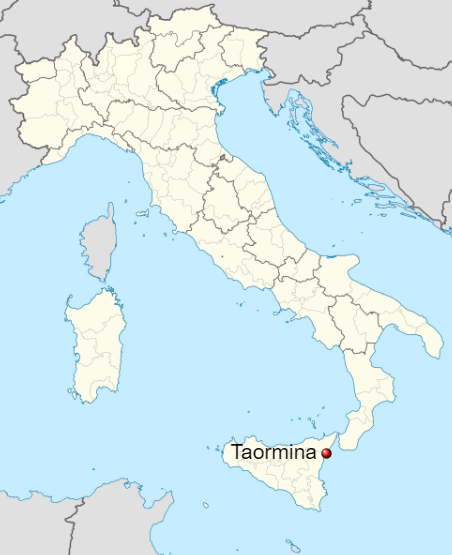
The history of Taormina dates back to before Ancient Greece established its first colony on Sicily in 734 BCE in Magna Graecia. After the fall of the Western Roman Empire, Taormina continued to rank as one of the more important towns of the island. Taormina followed the history of Sicily in being ruled by successive foreign monarchs. After the Italian unification , Taormina began to attract well-off tourists from northern Europe.
We visited the city and site in May 2005.
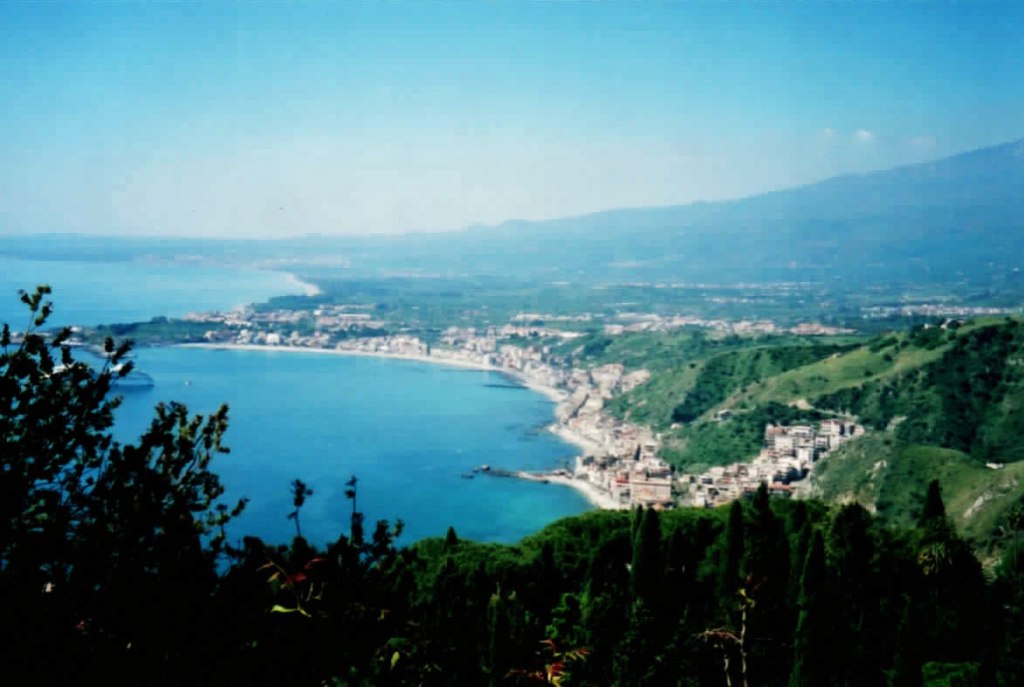
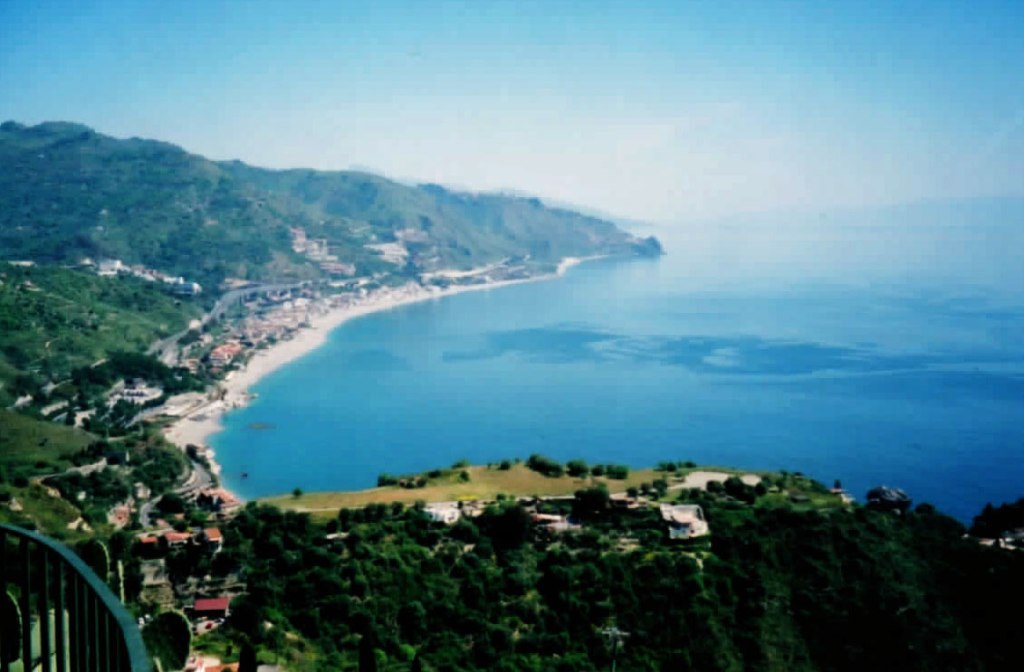
The present town of Taormina occupies the ancient site, on a hill that forms the last projecting point of the mountain ridge that extends along the coast from Cape Pelorus to this point.
The site of the old town is about 250 metres above the sea, while a very steep and almost isolated rock, crowned by a Norman castle, rises about 150 metres higher. This is the likely site of the ancient citadel, an inaccessible position mentioned by ancient writers.
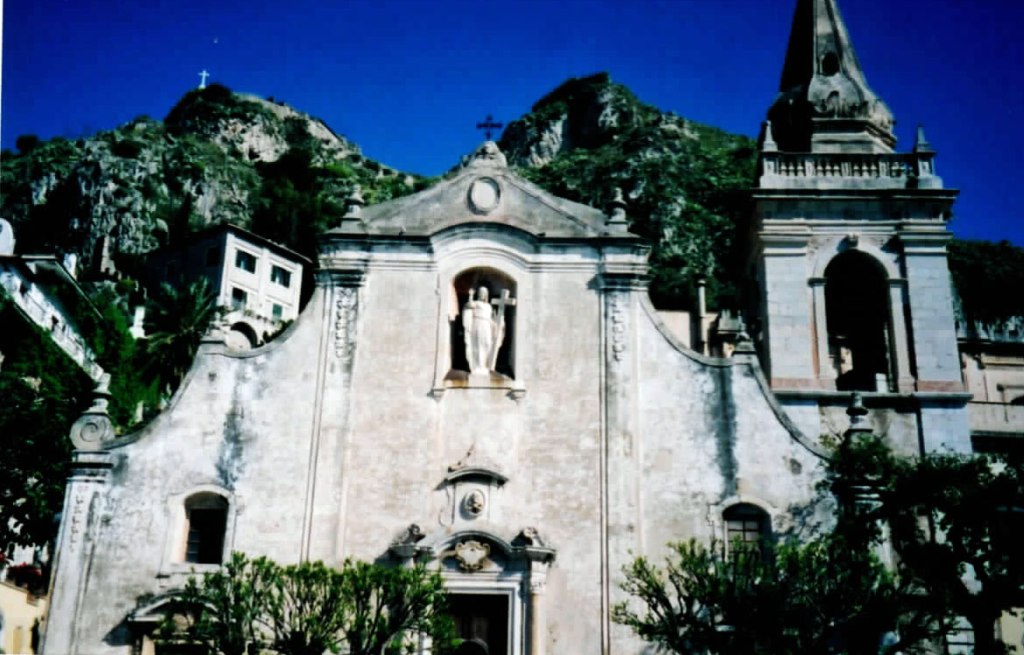
The city’s “Duomo” is not actually a cathedral (as its name implies), but this Norman-Arab church, built over an earlier, Paleo Christian structure, dates from the twelfth century. The Badia Vecchia (Old Abbey) was built in the fourteenth century.
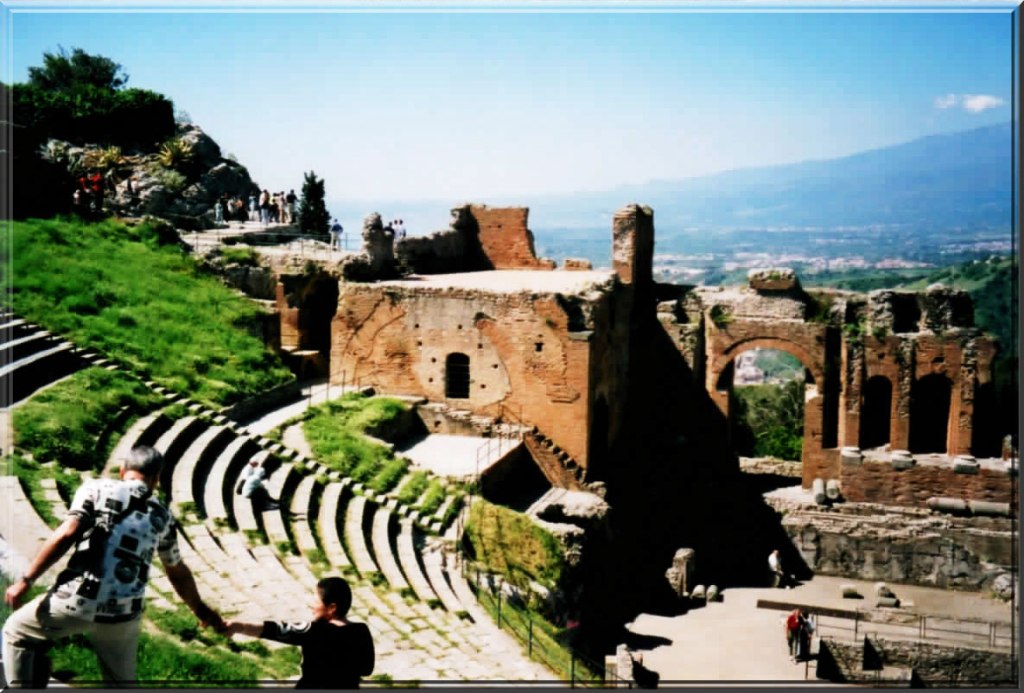
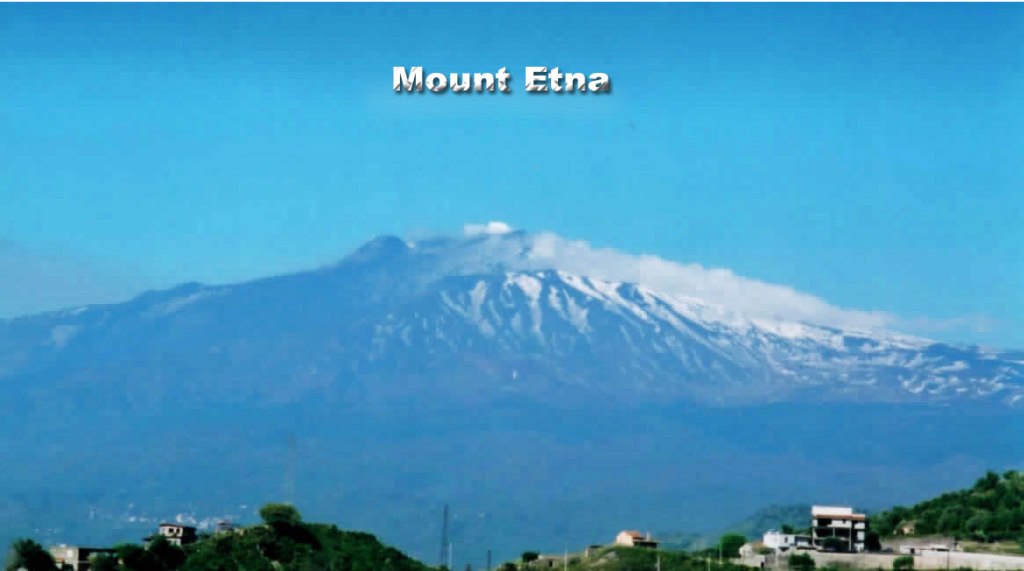
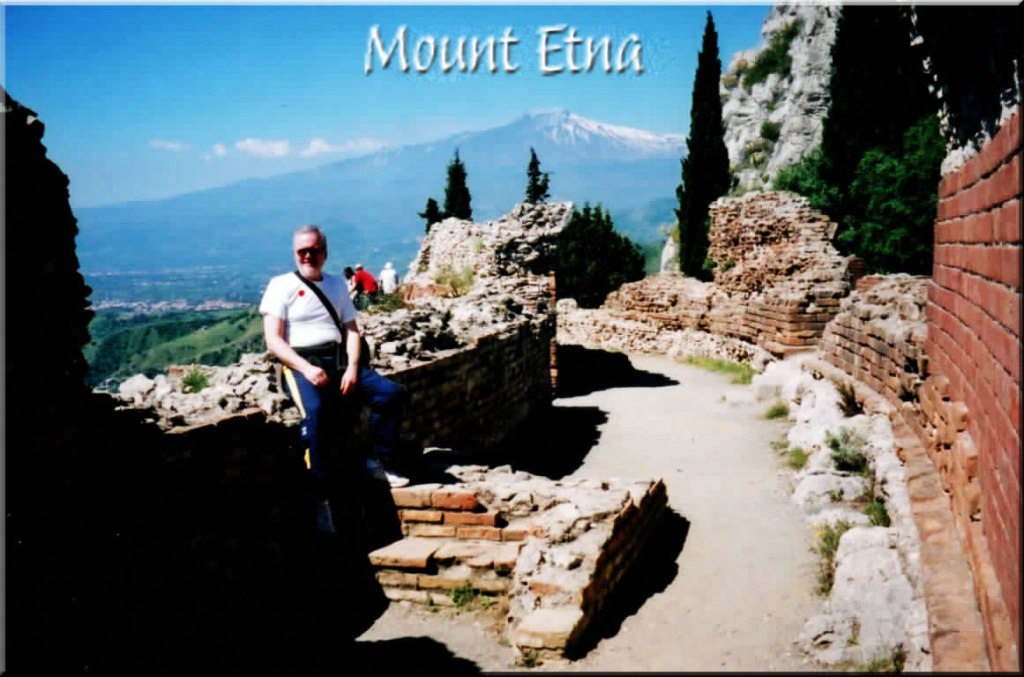
The theater/arena with the majestic Mont Etna in the background.
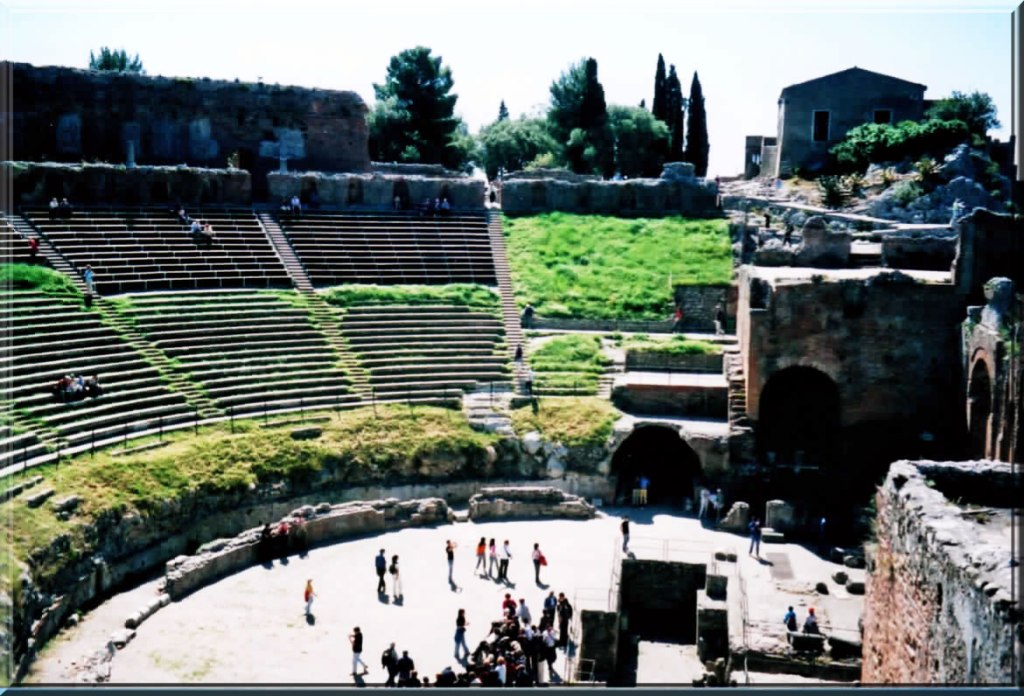
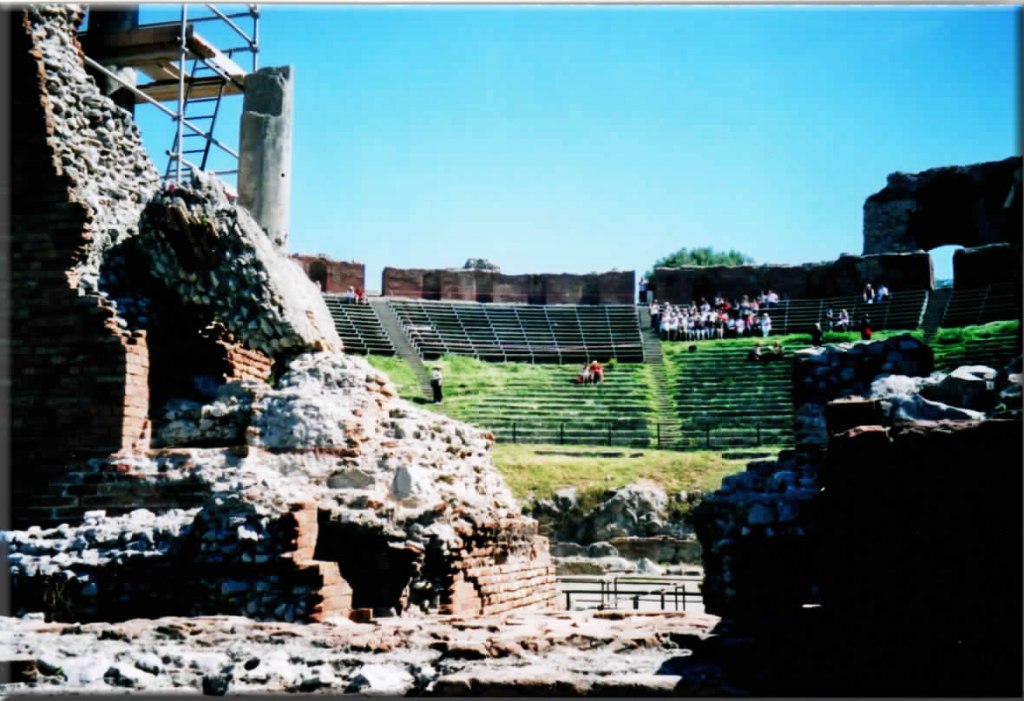
The ancient theatre of Taormina is built for the most part of brick, and is therefore probably of Roman date, though the plan and arrangement are in accordance with those of Greek, rather than Roman, theatres; whence it is supposed that the present structure was rebuilt upon the foundations of an older theatre of the Greek period.
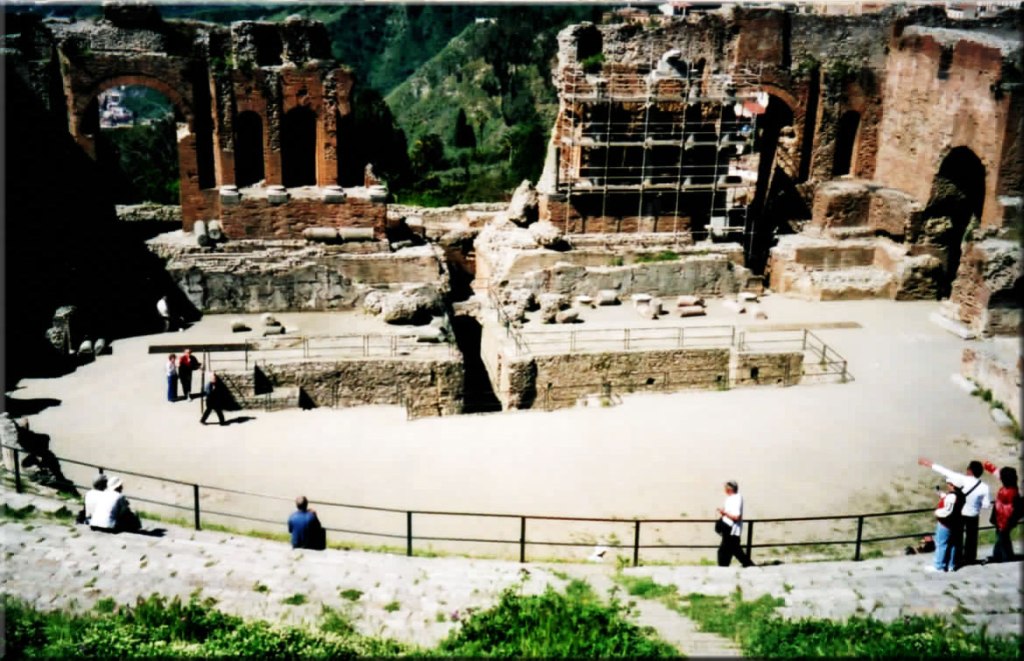
With a diameter of 109 metres (after an expansion in the 2nd century), this theatre is the second largest of its kind in Sicily (after that of Syracuse); it is frequently used for operatic and theatrical performances and for concerts.
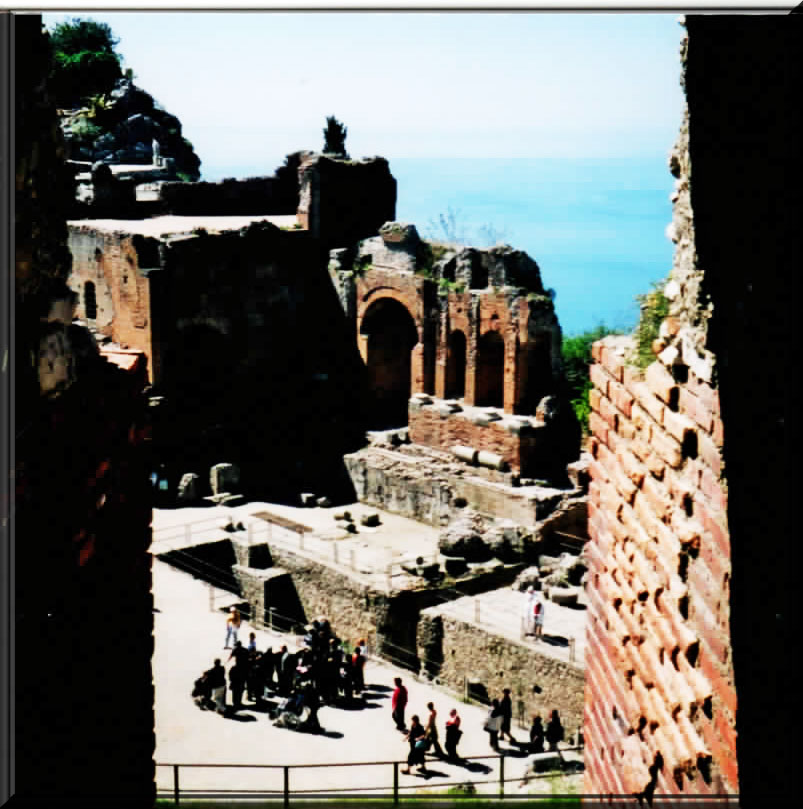
The greater part of the original seats have disappeared, but the wall which surrounded the whole cavea is preserved, and the proscenium with the back wall of the scena and its appendages, of which only traces remain in most ancient theatres, are here preserved in an uncommon state of integrity.

 s
s 