




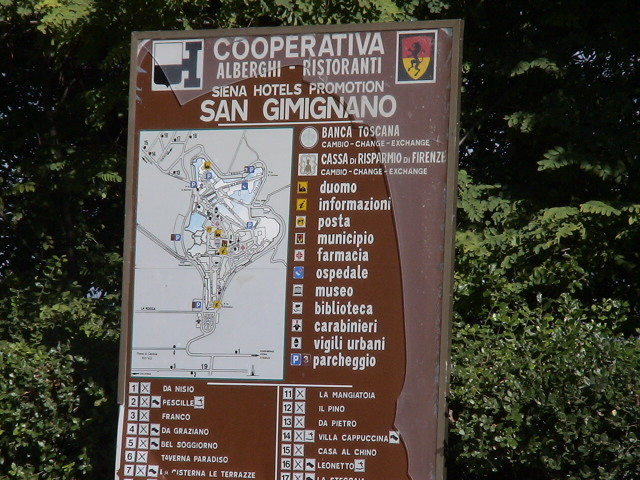
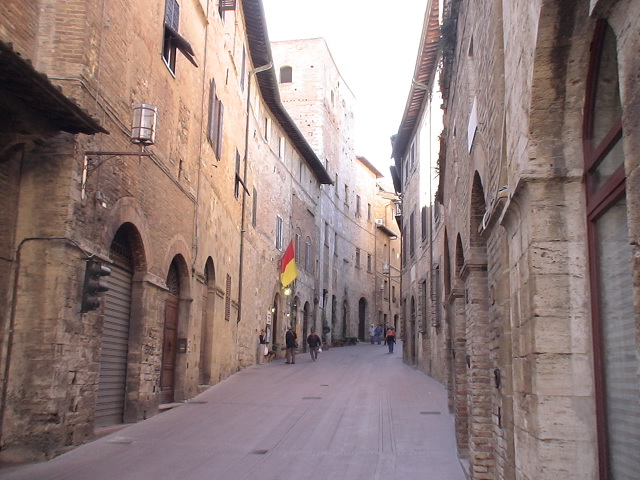
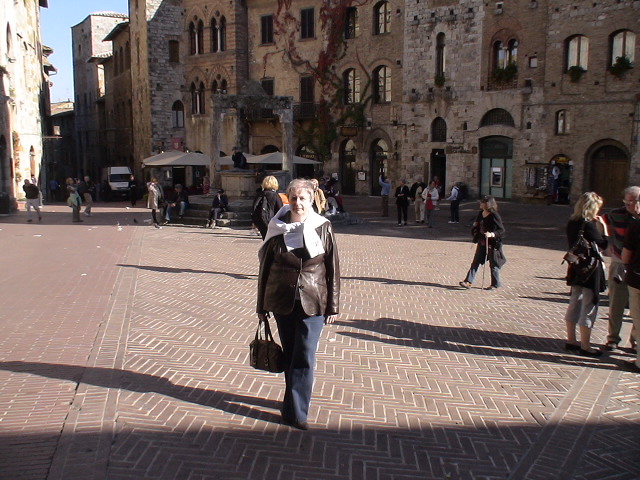
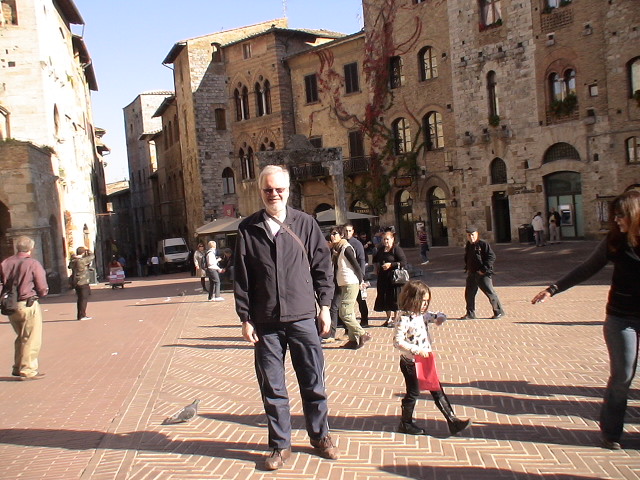
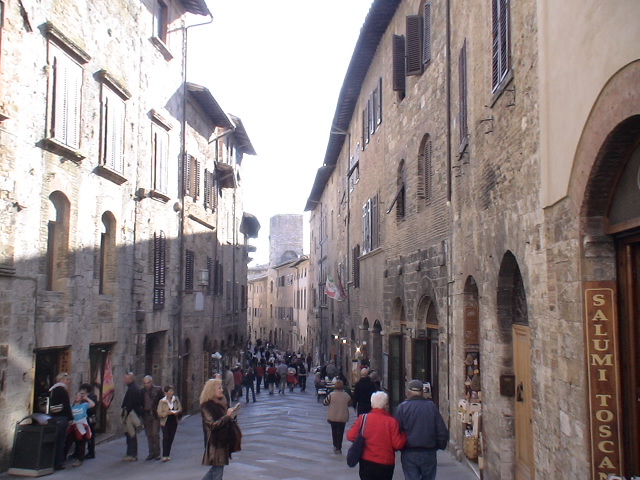
San Gimignano is a small walled medieval hill town in the province of Siena, Tuscany. This hill was the location of a small Etruscan village during the Hellenistic period (200-300 BC) and San Gimignano began its life as a town in the 10 C, being named after the Bishop of Modena, St. Gimignano, who is said to have saved the village from the barbarian hordes.
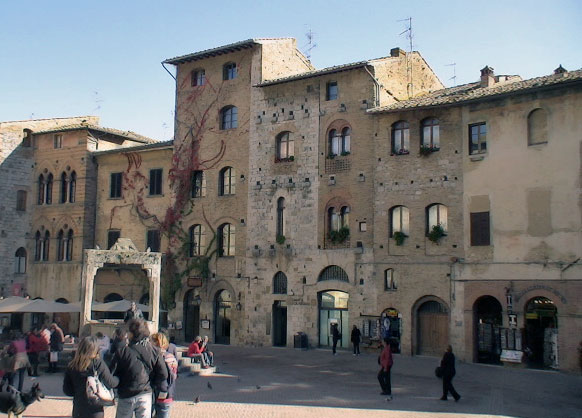

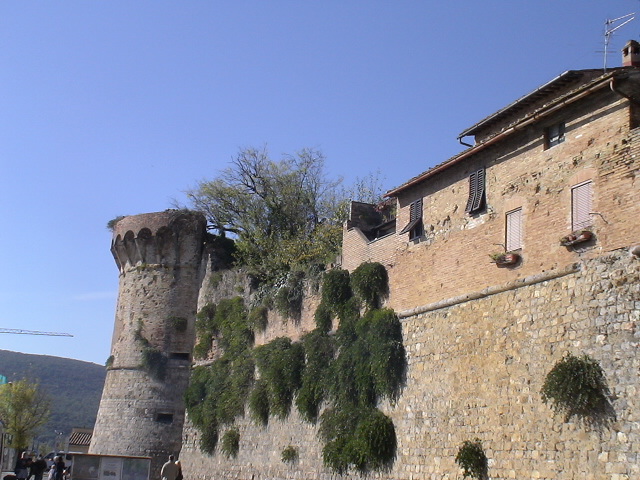
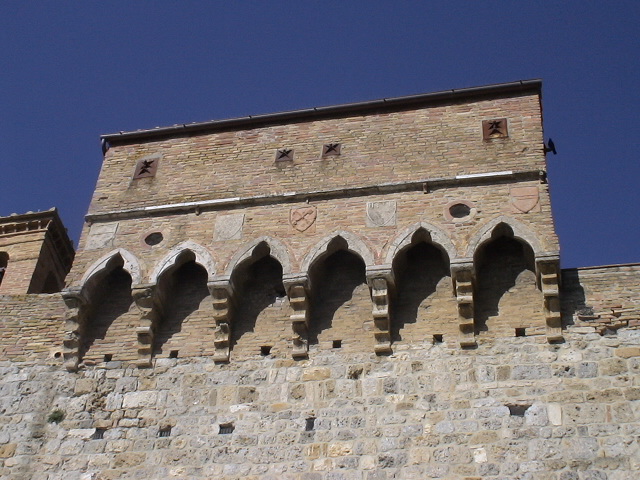
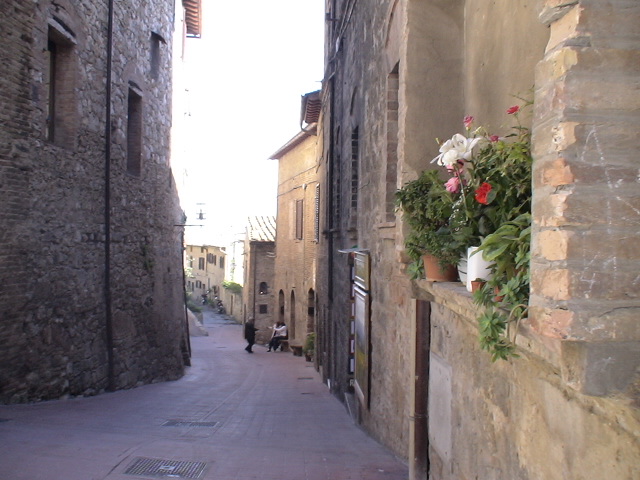
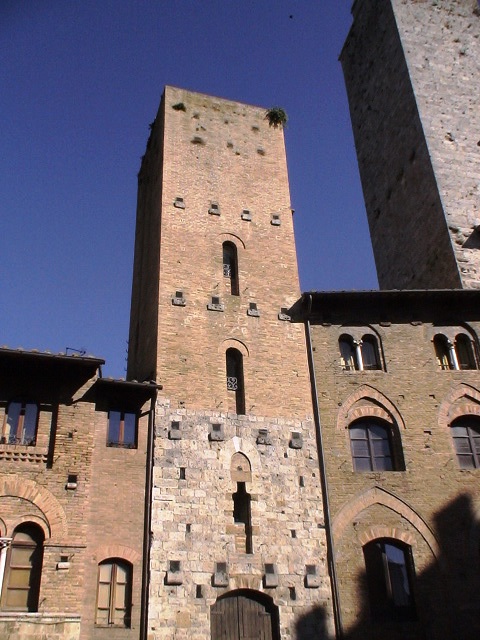
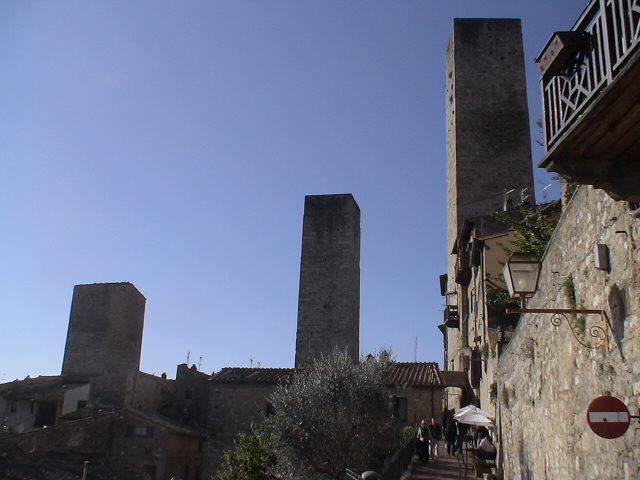
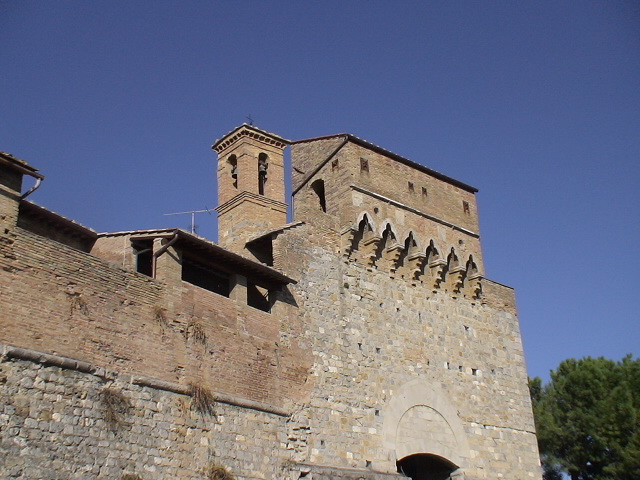
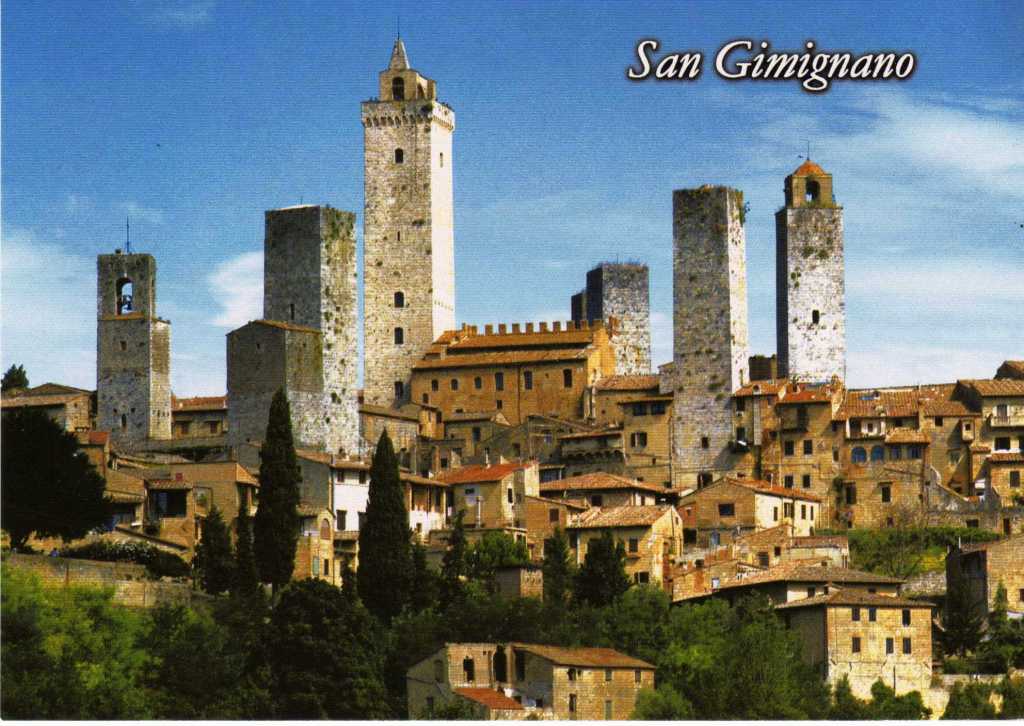
It is mainly famous for its medieval architecture, especially its towers, which may be seen from several kilometres outside the town.
Families built the towers and the higher the tower the more power it projected.
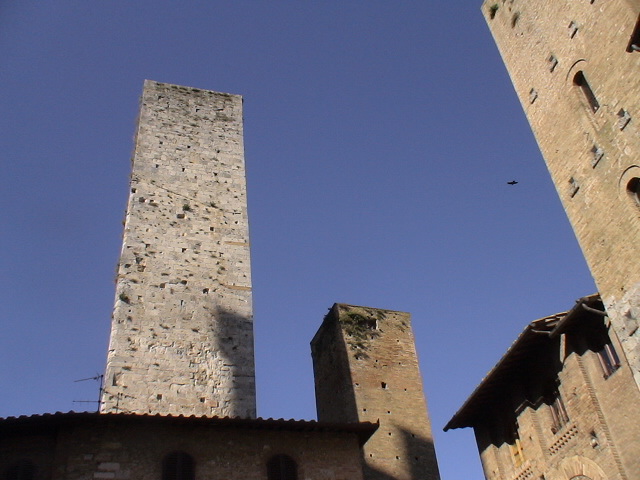
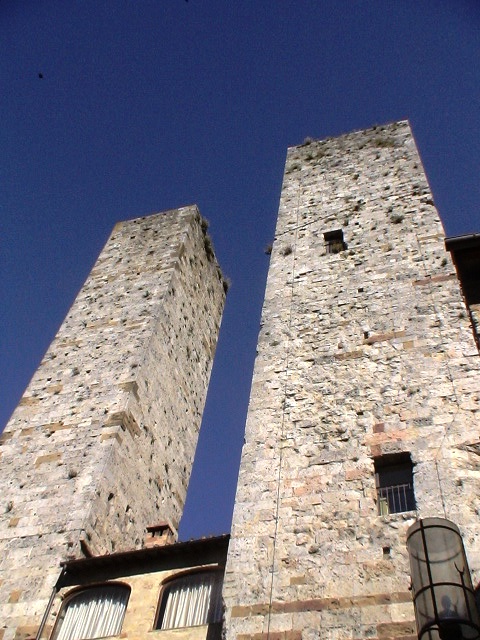
While in other cities, such as Florence , most or all of their towers have been brought down by wars, catastrophes, or urban renewal, San Gimignano has managed to conserve fourteen towers of varying heights, for which it is known internationally.
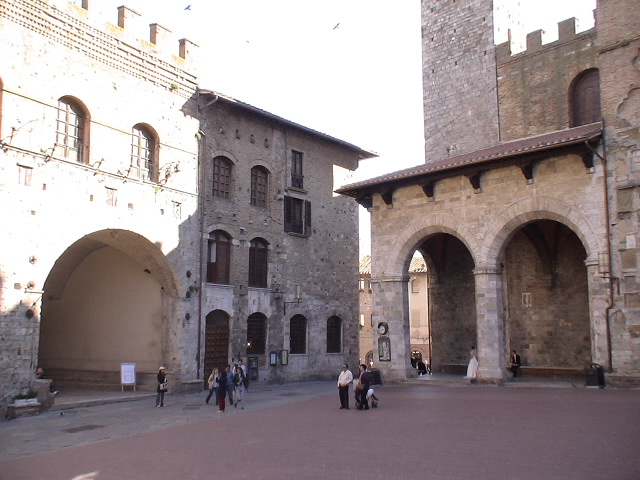
The city flourished until 1348, when it was struck by the Black Death that affected all of Europe, and about half the townsfolk died.
The town submitted to the rule of Florence. Initially, some Gothic palazzi were built in the Florentine style, and many of the towers were reduced to the height of the houses.
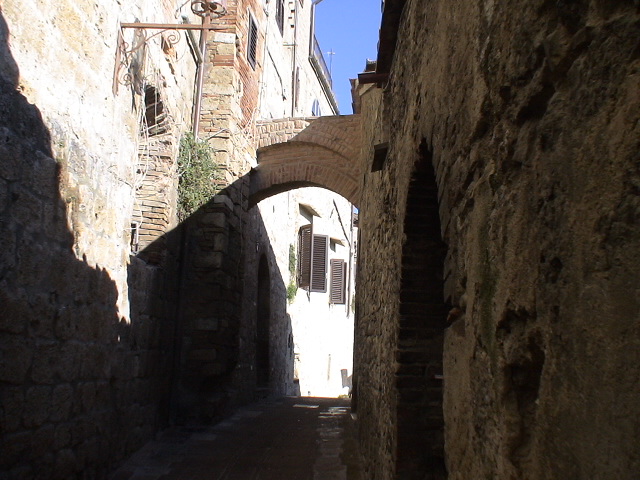
There was little subsequent development, and San Gimignano remained preserved in its medieval state until the 19th century, when its status as a touristic and artistic resort began to be recognised.


 s
s 