



Rouen is the historical capital city of Normandy, in northwestern France on the River Seine, and currently the capital of the Haute-Normandie (Upper Normandy) région. Once one of the largest and most prosperous cities of mediaval Europe, Rouen was the seat of the Exchequer of Normandy in the Middle Ages. It was one of the capitals of the Anglo-Norman dynasties, which ruled both England and large parts of modern France from the 11th century to the 15th century.
It was in Rouen where Joan of Arc was burnt in 1431.
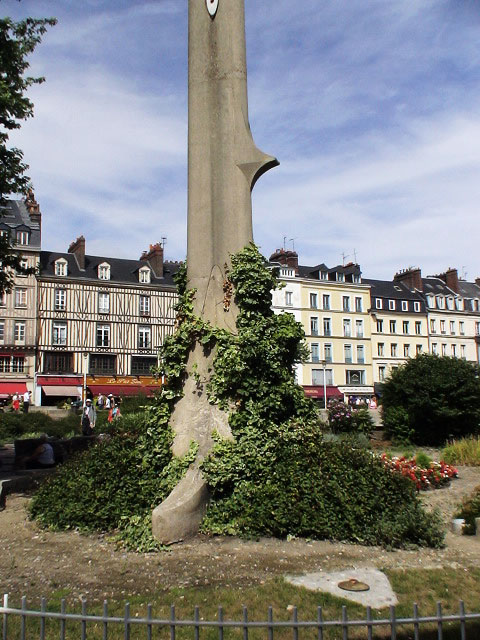
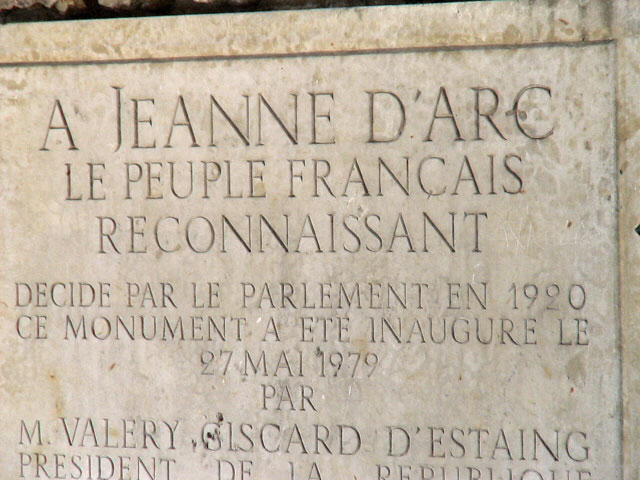
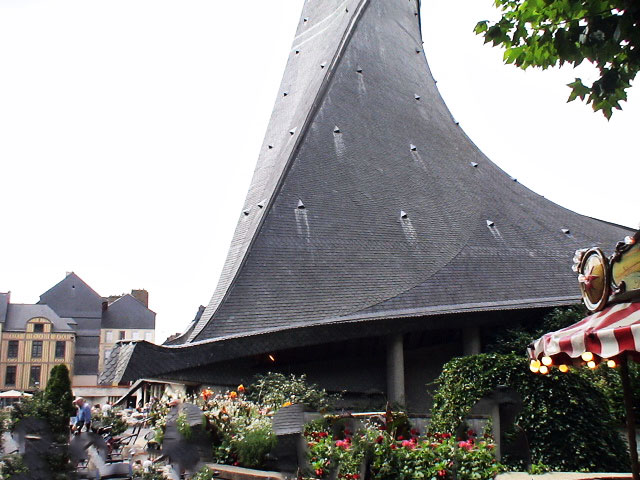
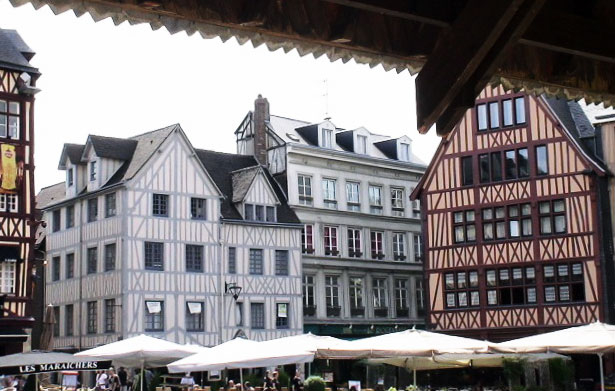
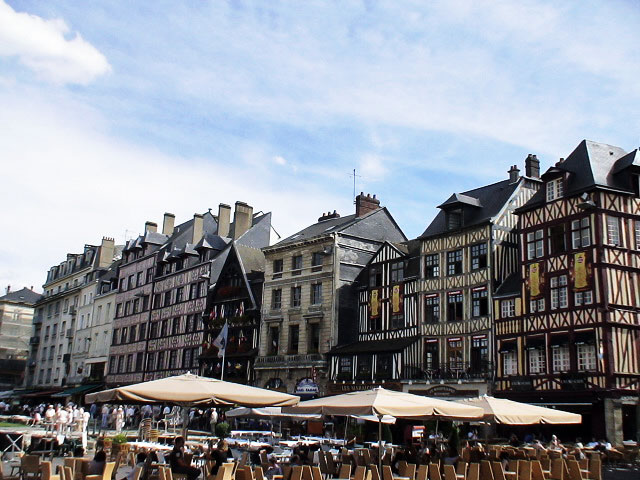
At about the age of nineteen, Joan was executed on 30 May 1431. In the morning, she was allowed to receive the sacraments despite the court process requiring they be denied to heretics (For wearing men’s clothing). She was then taken to Rouen’s Vieux-Marché (Old Marketplace), where she was publicly read her sentence of condemnation.
At this point, she should have been turned over to the appropriate authority, the bailiff of Rouen, for secular sentencing, but instead was delivered directly to the English and tied to a tall plastered pillar for execution by burning.
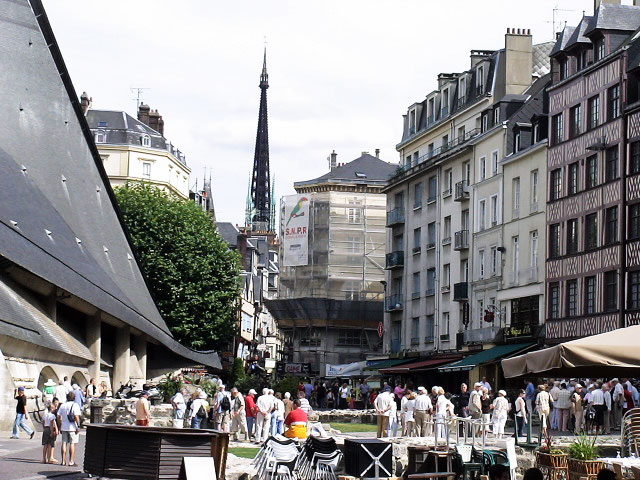
She asked to view a cross as she died, and was given one by an English soldier made from a stick, which she kissed and placed next to her chest.
A processional crucifix was fetched from the church of Saint-Sauveur. She embraced it before her hands were bound, and it was held before her eyes during her execution.
After her death, her remains were thrown into the Seine River.
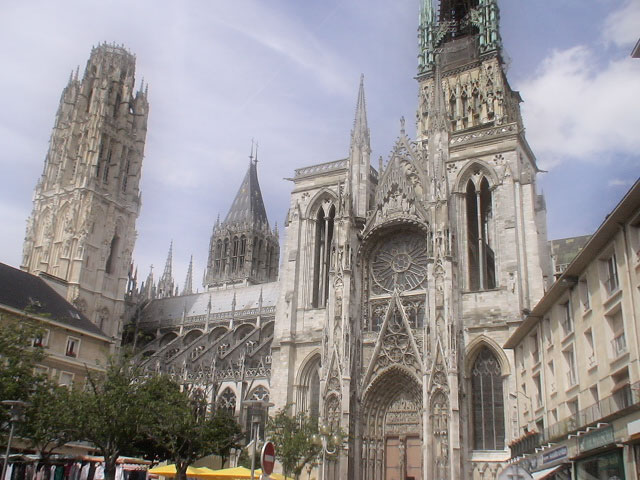
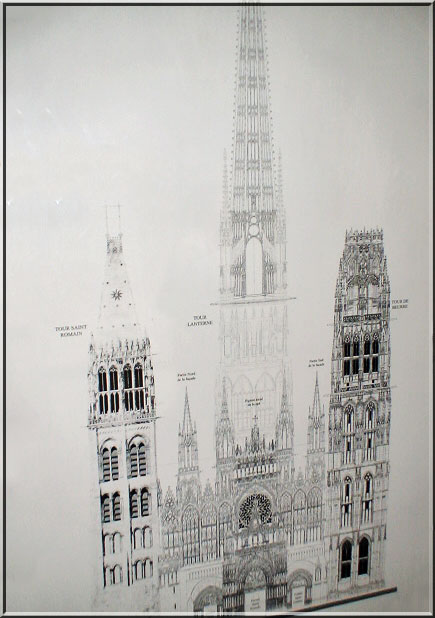
The project for a cathedral in the new Gothic style was first launched by the Archbishop of Rouen, Hugues of Amiens, who had attended the consecration in 1144 of the Basilica of Saint-Denis, the first Gothic structure, with its emphasis upon filling the interior with light. In 1145, he began constructing a tower, now called the Tower Saint-Roman, in the new Gothic style.


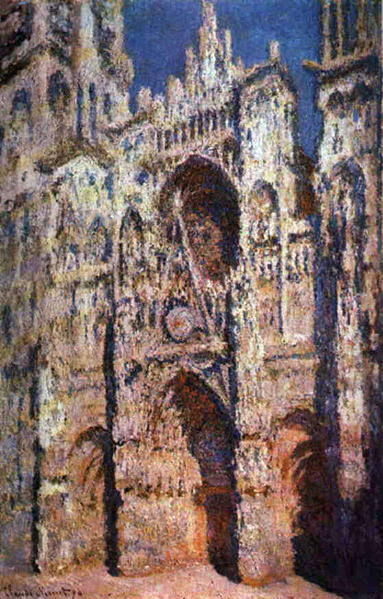
The Rouen Cathedral was the subject for a series of paintings by the Impressionist painter Claude Monet, who painted the same scene at different times of the day.
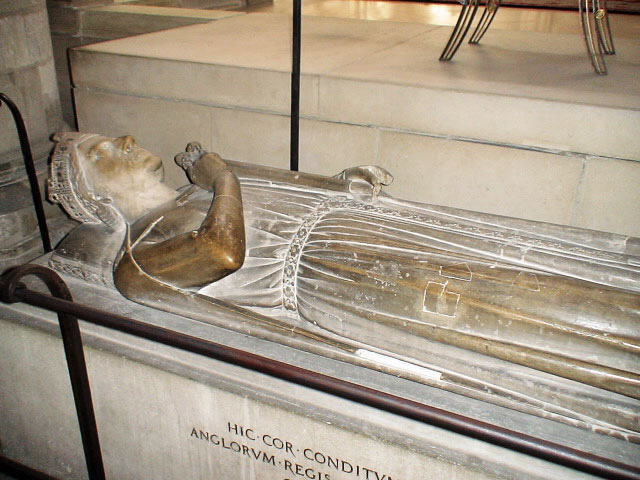
It contains a tomb of Richard the Lionheart which contains his heart. His bowels were buried within the church of the Chateau of Châlus-Chabrol in the Limousin. It was from the walls of the Chateau of Châlus-Chabrol that the crossbow bolt was fired, which led to his death once the wound became septic. His corporal remains were buried next to his father at Fon tevraud Abbey near Chinon and Saumur, France.
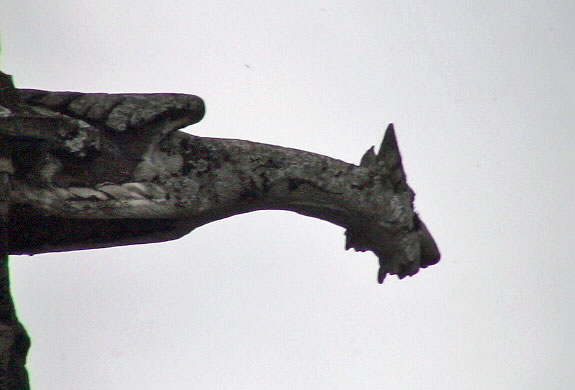


A complete reconstruction of the cathedral was begun by his successor, Gautier the Magnificent. in 1185 he demolished the Romanesque nave and began building the western end of the sanctuary. He had completed the west front and first traverses when the work was interrupted by a major fire on Easter eve in 1200, which destroyed a large part of the town and seriously damaged the unfinished church and its furnishings. Gautier quickly repaired the damage and resumed the work, which was directed by his master mason, Jean d’Andeli.
The nave was sufficiently complete by 1204 for King Philip II of France to be received there to celebrate the annexation of Normandy to the Kingdom of France. By 1207 the main altar was in place in the choir.
The first architectural addition to the new church was a series of small chapels between the buttresses on the north and south sides of the nave, requested by the city’s prominent religious brotherhoods and corporations. In 1280 the surrounding spaces and buildings were modified to permit the construction of portals on the north and south transepts. The next addition was a response to the growing role of the Virgin Mary in church doctrine; the small axial chapel at the east end of the apse was replaced by a much larger chapel dedicated to her, begun in 1302. The west front was also given new decoration between 1370 and 1450.


In the late 16th century the cathedral was badly damaged during the French Wars of Religion: in 1562 the Calvinists attacked the furniture, tombs, stained-glass windows and statuary. The cathedral was again struck by lightning in 1625 and 1642, then damaged by a hurricane in 1683.
In 1796, in the course of the French Revolution, the new revolutionary government nationalized the cathedral and transformed it for a time into a Temple of Reason. Some of the furniture and sculpture was sold, and the chapel fences were melted down to make cannon.
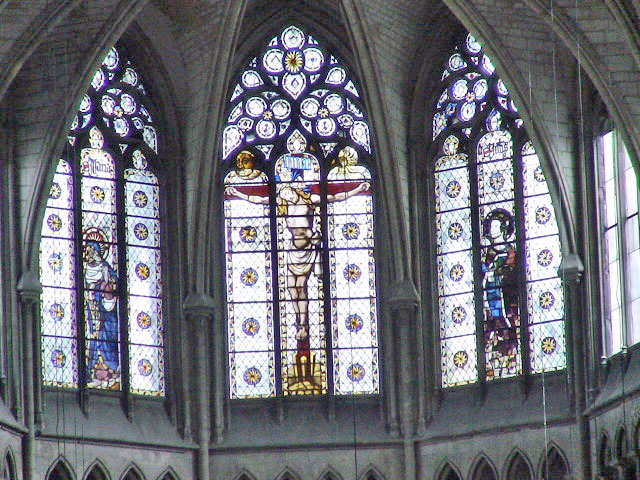
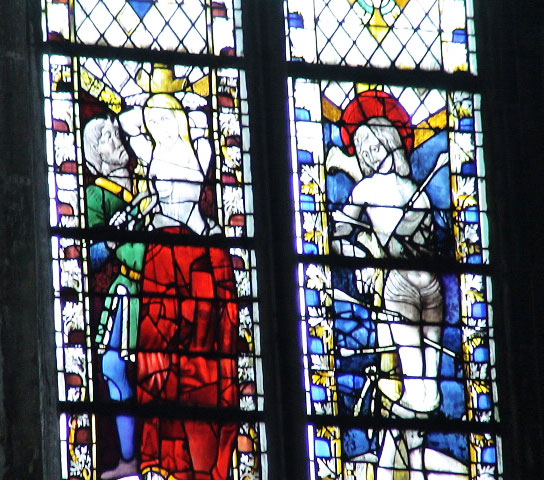
At the beginning of World War II in 1939, remembering the damage caused to French cathedrals in World War I, the Cathedral authorities protected the sculpture of the cathedral with sandbags and removed the old stained glass and transported it to sites far from the city.
Nonetheless, in the weeks before D-Day in Normandy, the cathedral was hit twice by Allied bombs. In April 1944, seven bombs dropped by the British Royal Air Force hit the building, narrowly missing a key pillar of the lantern tower, and damaging much of the south aisle and destroying two windows. In June 1944, a few days before D-Day, bombs dropped by the U.S. Army Air Force set fire to the Saint-Romain tower. The bells melted, leaving molten remains on the floor.

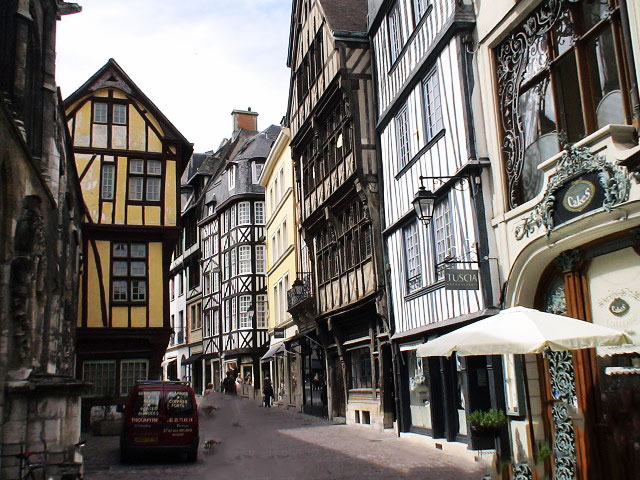


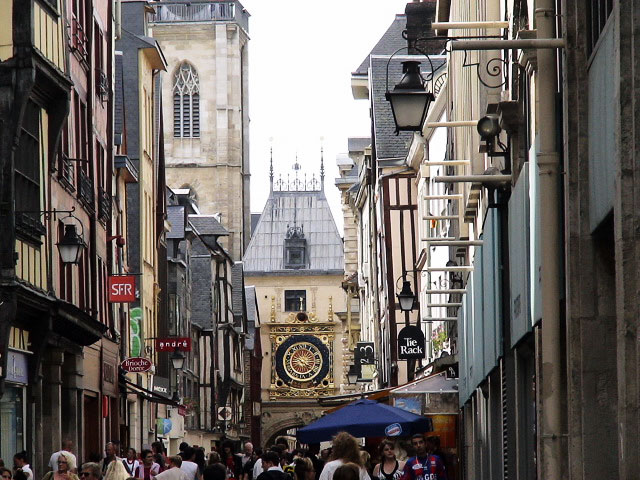
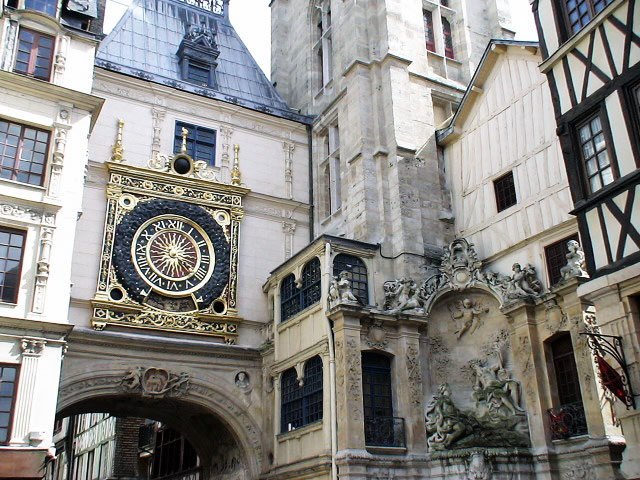
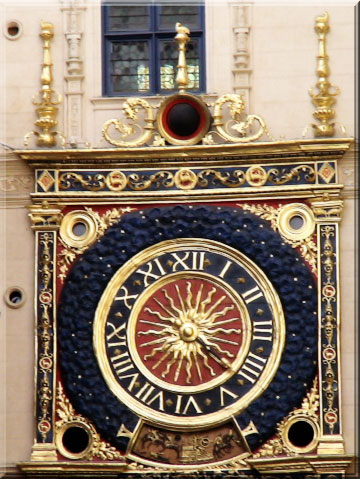
The Gros Horloge is an astronomical clock (dating back to the16th century) though the movement is considerably older (1389). It is located in the Gros Horloge Street.



 s
s 