



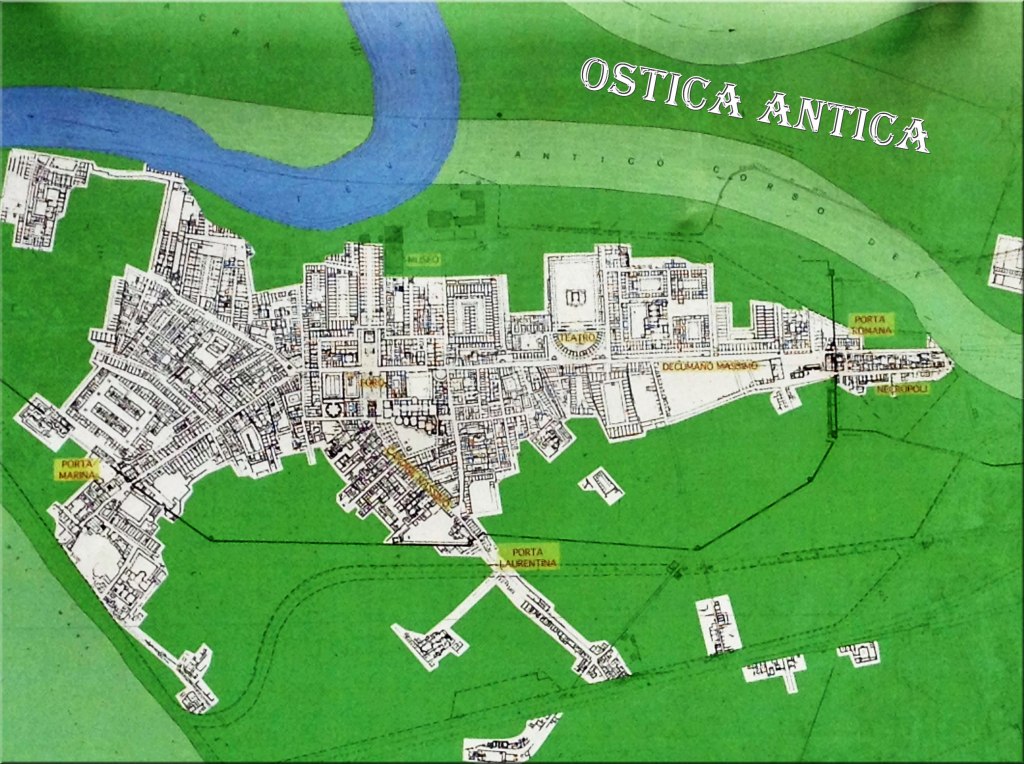
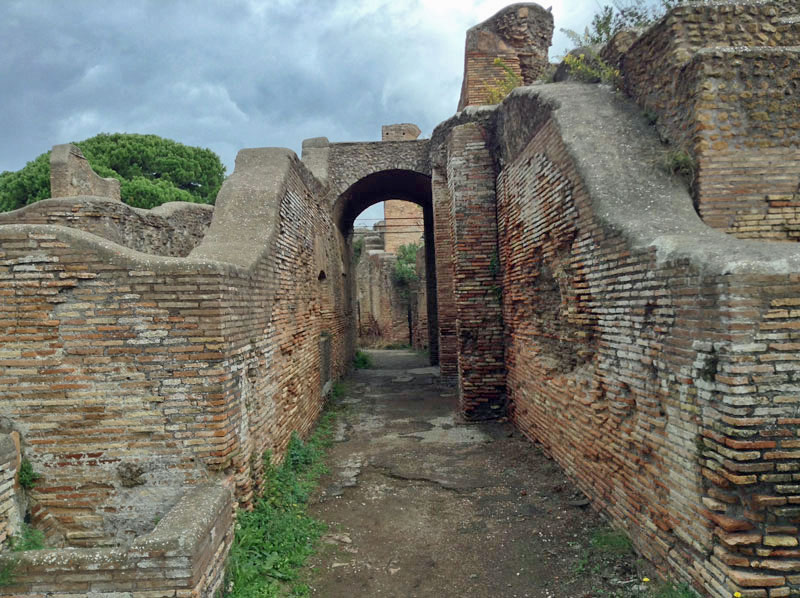
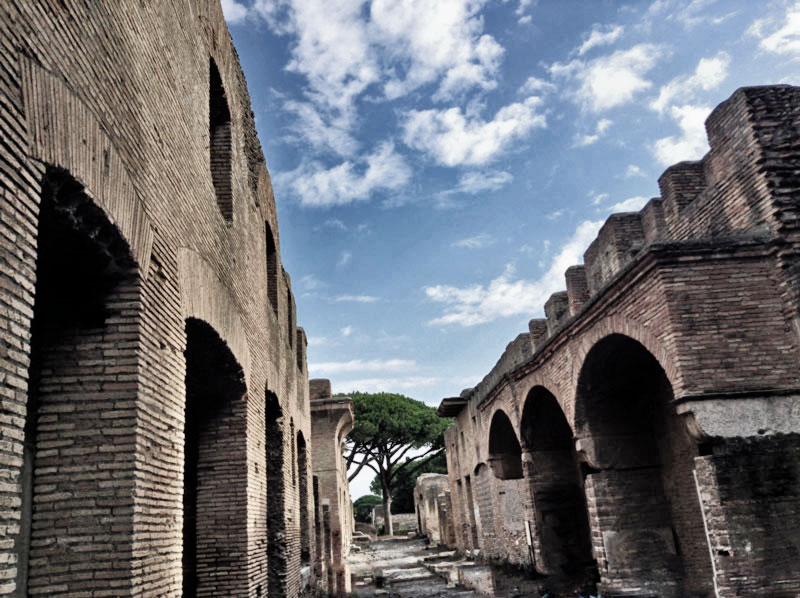
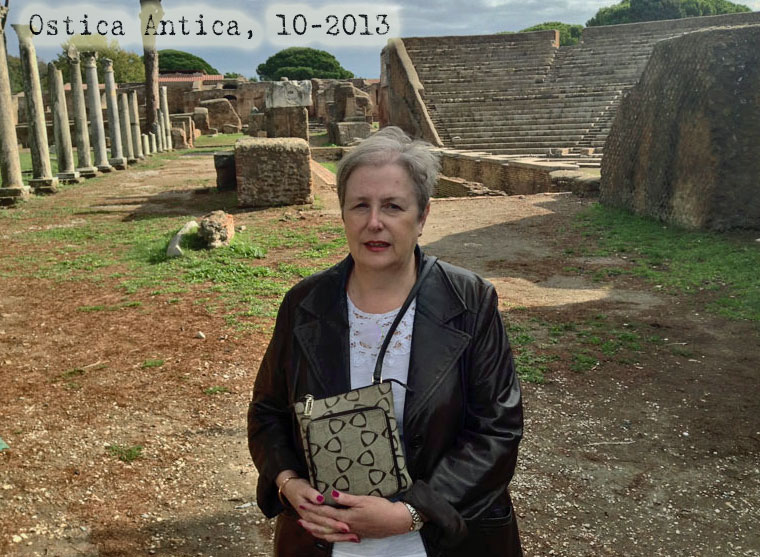
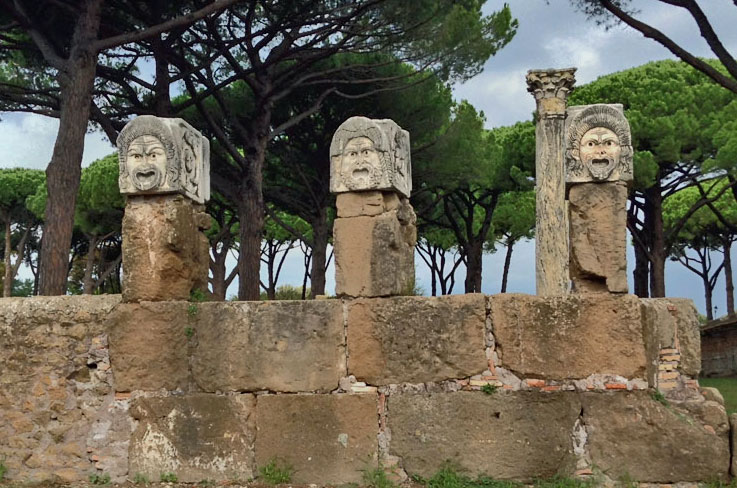
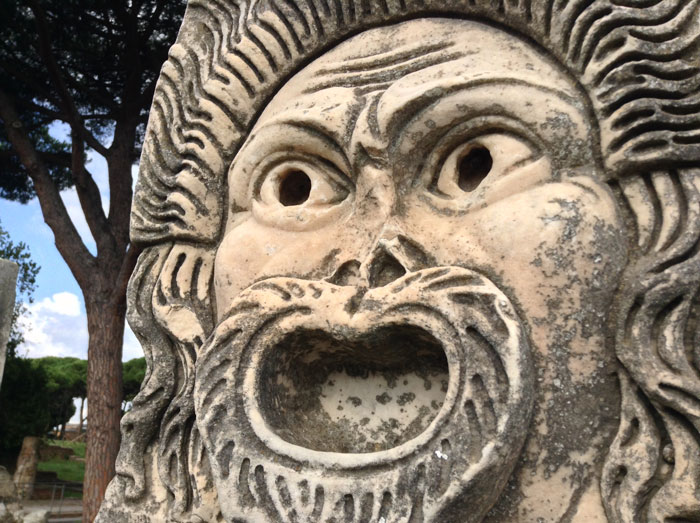
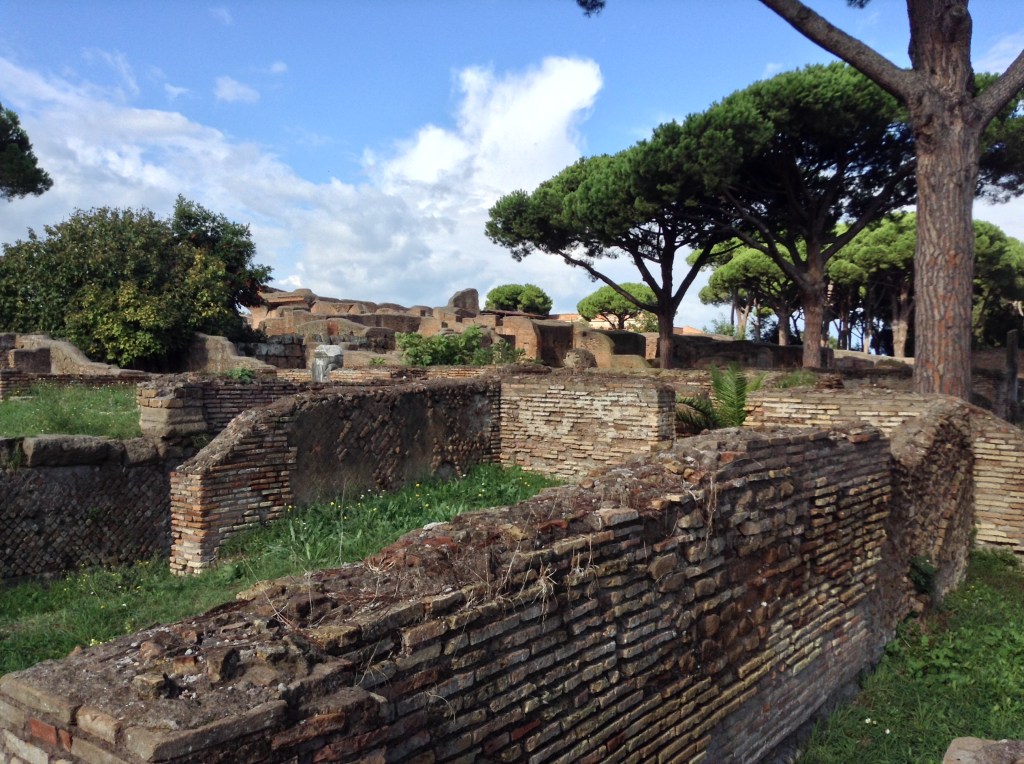
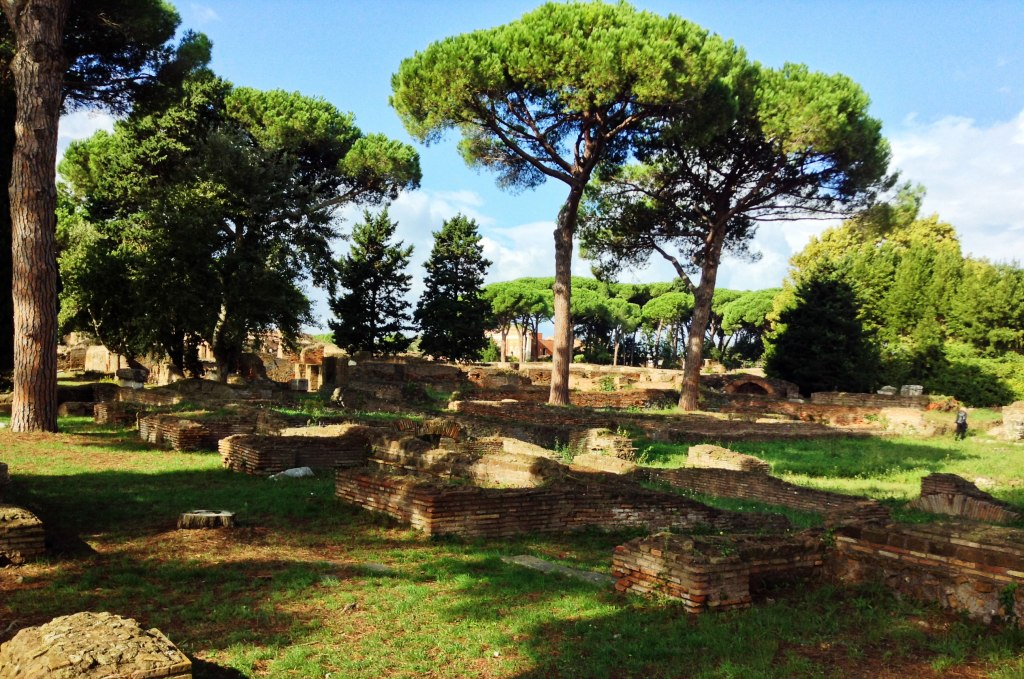
Ostia Antica is a large archeological site, close to the modern suburb of Ostia (Rome), that was the location of the harbour city of ancient Rome, which is approximately 30 kilometres to the northeast.
“Ostia” in Latin means “mouth”. At the mouth of the River Tiber, Ostia was Rome’s seaport, but due to silting the site now lies 3 kilometres from the sea. The site is noted for the excellent preservation of its ancient buildings, magnificent frescoes, and impressive mosaics.
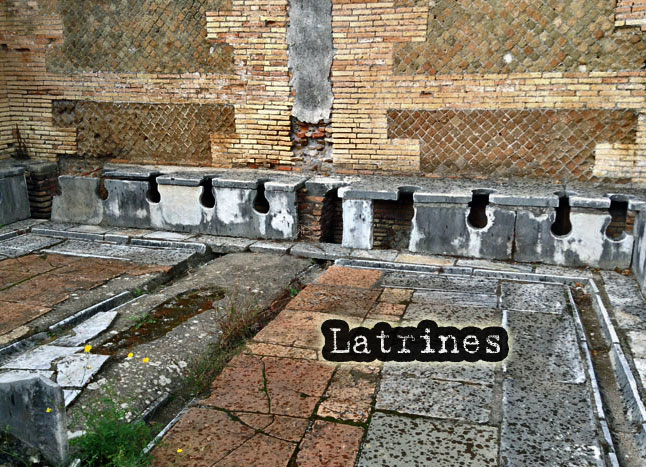
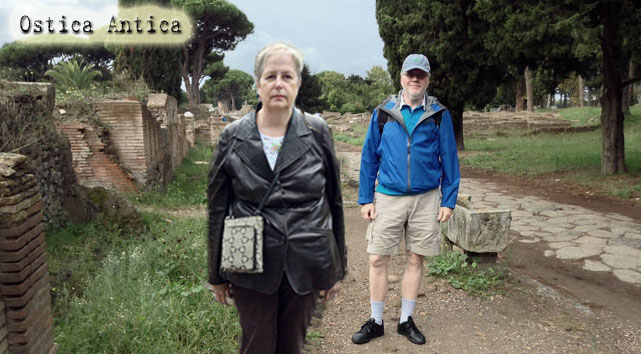
We decided to visit this site instead of touring Rome and we were not disappointed. If you enjoy Roman ruins, this is a must. You can easily imagine daily life in a Roman town.
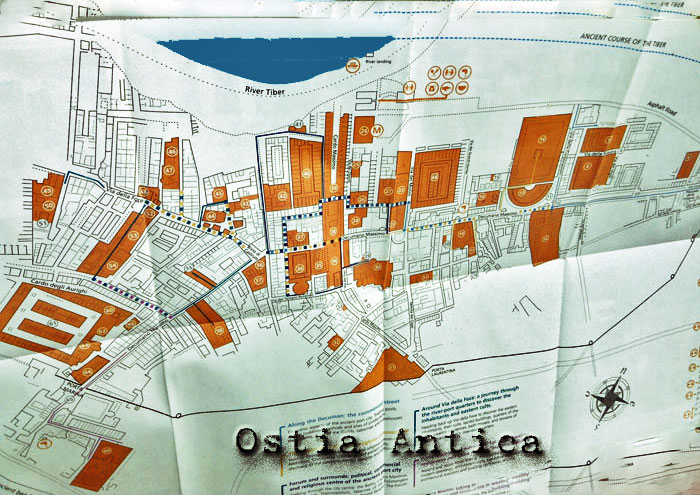
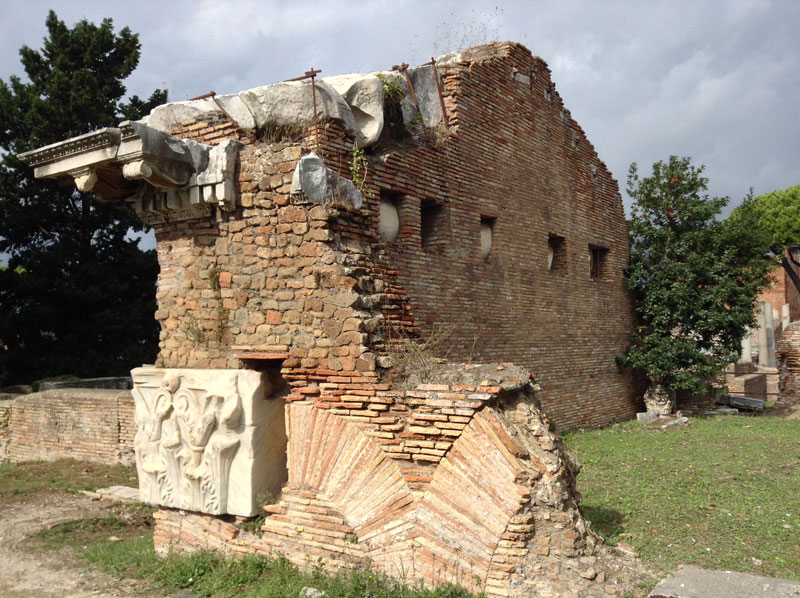
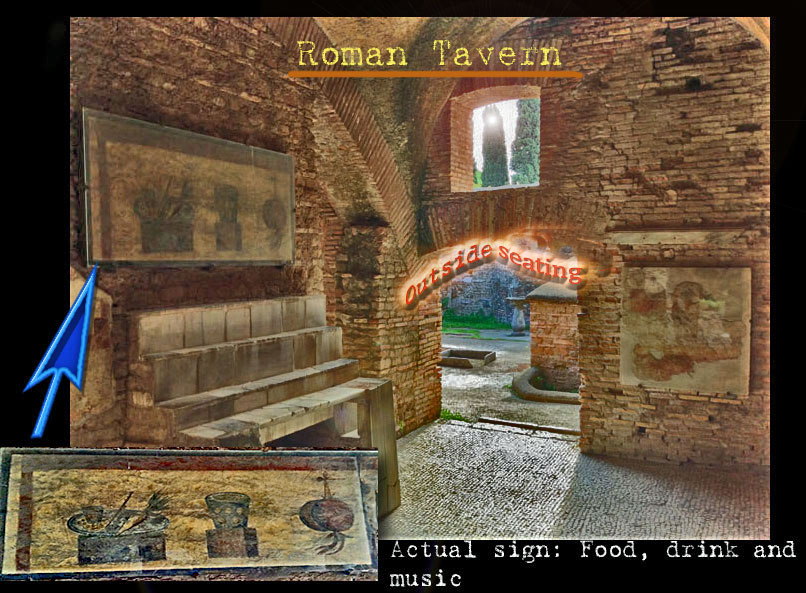

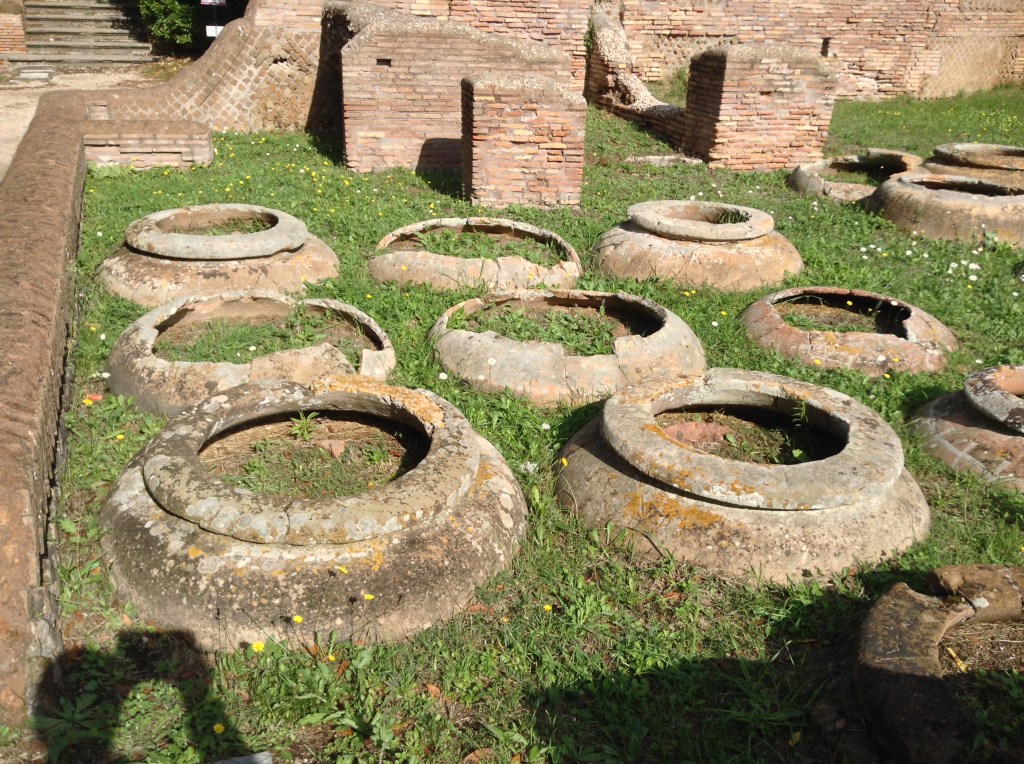
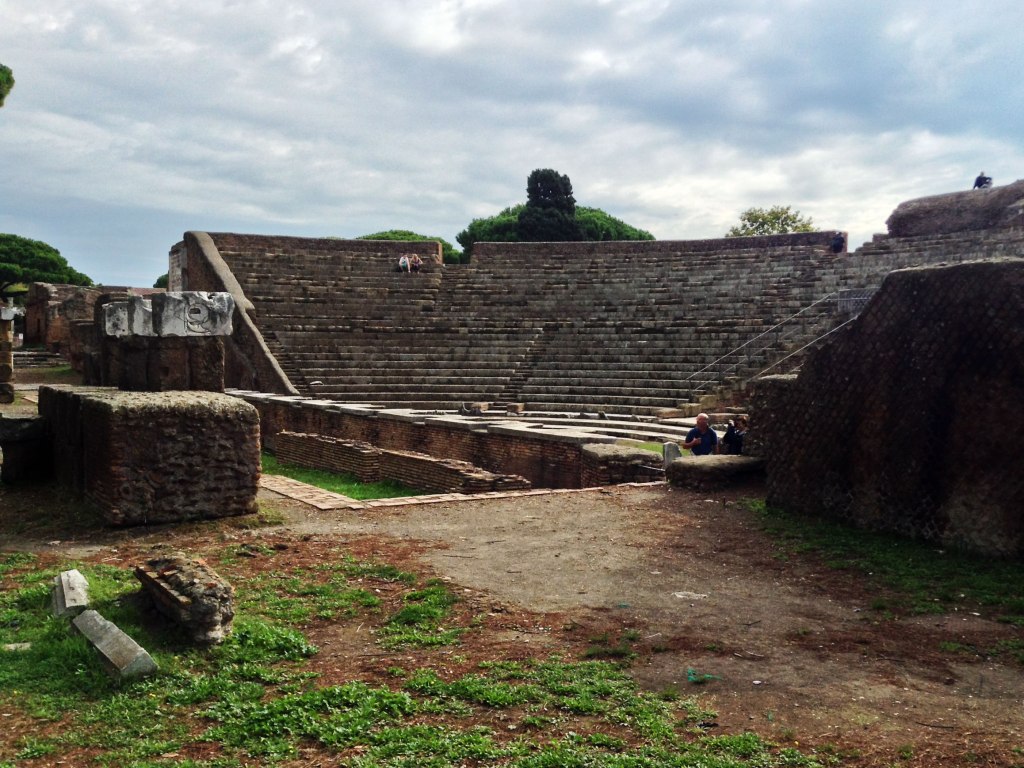
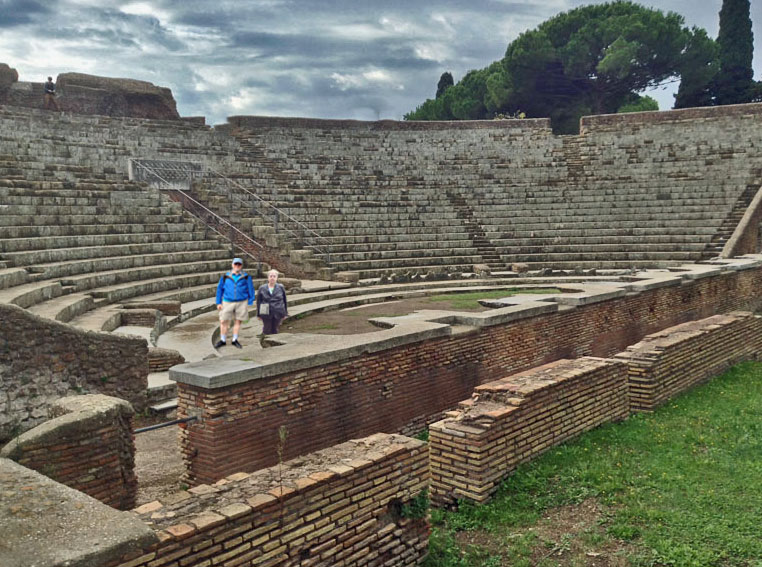
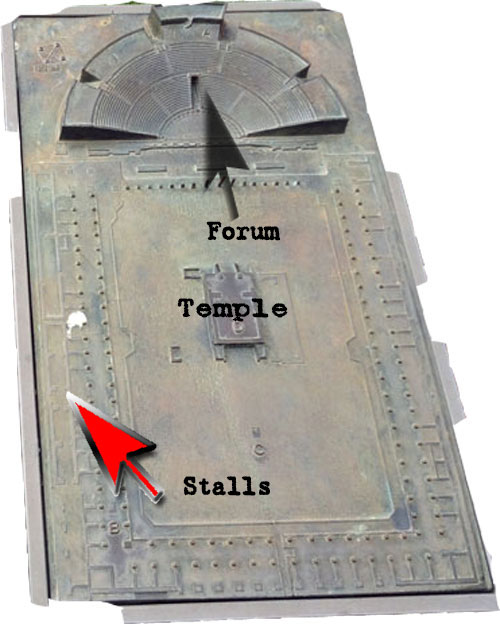
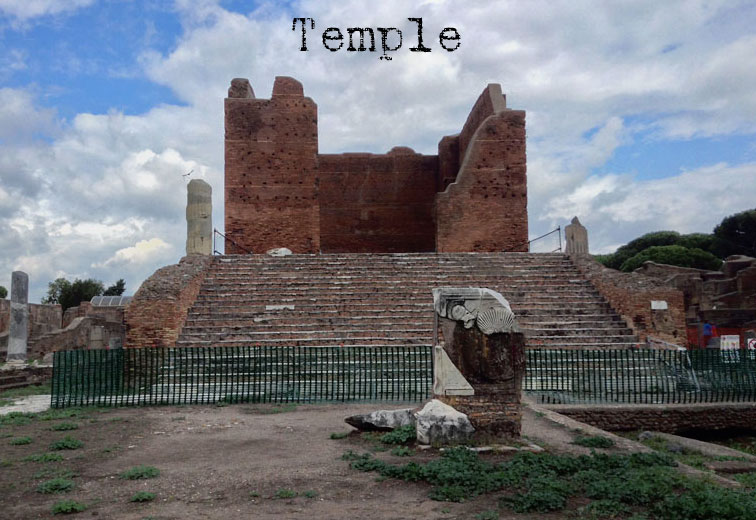
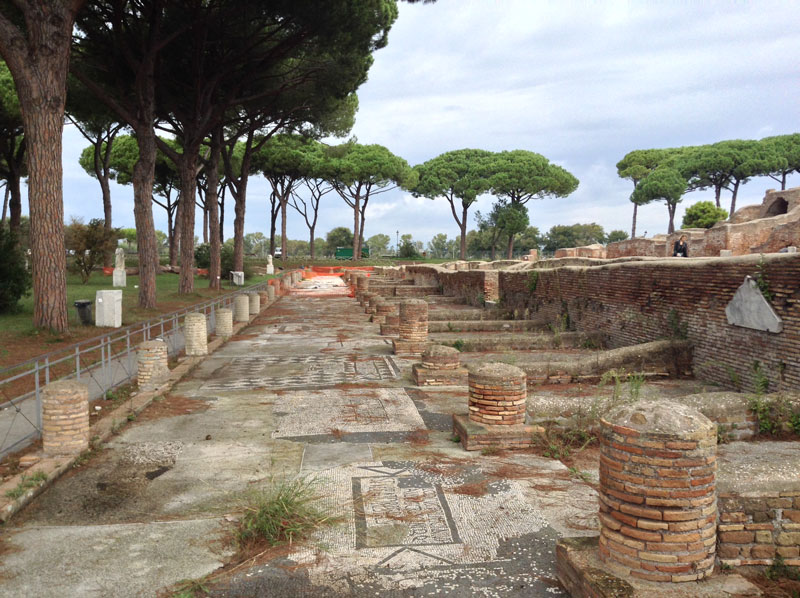

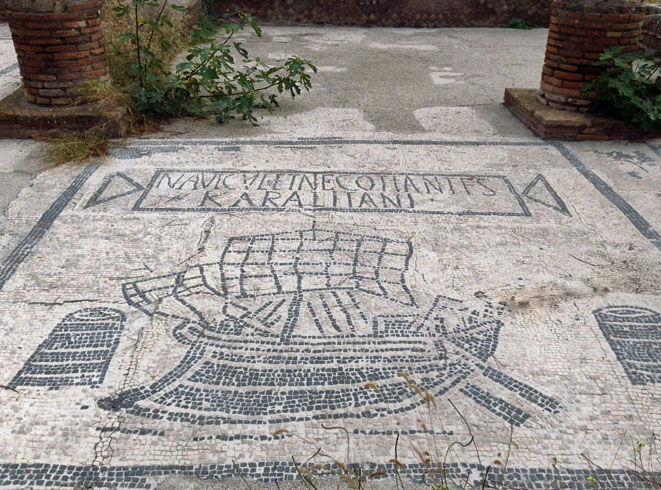
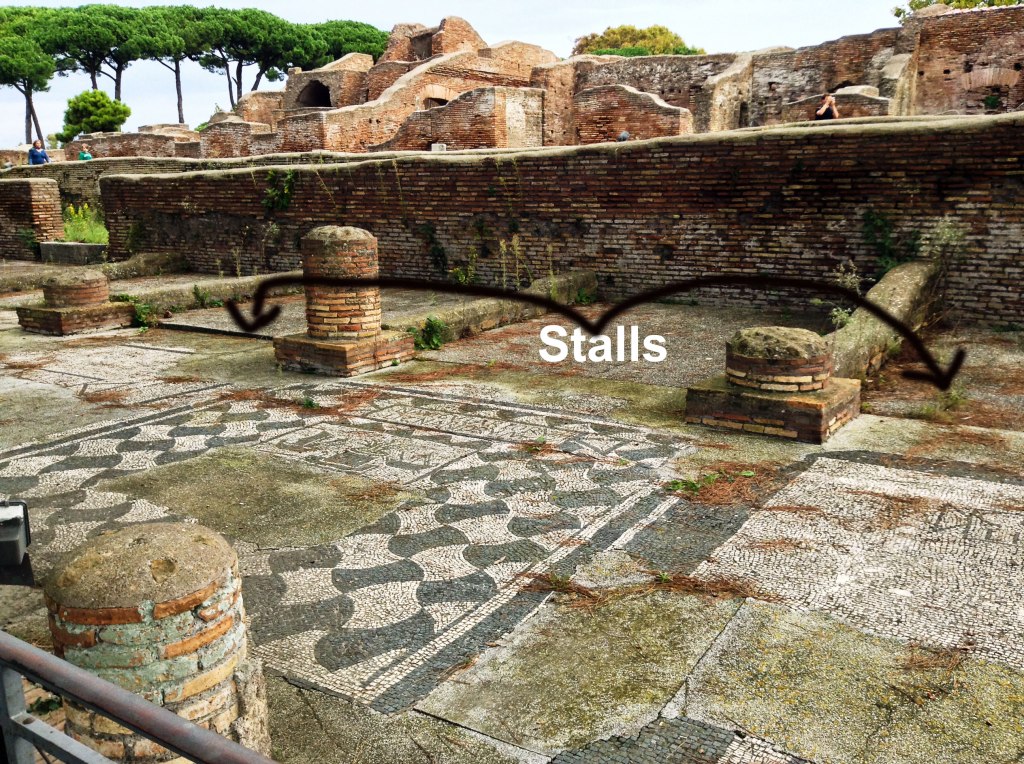
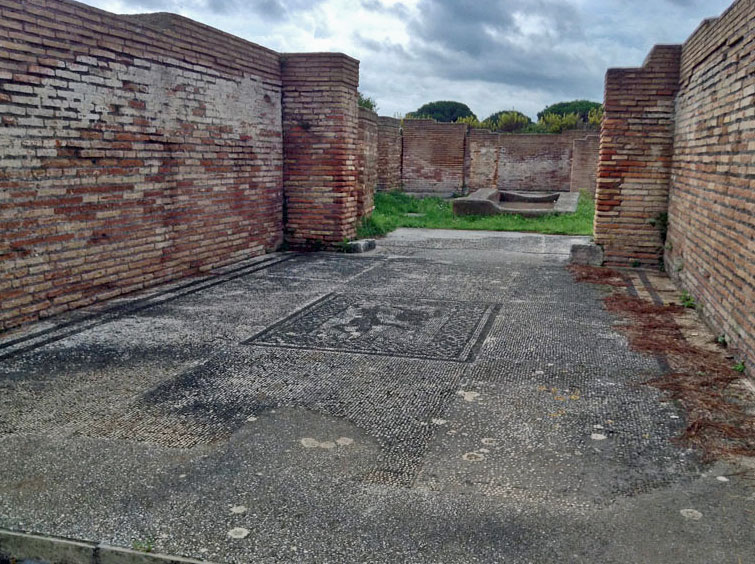
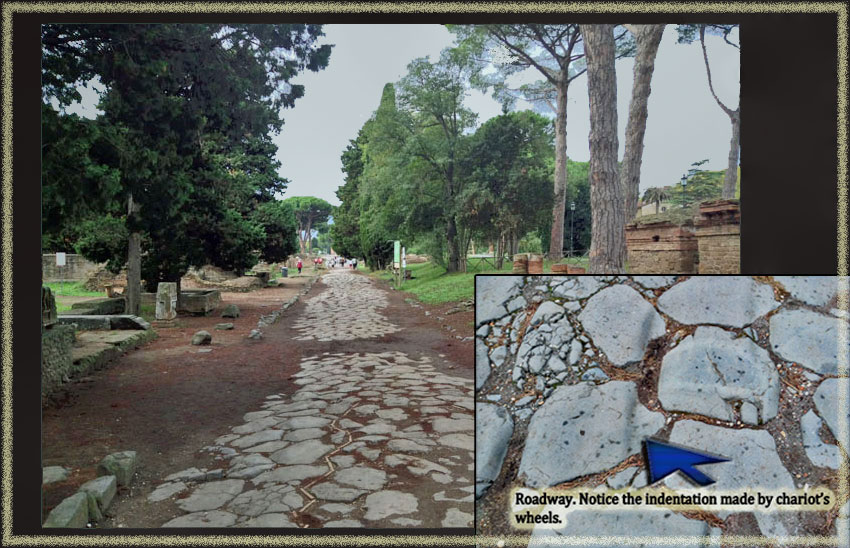
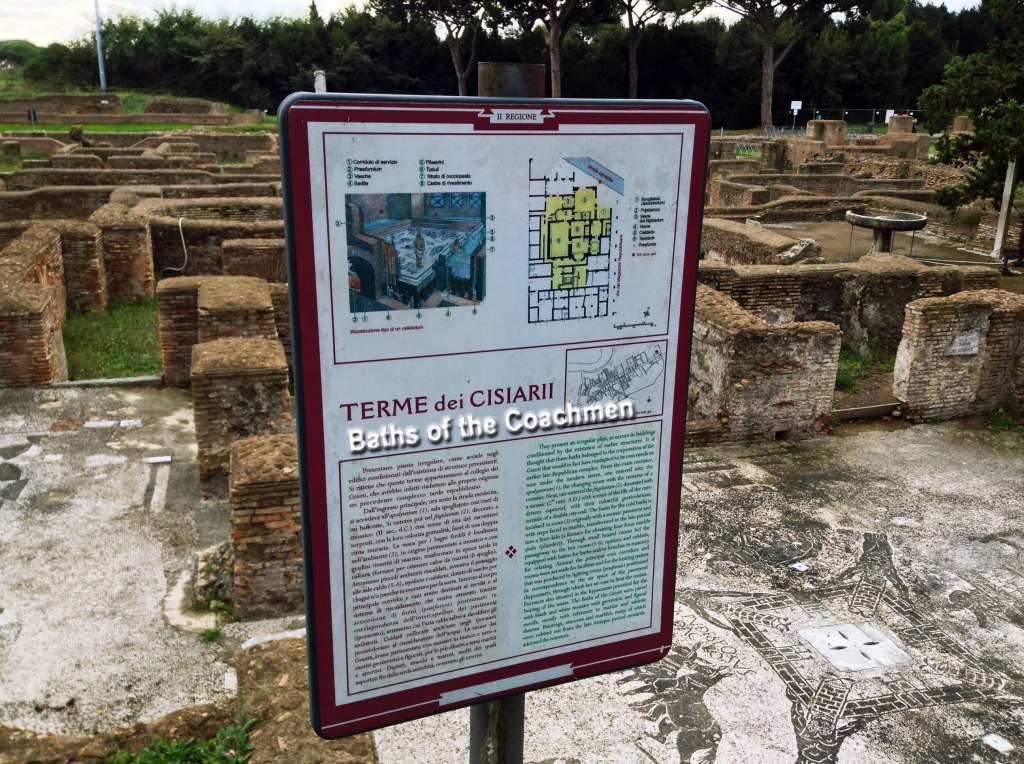
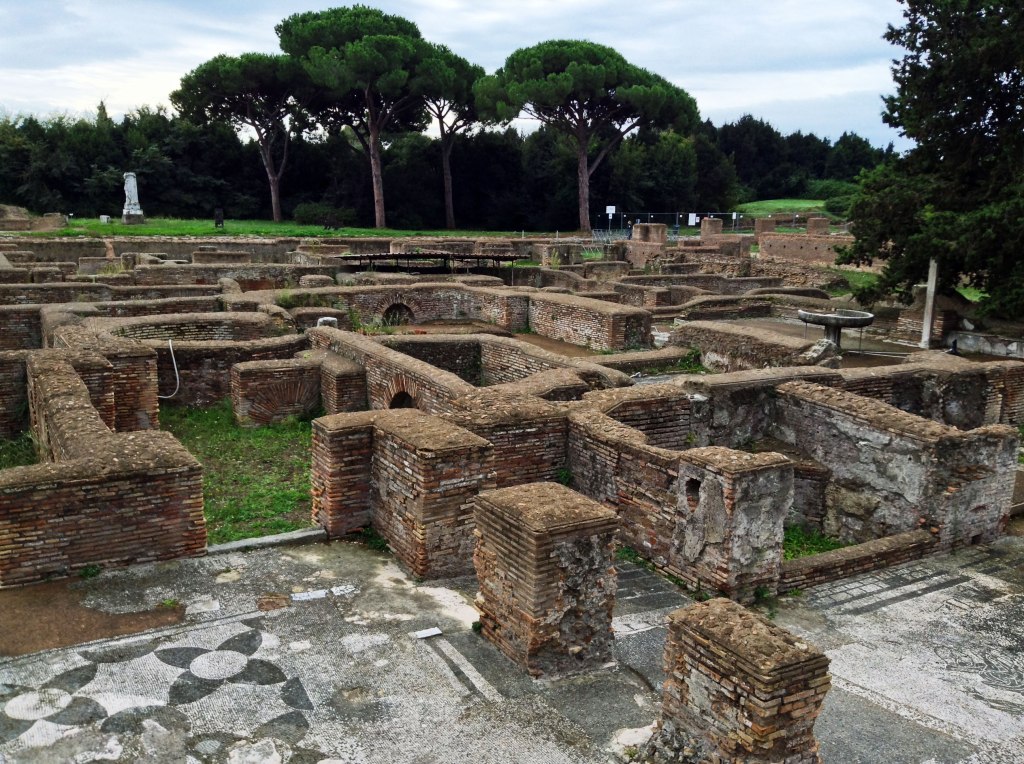
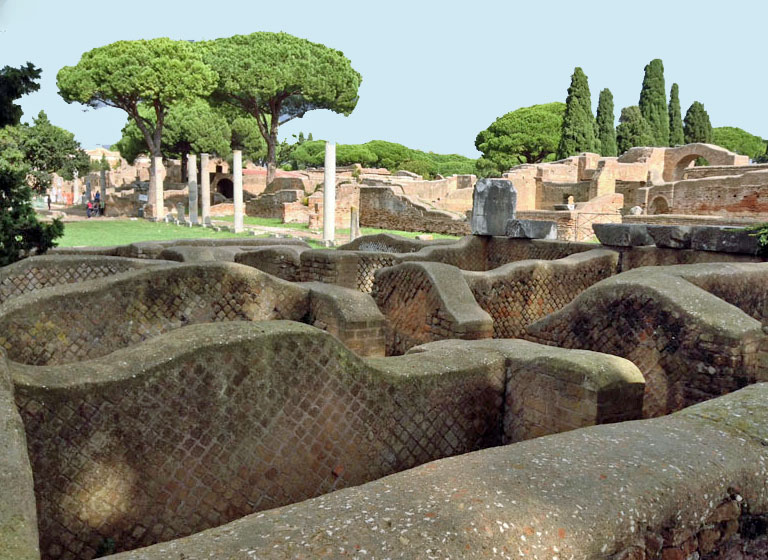
The Baths of the Coachmen were built during the early reign of Hadrian and modified extensively in the second half of the third century. The coaches are depicted on a large mosaic. They may be compared to cabs, used for transport to and from Rome – not everybody had a horse at his disposal. The cabs were stationed outside the baths, near the Roman Gate. A long basin on the other side of the street may well have contained the drinking water for the animals that pulled the wagons. It has been suggested that the guild of the coachmen owned the baths, but that is speculation. Taking a bath here would be tempting, after a long trip on the dusty Via Ostiensis.


 s
s 