



- South Bank (OXO Tower)
- The Chelsea Physic Garden
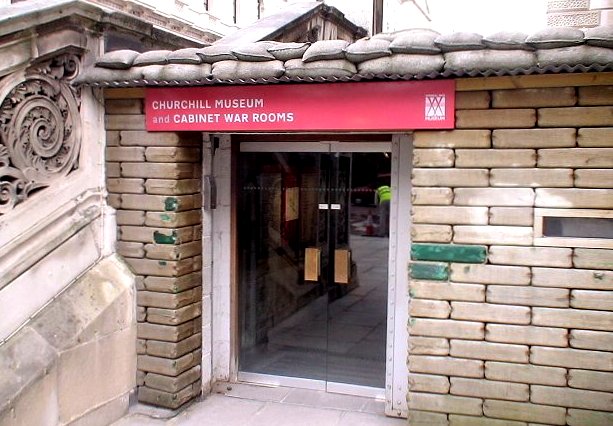
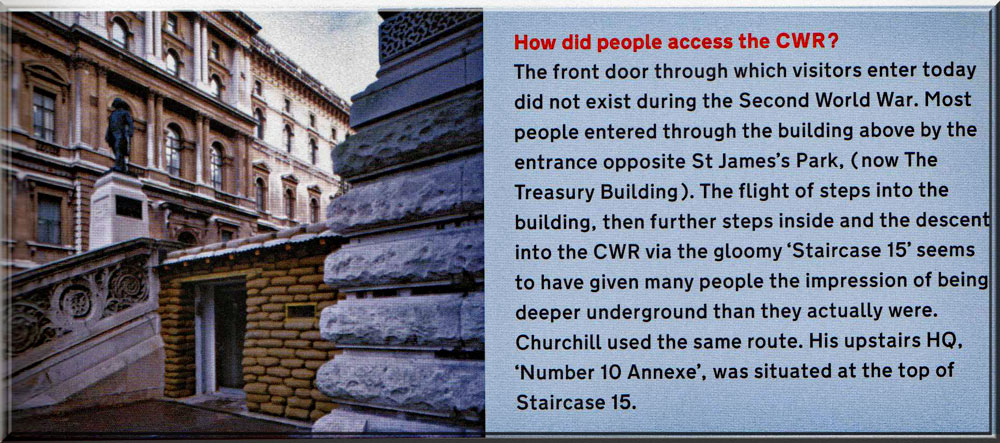
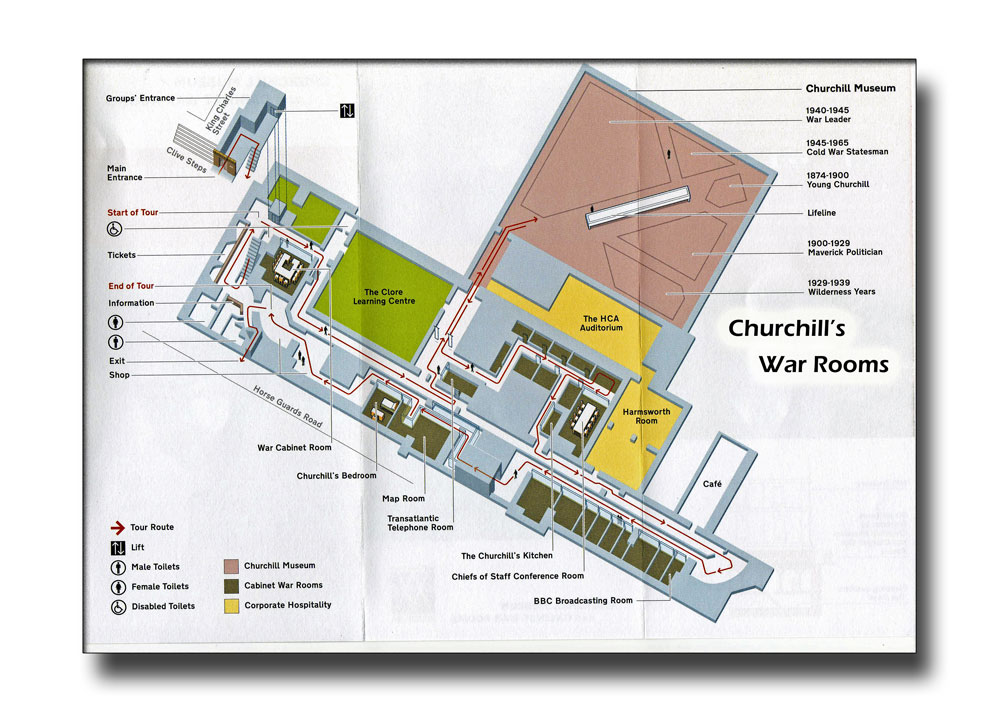
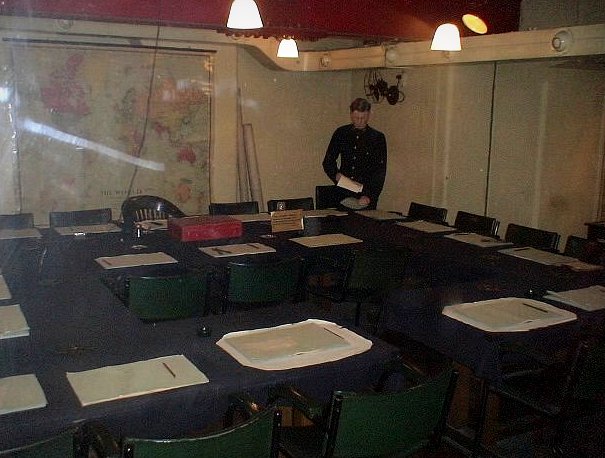
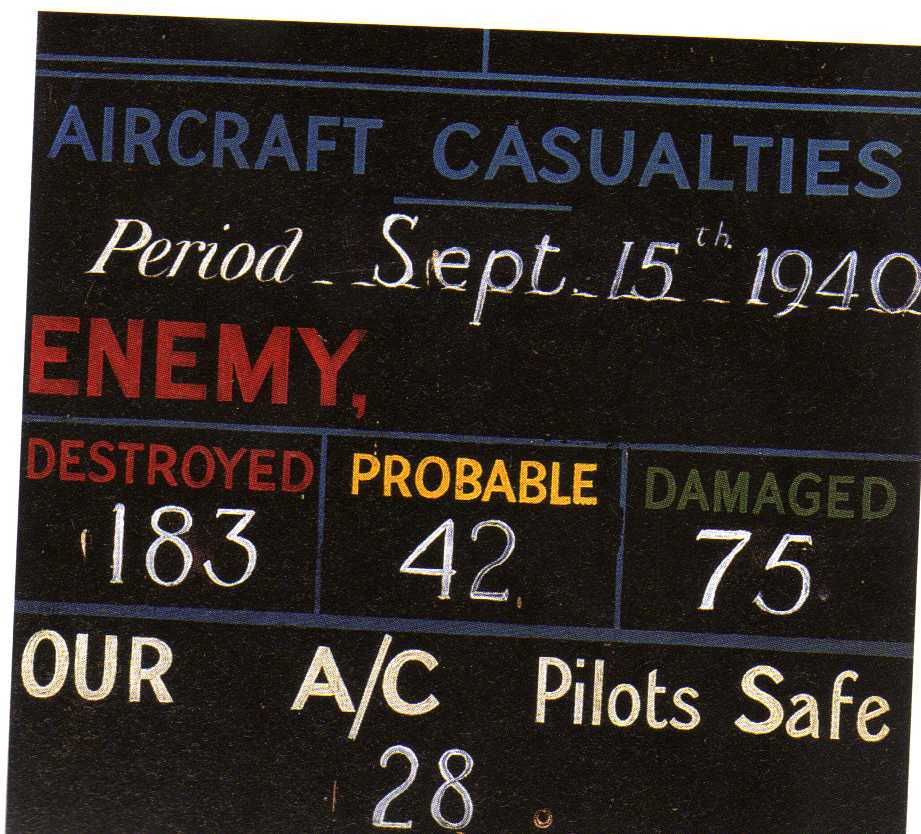
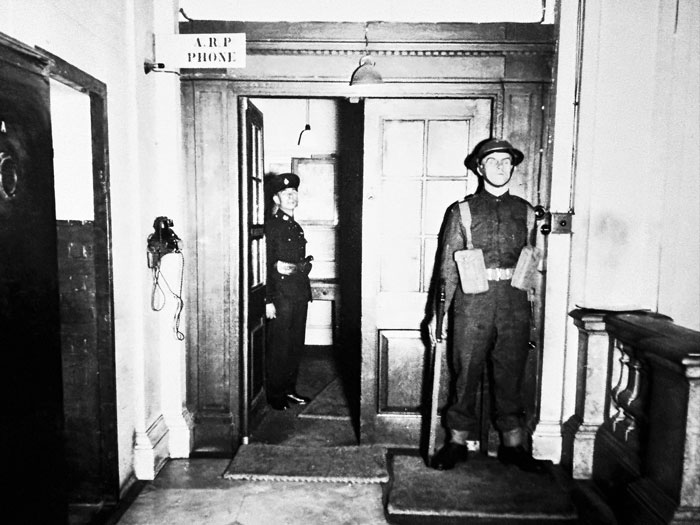
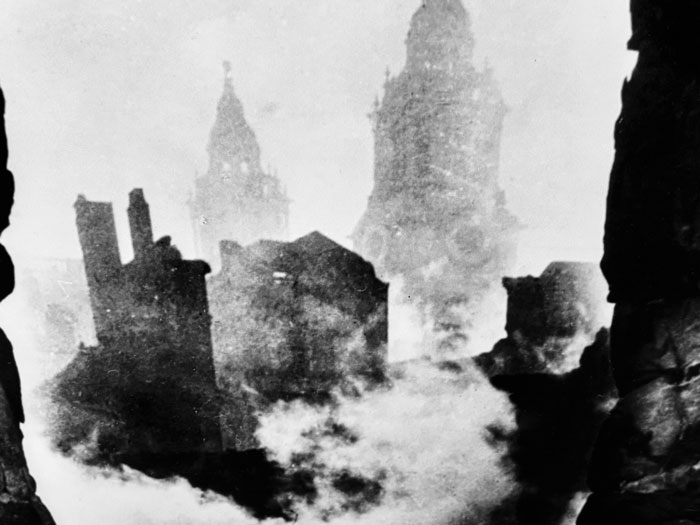
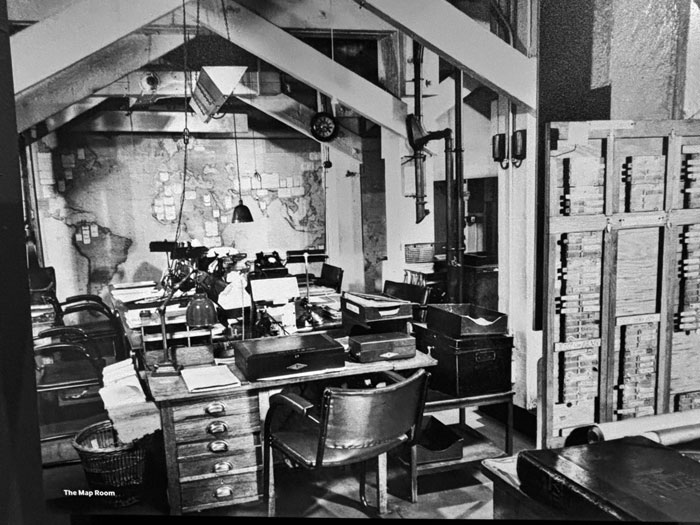
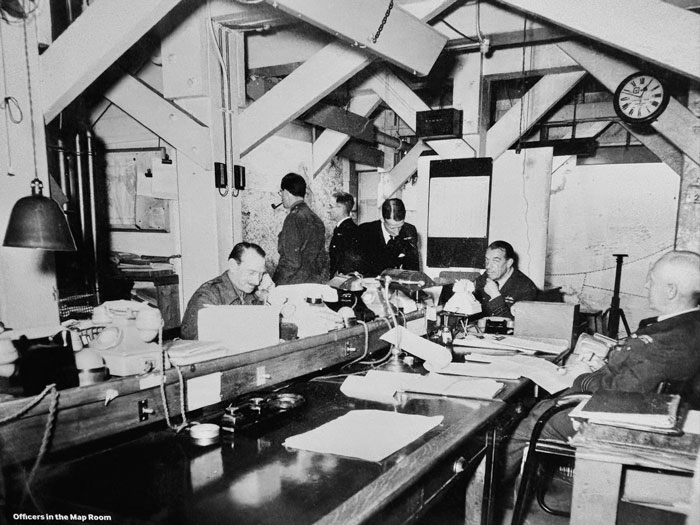
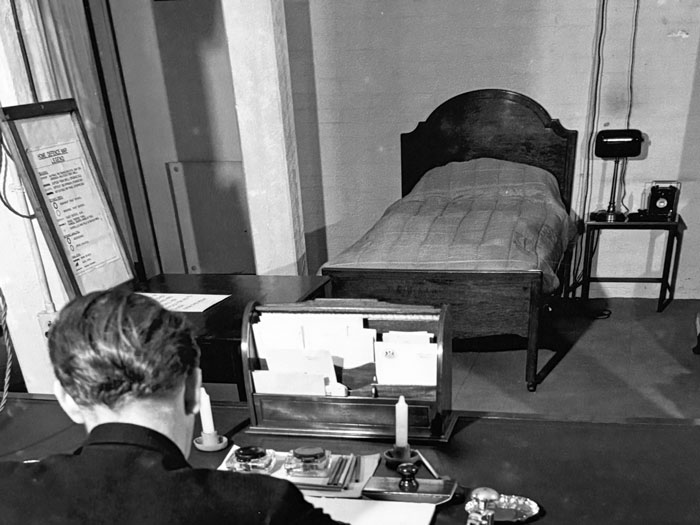
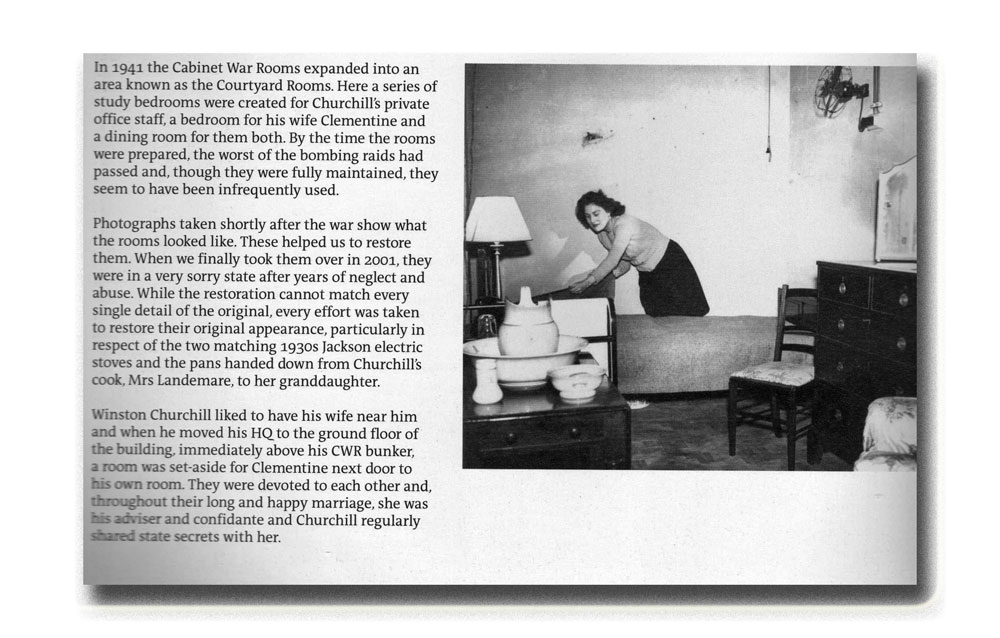
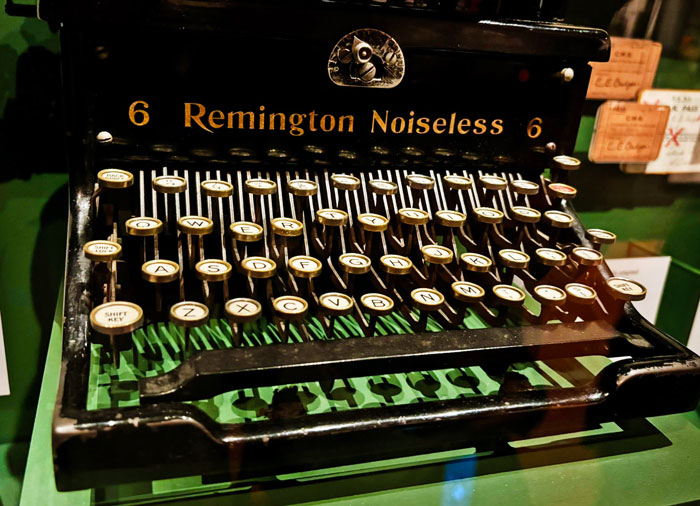
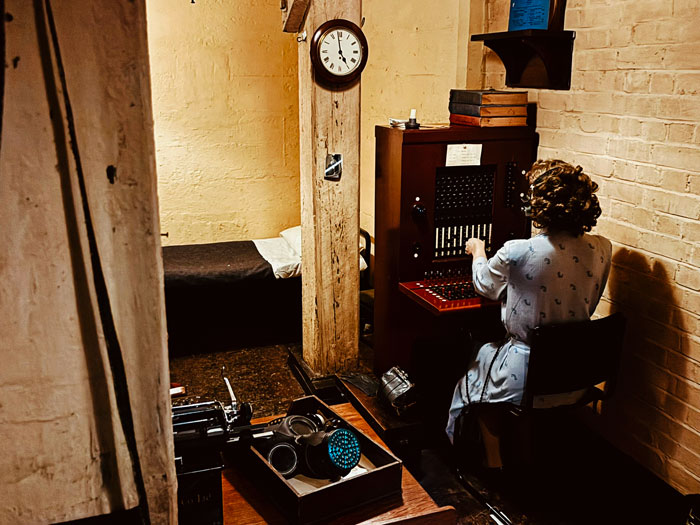
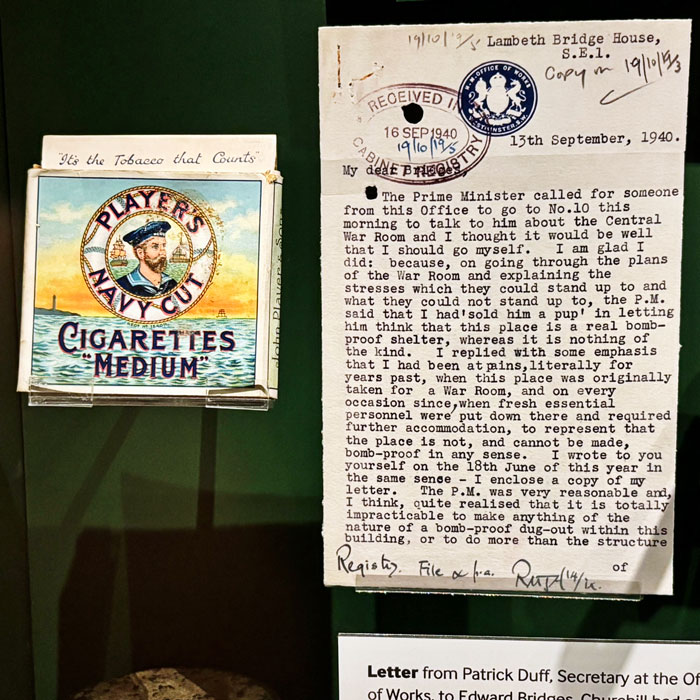
- The Churchill Museum and Cabinet War Rooms (Updated December 2025)
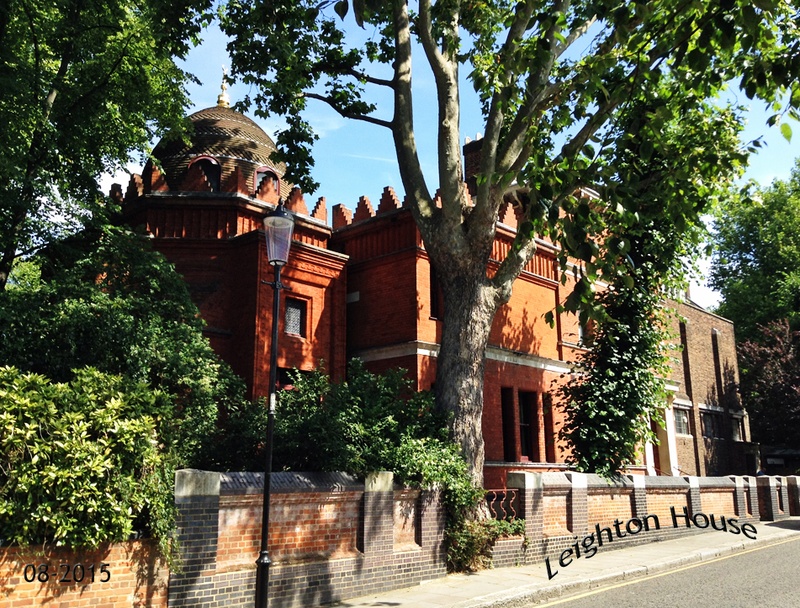
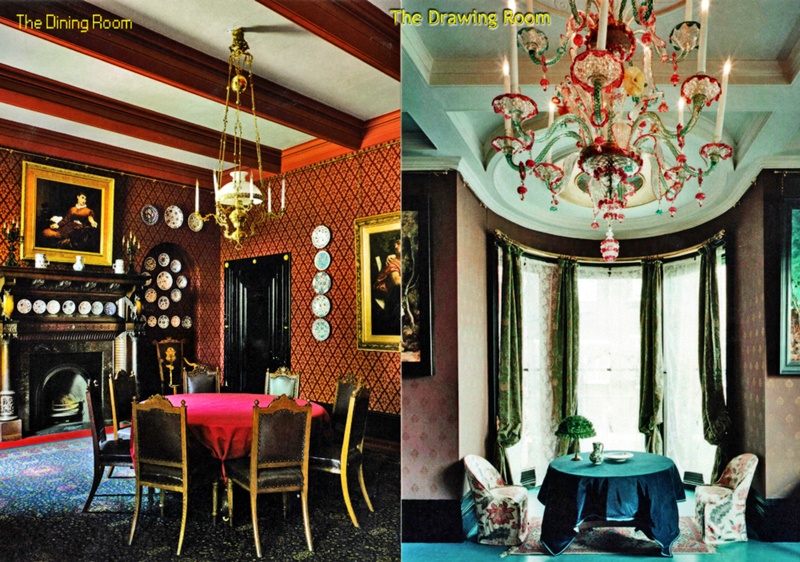
- Leighton House Museum
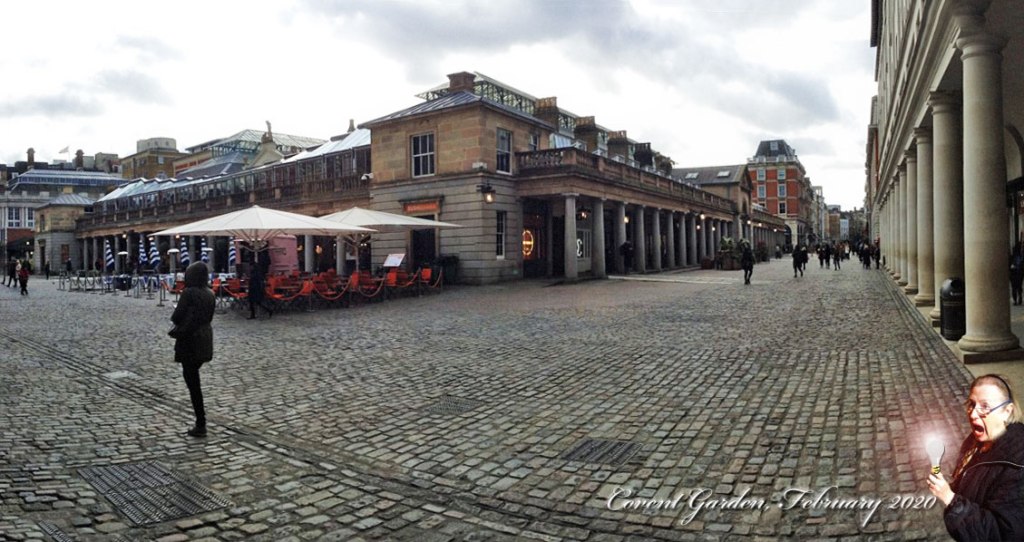
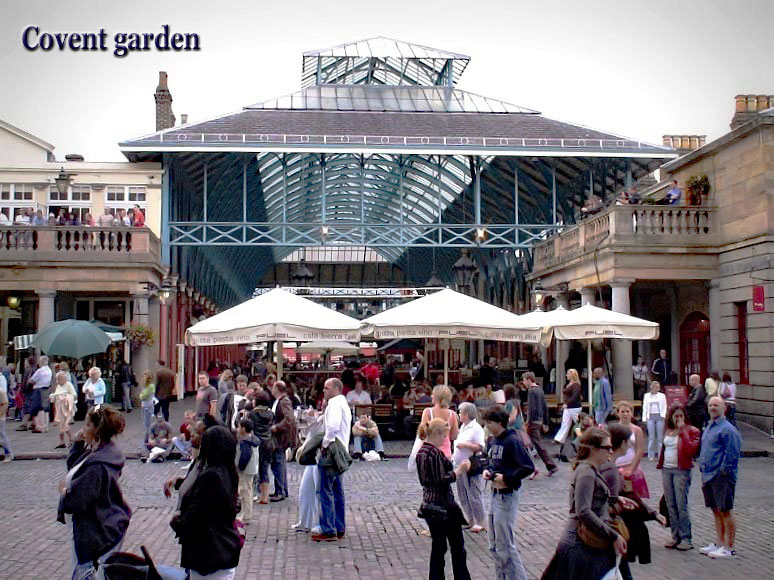
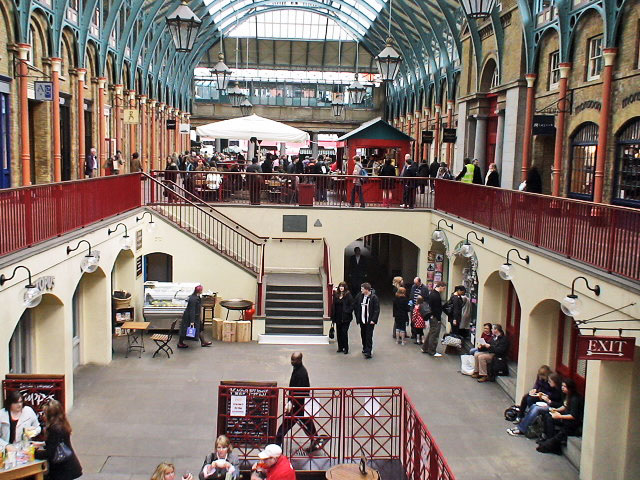
- Convent Garden
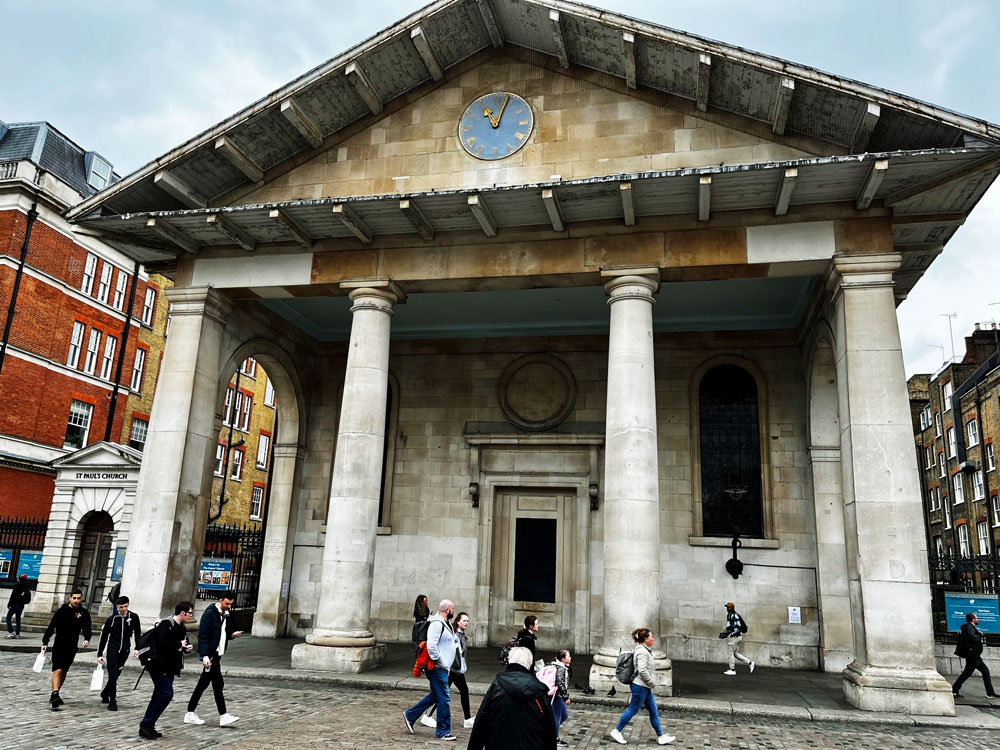
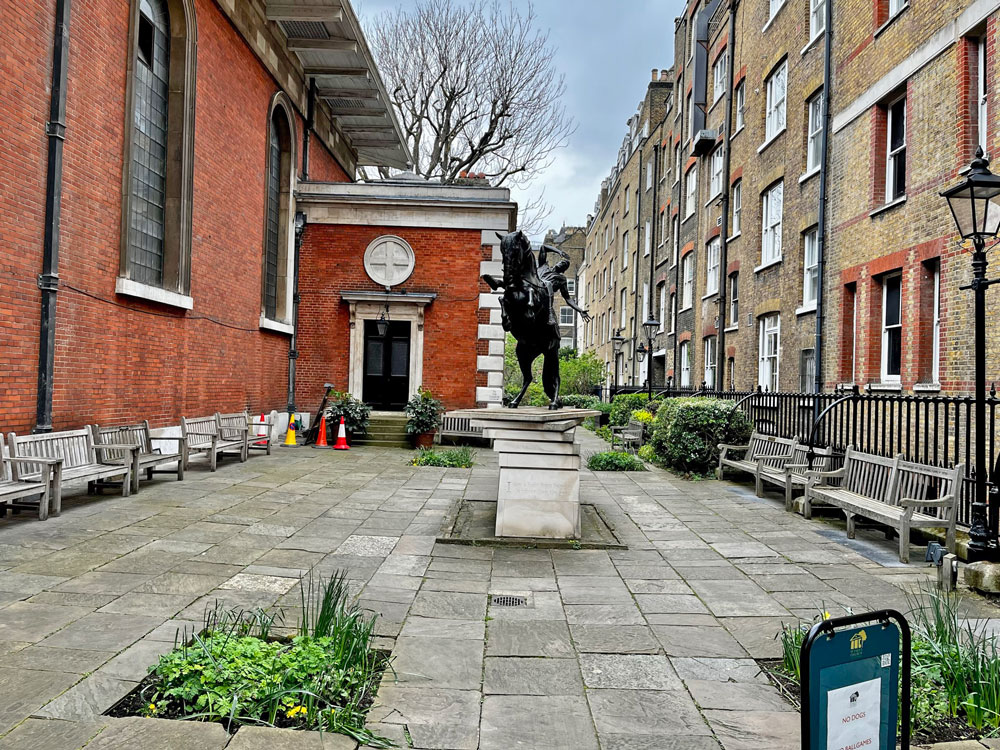
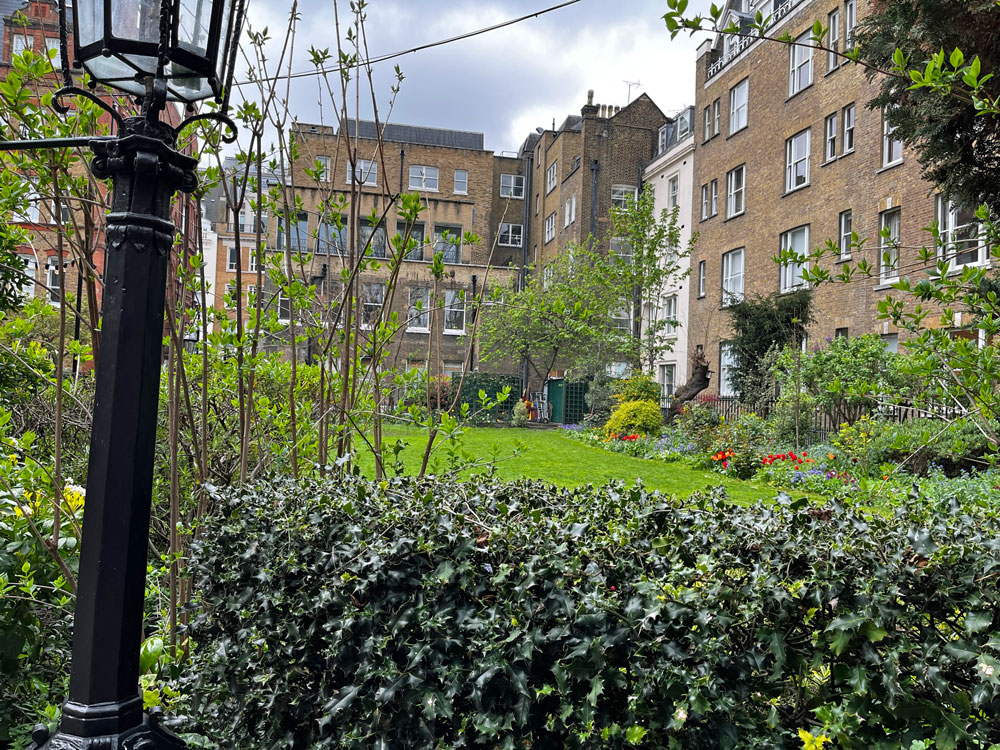
- St-Paul’s Church
- The British Imperial War Museum
- H.M.S Belfast
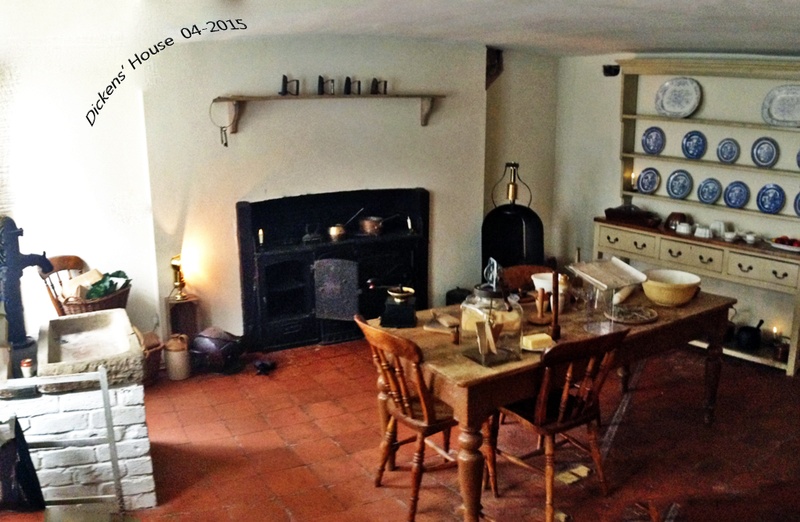
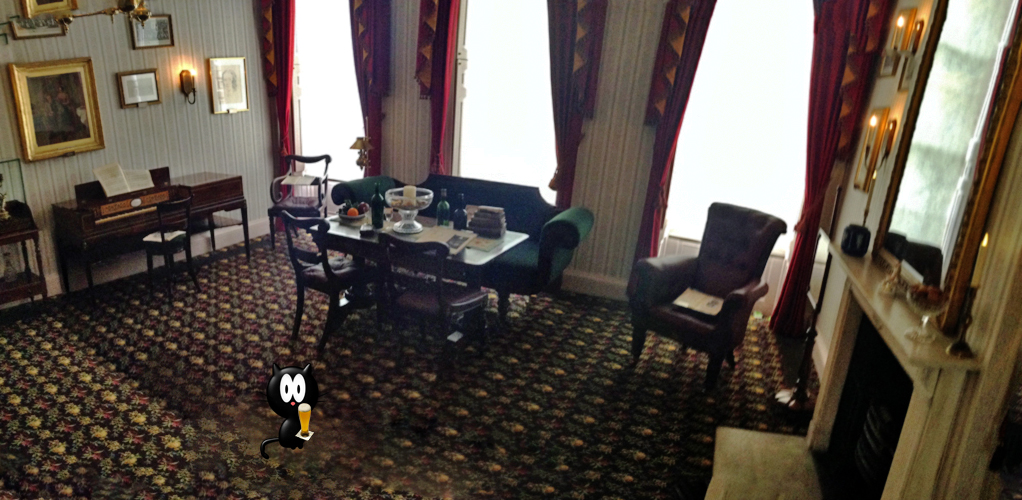
- Dicken’s House
- The Wallace Collection (UPDATED- December 2025)
- Freemasons’ Hall
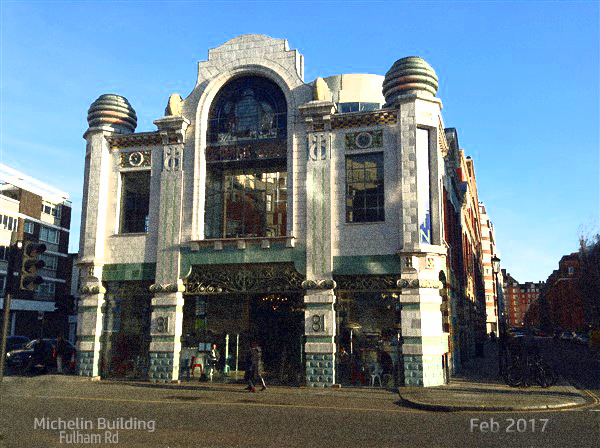
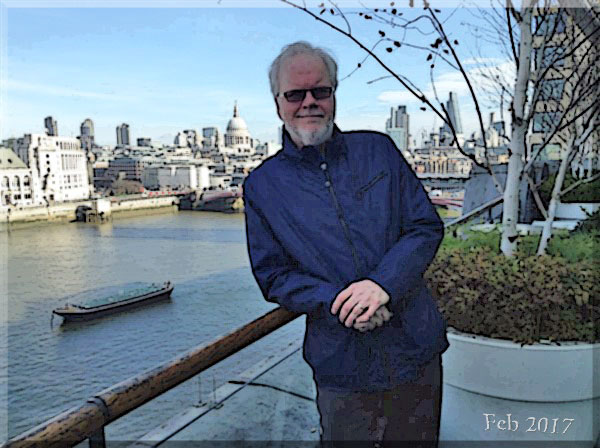
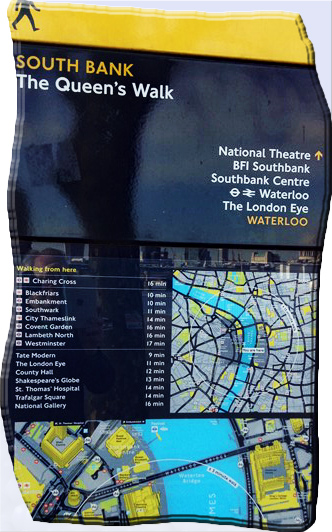
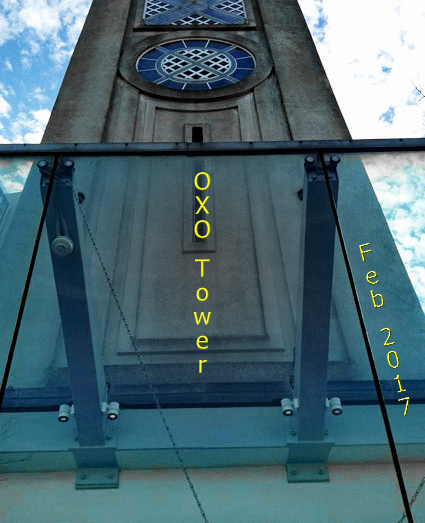
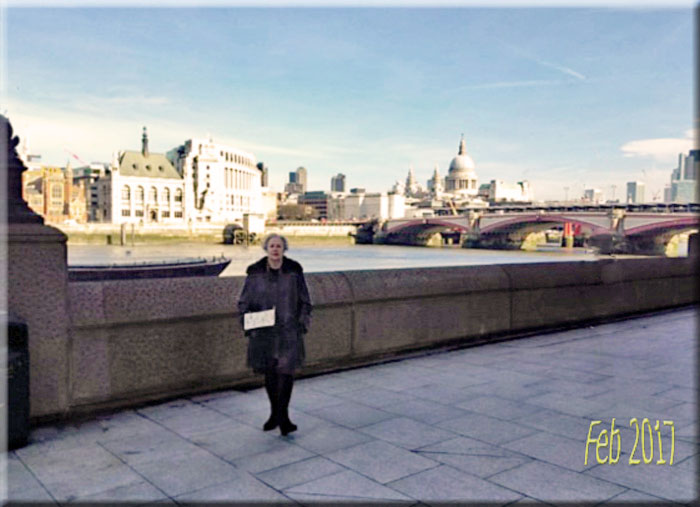
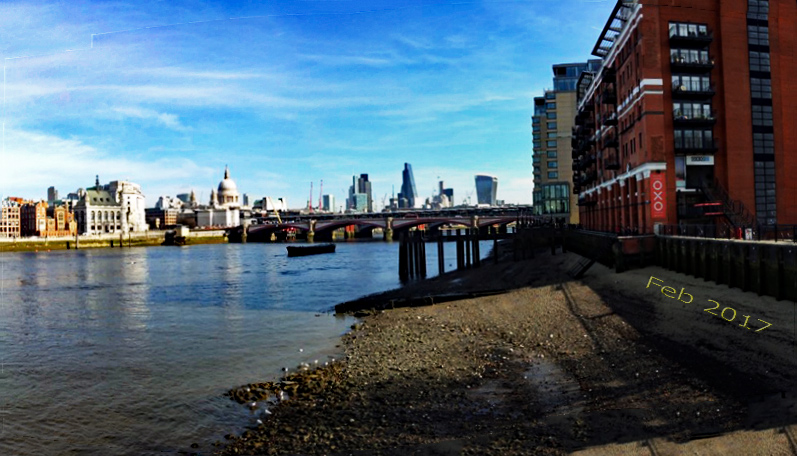
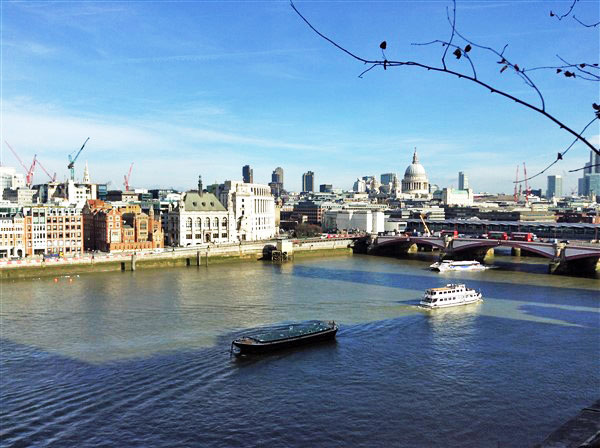
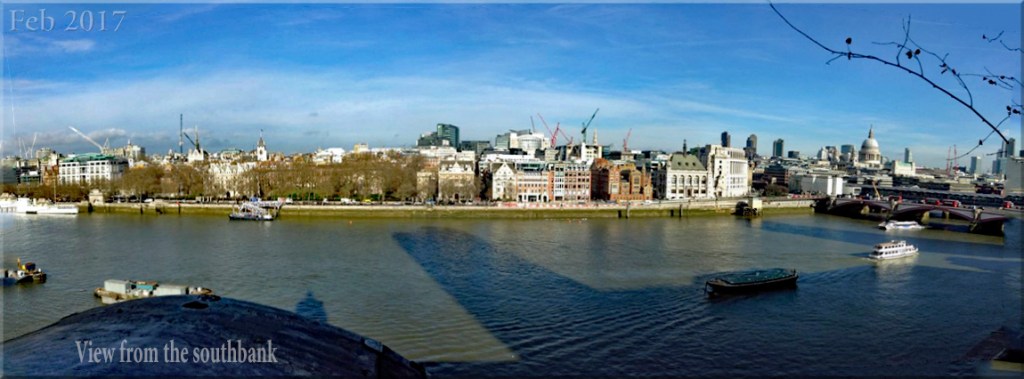
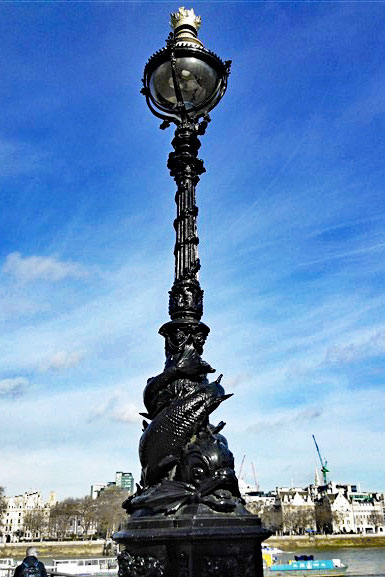
The Oxo Tower is a building with a prominent tower on the south bank of the River Thames. The building has mixed use as Oxo Tower Wharf containing a set of design, arts and crafts shops on the ground and first floors with two galleries, Bargehouse and gallery.




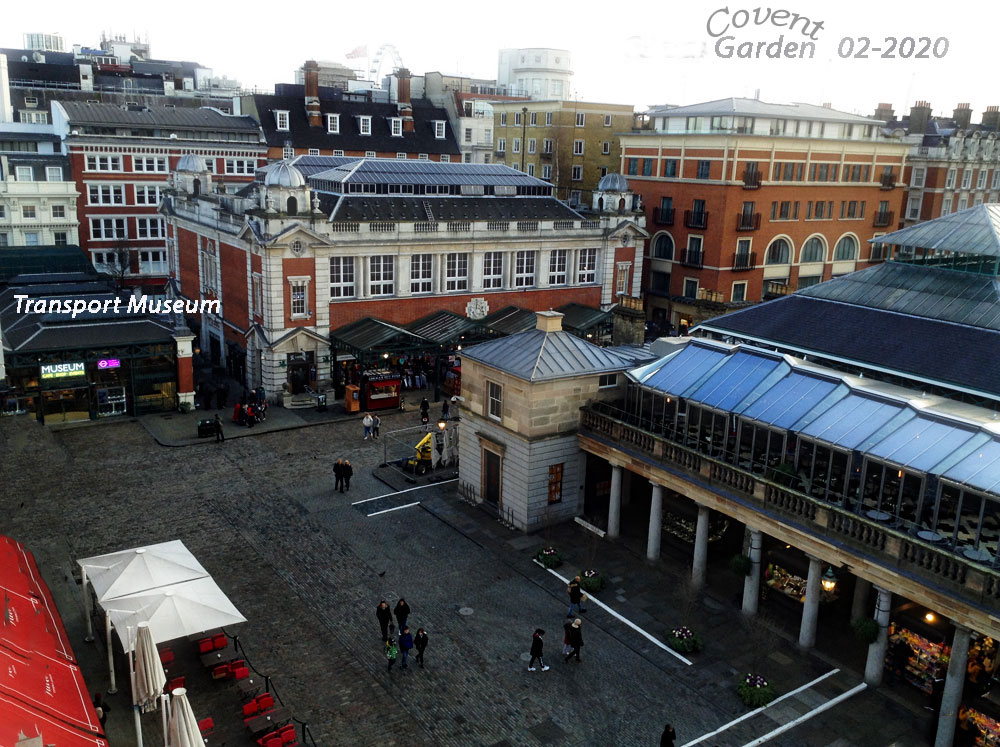
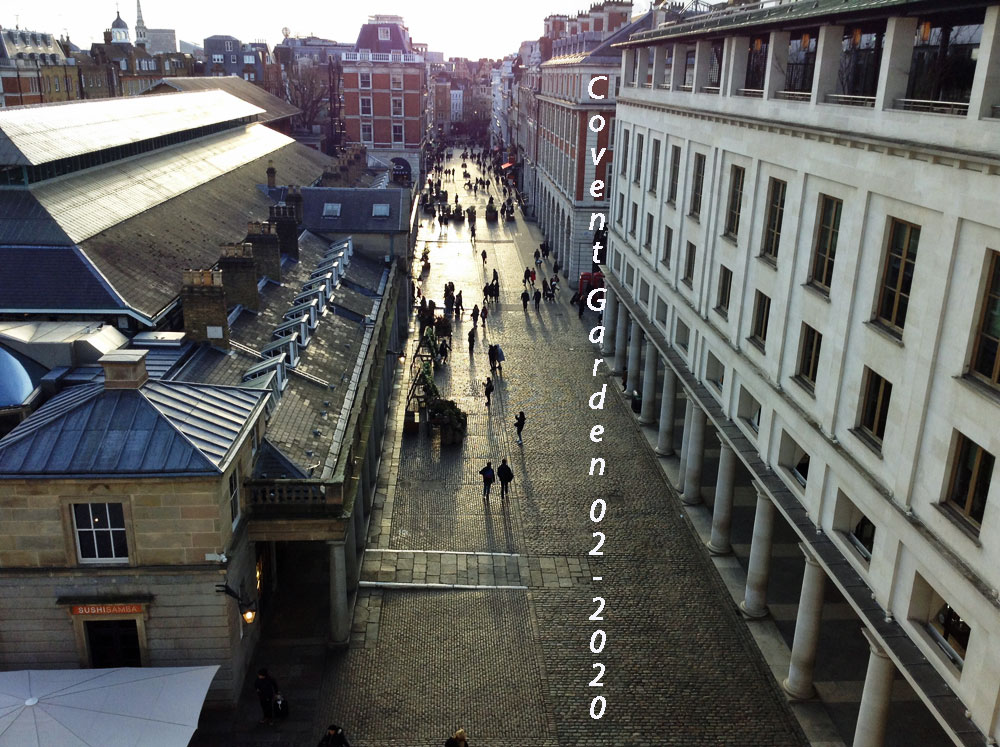
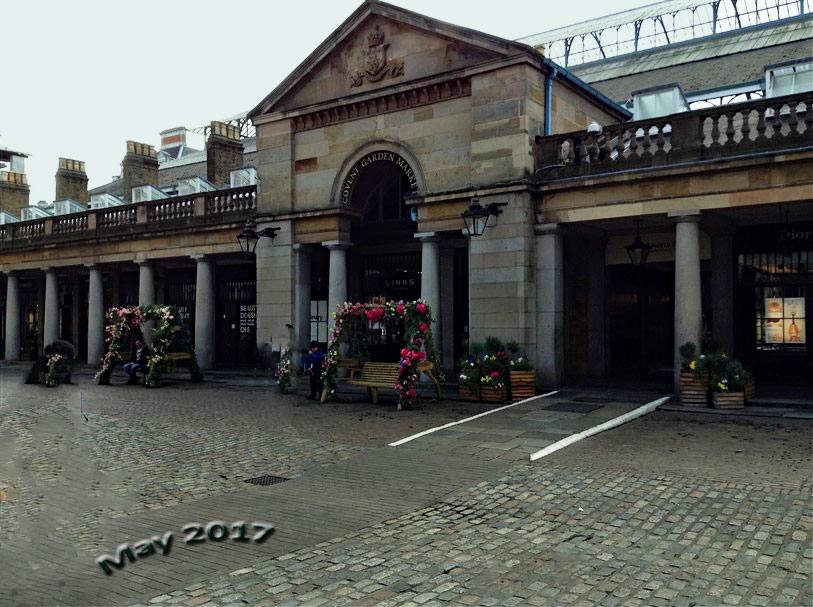
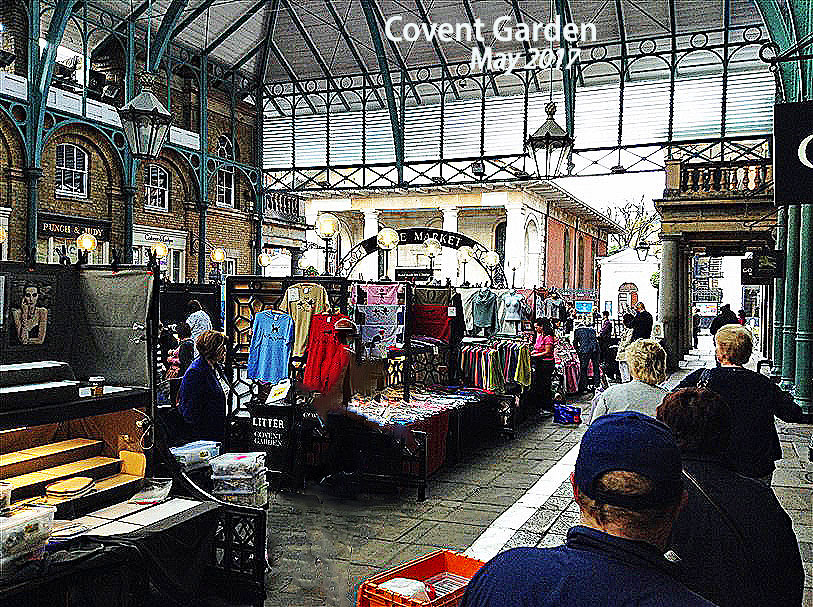
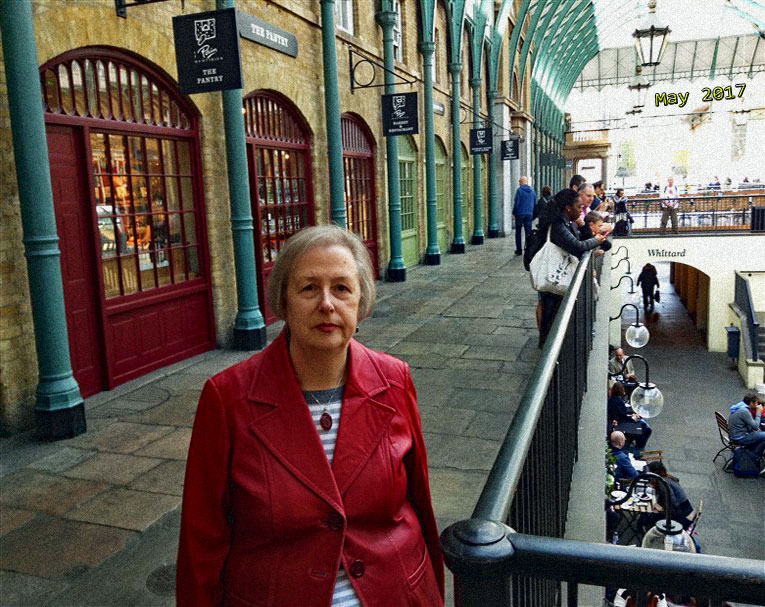
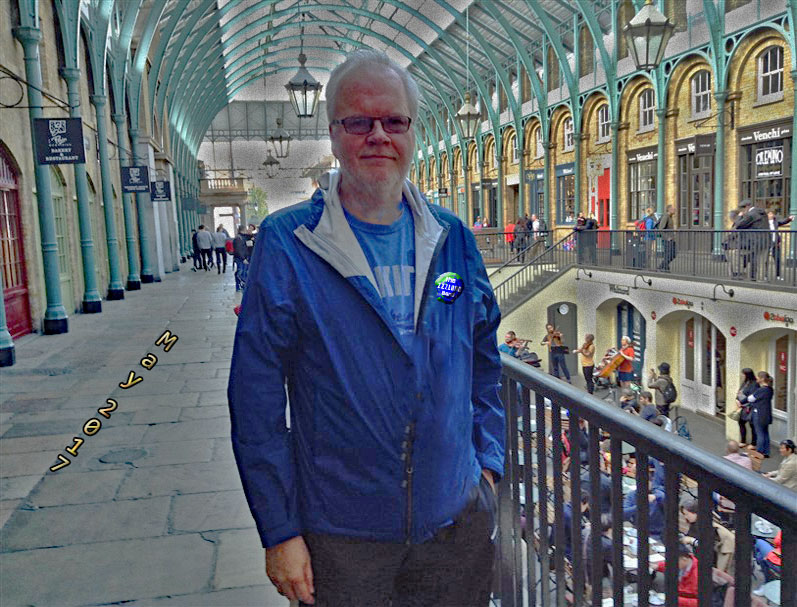
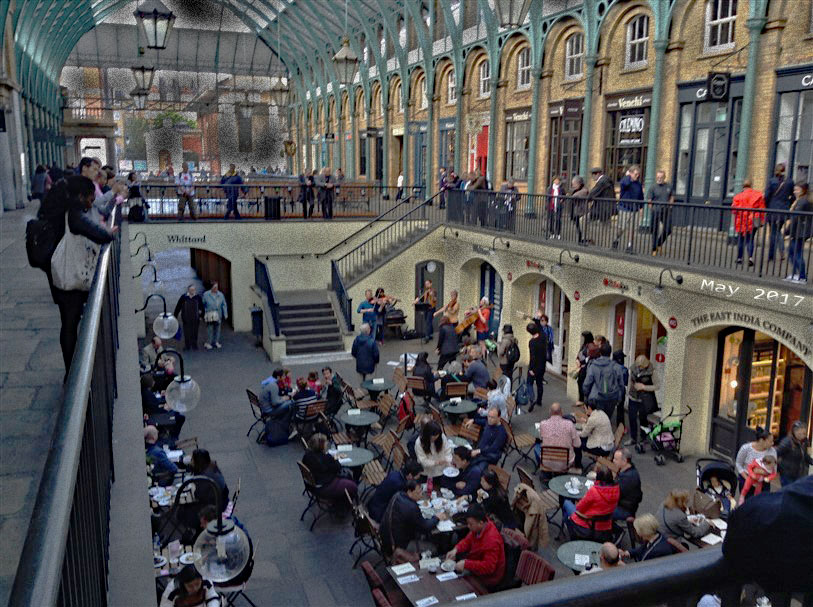
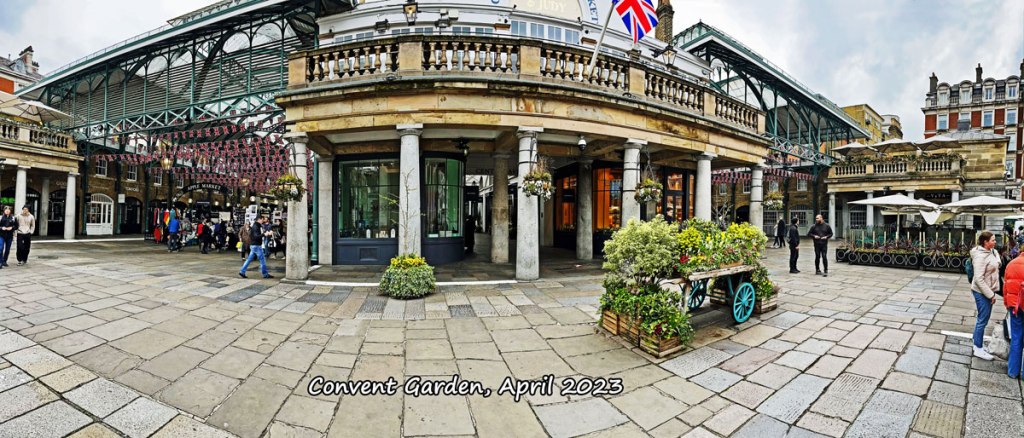
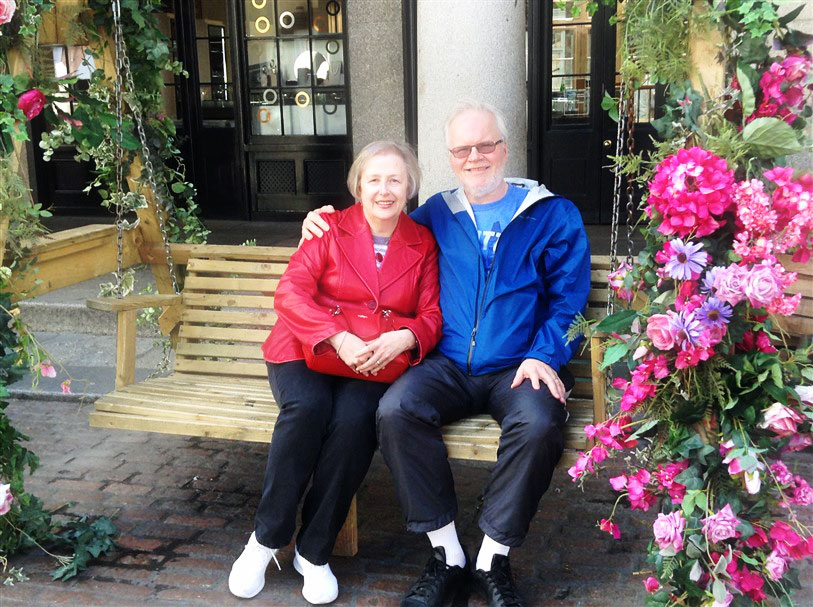
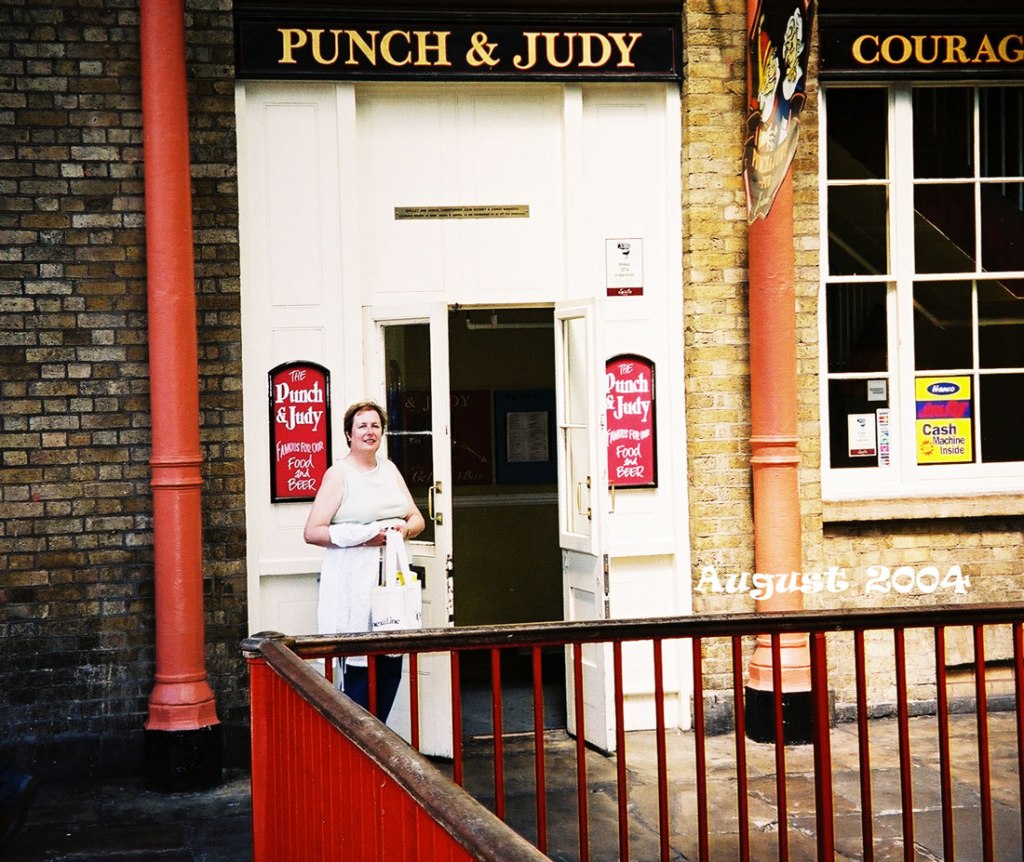
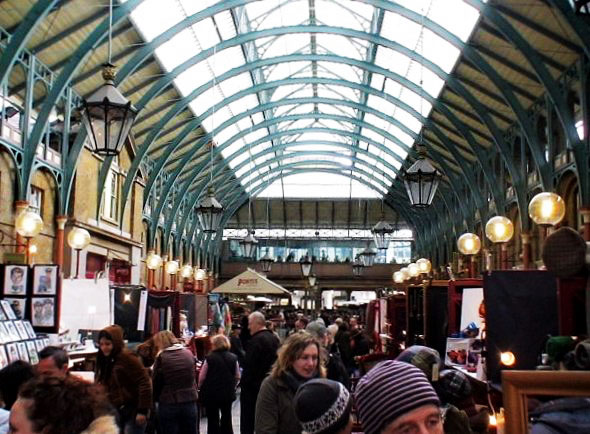
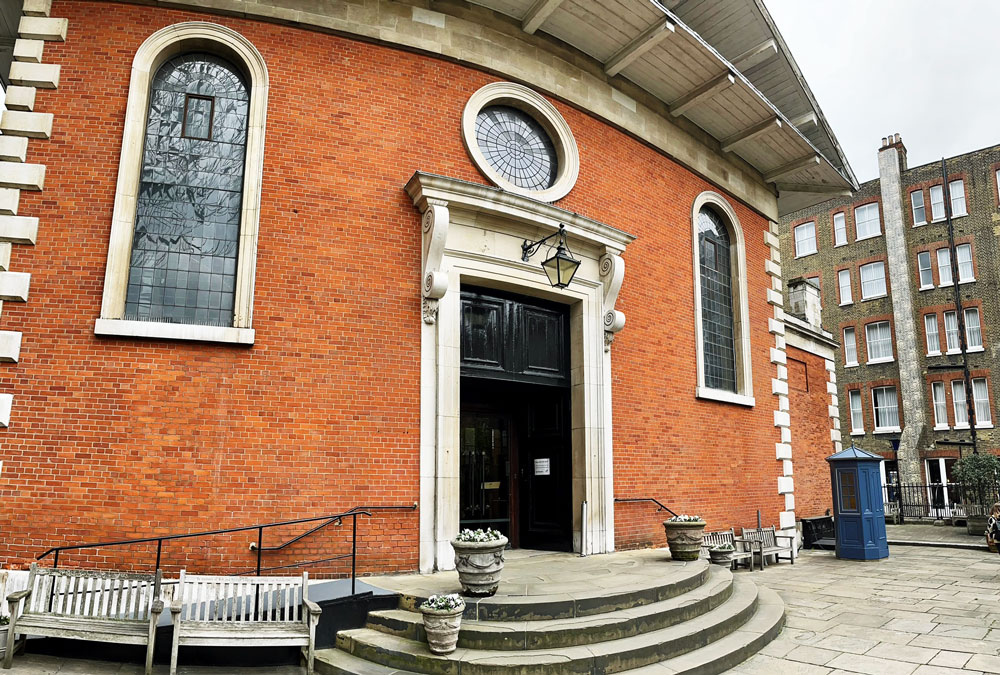
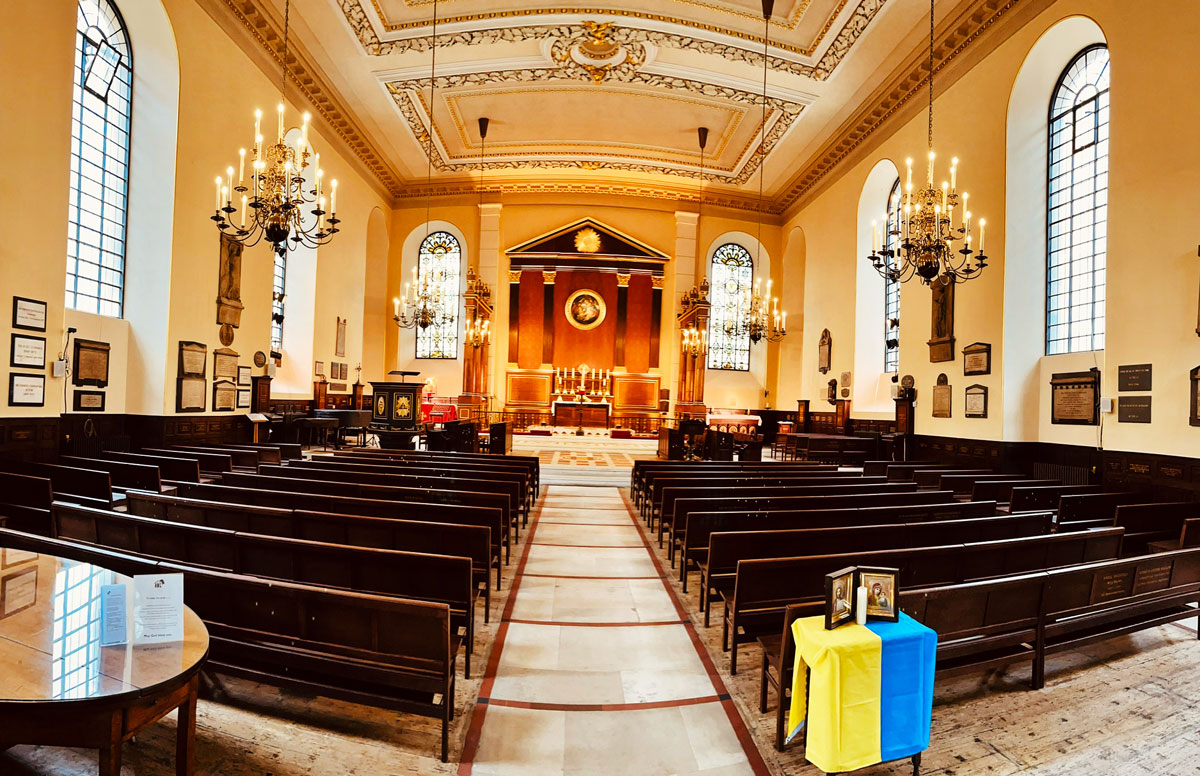
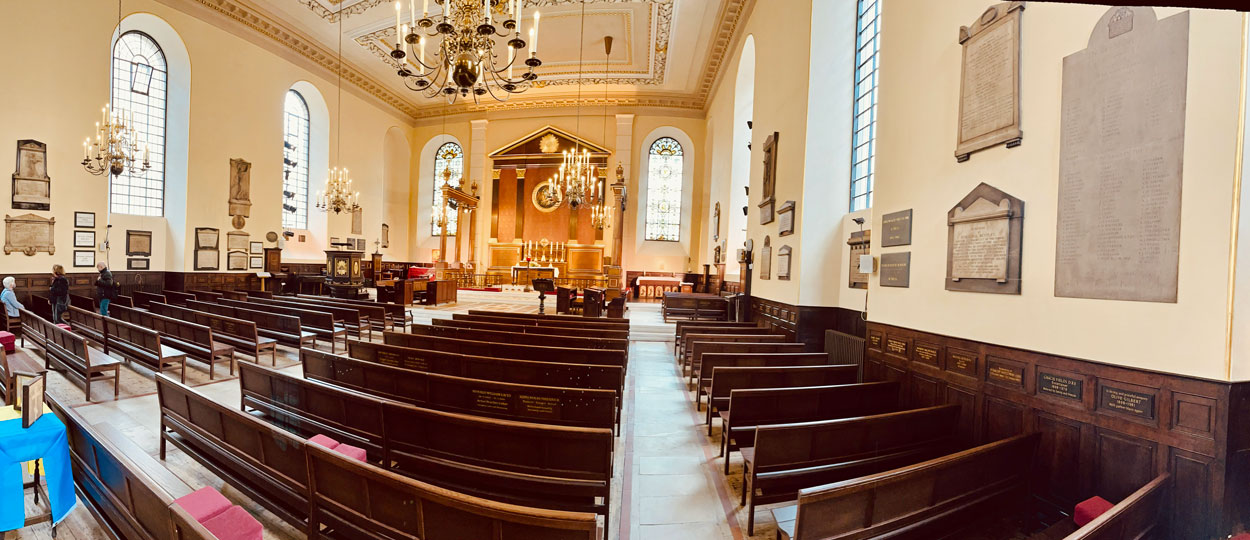
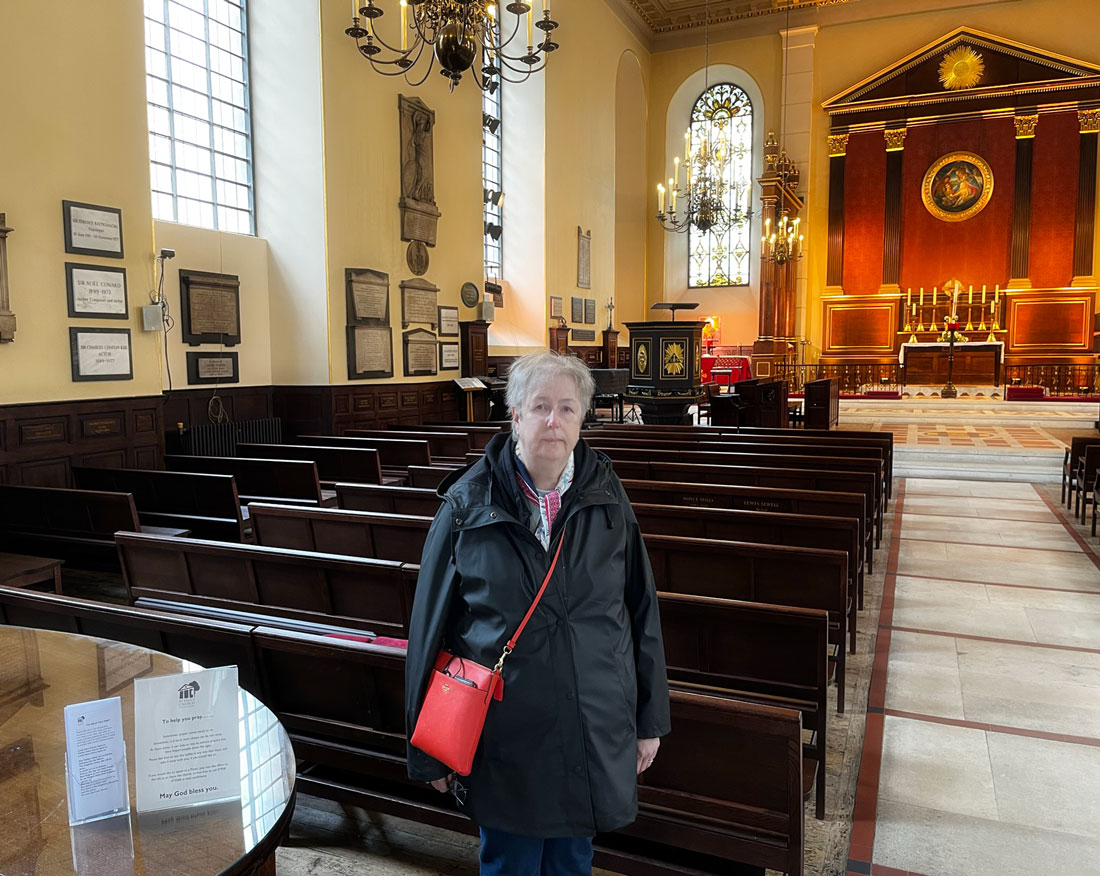
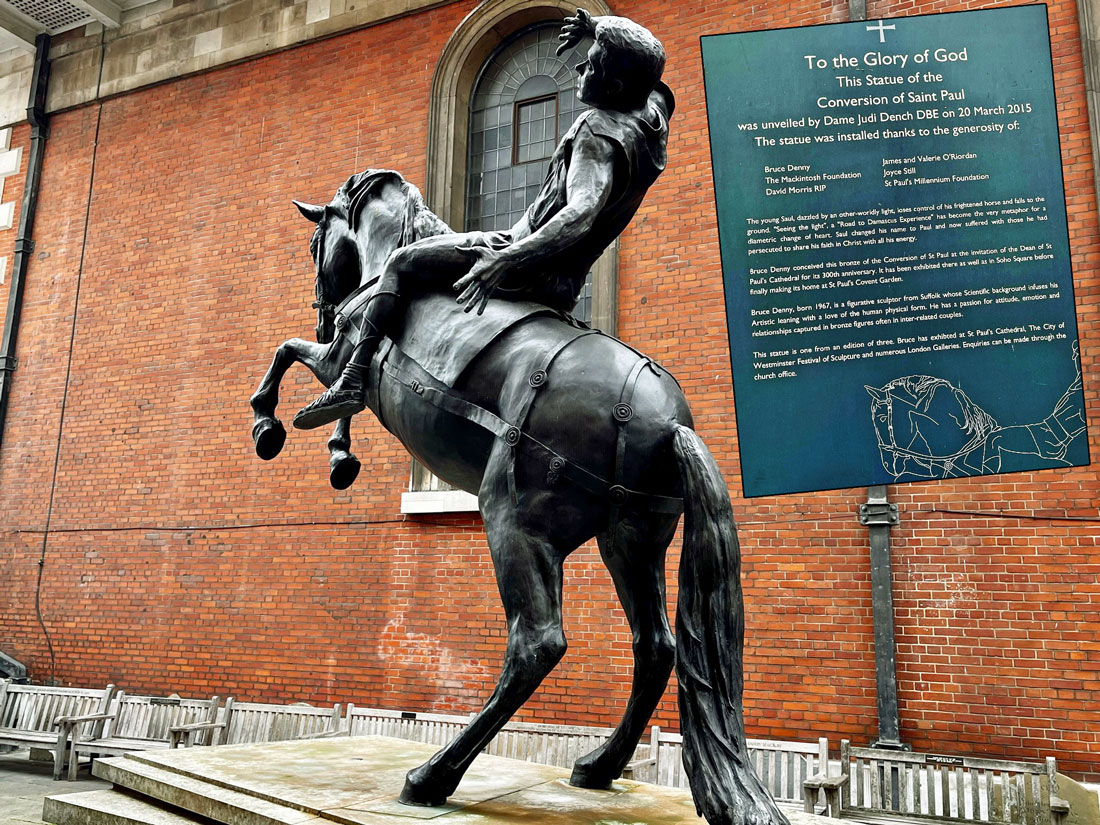
St Paul’s Church
It was designed by Inigo Jones as part of a commission for the 4th Earl of Bedford in 1631 to create “houses and buildings fit for the habitations of Gentlemen and men of ability”.
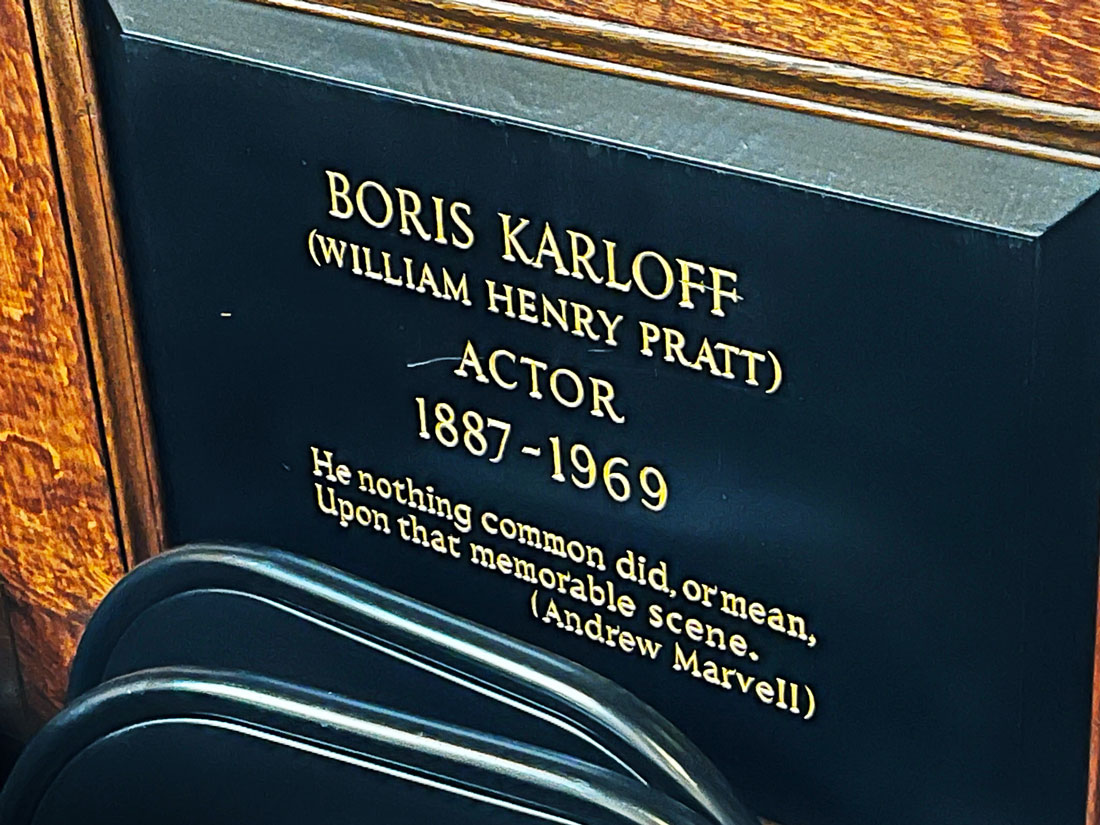
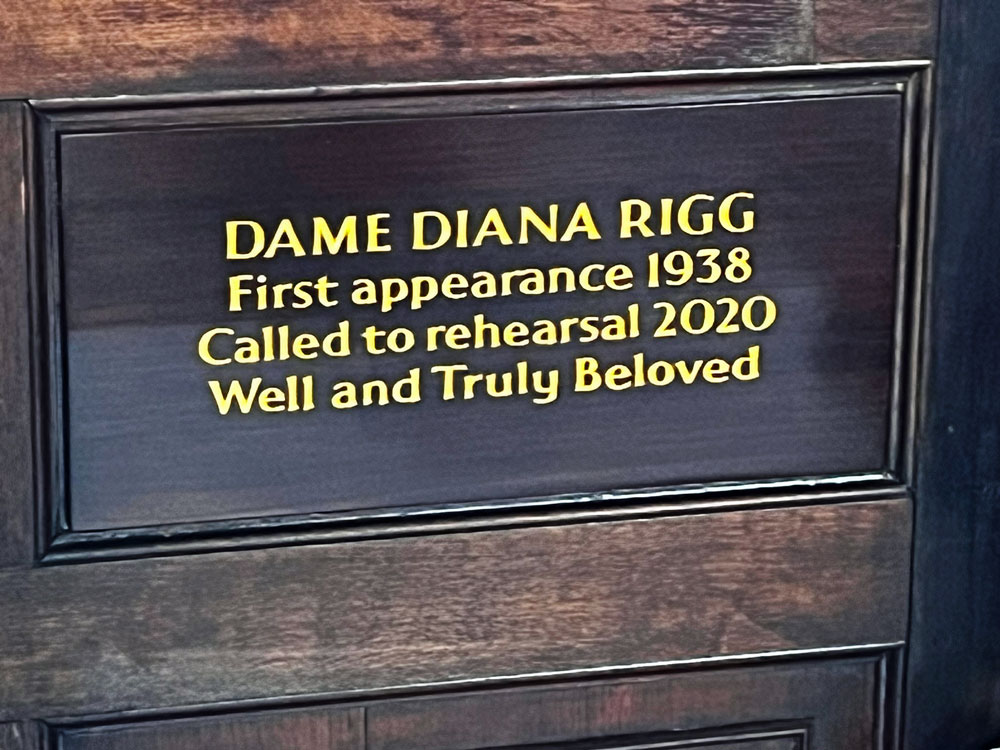
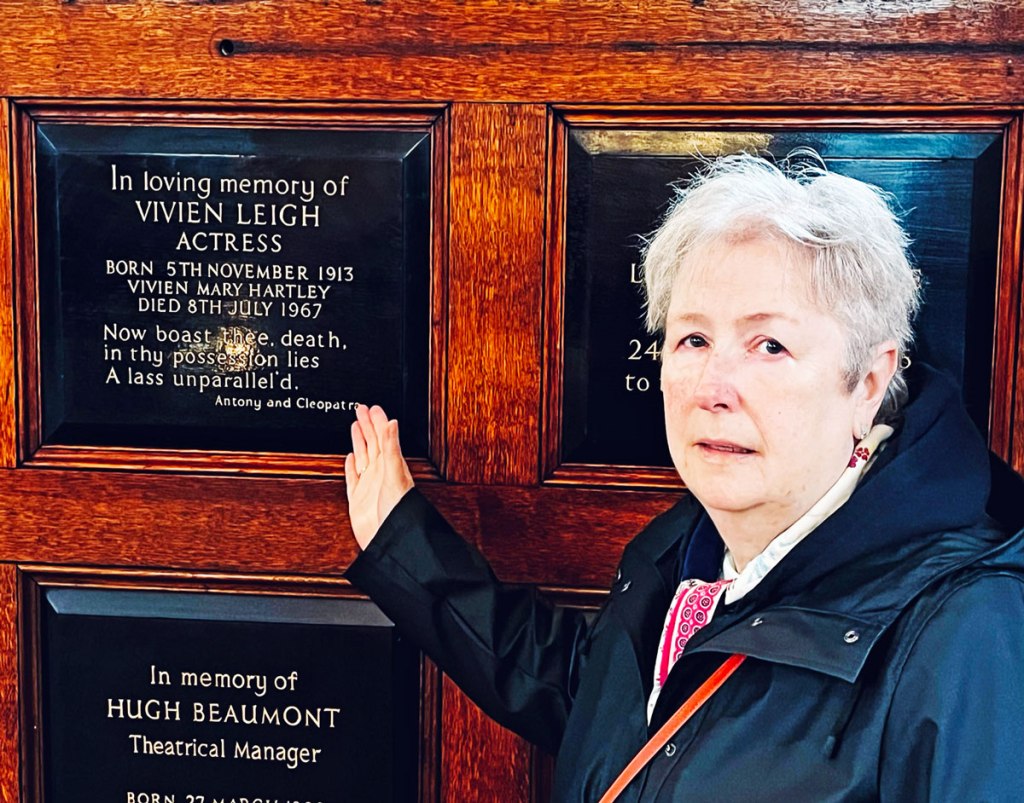
As well as being the parish church of Covent Garden, the church has gained the nickname of “the actors’ church” by a long association with the theatre community.
The first known victim of the 1665–1666 outbreak of the Plague in England, Margaret Ponteous, was buried in the churchyard on 12 April 1665.

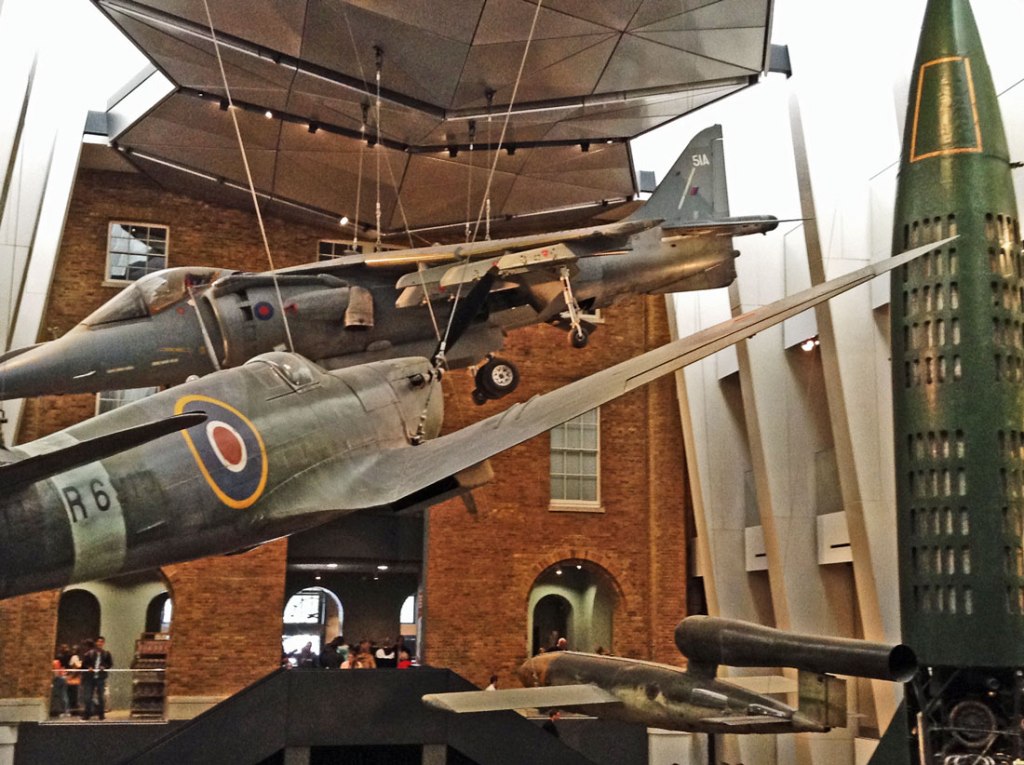
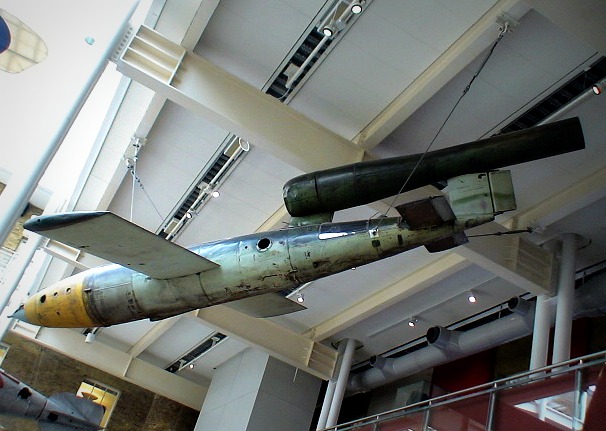
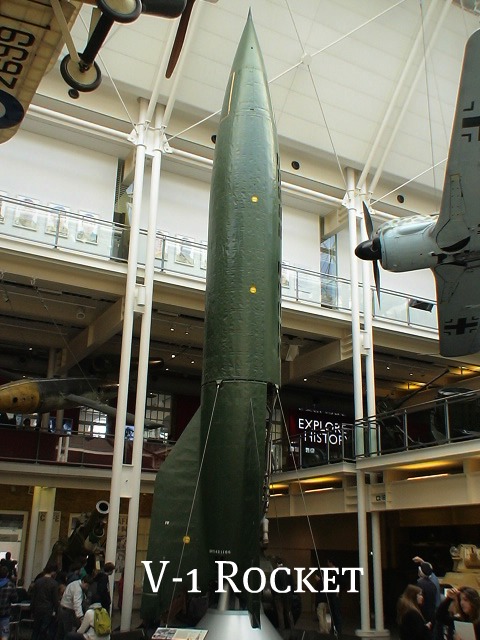
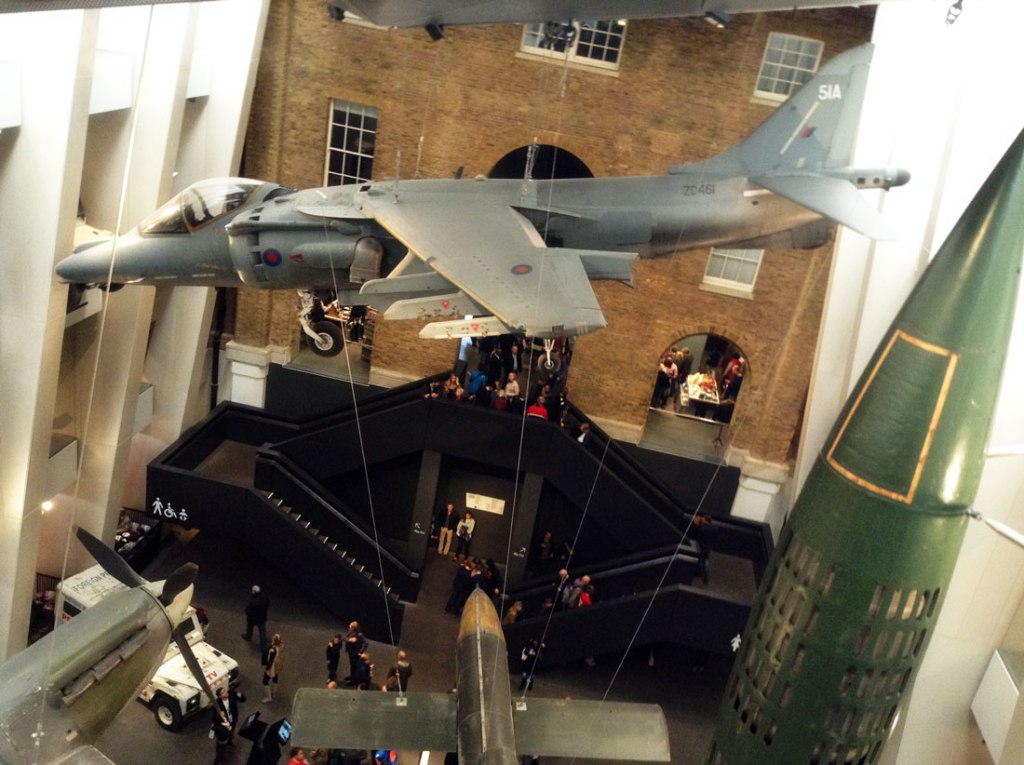
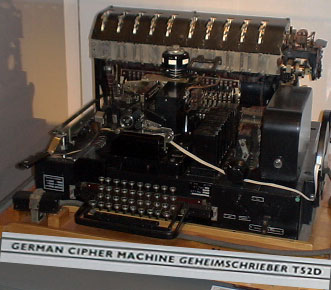
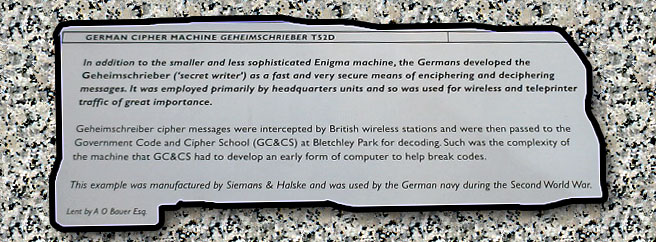
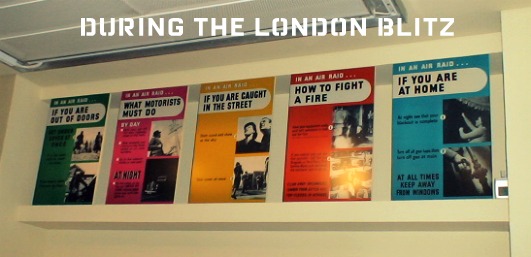
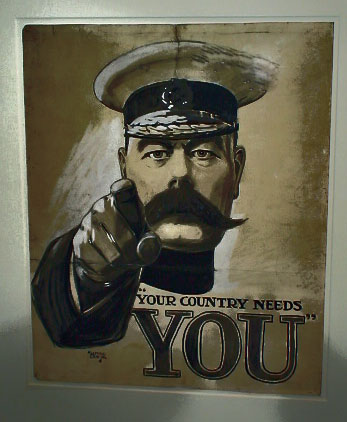
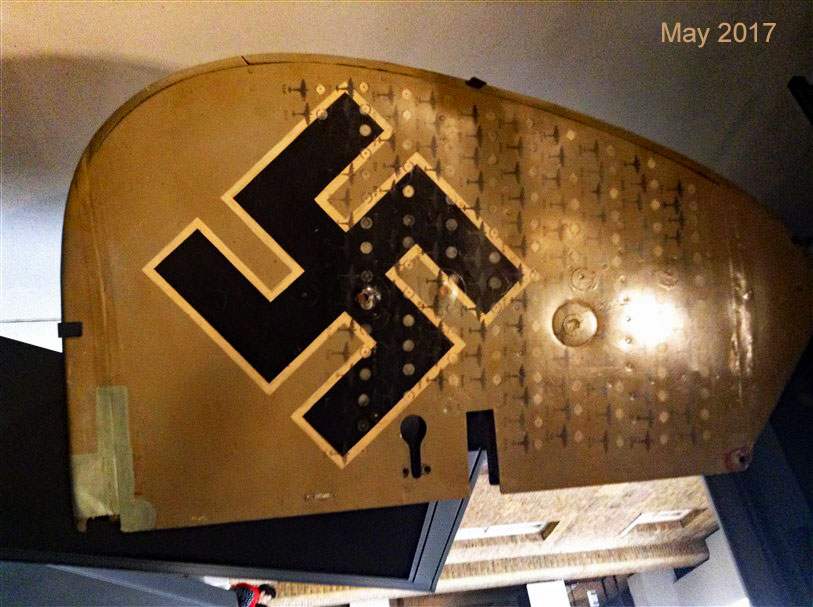
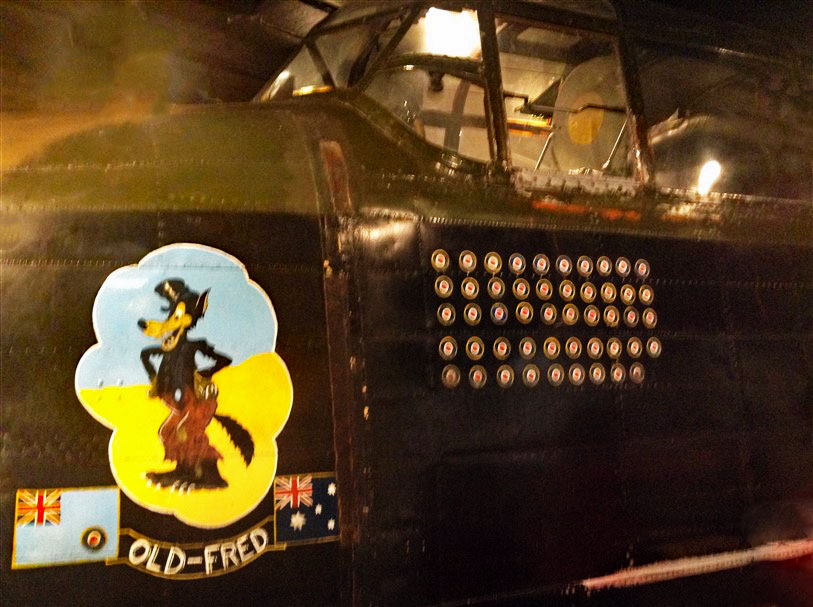

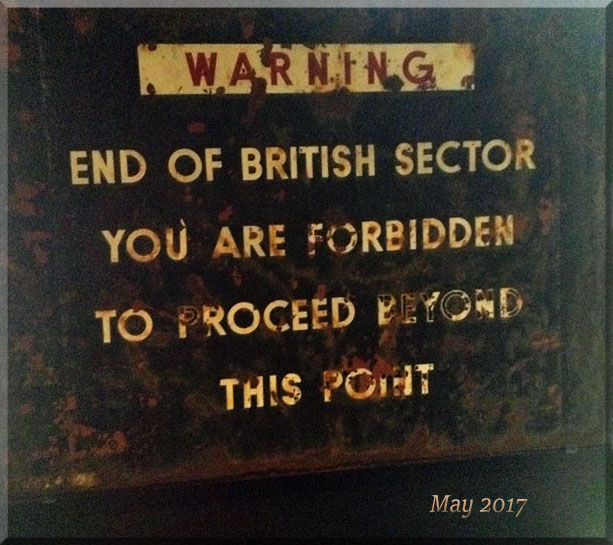
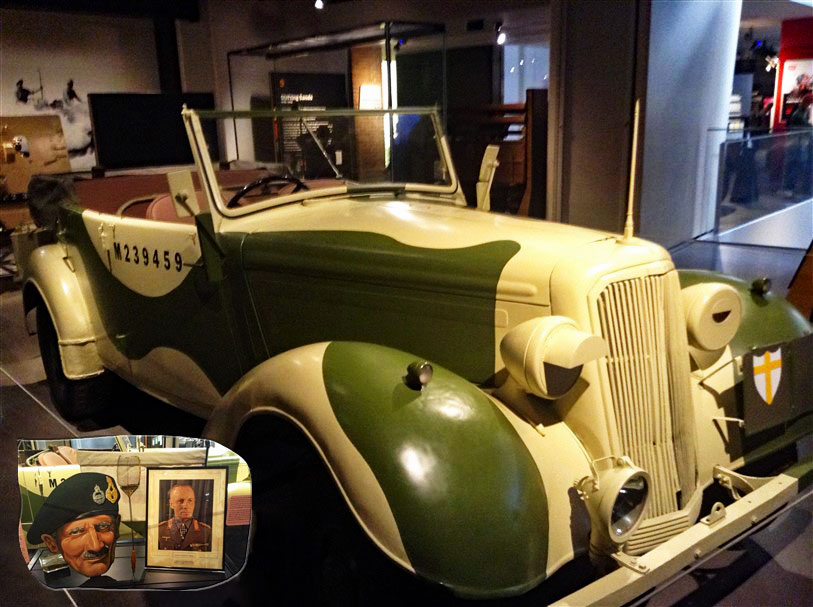
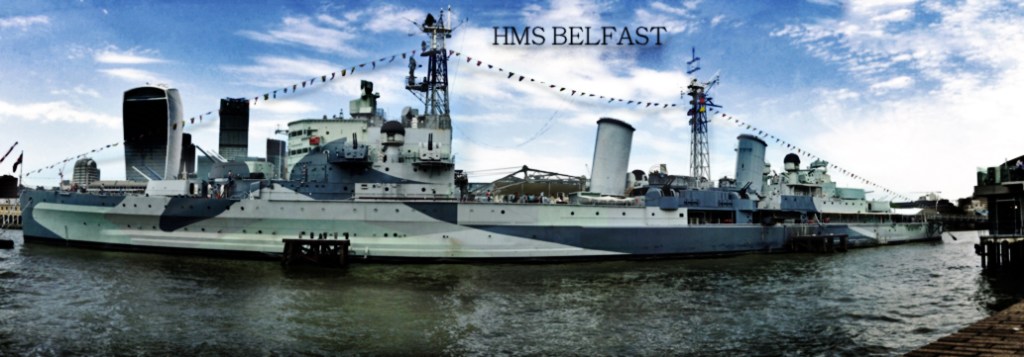
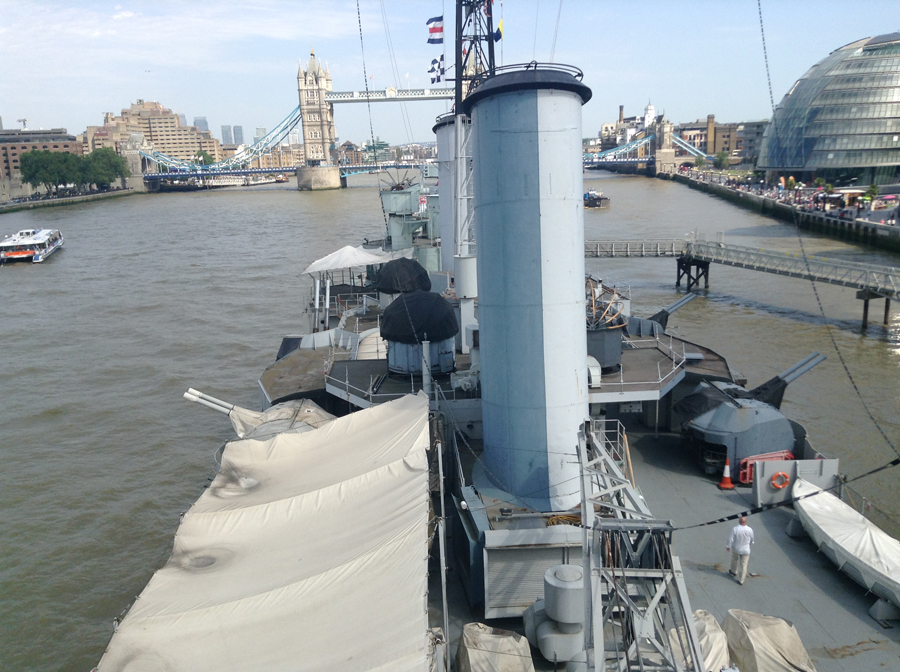
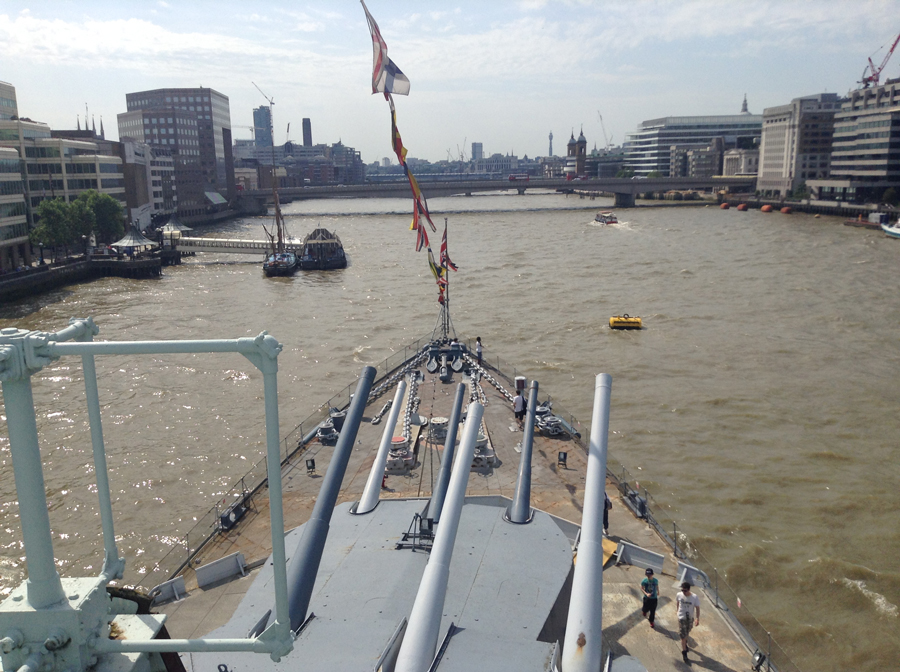
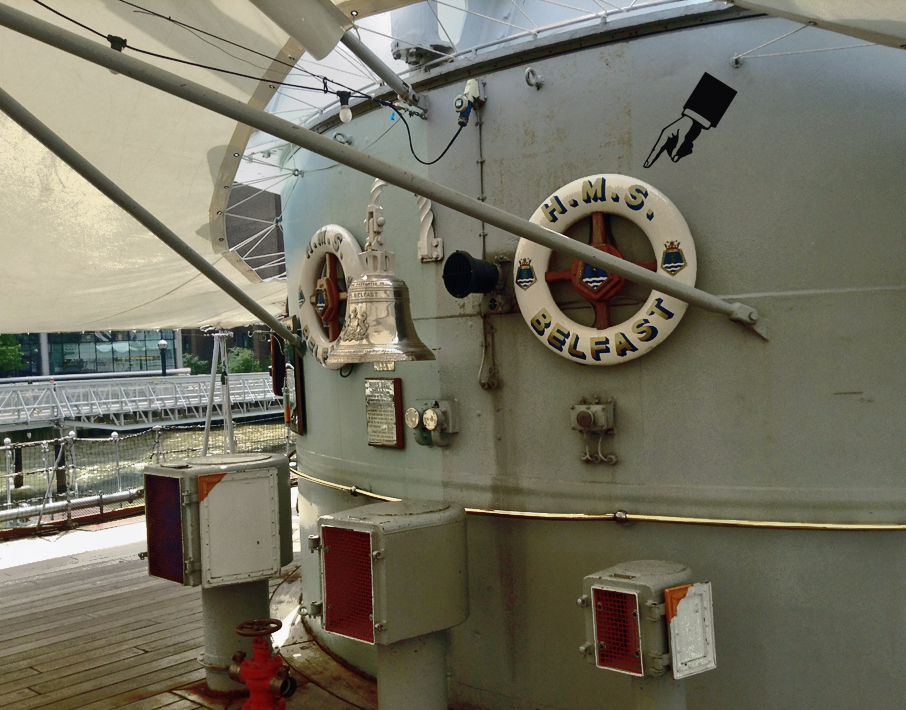
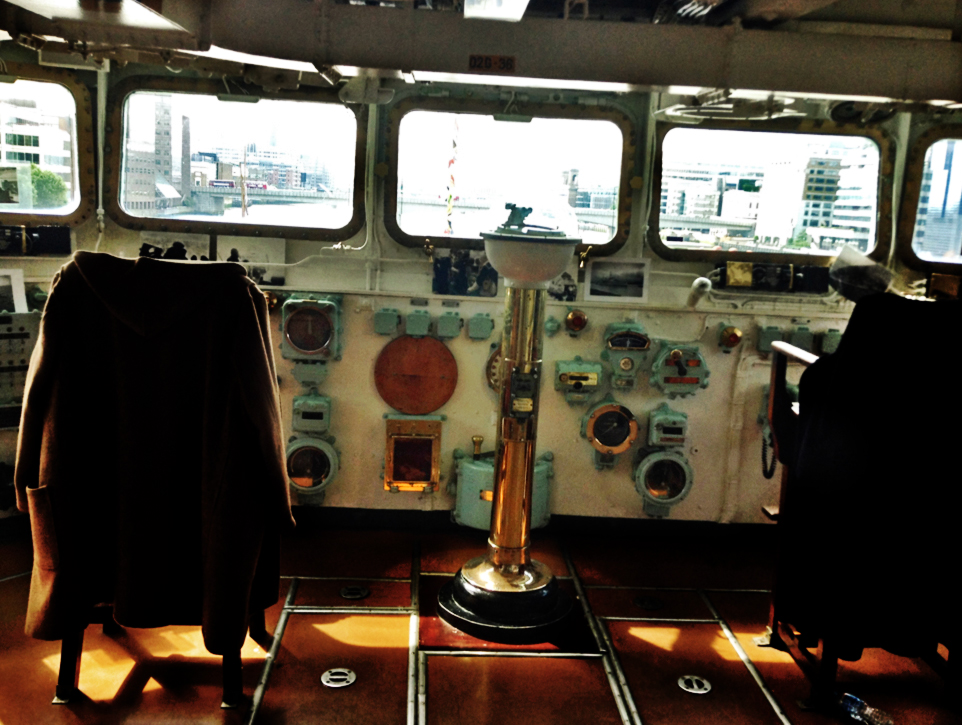
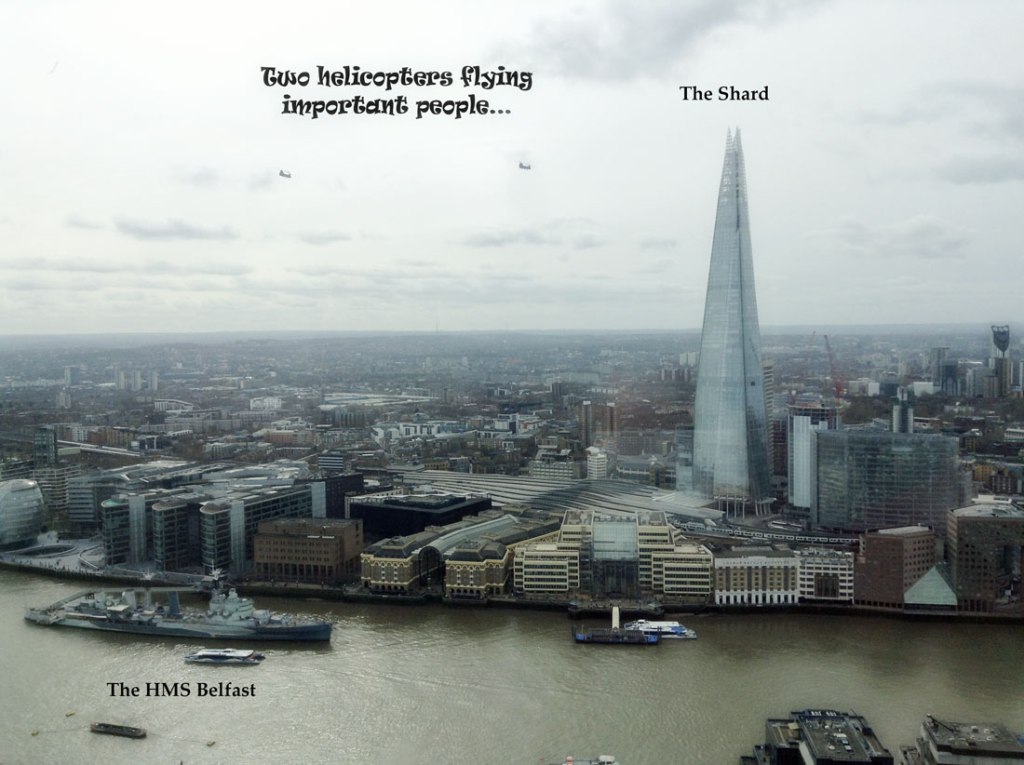
HMS Belfast is a Town-class light cruiser that was built for the Royal Navy. She is now permanently moored as a museum ship on the River Thames and is operated by the Imperial War Museum.
Construction of Belfast, the first ship in the Royal Navy to be named after the capital city of Northern Ireland and one of ten Town-class cruisers, began in December 1936. Commissioned in early August 1939 shortly before the outbreak of the WW II, Belfast was initially part of the British naval blockade against Germany. In November 1939, Belfast struck a German mine and, in spite of fears that she would be scrapped, spent more than two years undergoing extensive repairs. Belfast returned to action in November 1942 with improved firepower, radar equipment, and armour.
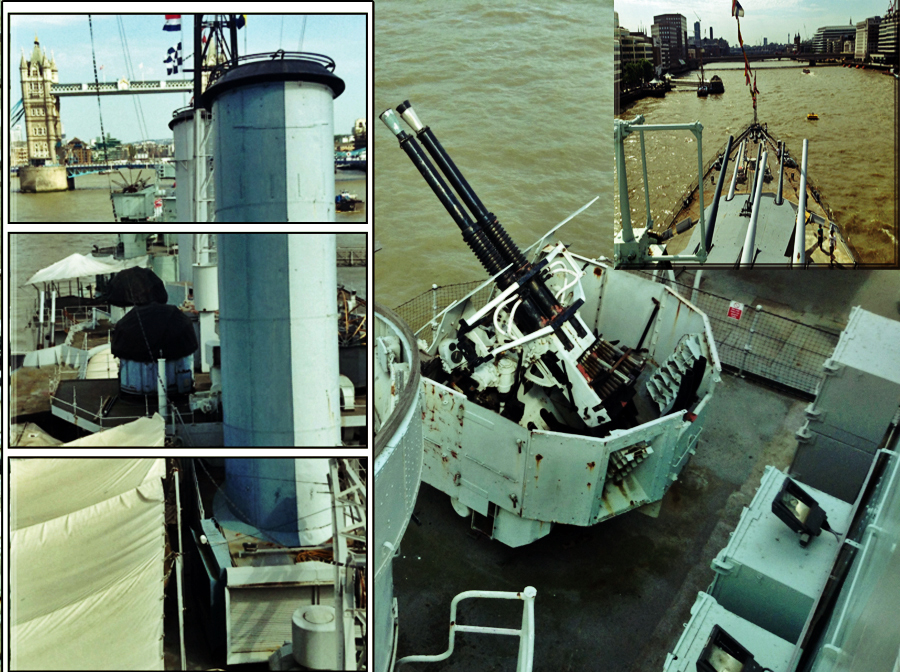
Belfast saw action escorting Artic convoys to the Soviet Union during 1943 and in December 1943 played an important role in the Battle of North cape, assisting in the destruction of the German warship Scharnhorst. In June 1944, Belfast took part in Operation Overlord supporting the Normandy landings.
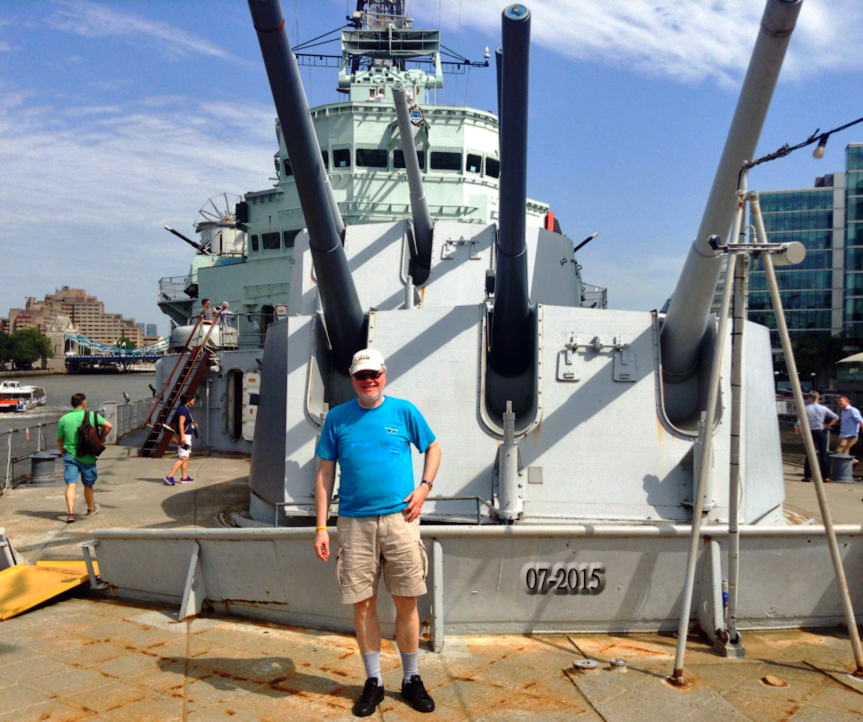
In June 1945, she was redeployed to the Far East to join the British Pacific Fleet, arriving shortly before the end of the Second World War. Belfast saw further combat action in 1950–52 during the Korean War and underwent an extensive modernisation between 1956 and 1959. A number of further overseas commissions followed before she entered reserve in 1963.

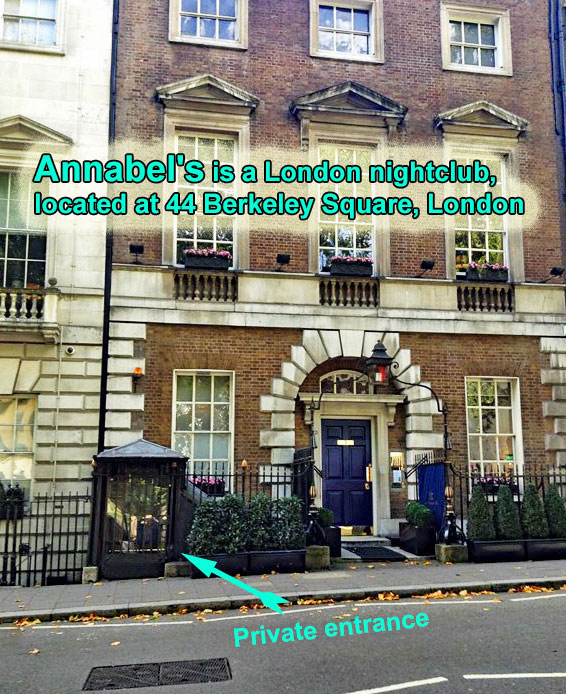
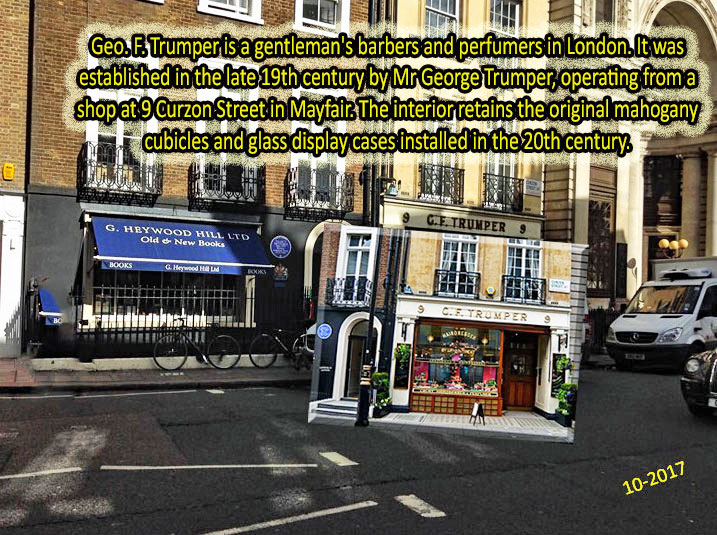
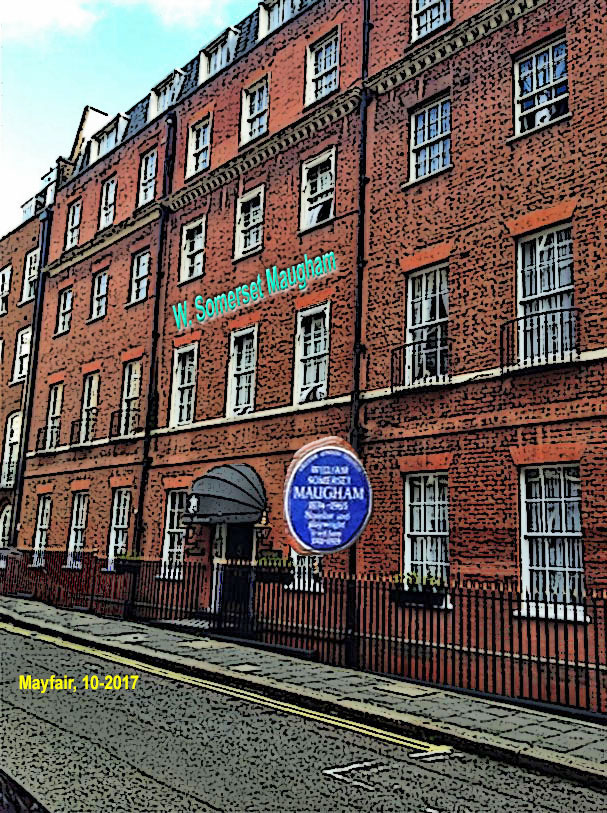
Freemasons’ Hall
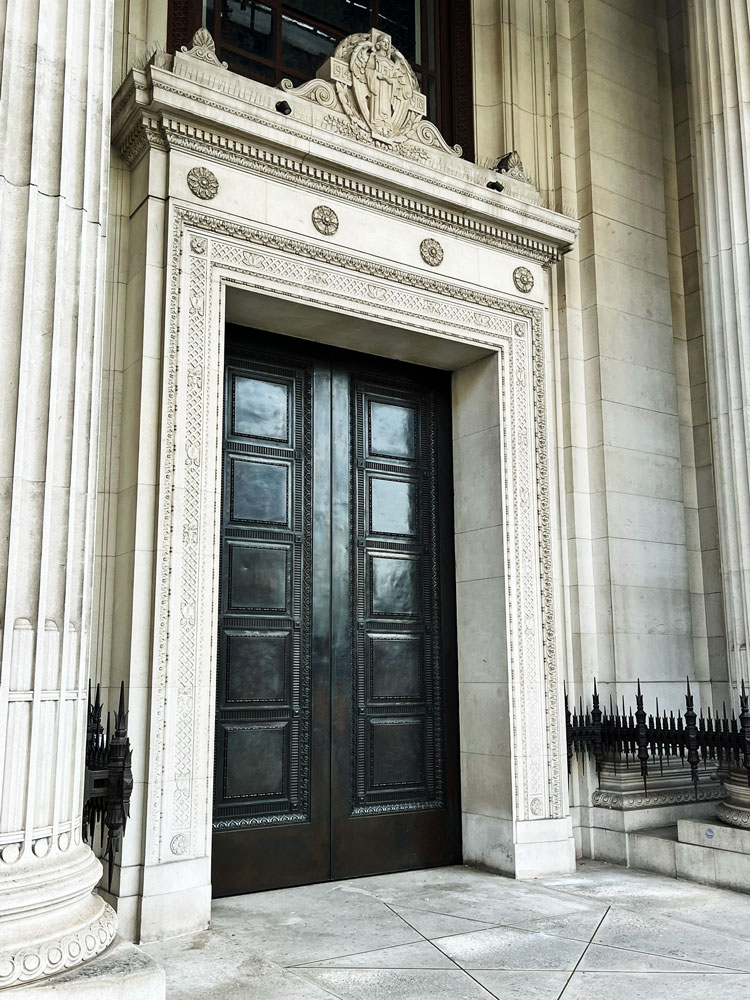
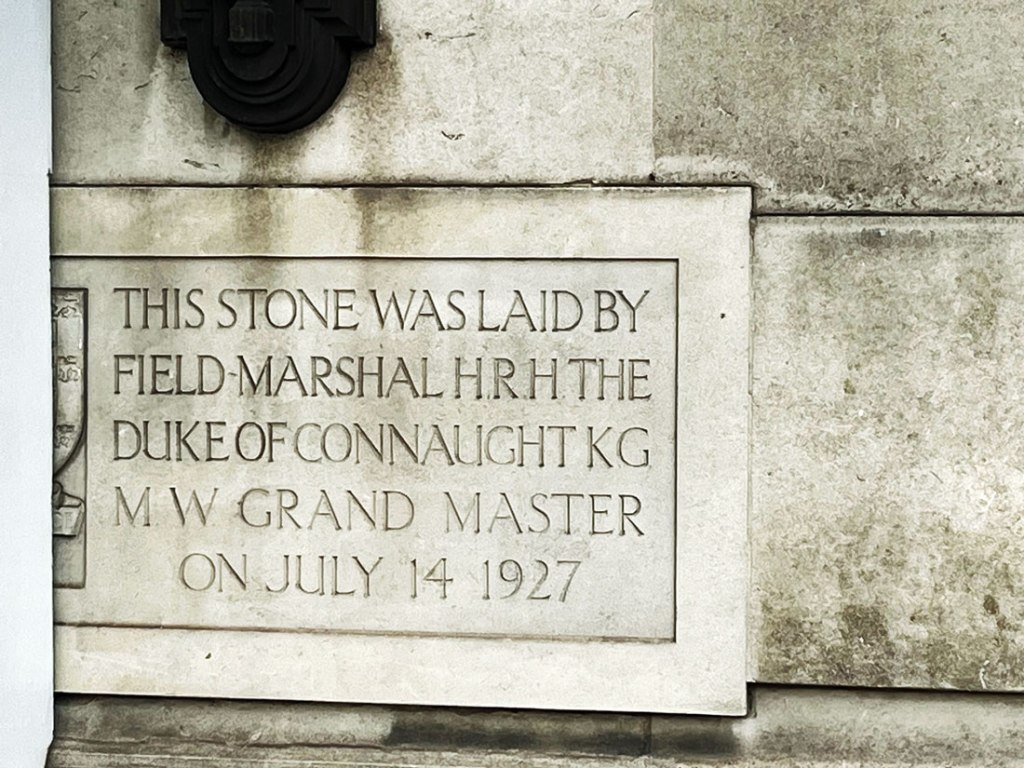
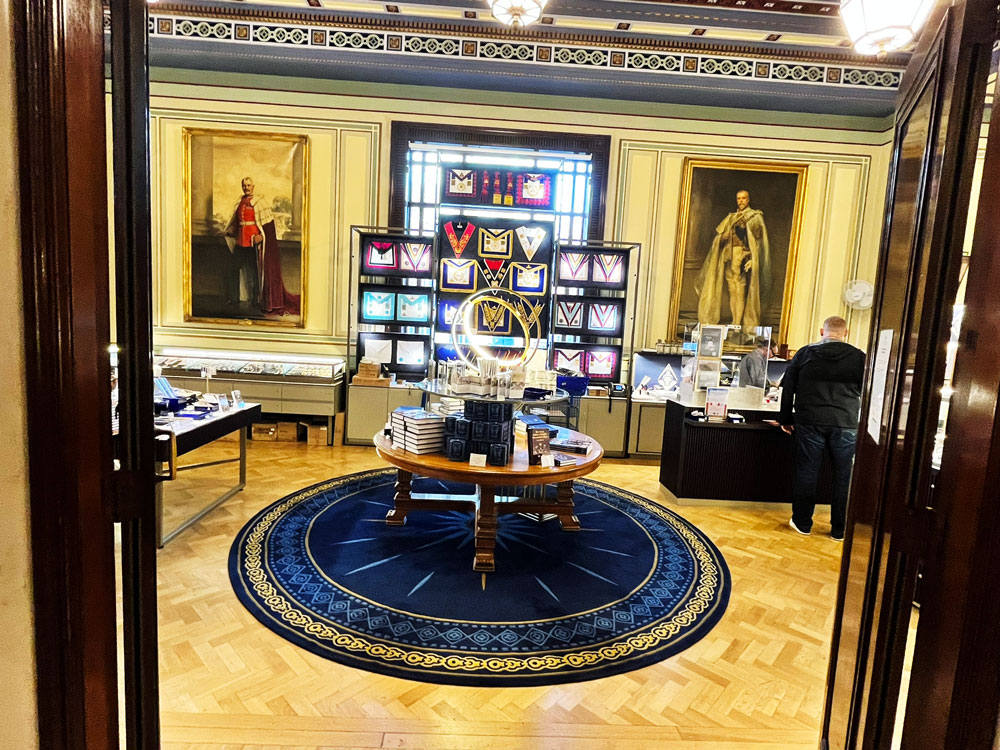
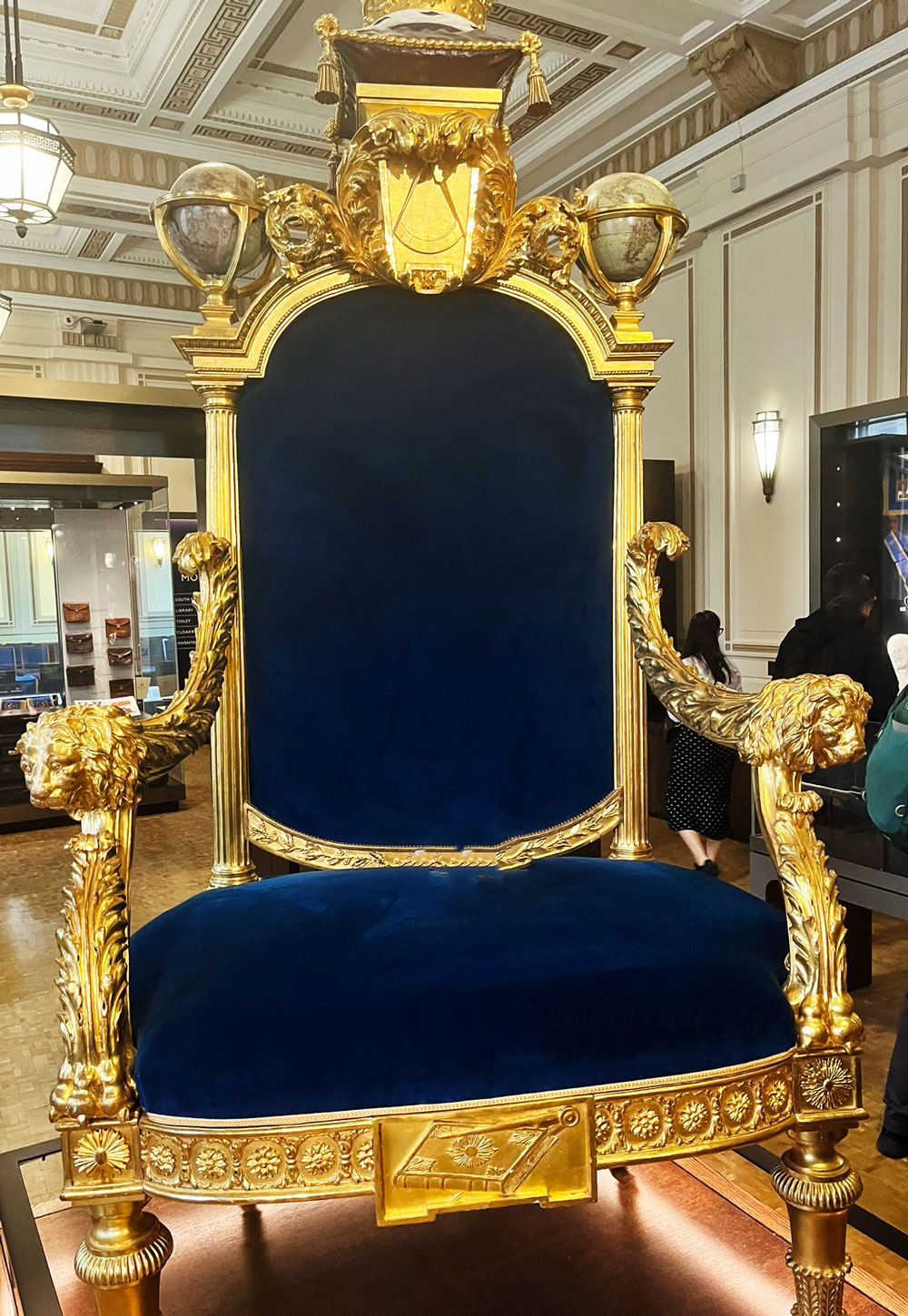
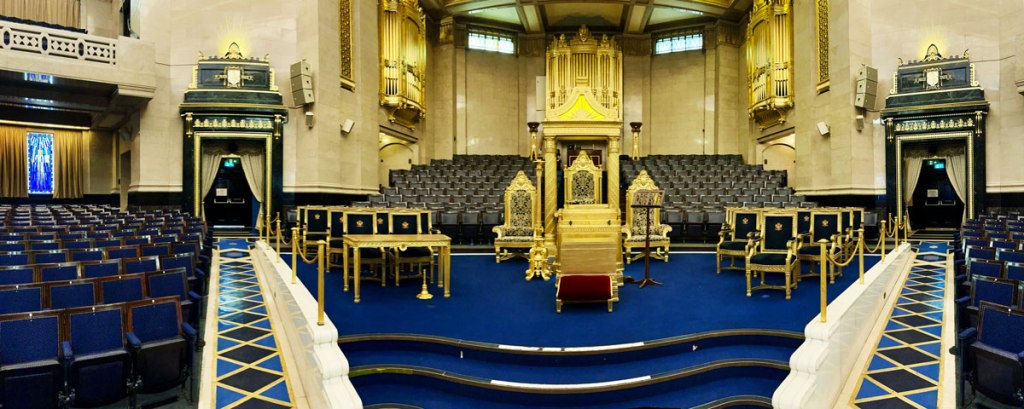
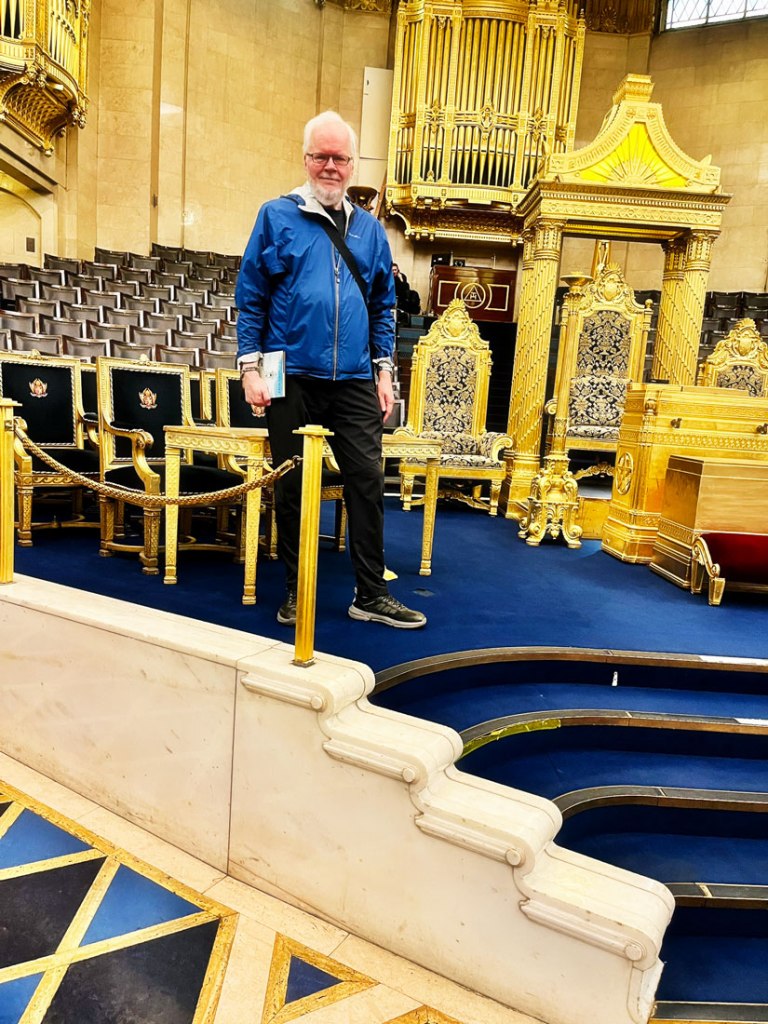
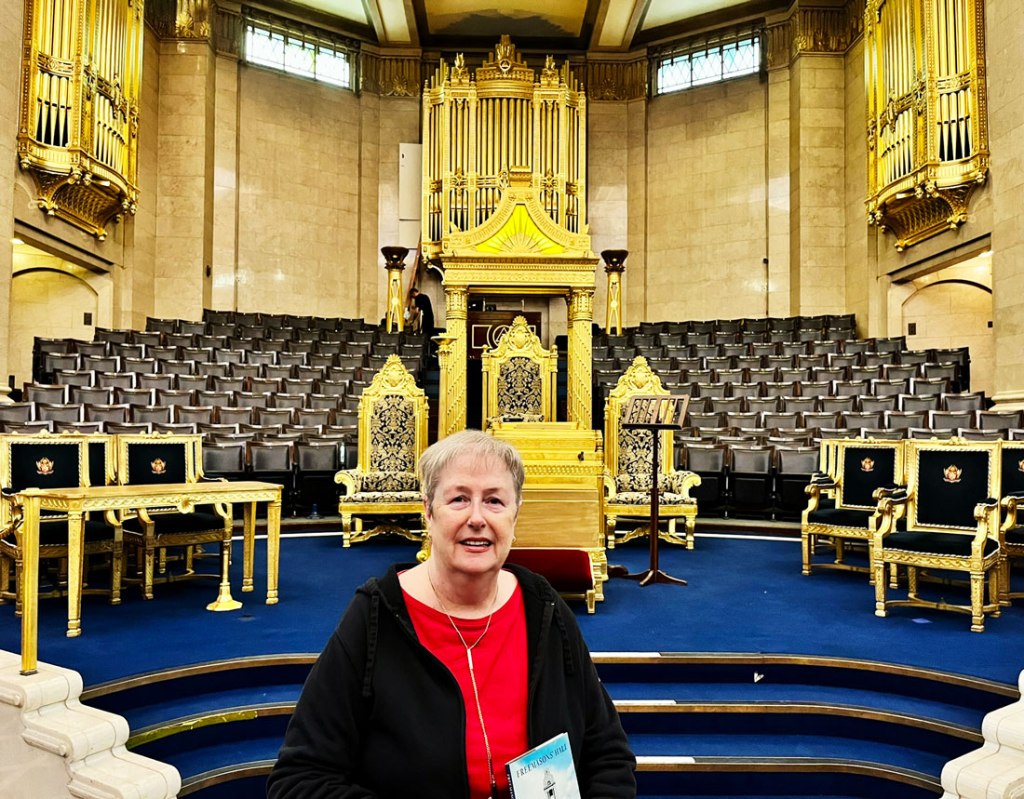
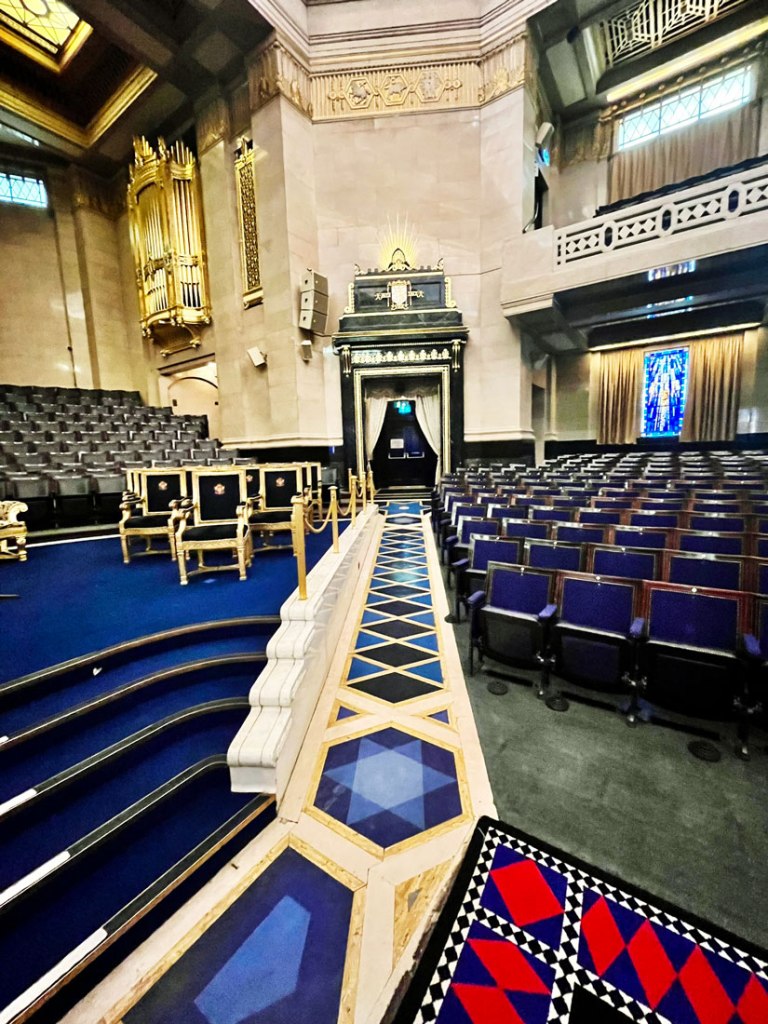
Freemasons’ Hall in London is the headquarters of the United Grand Lodge of England. A mouthful, indeed! It is the Supreme Grand Chapter of Royal Arch Masons of England, as well as being a meeting place for many Masonic Lodges in the London area. It is located near Coven Garden and has been a Masonic meeting place since 1775.
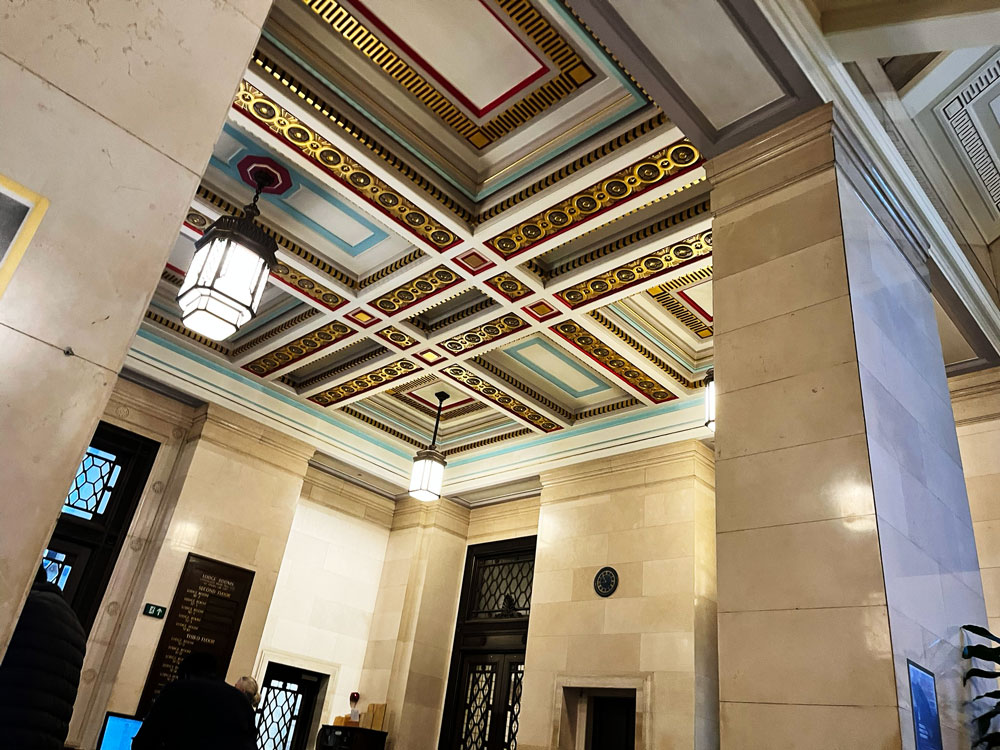
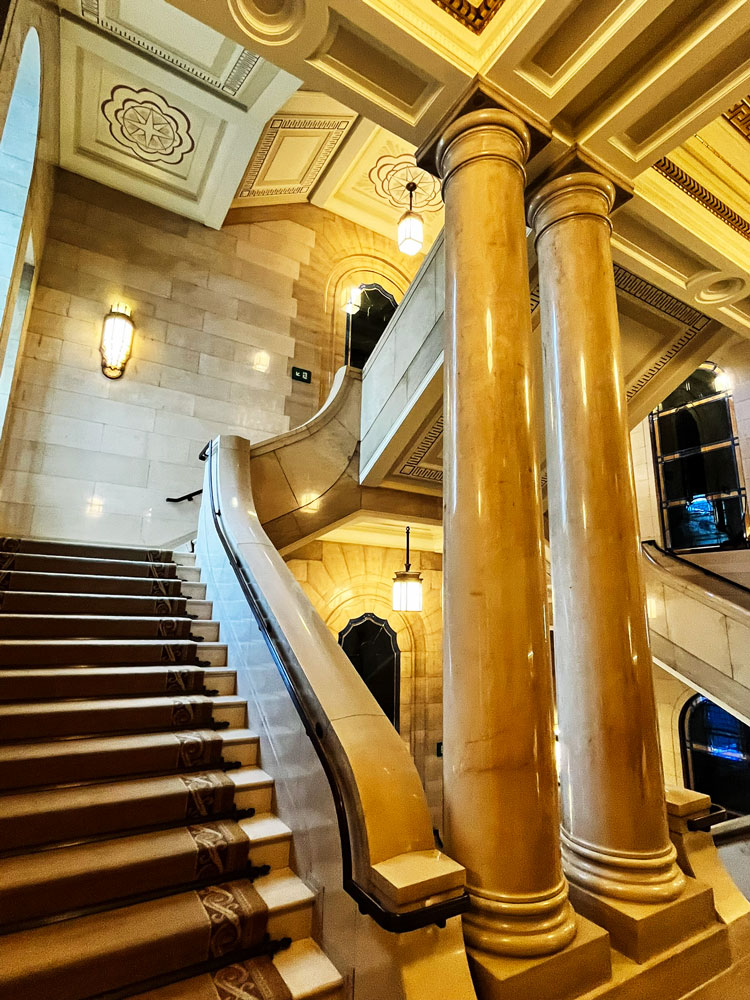
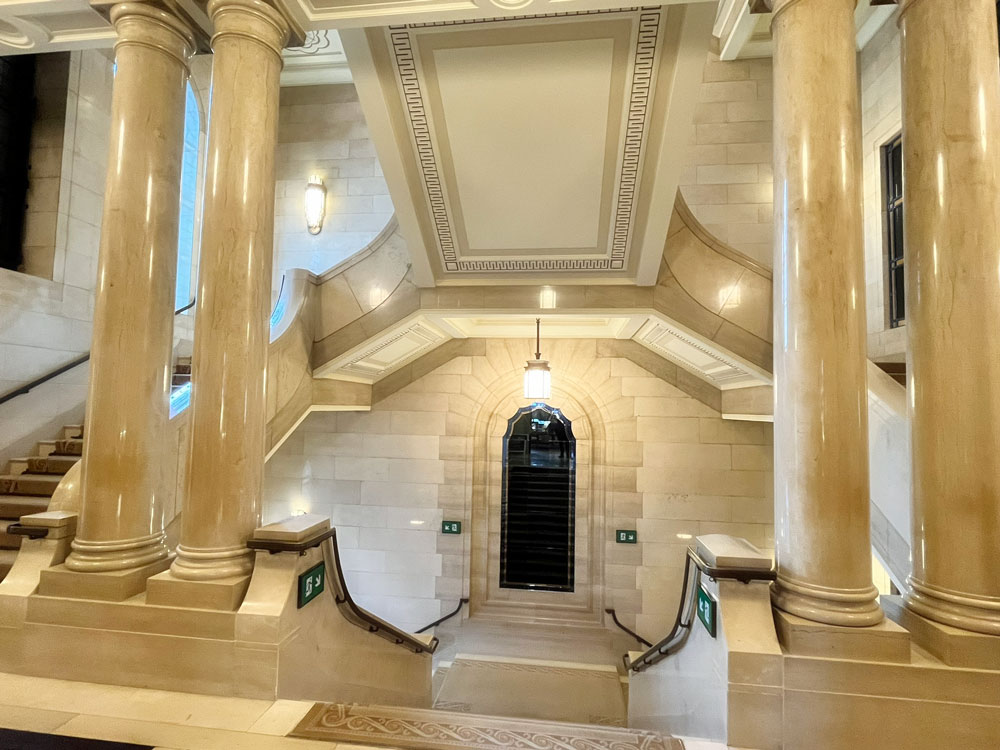
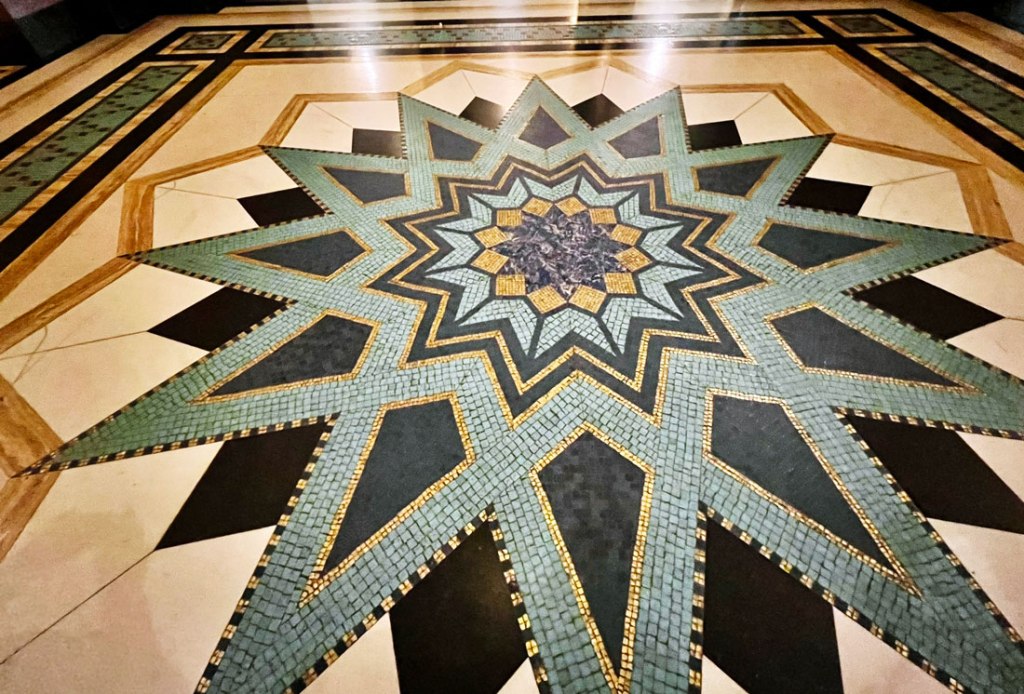
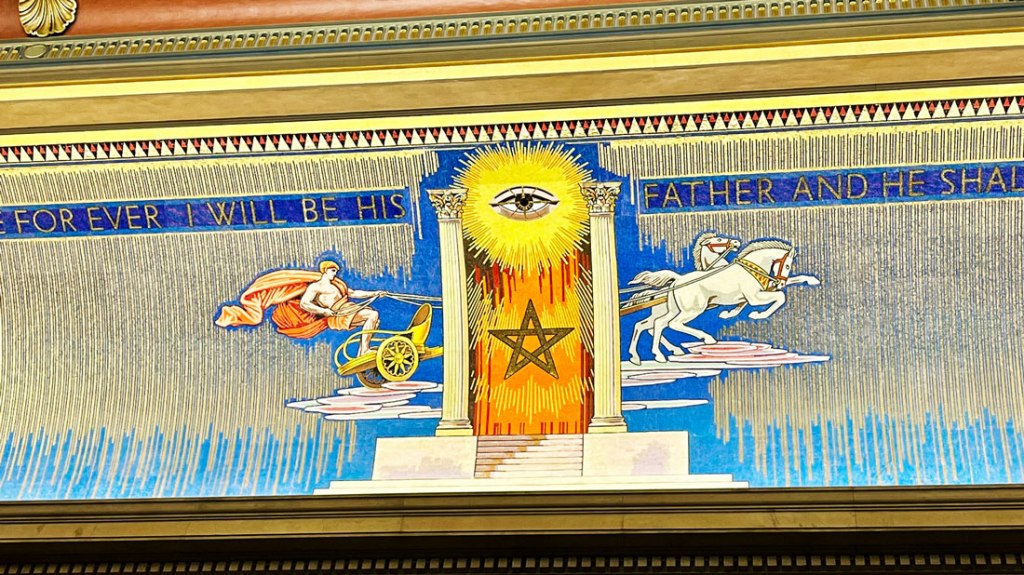
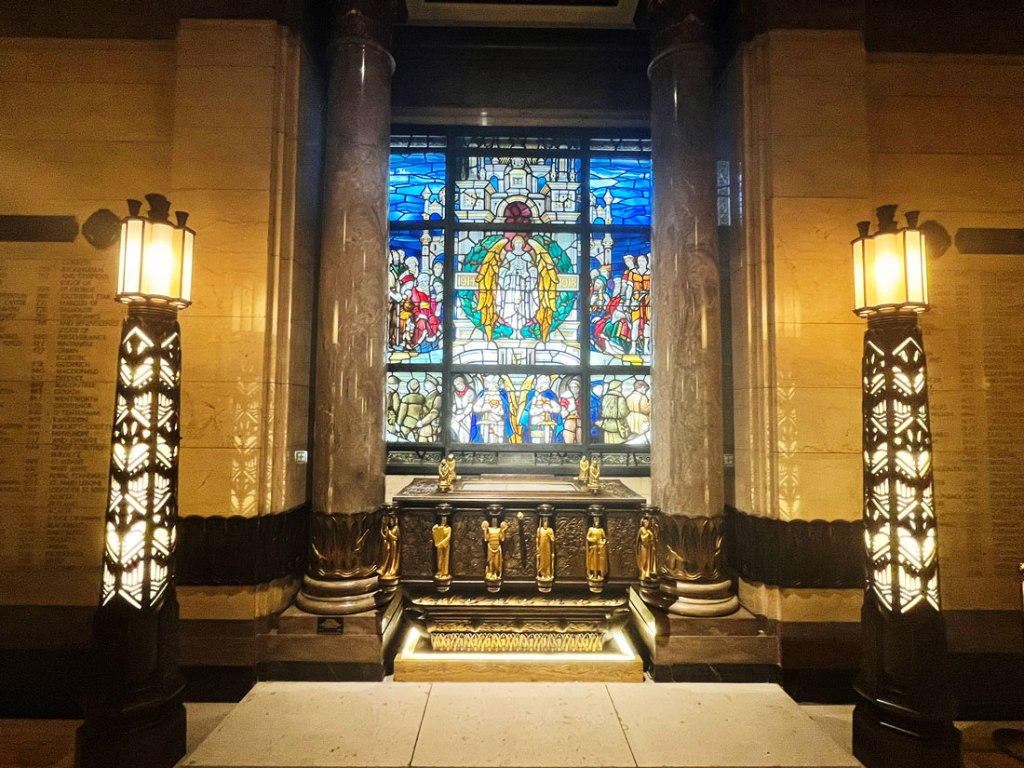
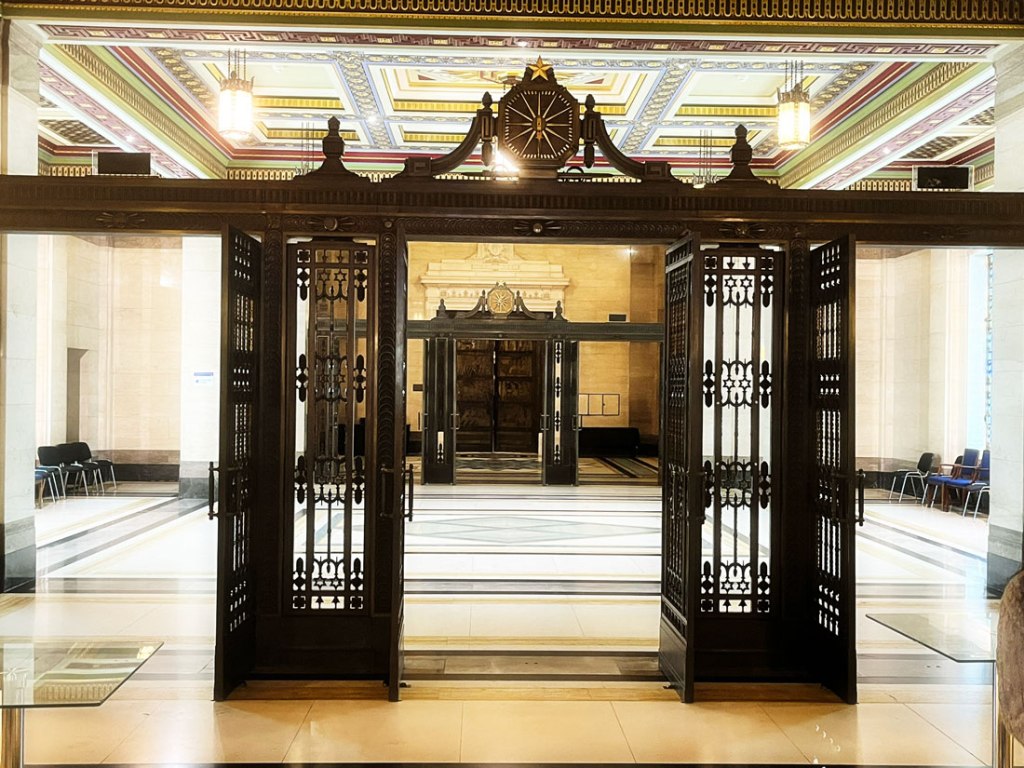
Parts of the building are open to the public daily, and its preserved classic Art deco style, together with its regular use as a film and television location, have made it a tourist destination.
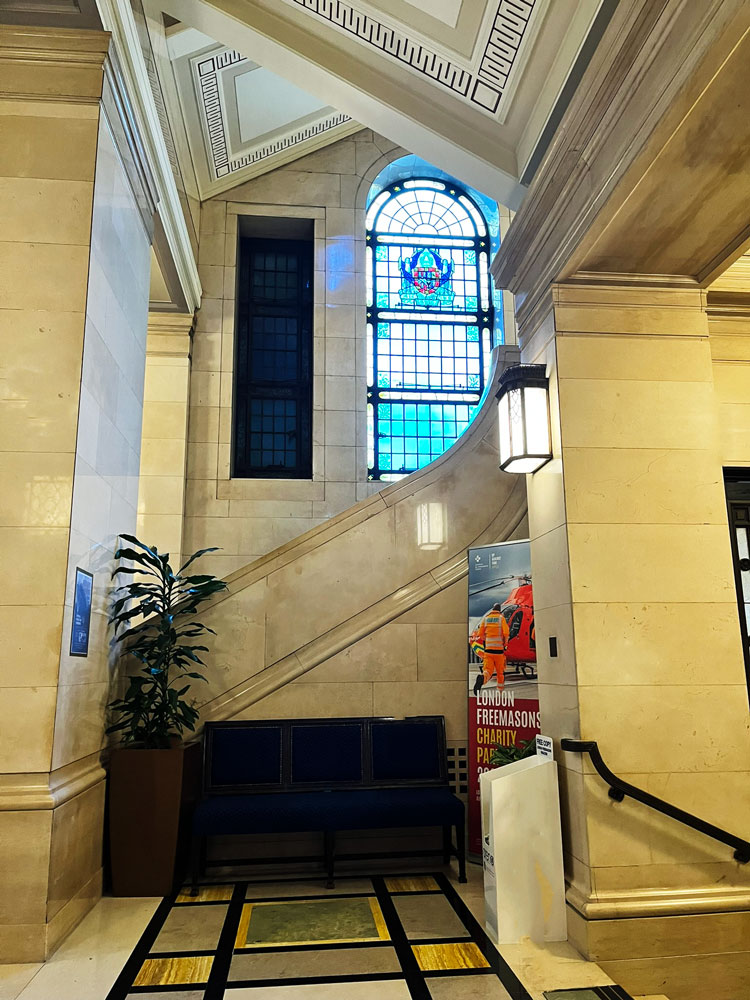
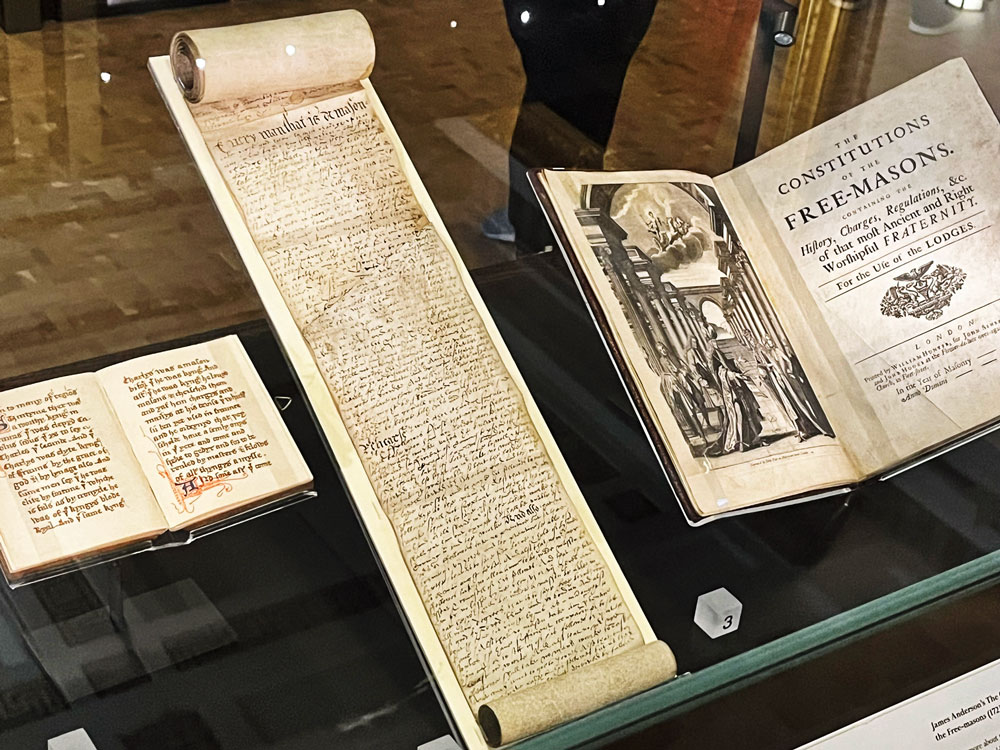
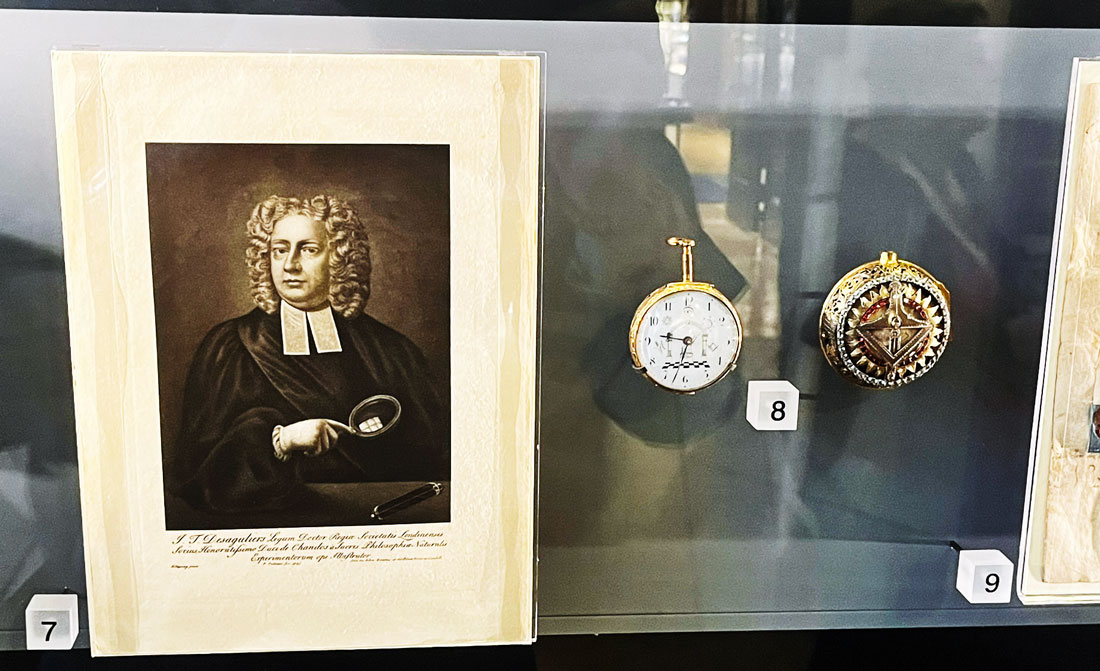
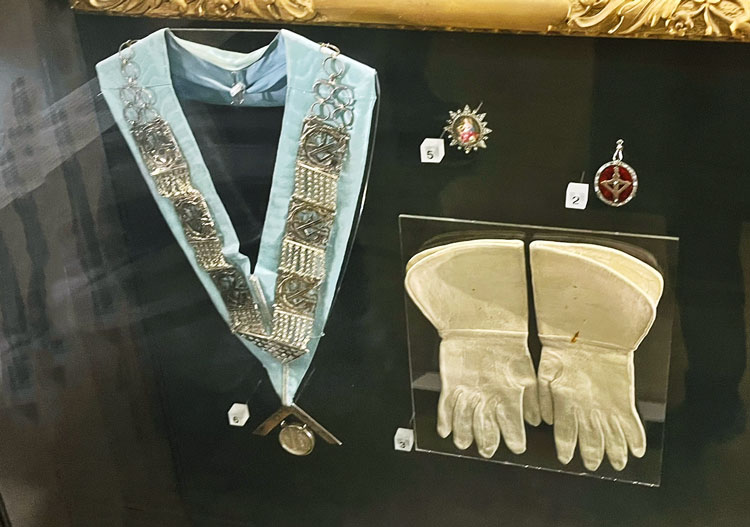
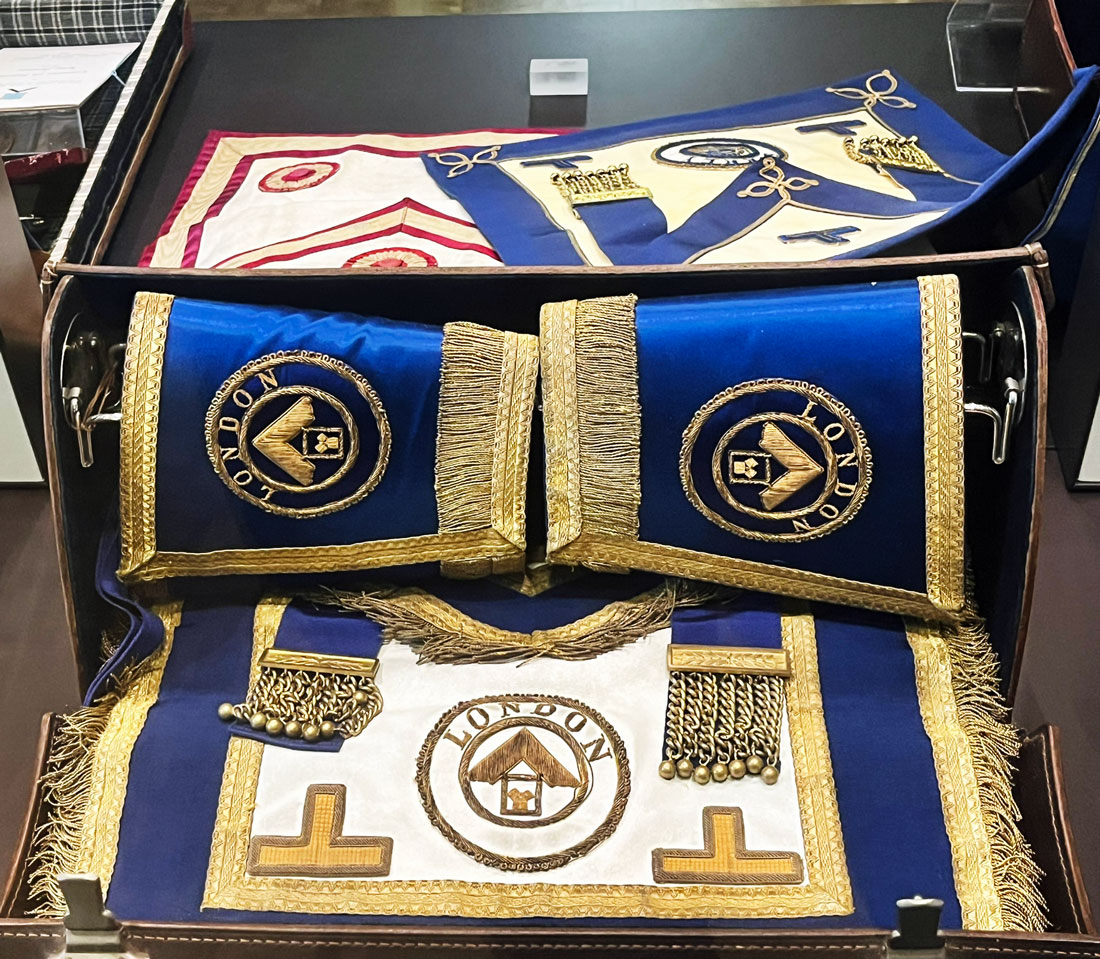
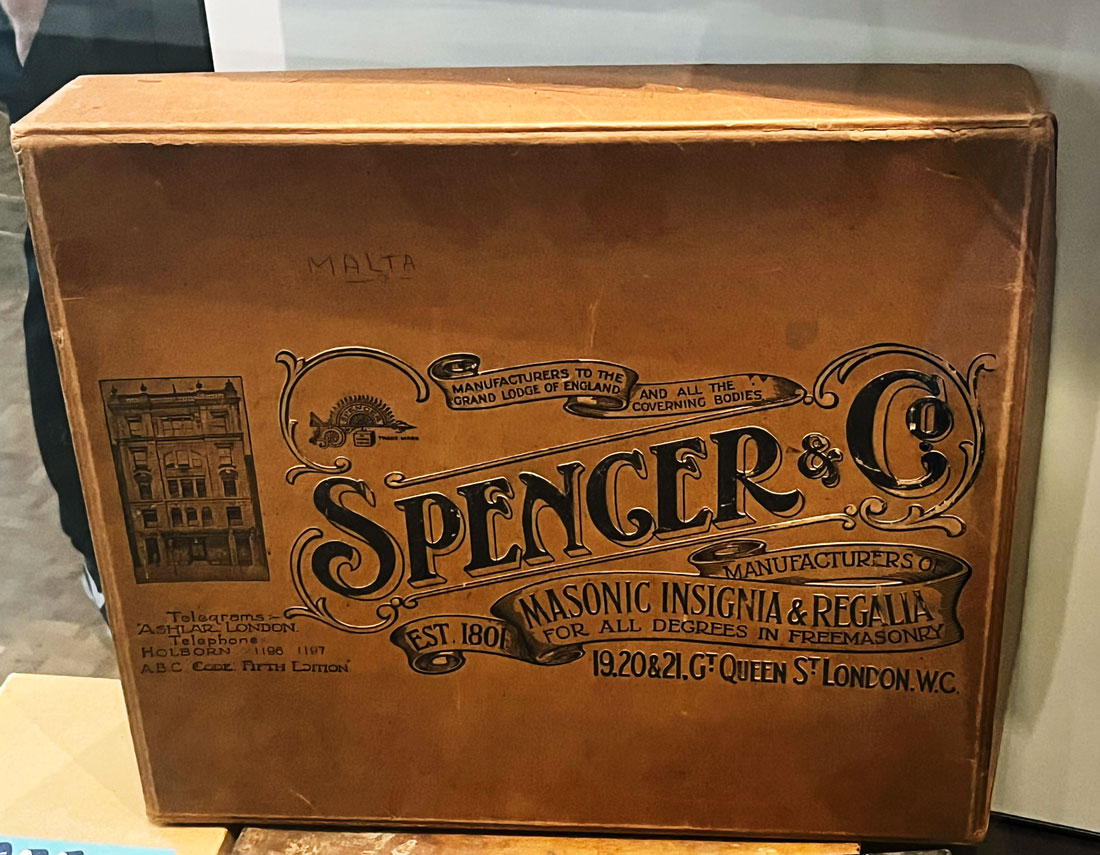
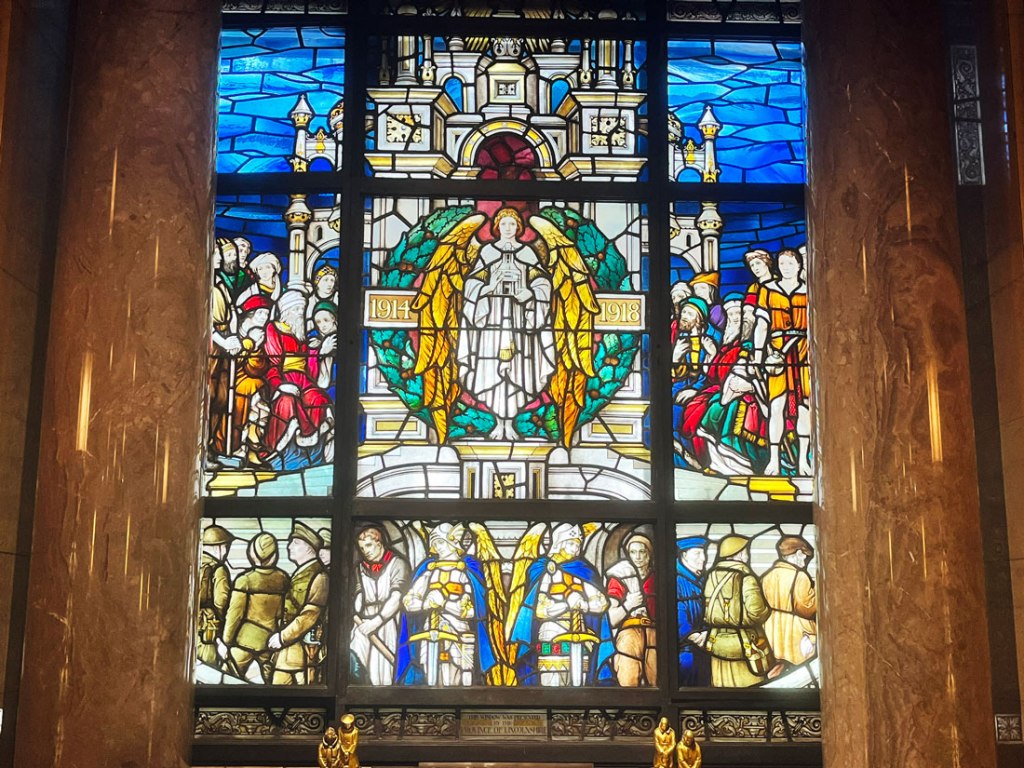
The current building, the third on this site, was built between 1927 and 1933 in the Art Deco style to the designs of architects Henry Victor Ashley and F. Winton Newman as a memorial to the 3,225 Freemasons who died on active service in W.W. I. It was fascinating visit.
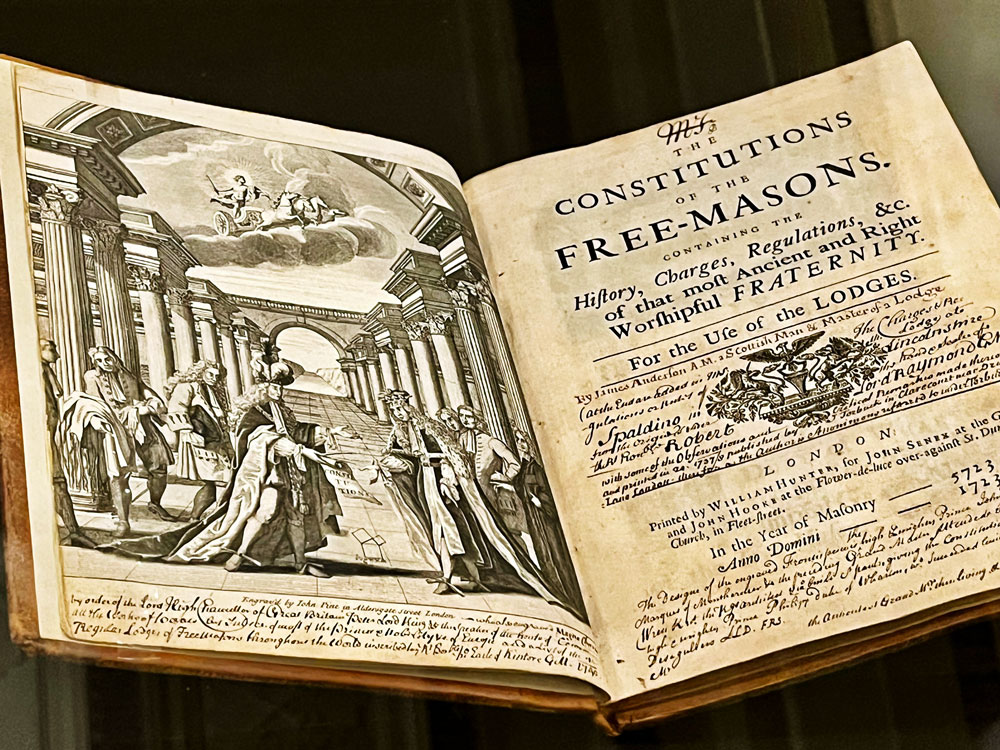

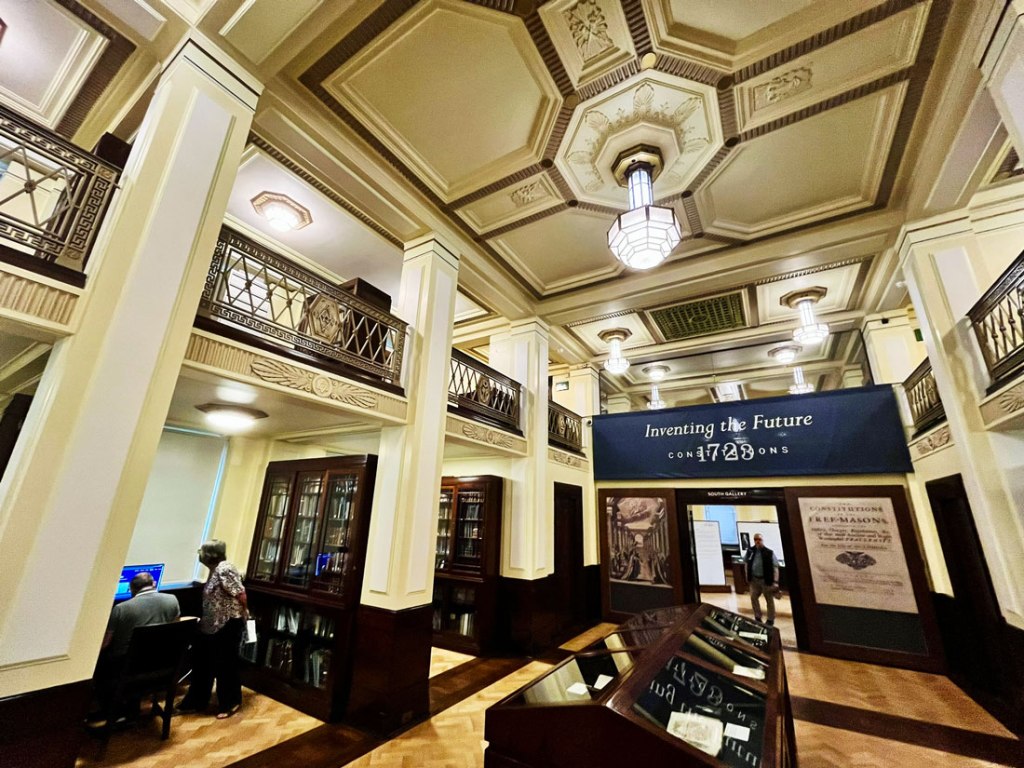
The Library is open to the public for reference use and users are required to register. The Library contains a comprehensive collection of printed books and manuscripts on every facet of Freemasonry in England, as well as material on Freemasonry elsewhere in the world, and on subjects associated with Freemasonry or with mystical and esoteric traditions. The Library catalogue is available online.
The Wallace Collection
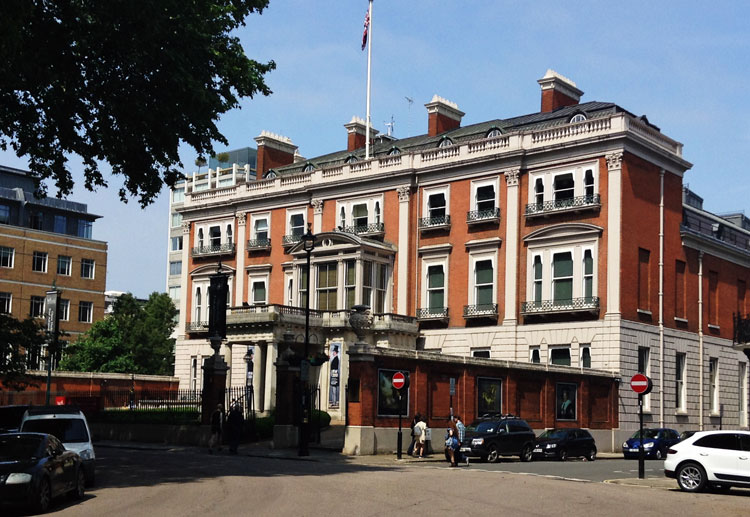
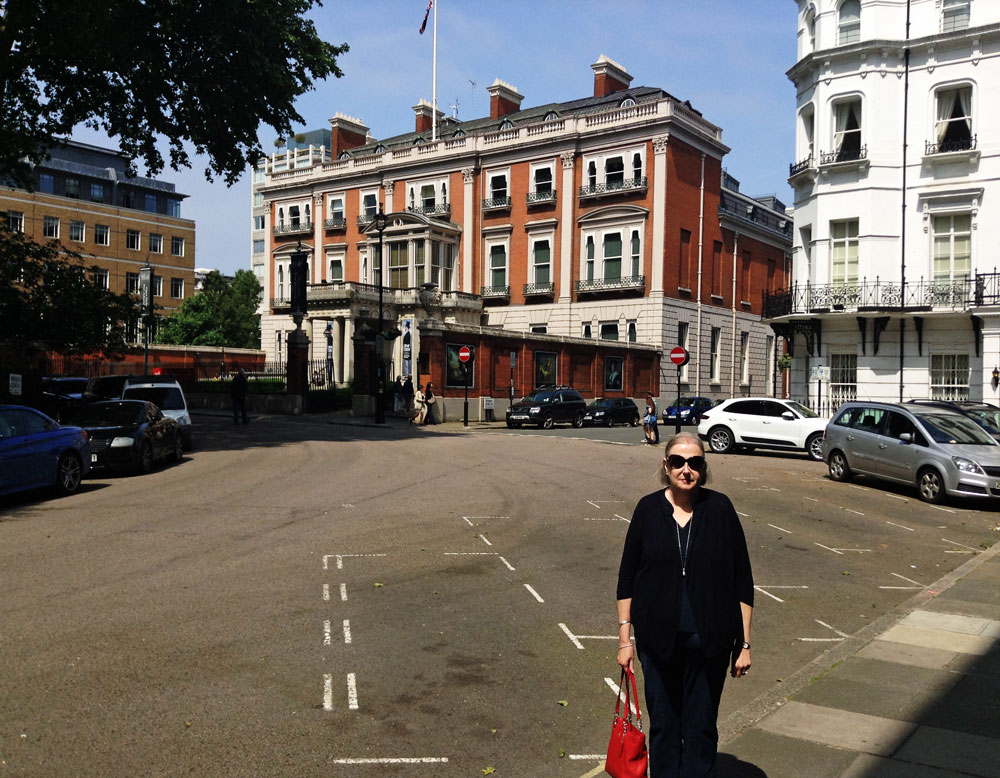
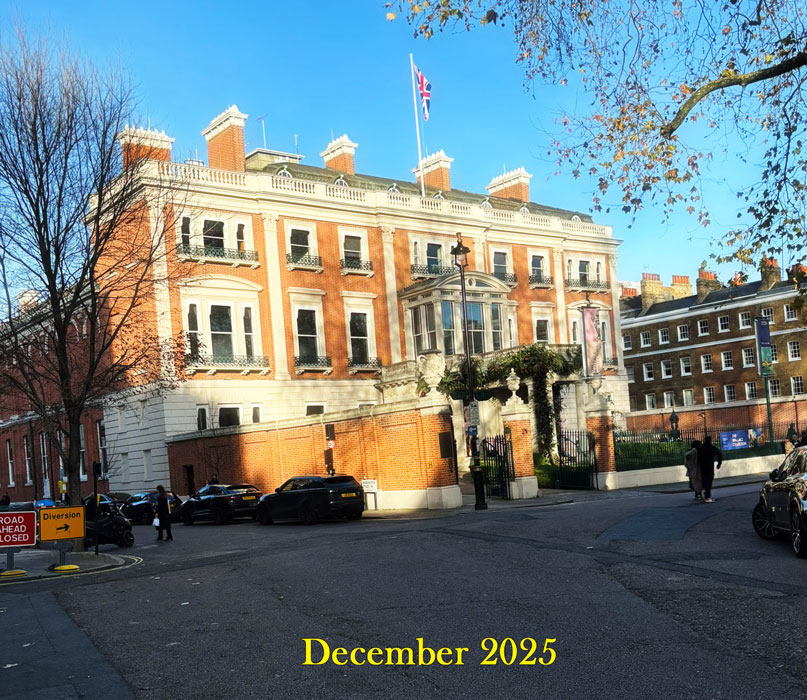
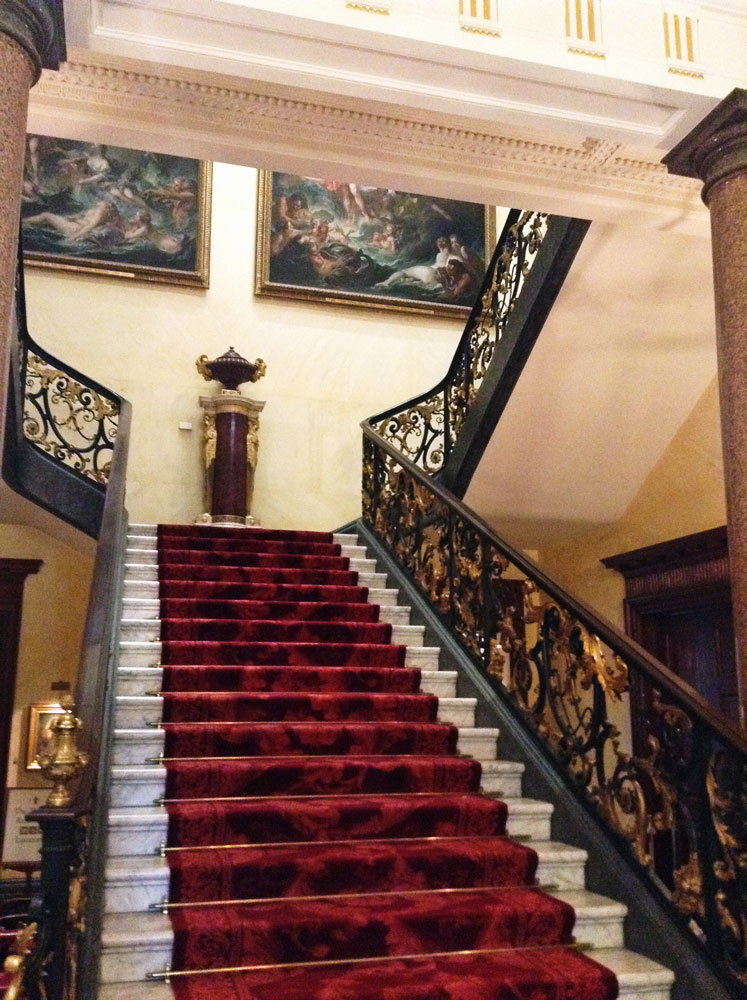
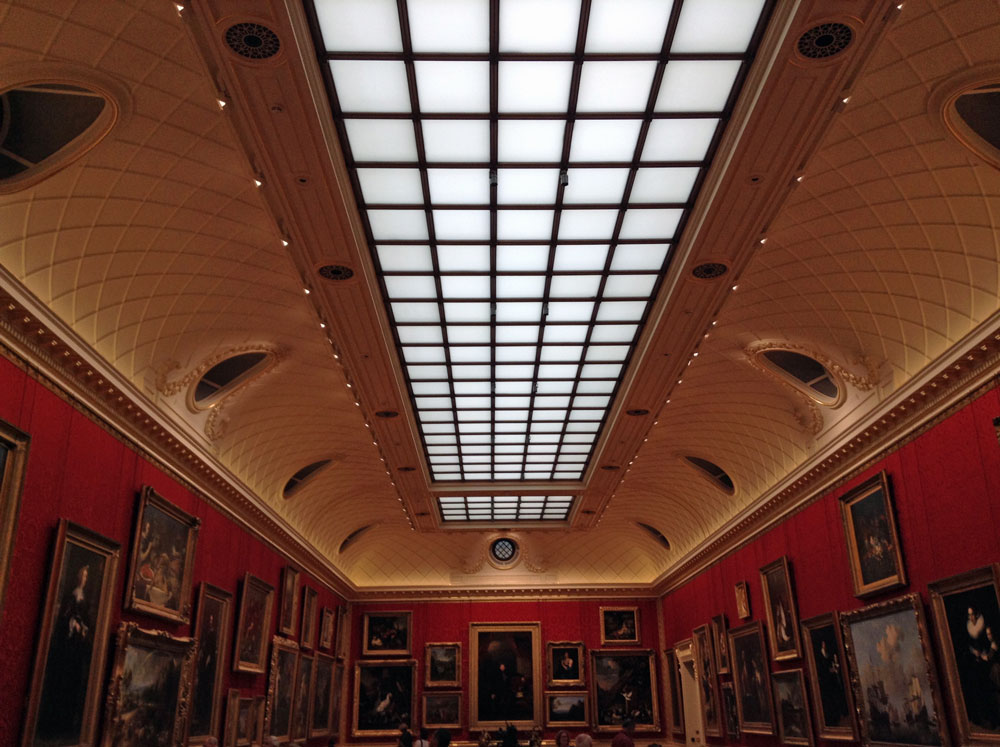
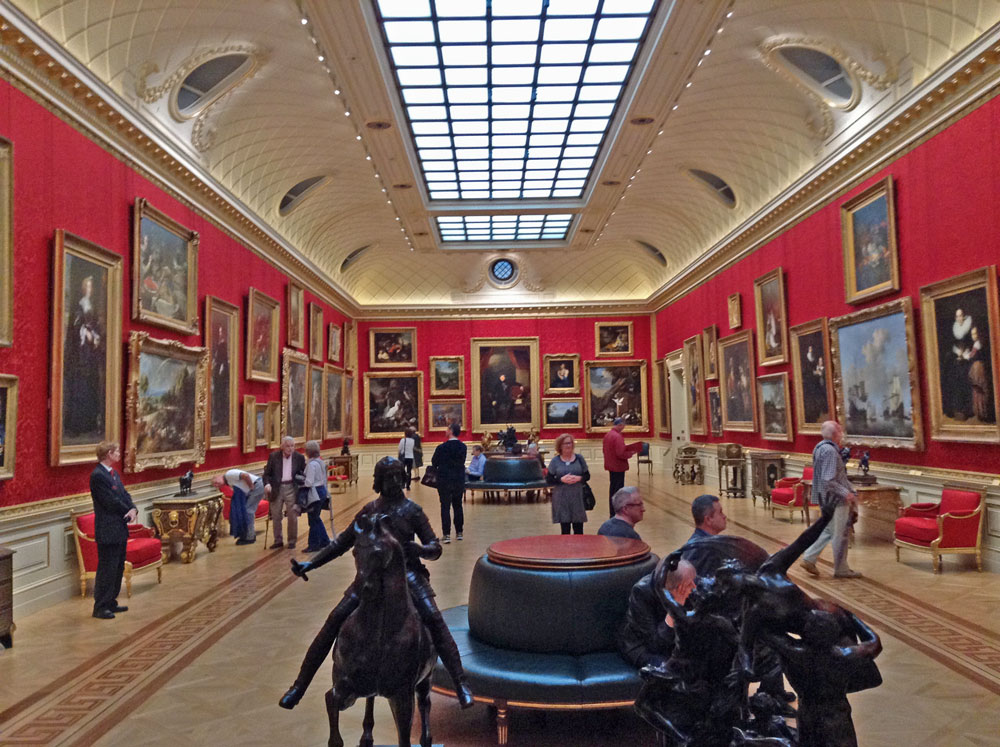
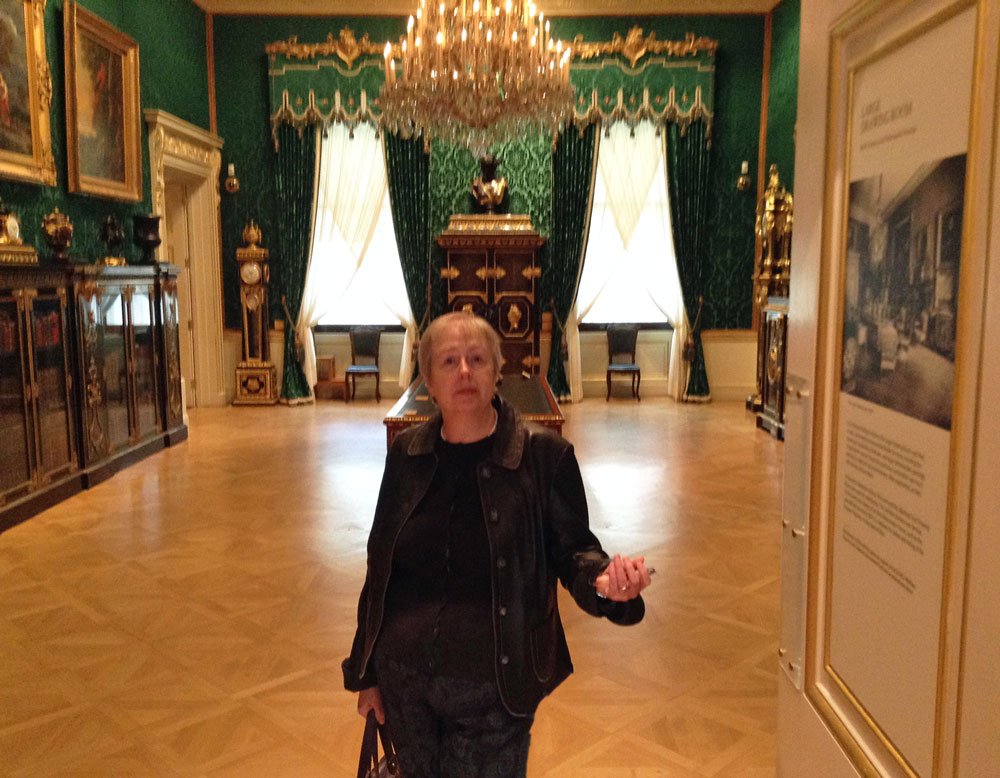
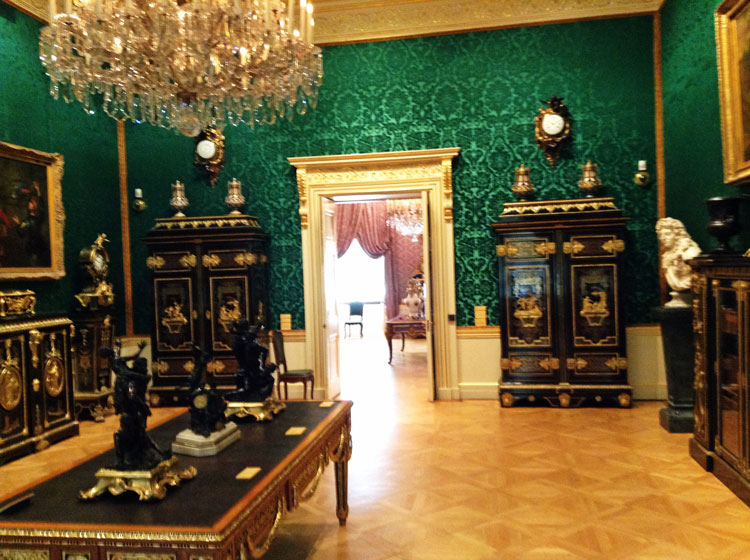
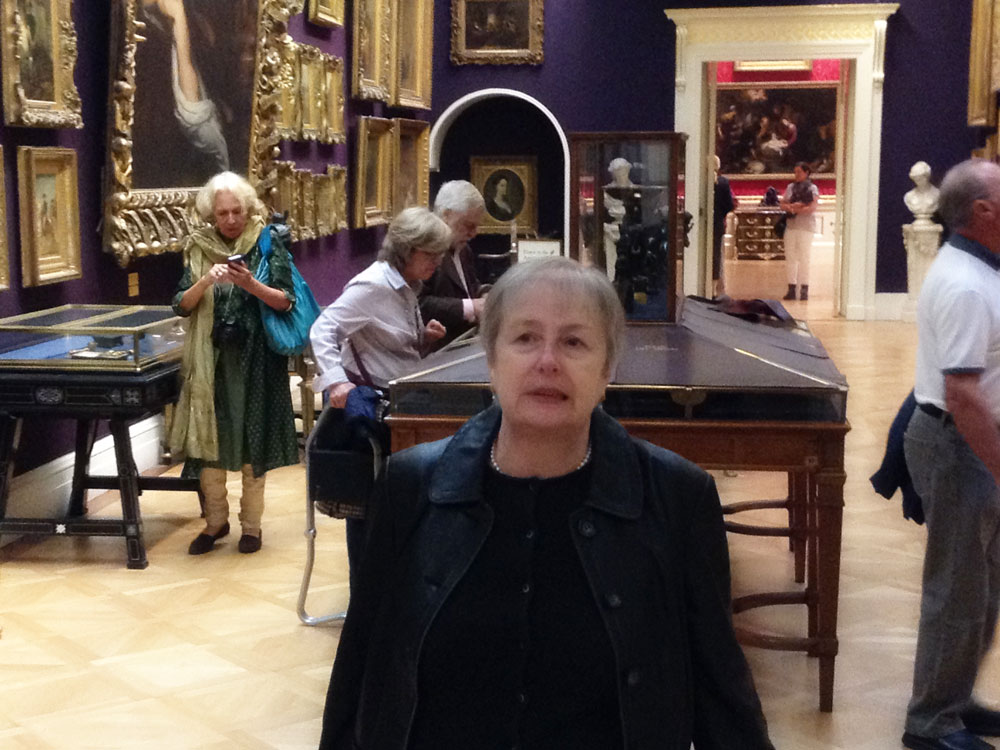
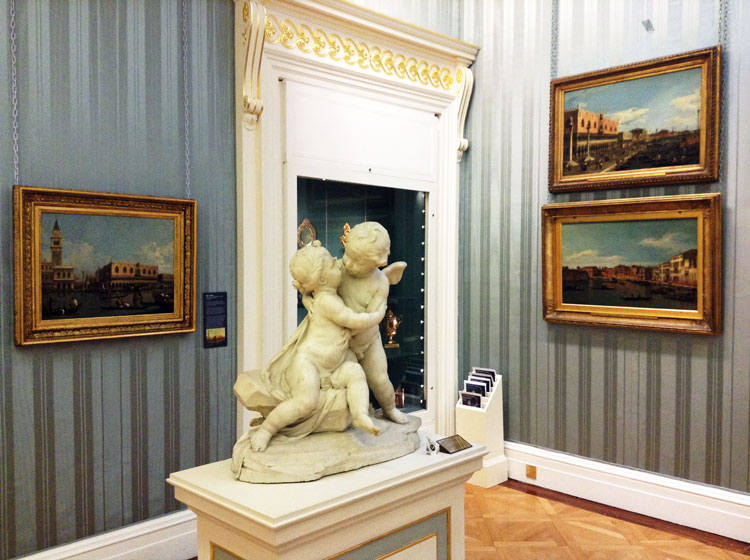
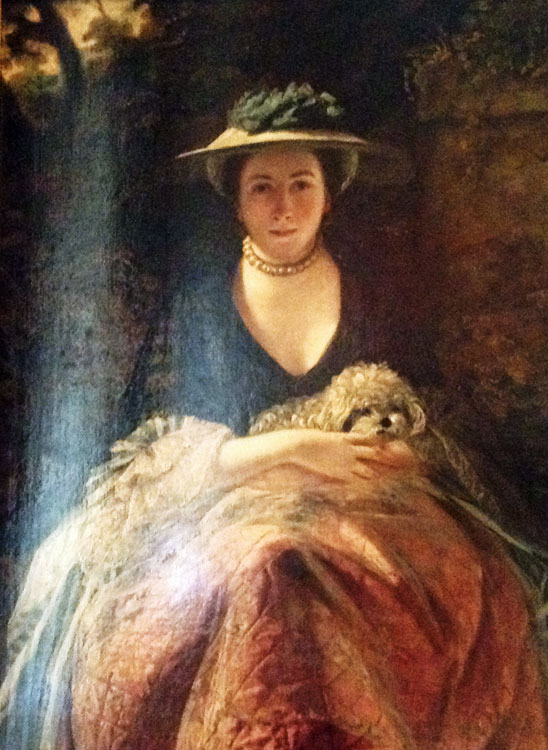
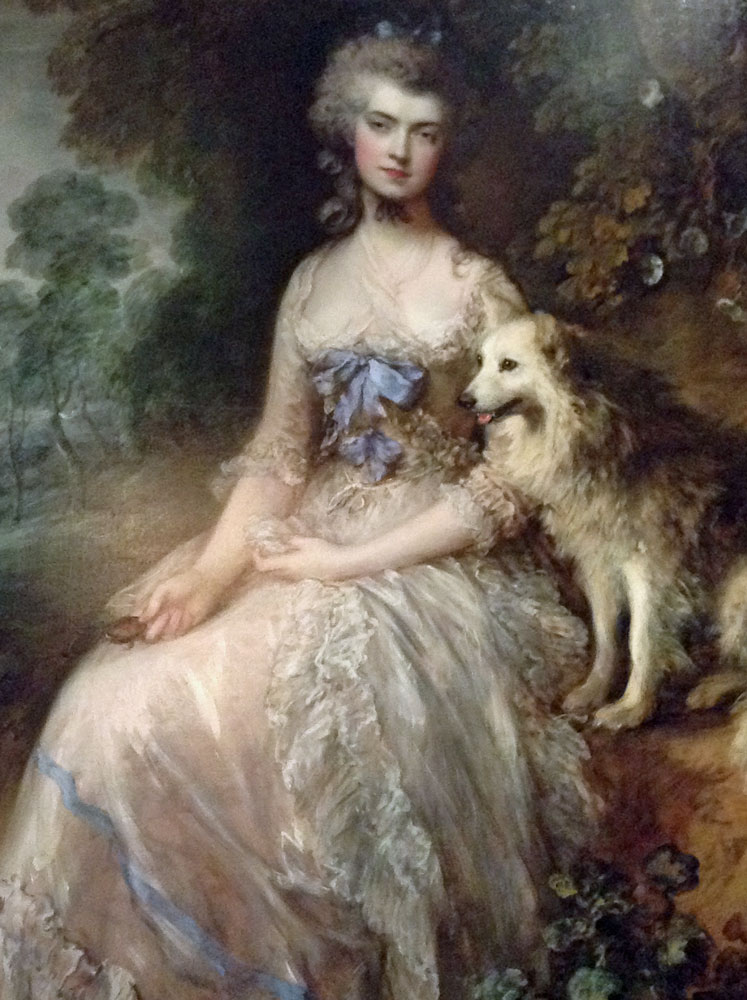
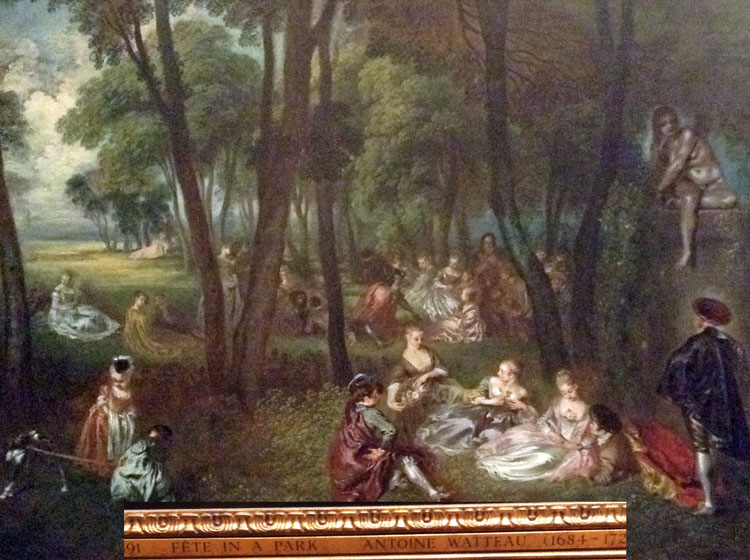
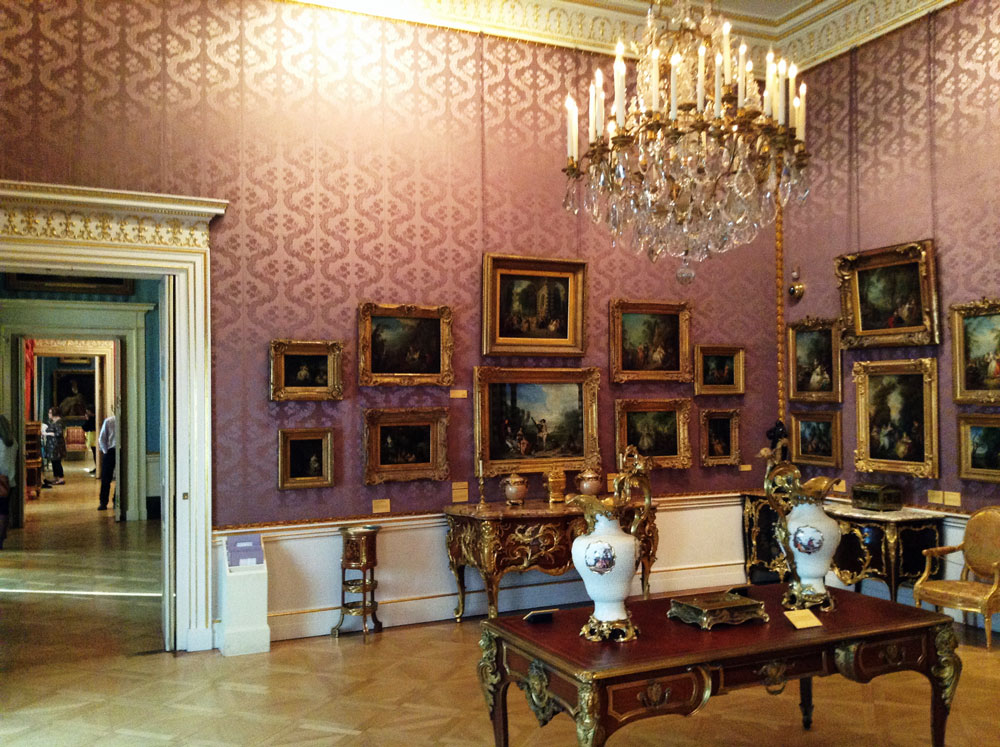
The Wallace Collection is a museum in London occupying Hertford House in Manchester Square, the former townhouse of the Seymour family, Marquesses of Hertford. It is named after Sir Richard Wallace, who built the extensive collection, along with the Marquesses of Hertford, in the 18th and 19th centuries.
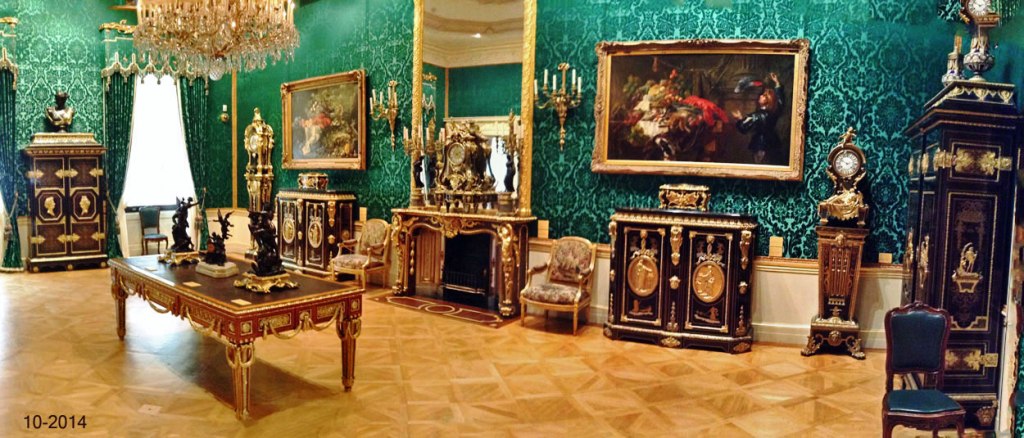
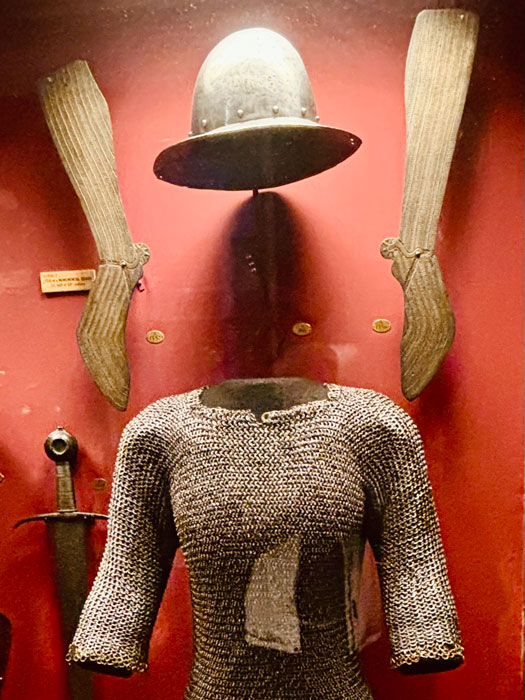
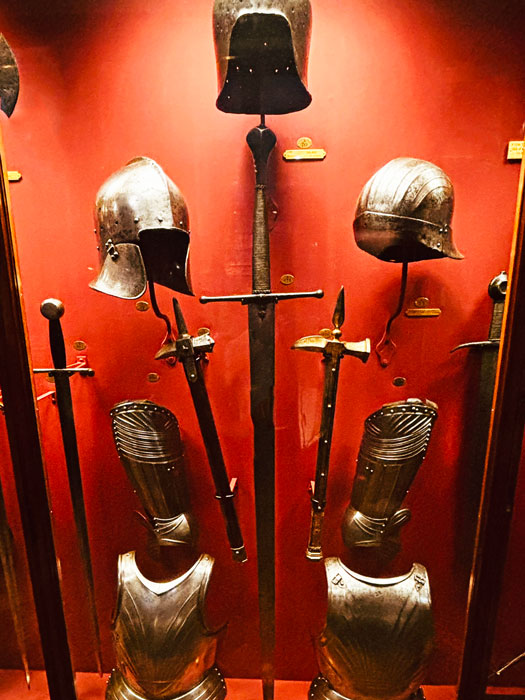
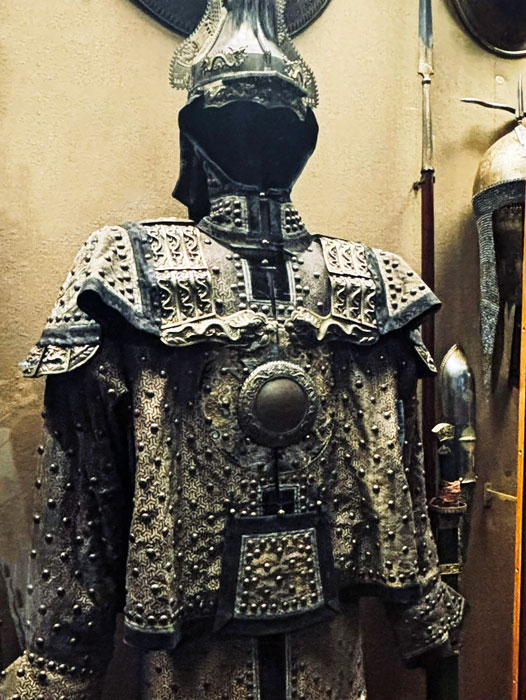
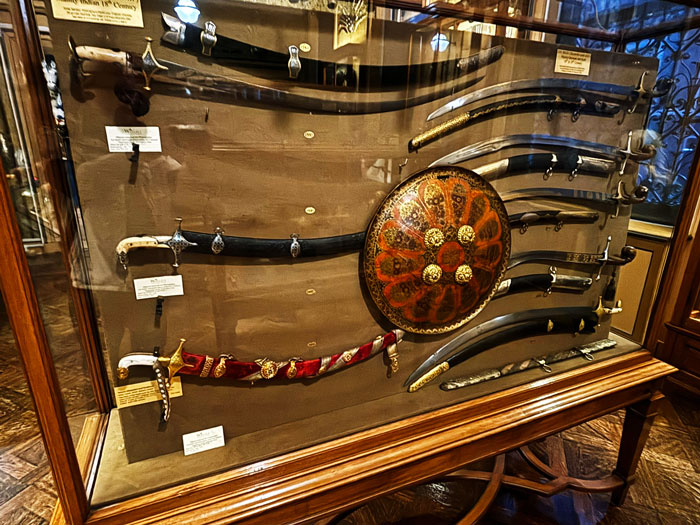
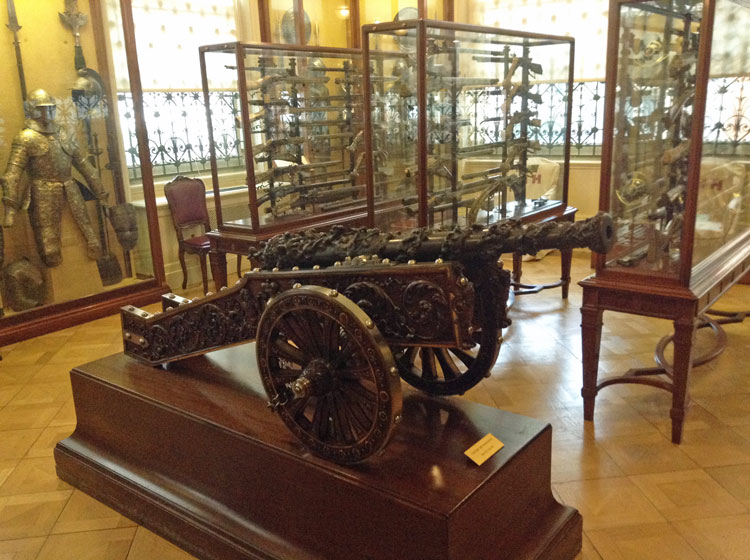
The collection features fine and decorative arts from the 15th to the 19th centuries with important holdings of French 18th-century paintings, furniture, arms and armour, porcelain and Old master paintings arranged into 25 galleries. It is open to the public and entry is free.
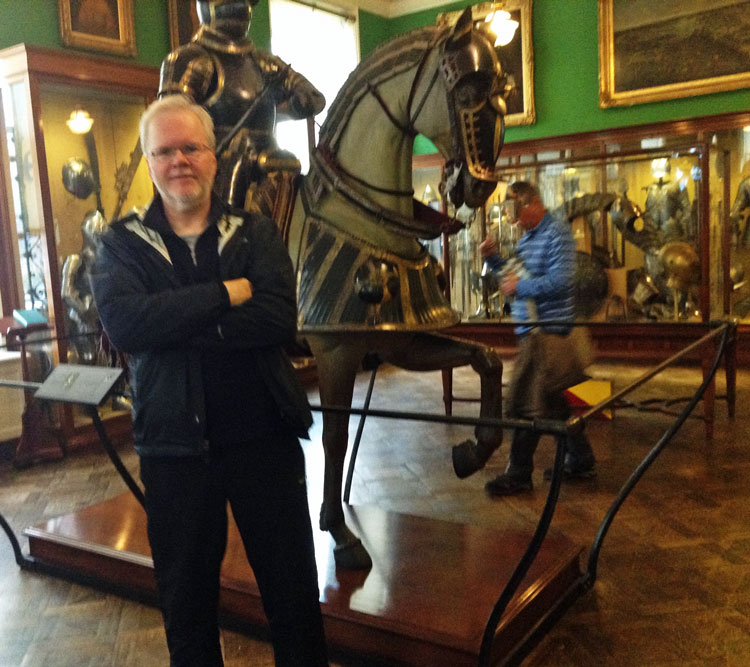
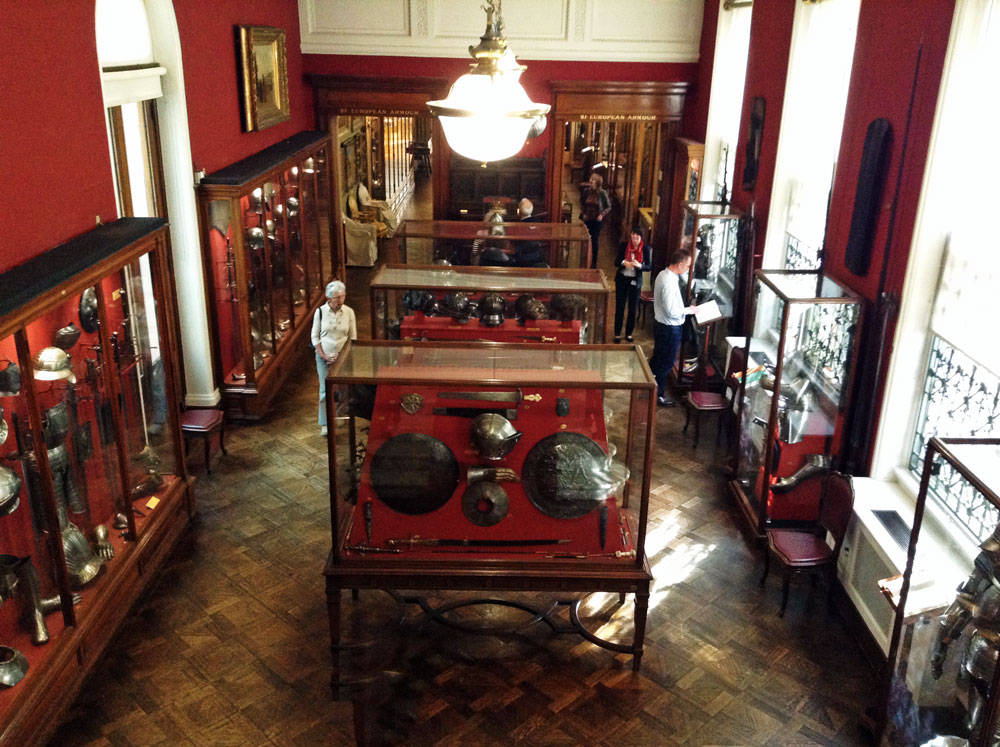
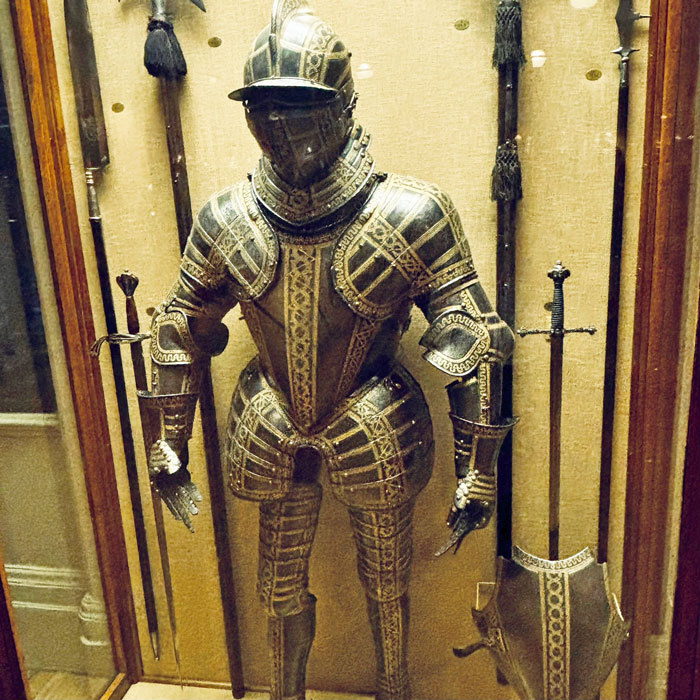
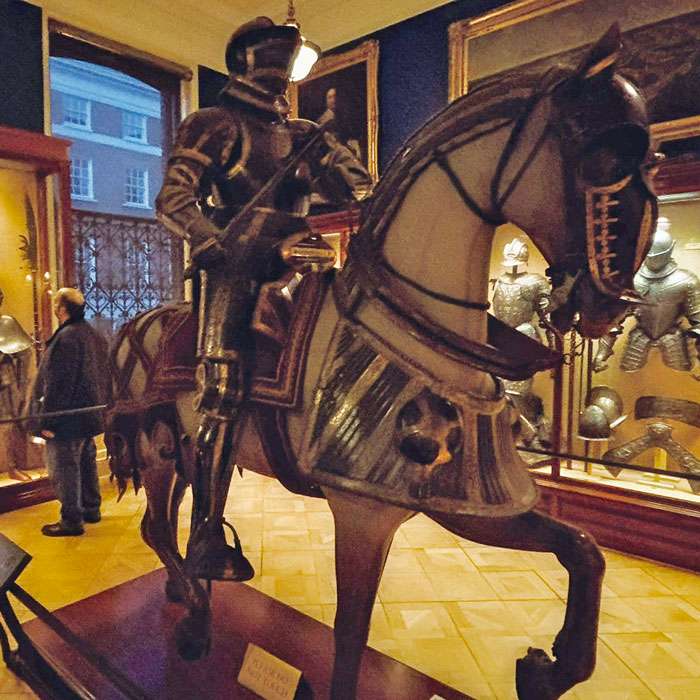
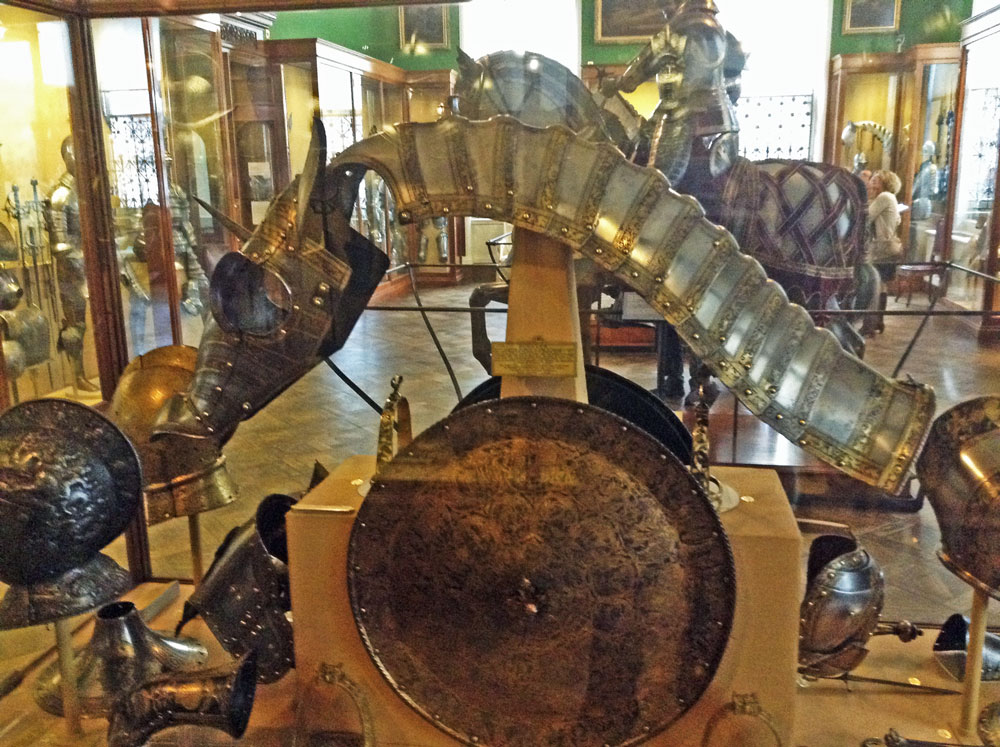
King Henry VIII had founded his court armour workshop at Greenwich in 1515 primarily to make fighting equipment for his own personal use. By the reign of his daughter Queen Elizabeth I however, the Greenwich workshop was devoted entirely to the making of armours for the queen’s close friends and supporters.
The above garniture is richly decorated with etched and gilt strapwork and borders. The clothing fashions of the time are also reflected in the design of the armour.
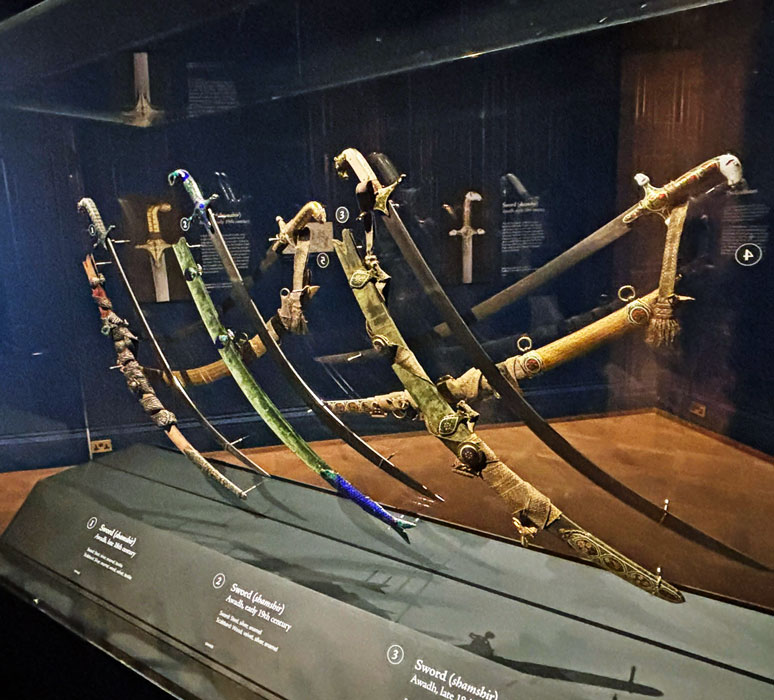
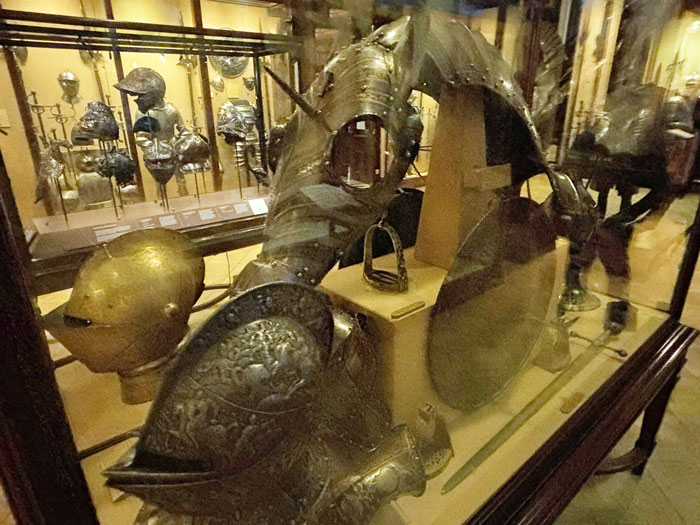
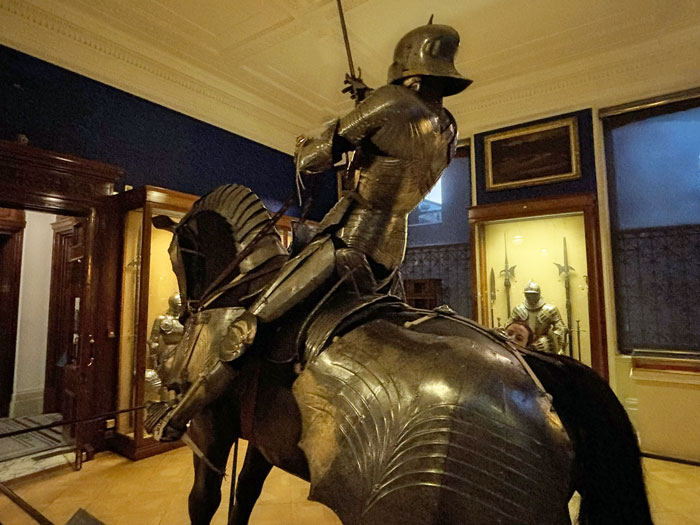
December 2025
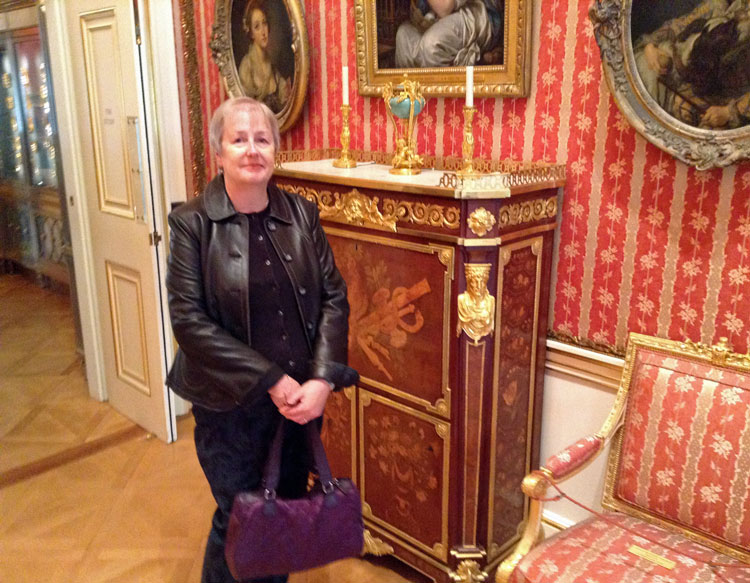
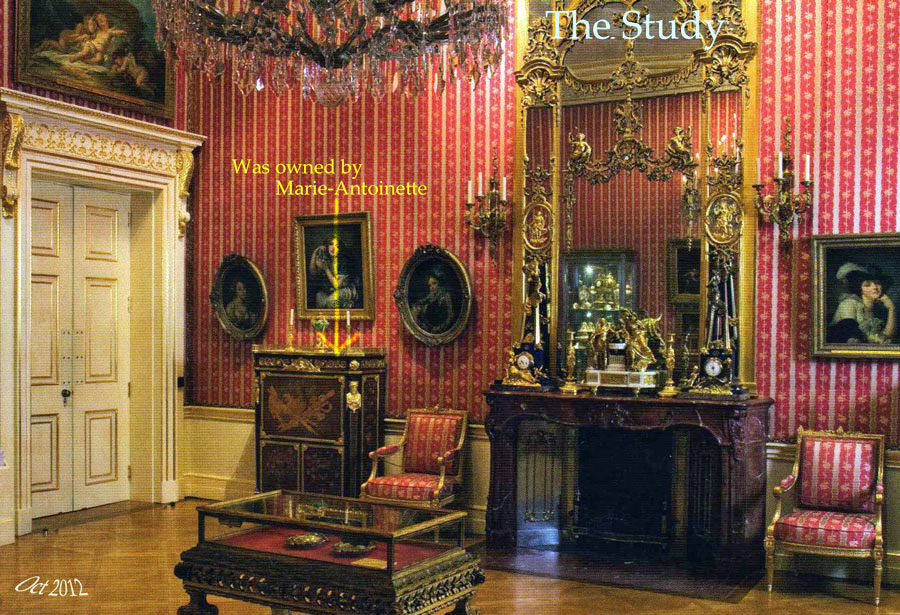
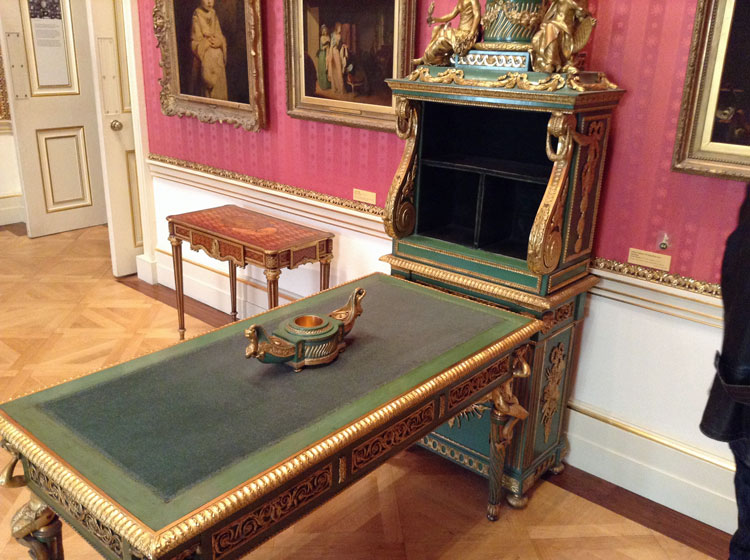
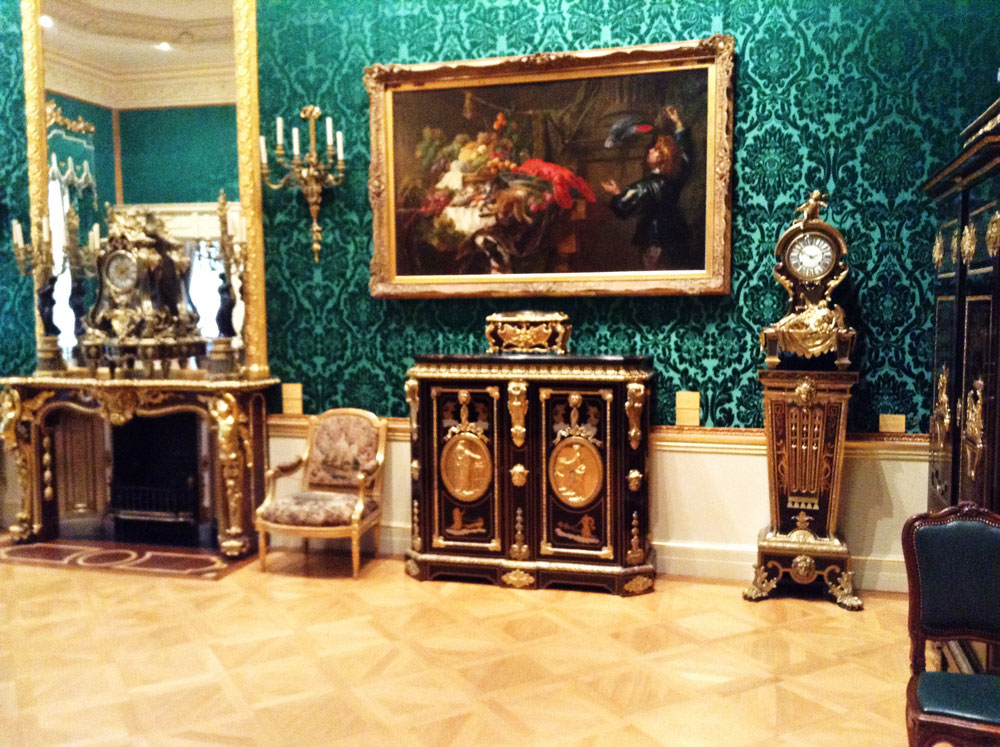
Filing-cabinet, writing-table and inkstand. c. 1765. Pear wood lacquered with green French vernis, gilt bronze. This suite of furniture by Dubois is one of the most important early examples of Neoclassicism in France.
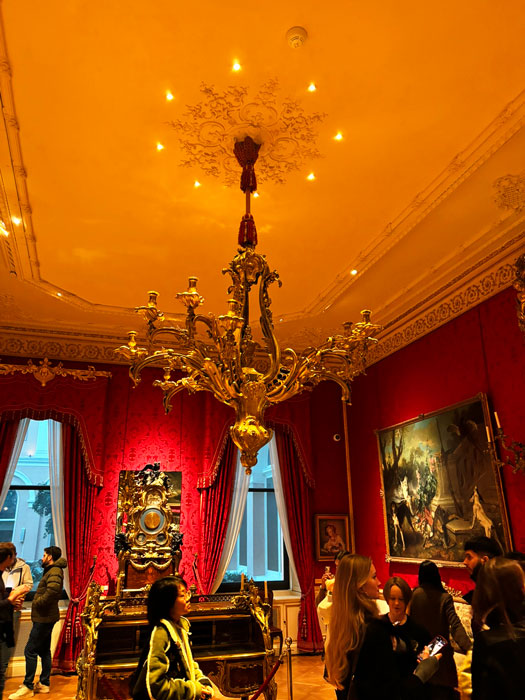
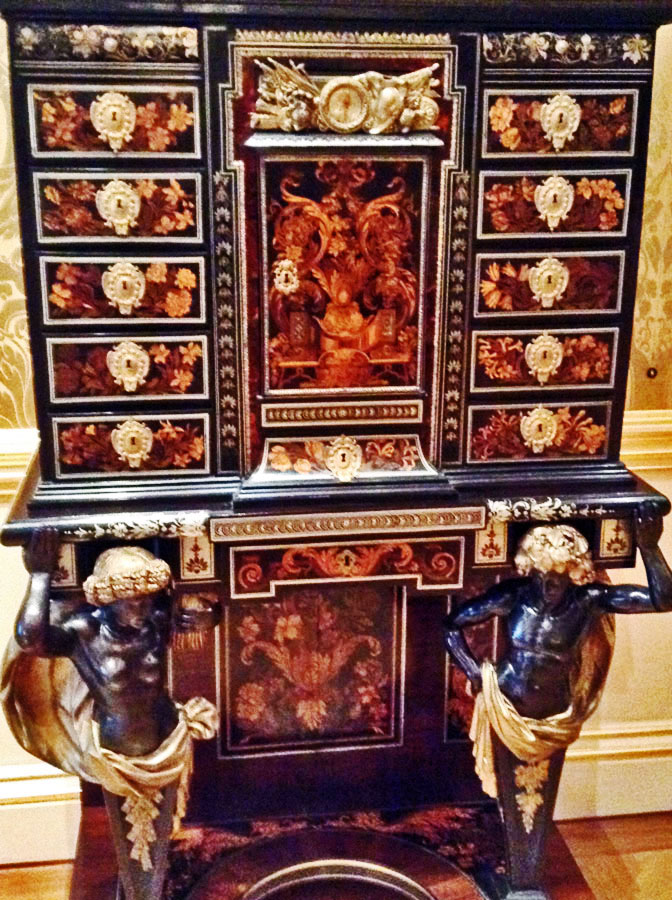
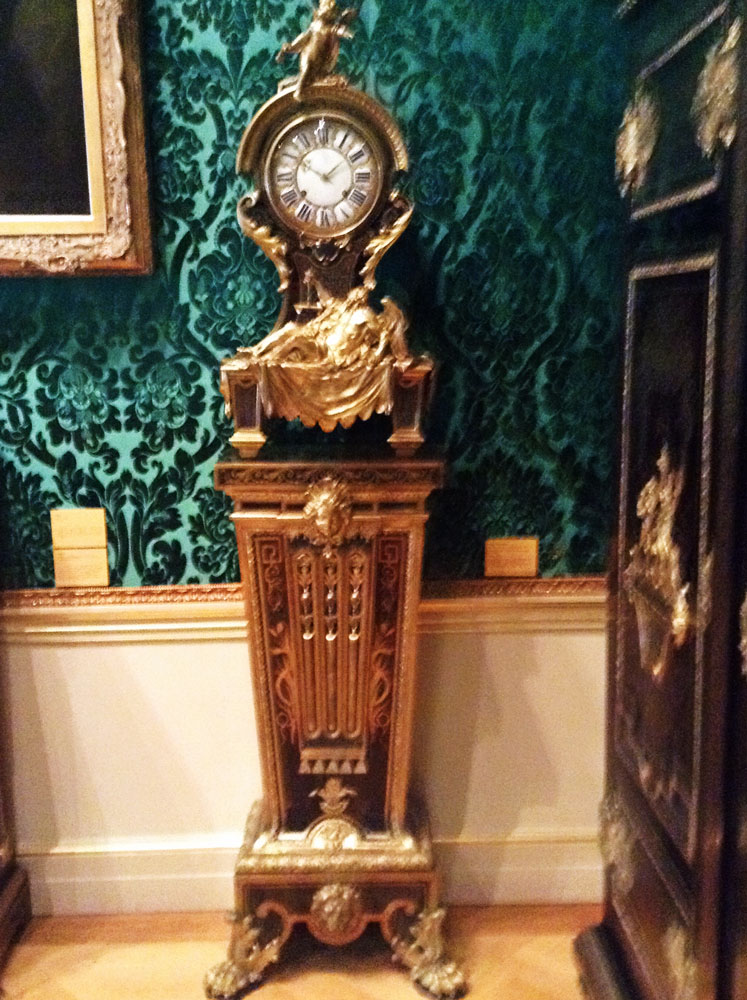
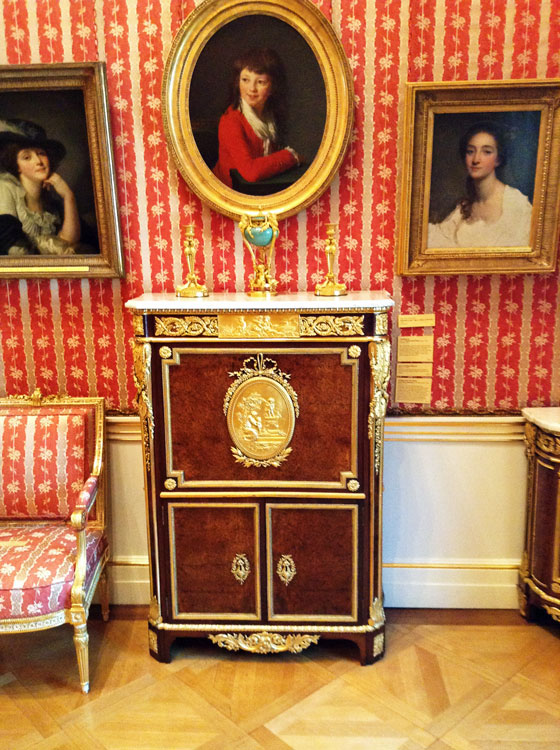
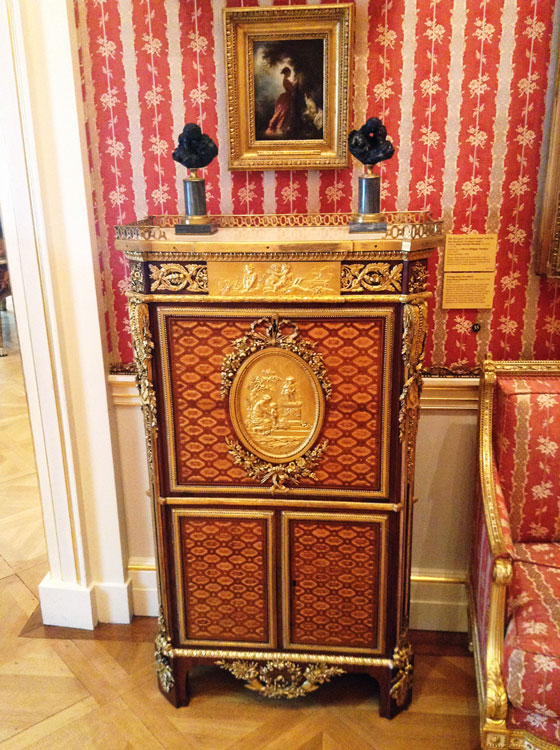
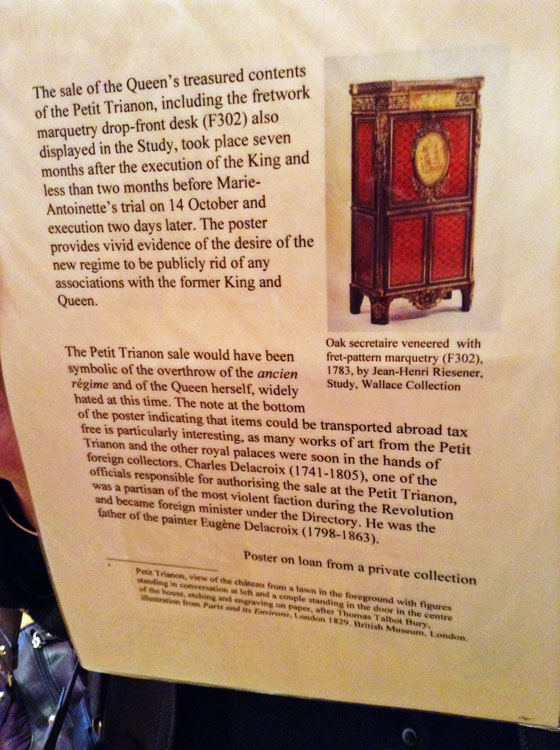
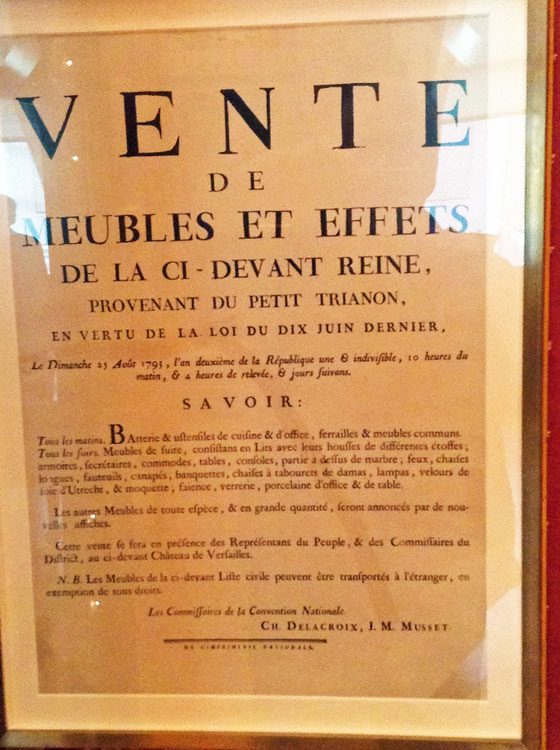
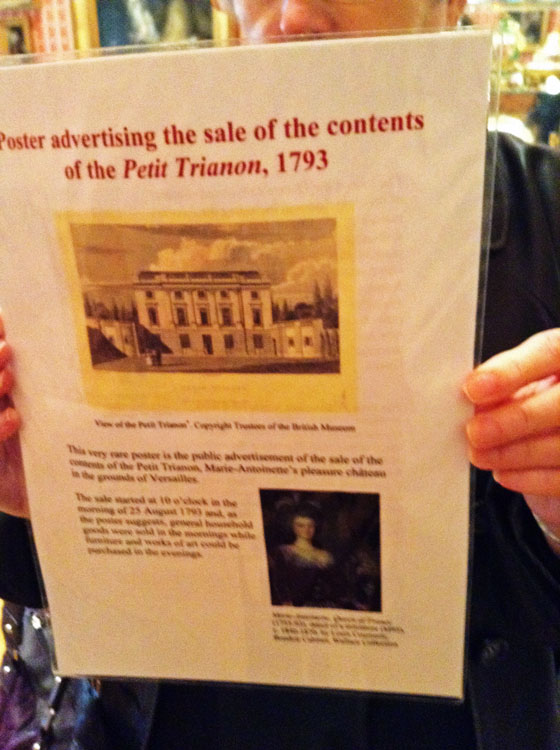
Fall-front desk– (Pictured above right): Marie-Antoinette escaped the rigours of court etiquette by visiting the Petit Trianon, a small but perfectly formed house in the grounds of Versailles that became her personal retreat. The desk was supplied for the Petit Trianon by Jean-Henri Riesener (1783). It was intended for her boudoir.

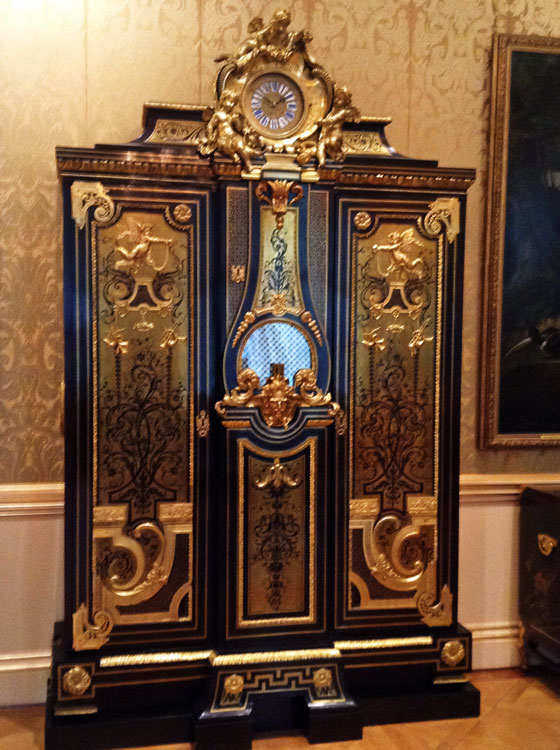
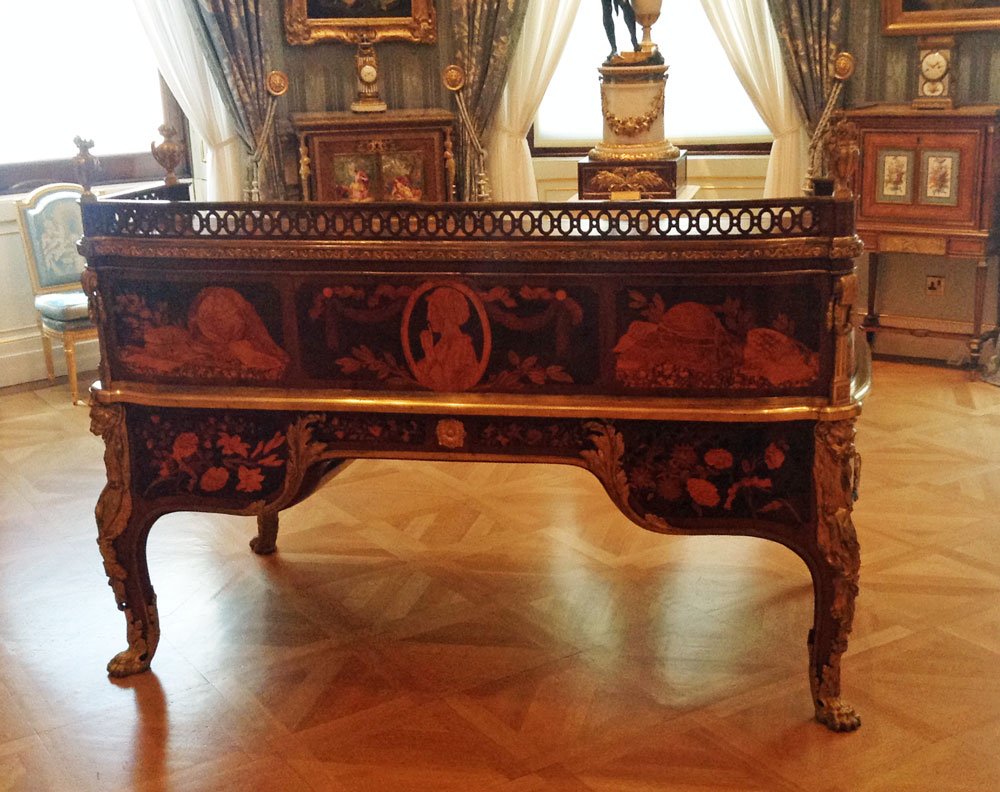
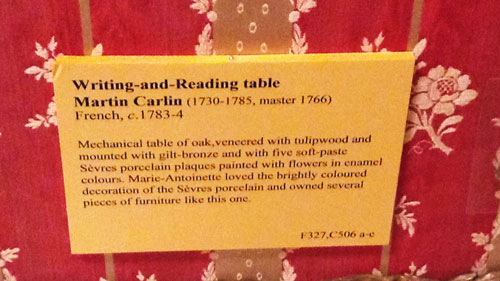
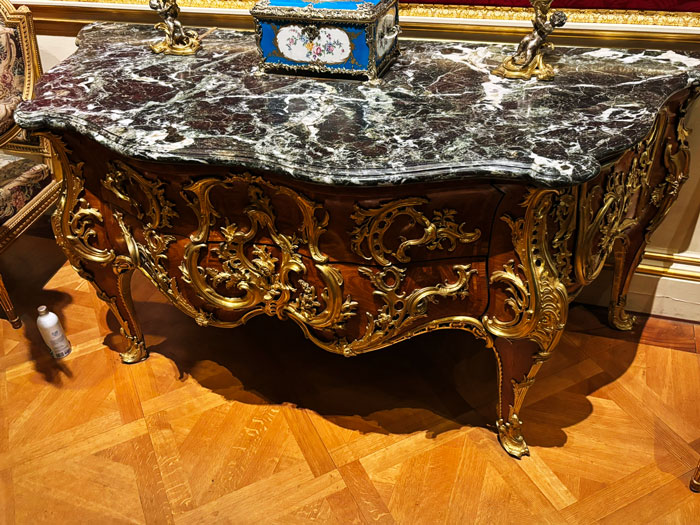
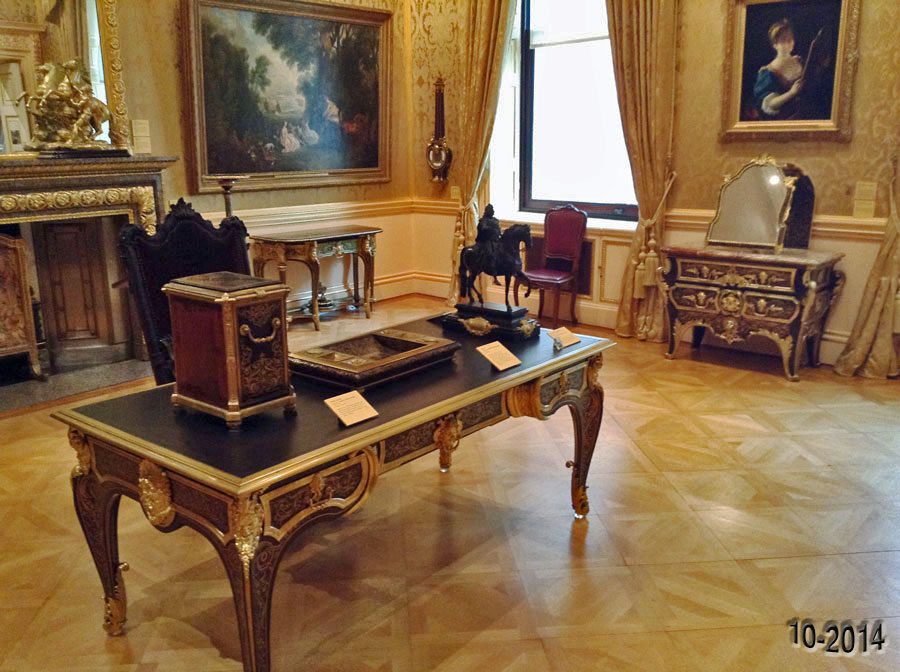
Chest-of-drawers– Oak veneered with kingwood and satin, mahogany, gilt, bronze, serpertine marble top. It was made for Louis XV’s bedchamber at Versailles.
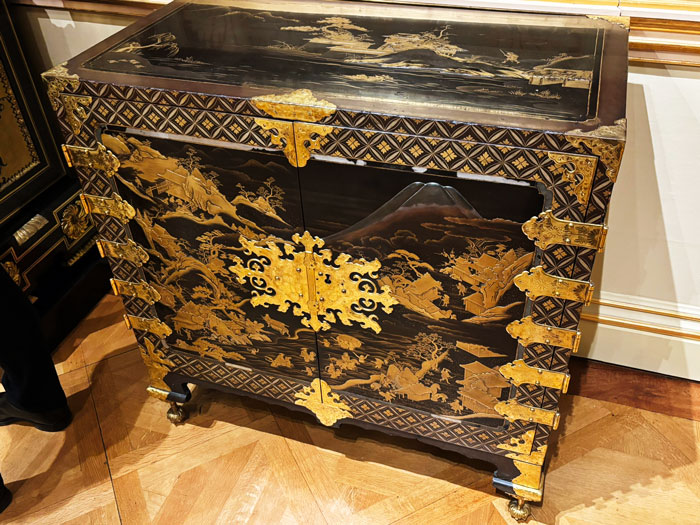
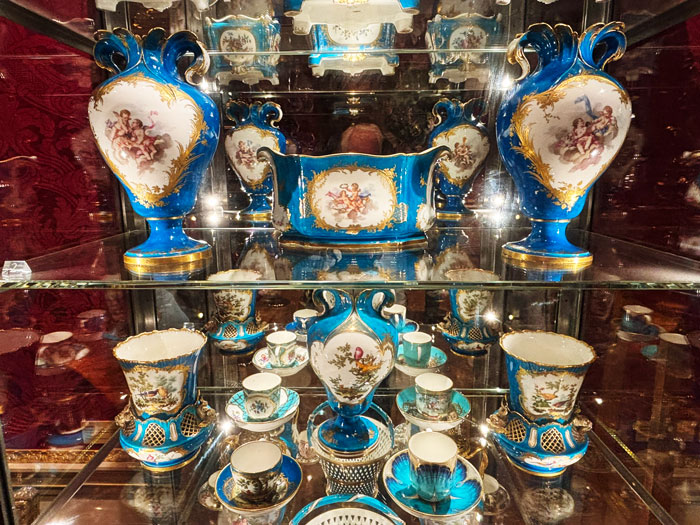
Sèvres Manufacturing (Soft-paste porcelain painted and gilded. c. 1759
December 2025

 s
s 