



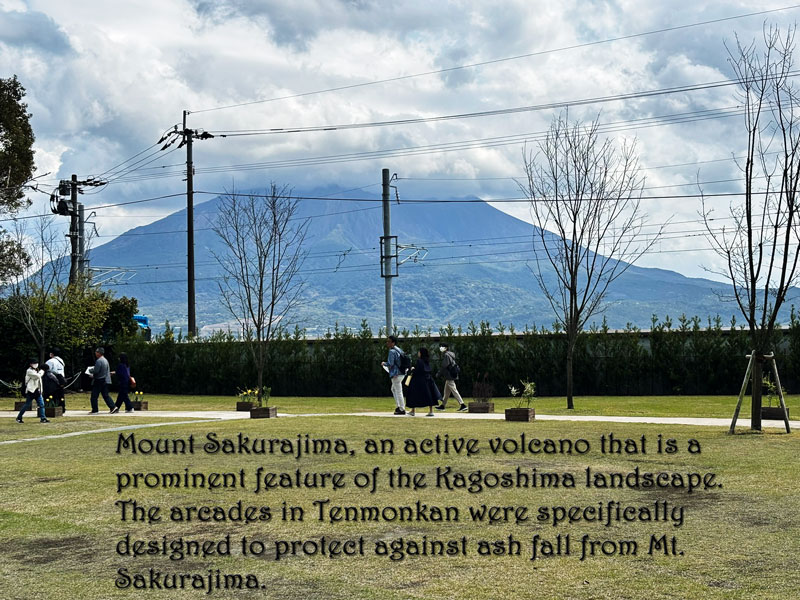
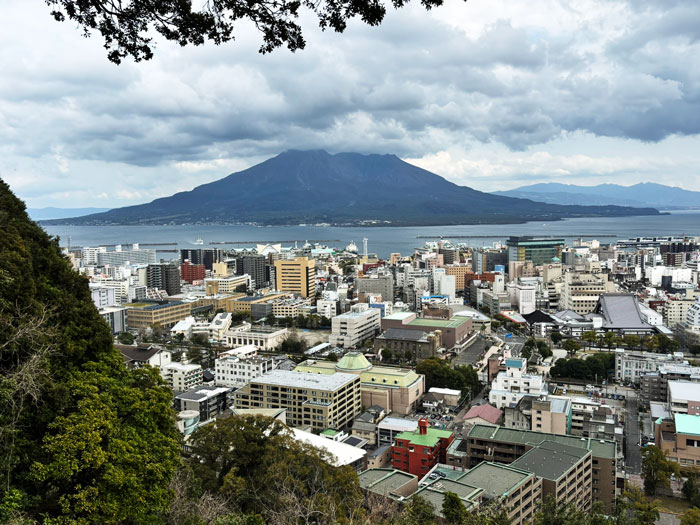
Kagoshima is located in ancient Satsuma Province and was the center of the territory of the Shimazu clan from the late Kamakura period. Kagoshima City developed political and commercial port city in the Edo period (1603–1868) when it became the seat of the Shimazu’s Satsuma Domain, which was one of the most powerful and wealthiest domains in the country throughout the period, and though international trade was banned for much of this period, the city remained quite active and prosperous. Kagoshima was also a significant center of Christian activity in Japan prior to the imposition of bans against that religion in the late 16th and early 17th centuries.
On the night of June 17, 1945, the 314th bombardment wing of the Army Air Corps (120 B-29s) dropped 809.6 tons of incendiary and cluster bombs destroying 5.46 km2 of Kagoshima (44.1 percent of the built-up area). Kagoshima was targeted because of its largely expanded naval port as well as its position as a railway terminus. A single B-29 was lost to unknown circumstances. Area bombing was chosen over precision bombing because of the cloudy weather over Japan during the middle of June. The planes were forced to navigate and bomb entirely by radar.
Japanese intelligence predicted that the Allied forces would assault Kagoshima and the Ariake Bay areas of southern Kyushu to gain naval and air bases to strike Tokyo.
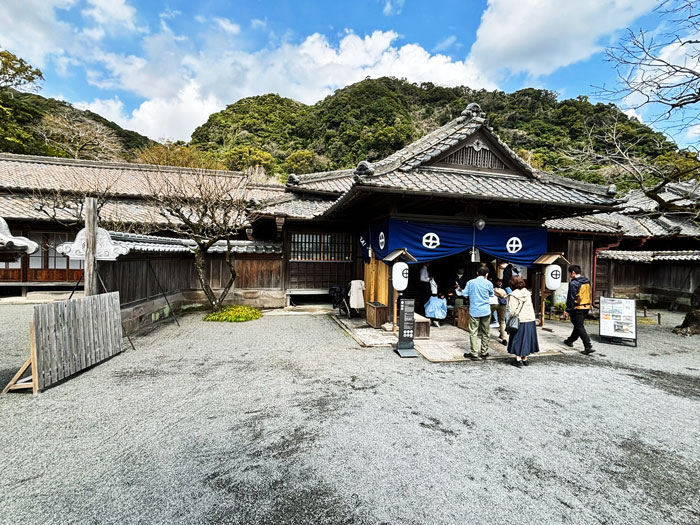
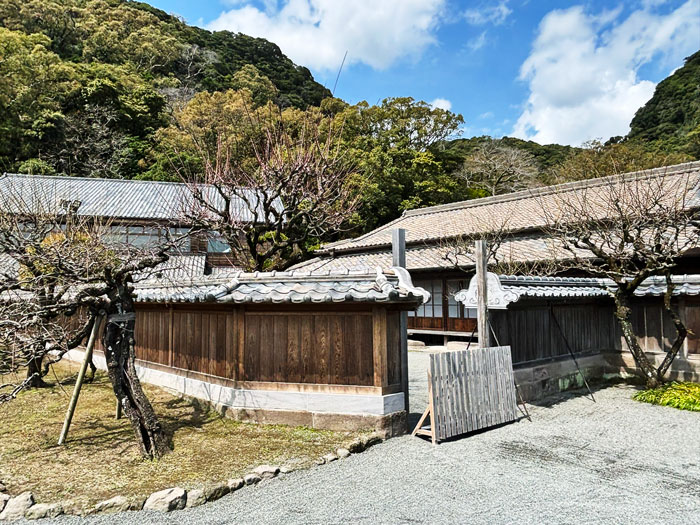
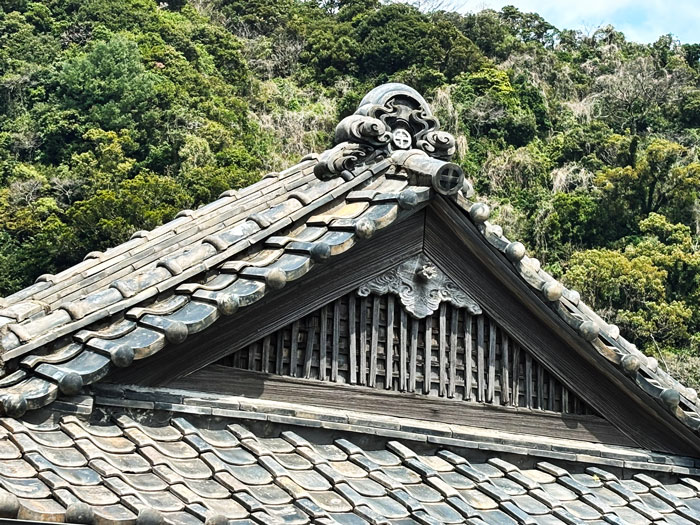
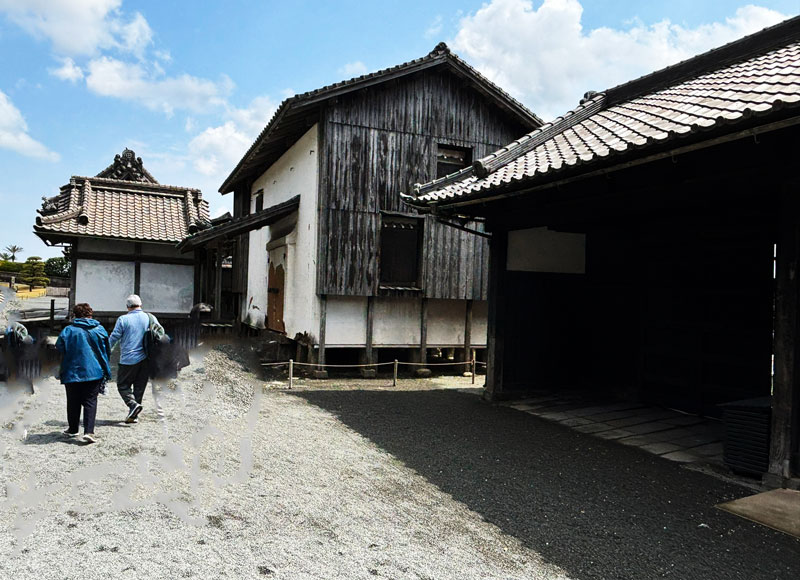
Sengan-en
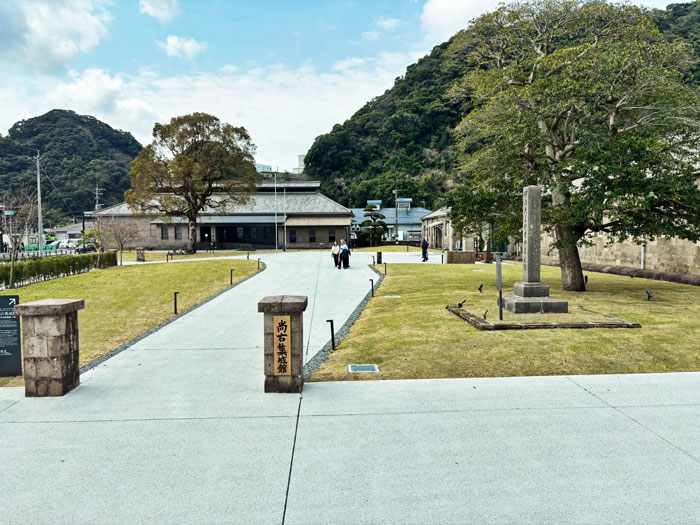
The Sengan-en residence was built in 1658. The name is derived from a supposed resemblance to an eponymous feature on Long Hu Shan. In 1736 they added a kyokusui water feature and moso bamboo , obtained from China.è
During the Bakumatsu and Meiji periods , the residence housed visiting dignitaries including Edward VIII in 1922.
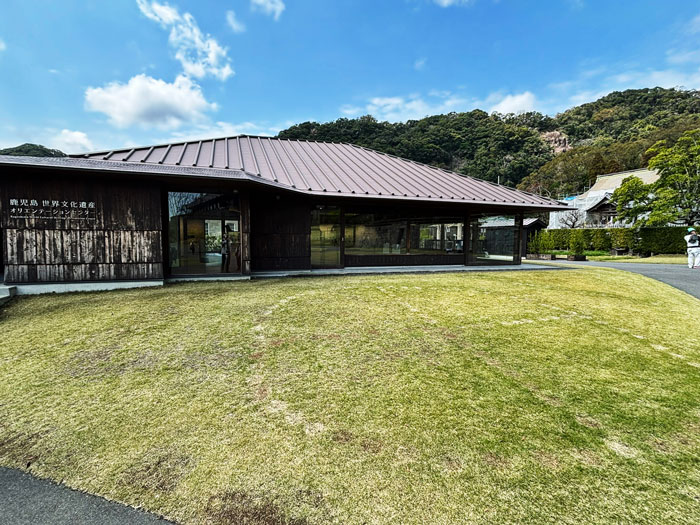
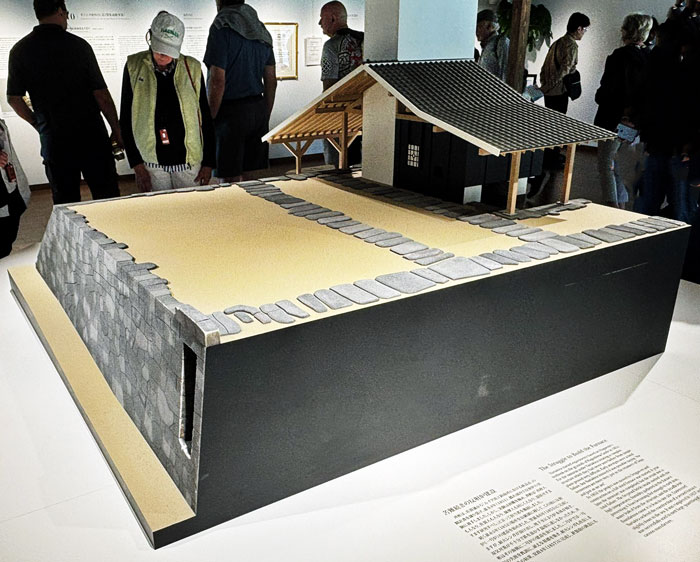
Sengan-en is a Japanese garden attached to a former Shimazu clan residence.
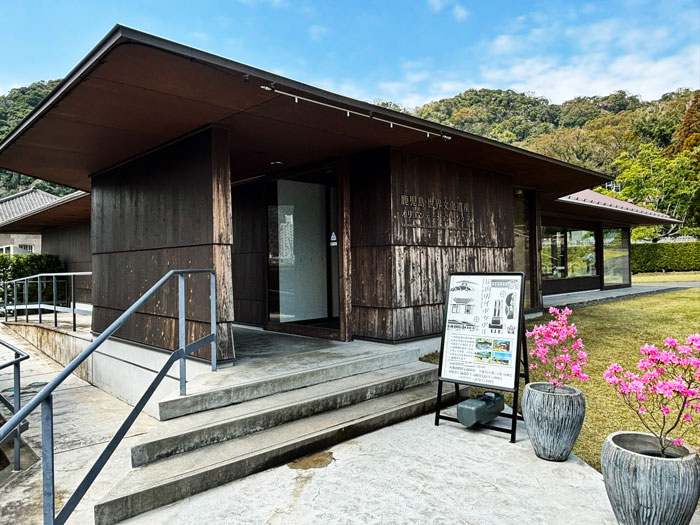
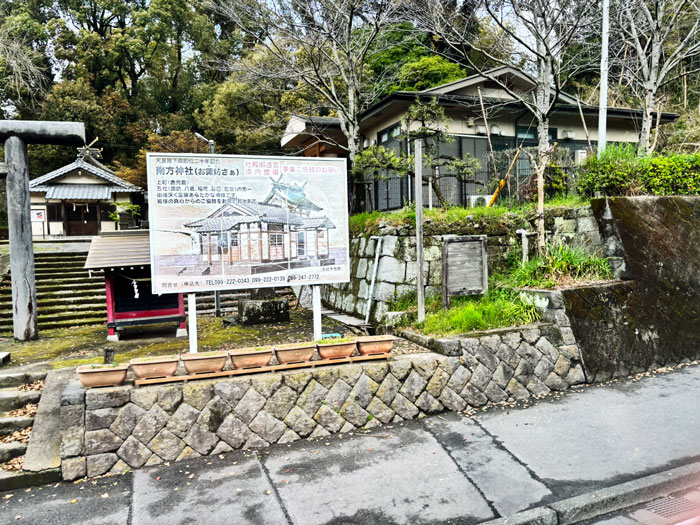
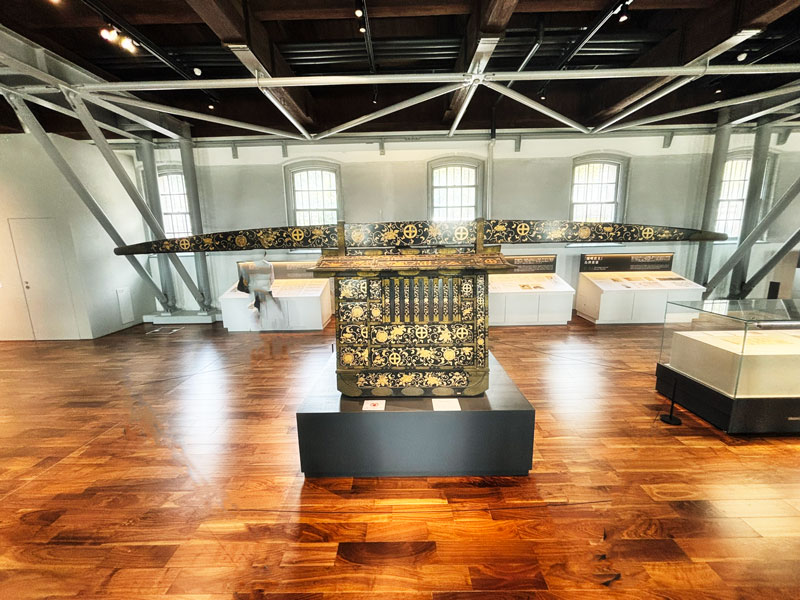
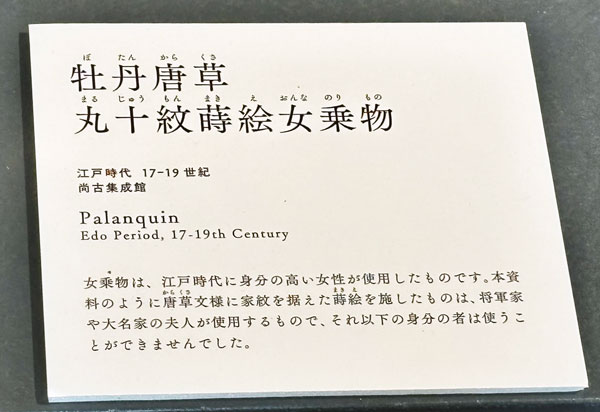
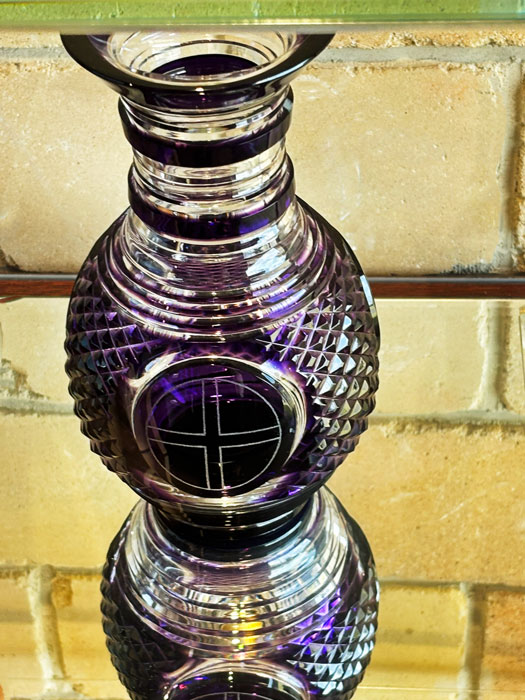
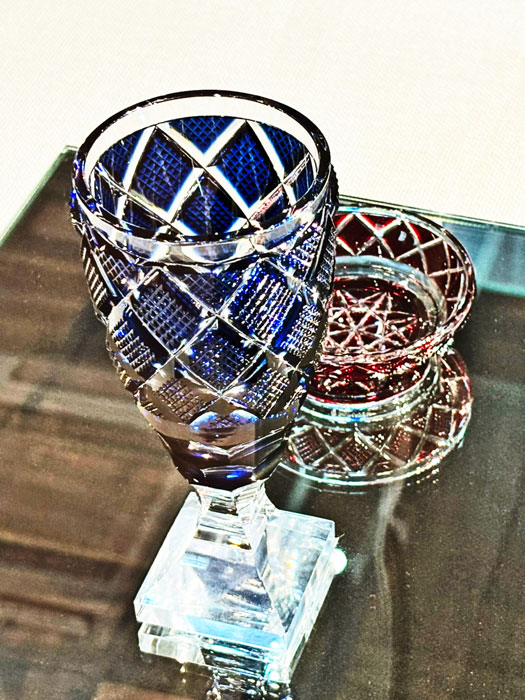
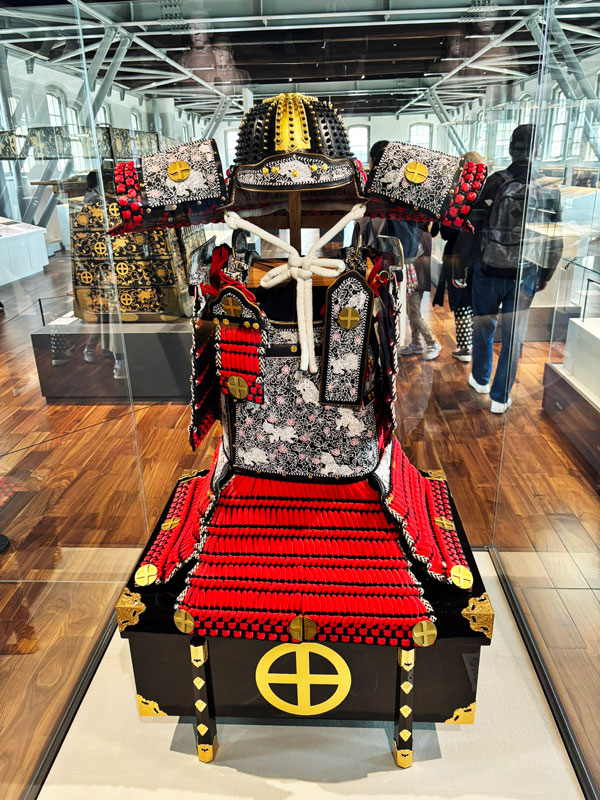
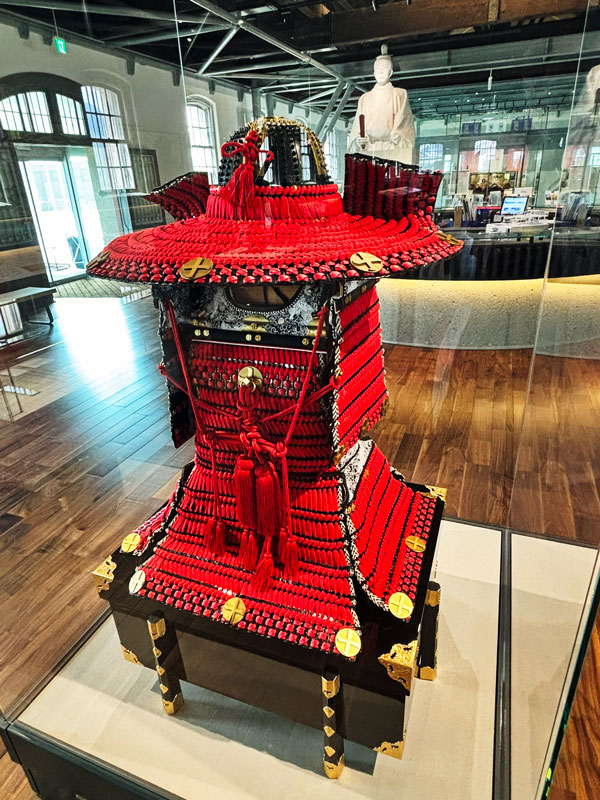
A historical samurai armor
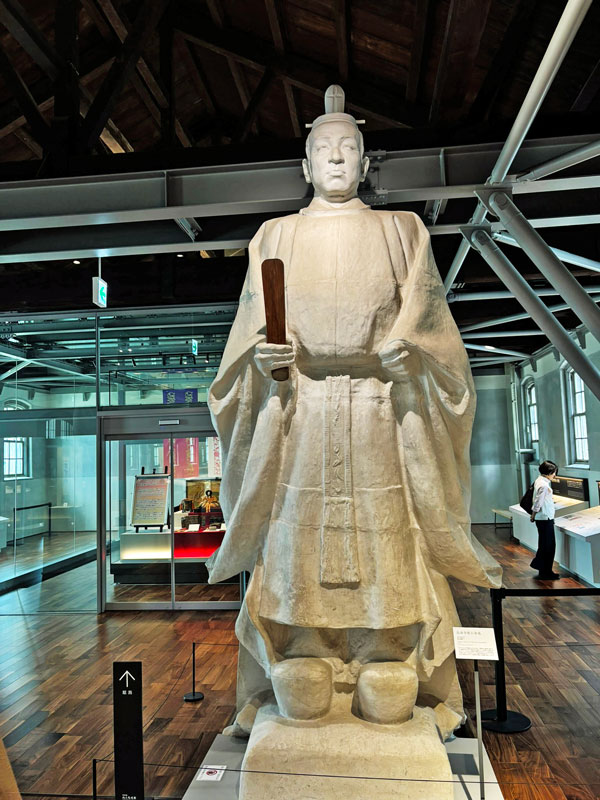

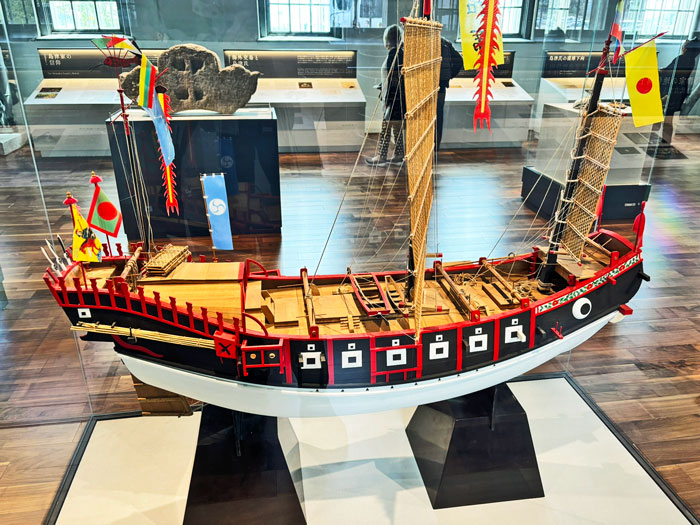
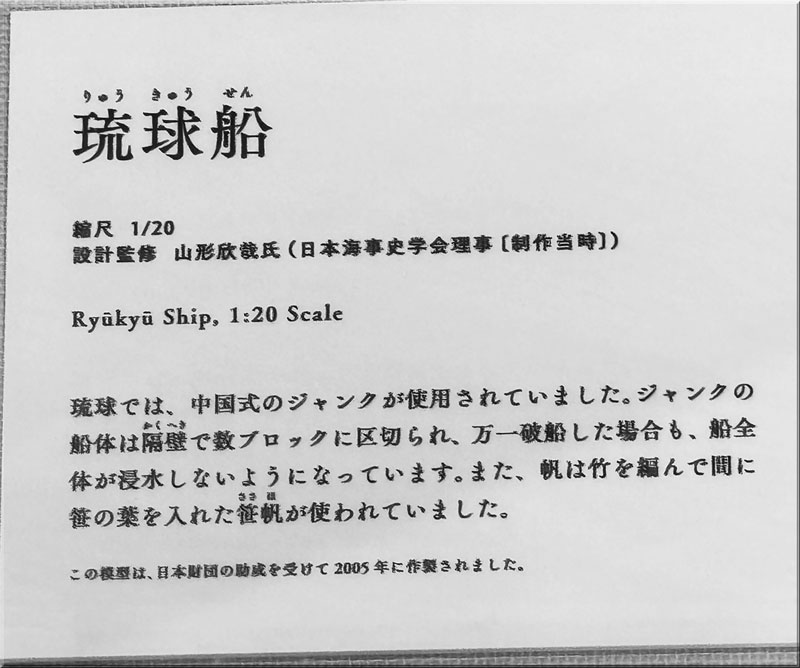
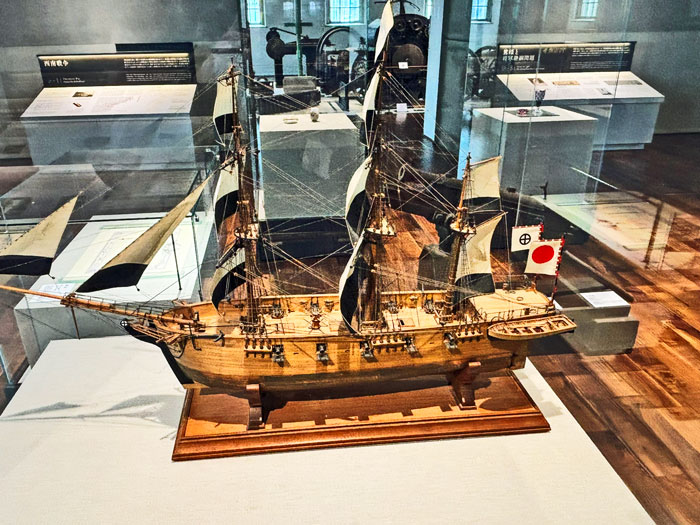
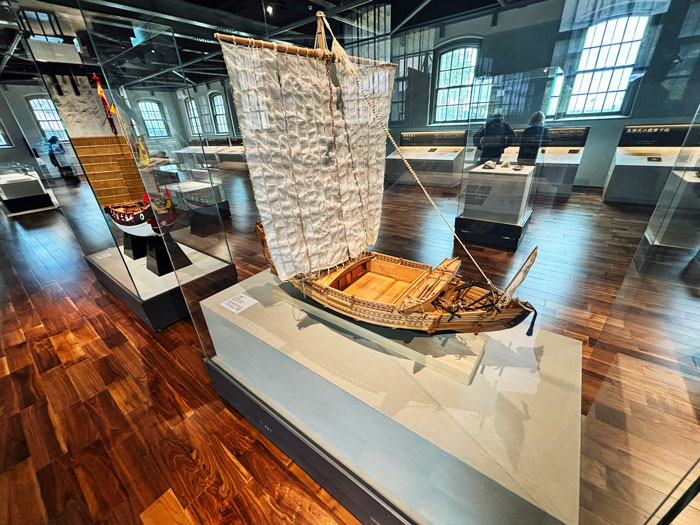

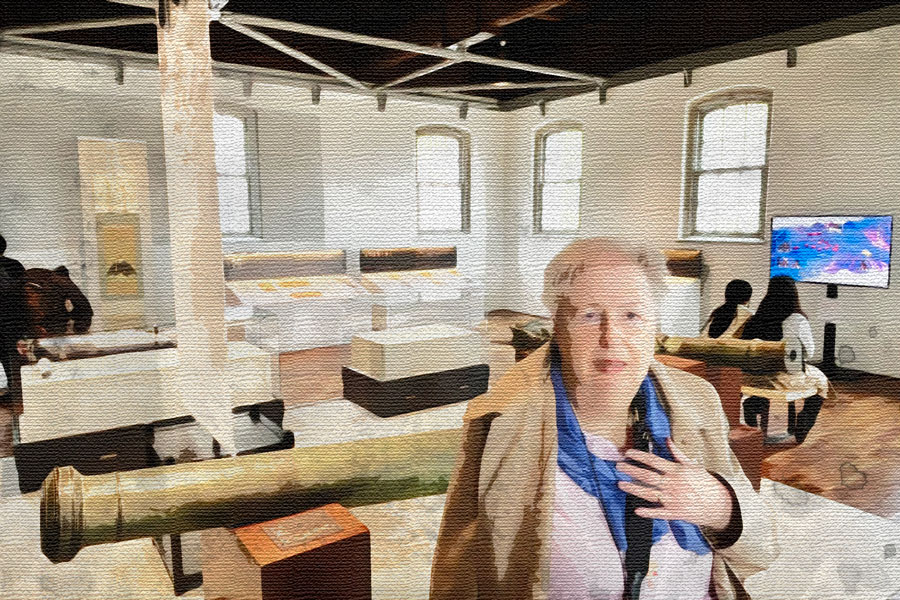
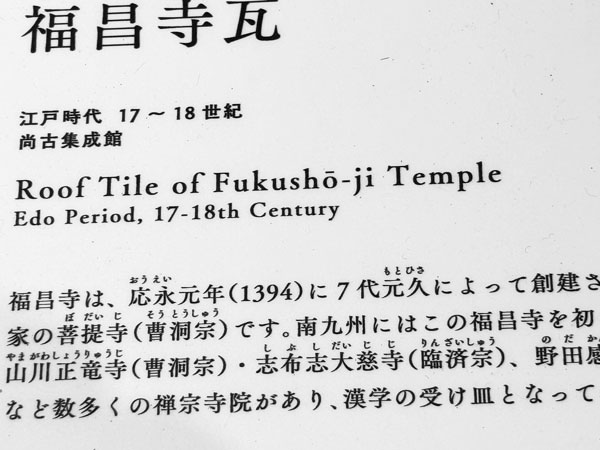
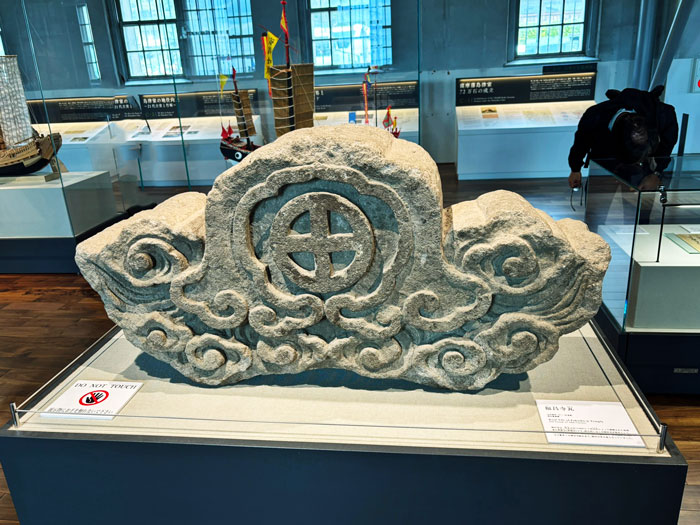
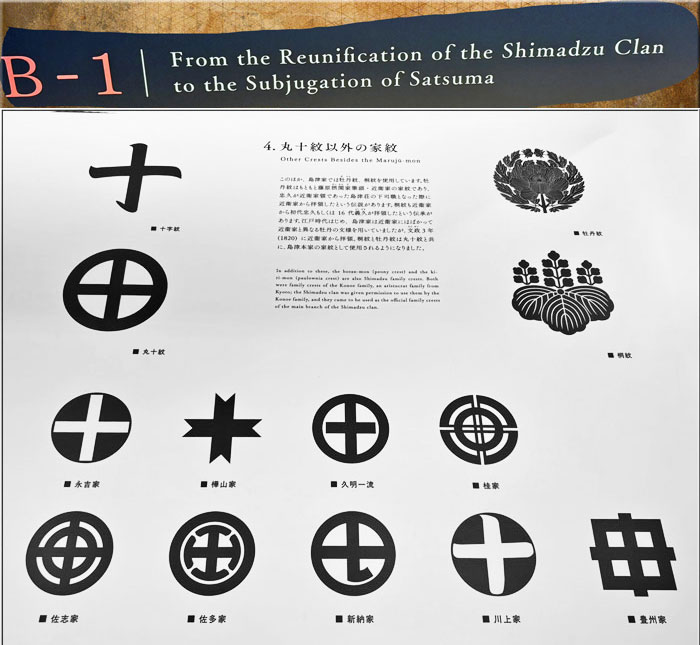
An informational display featuring various emblems and symbols related to the Shimadzu clan’s history, with text and illustrations.


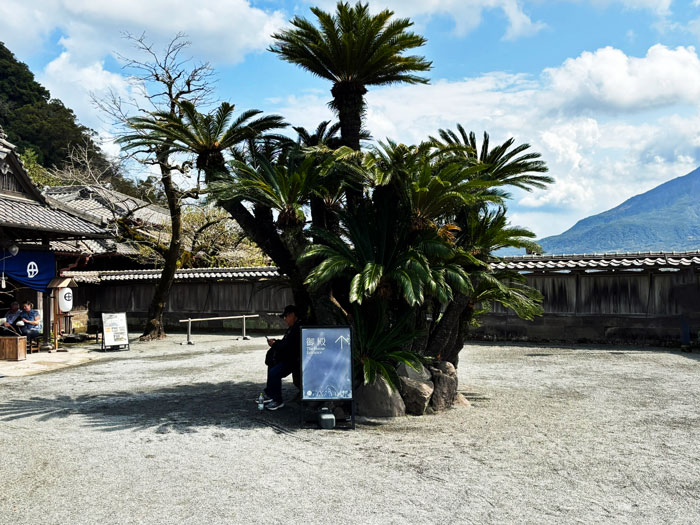
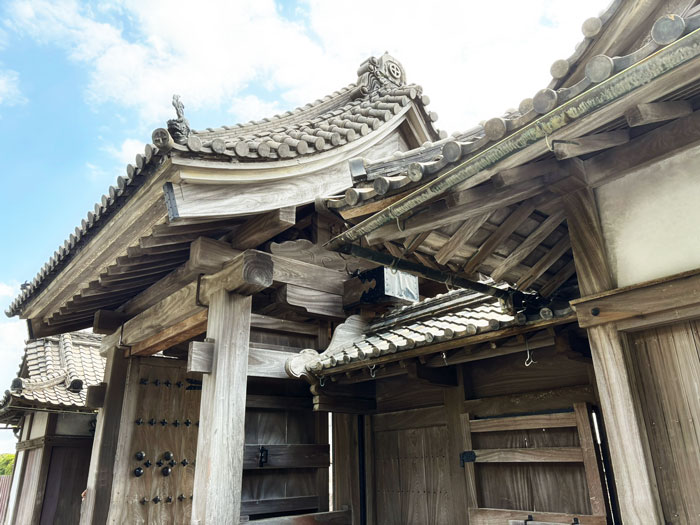
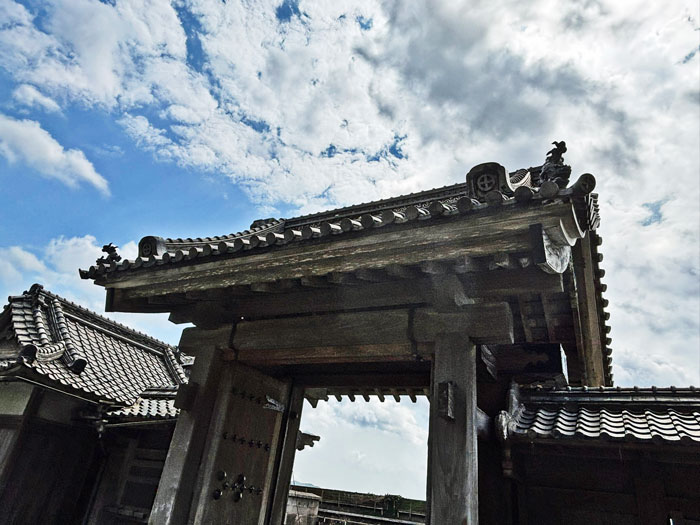
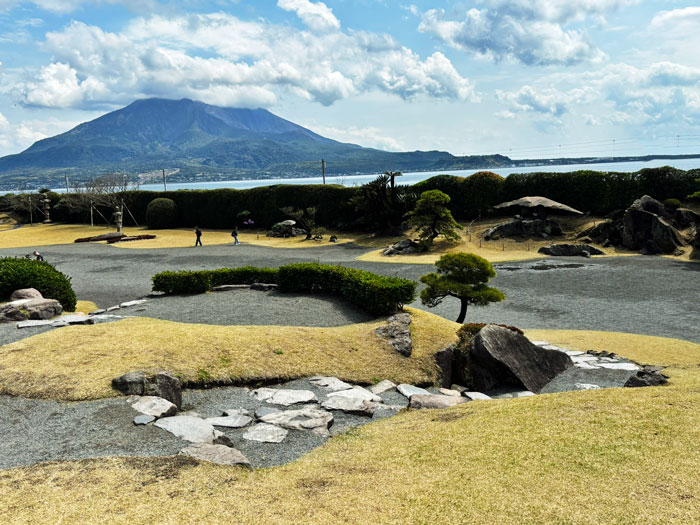
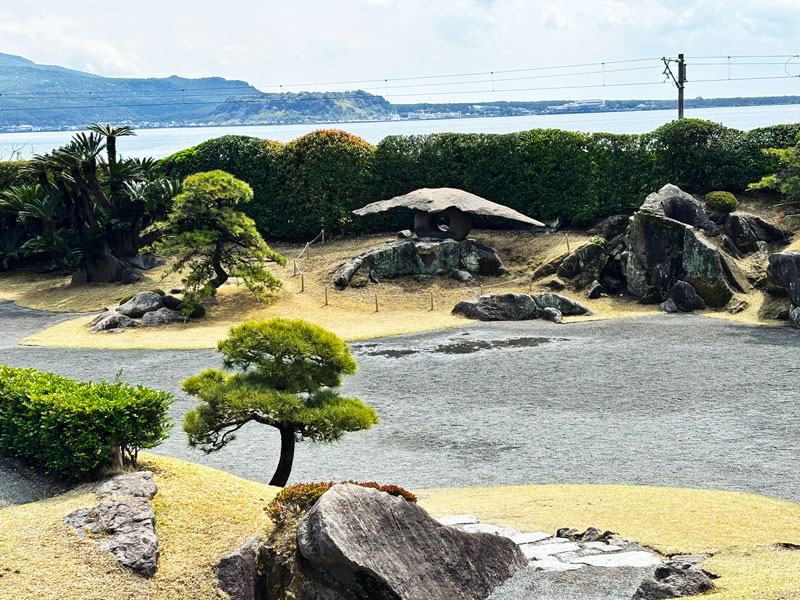
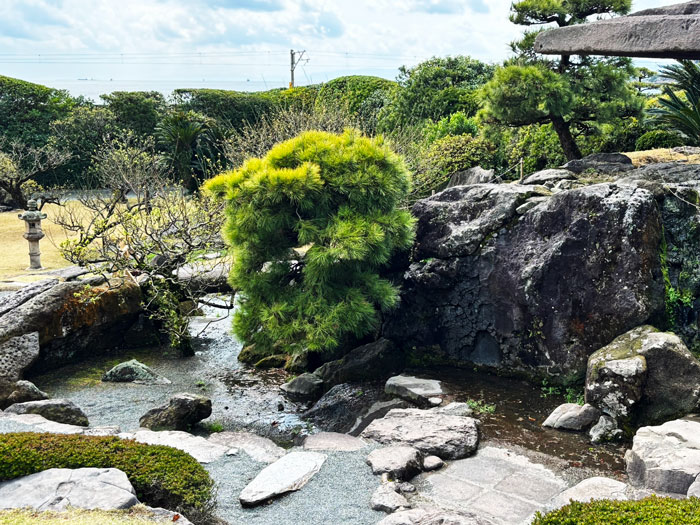
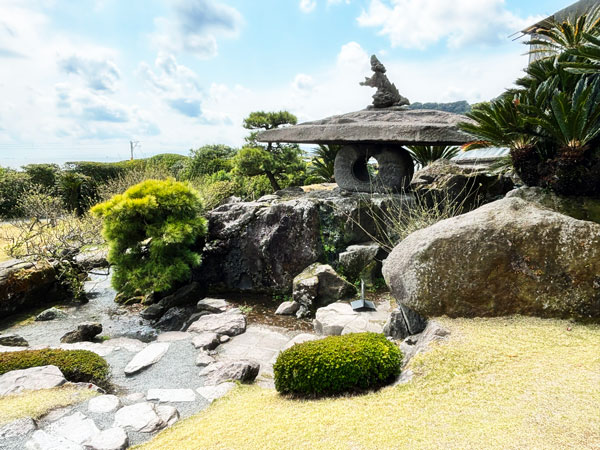
A traditional Japanese garden featuring a stone lantern, lush greenery, and a small stream flowing over rocks.
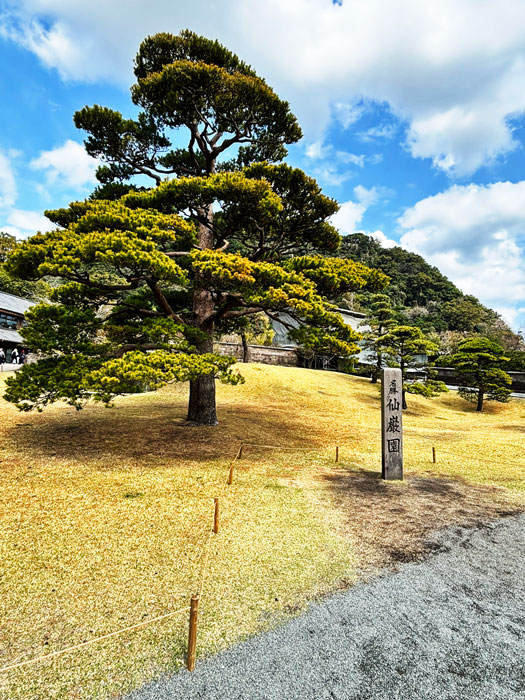

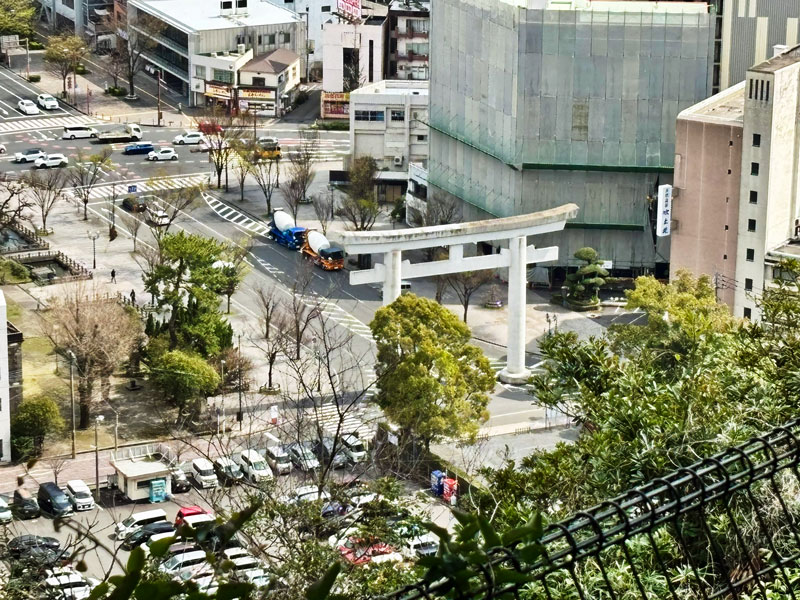
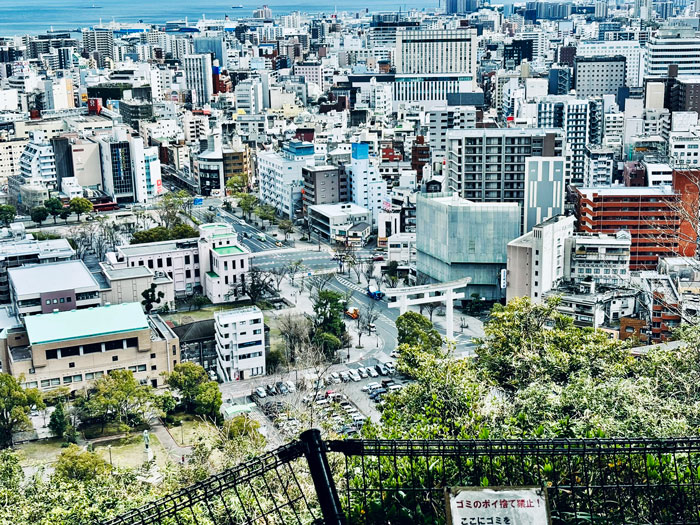
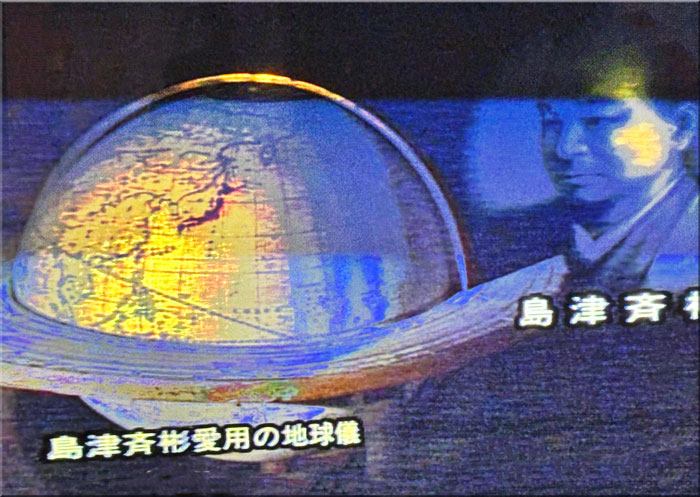
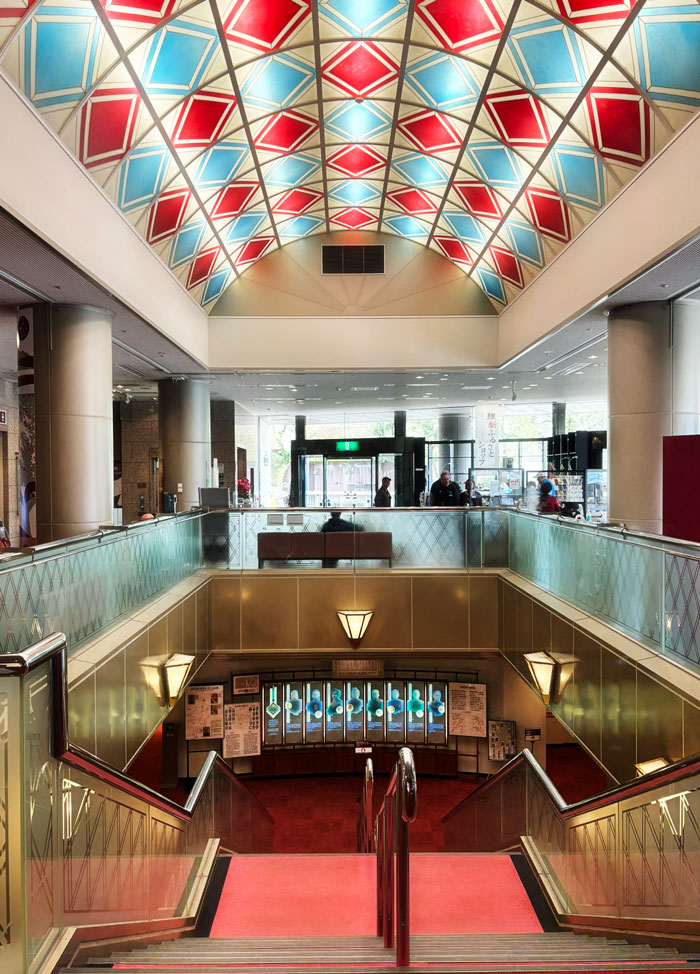
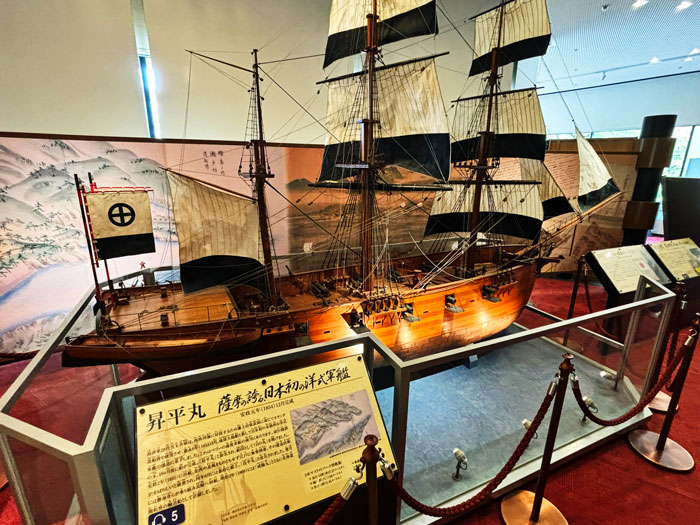
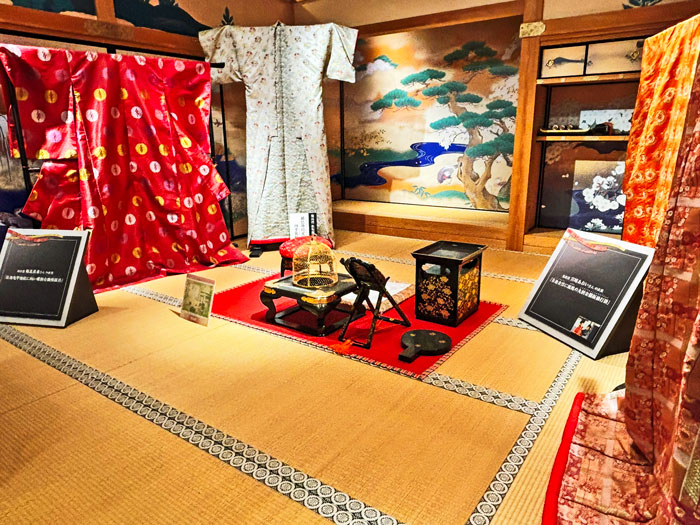
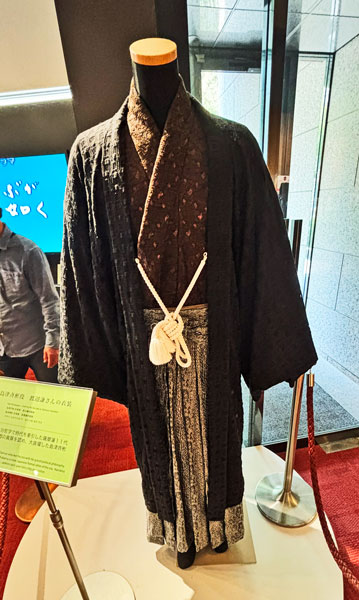
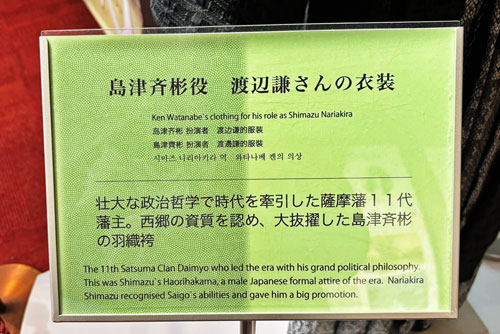
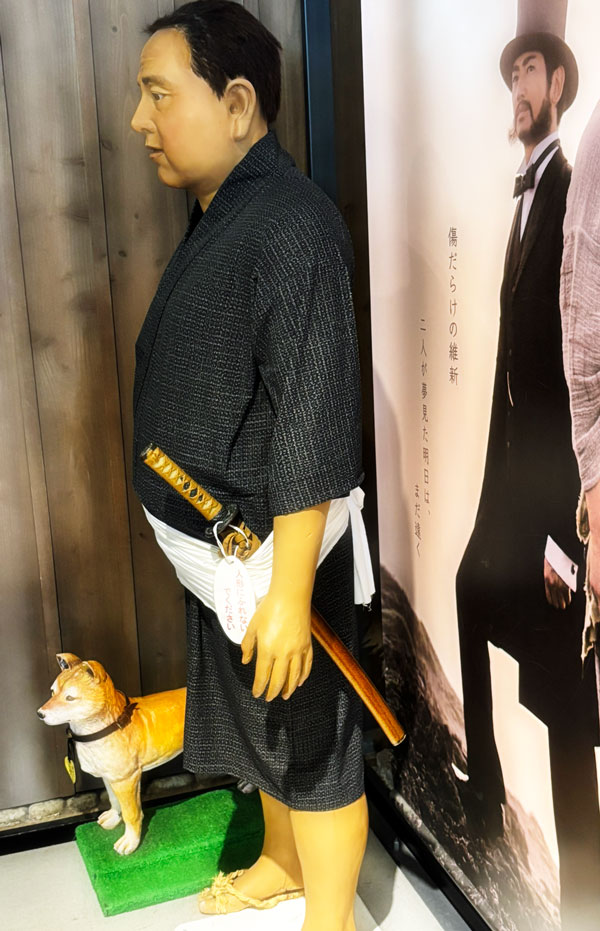
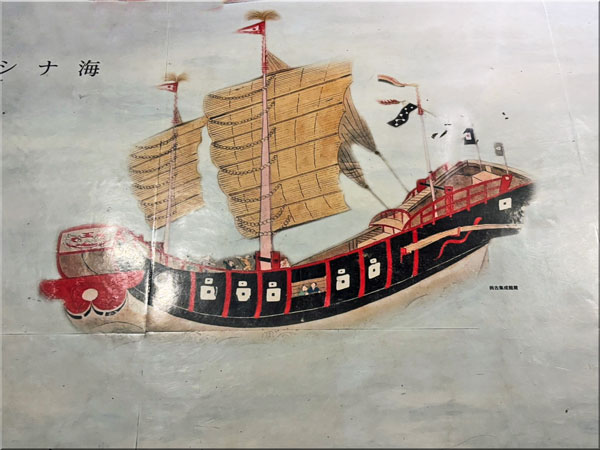
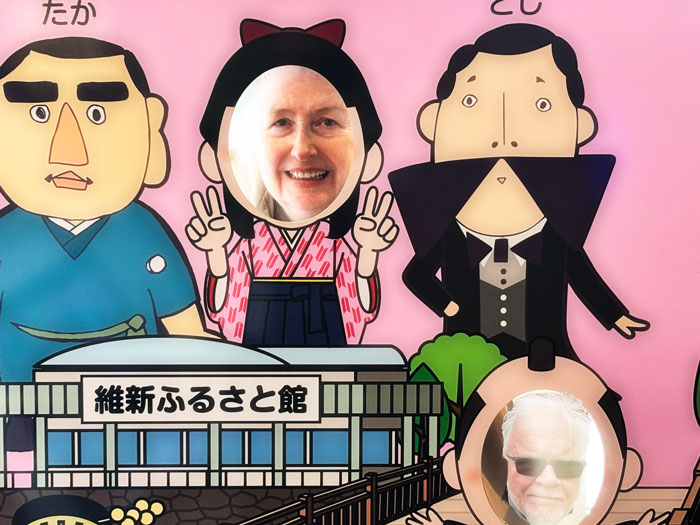
Museum of the Meiji Restoration
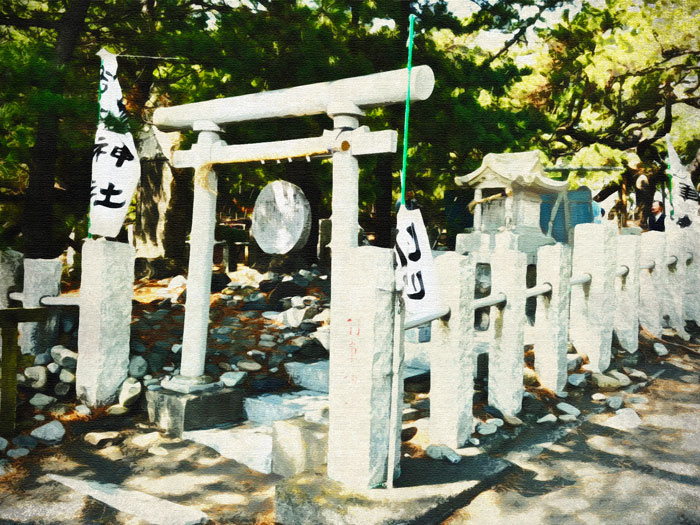
Miho no Matsubara (Pine grove at Miho) is a scenic area on the Miho Peninsula in Shizuoka City. Its seven-kilometre seashore is lined with pine trees. It is the location of the legend upon which the Noh drama Hagoromo is based; on the second Saturday and Sunday of October, the city of Shizuoka holds a Hagoromo Festival and a performance of the Noh drama takes place near the pine tree of the legend.
It was designated as a National Places of Scenic Beauty of Japan in 1922.[In 2013 the pine groves were added to the World Heritage List as part of the Fujisan Cultural Site.
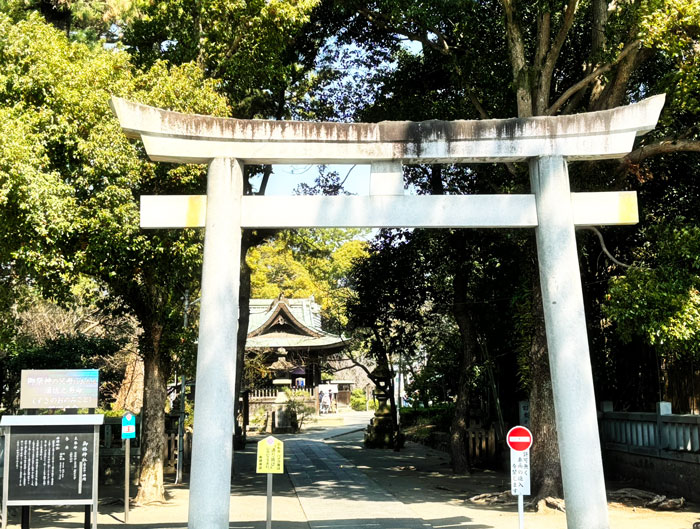
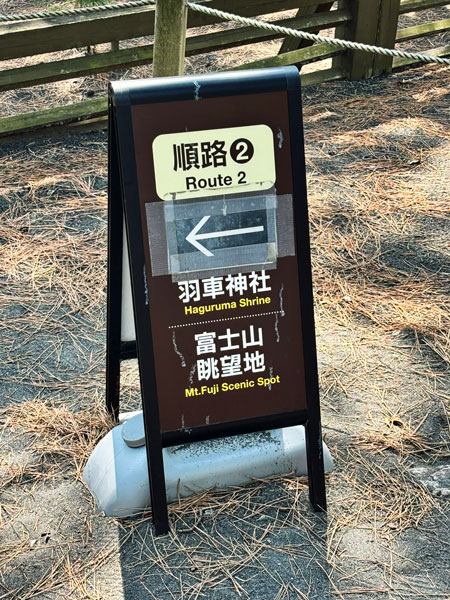
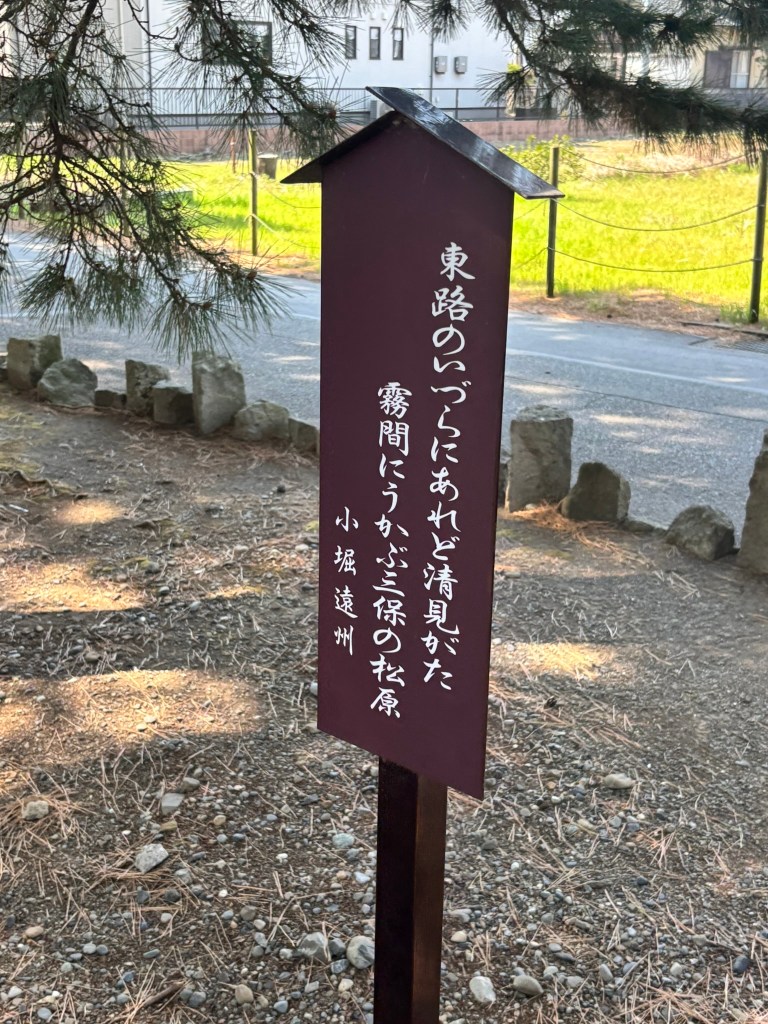
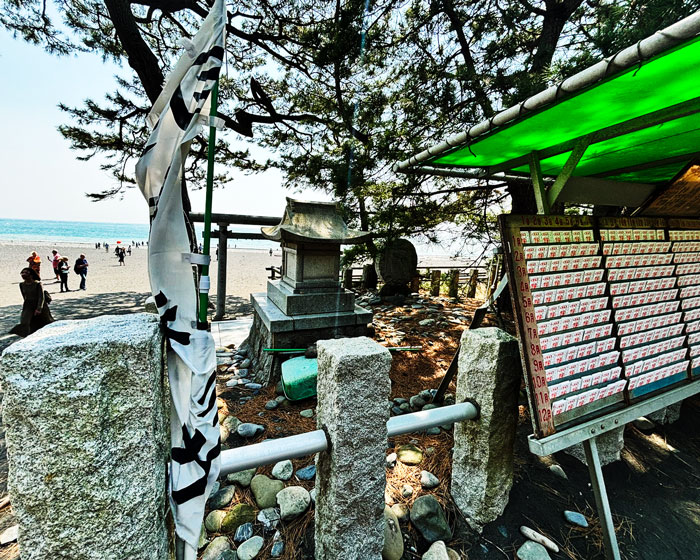

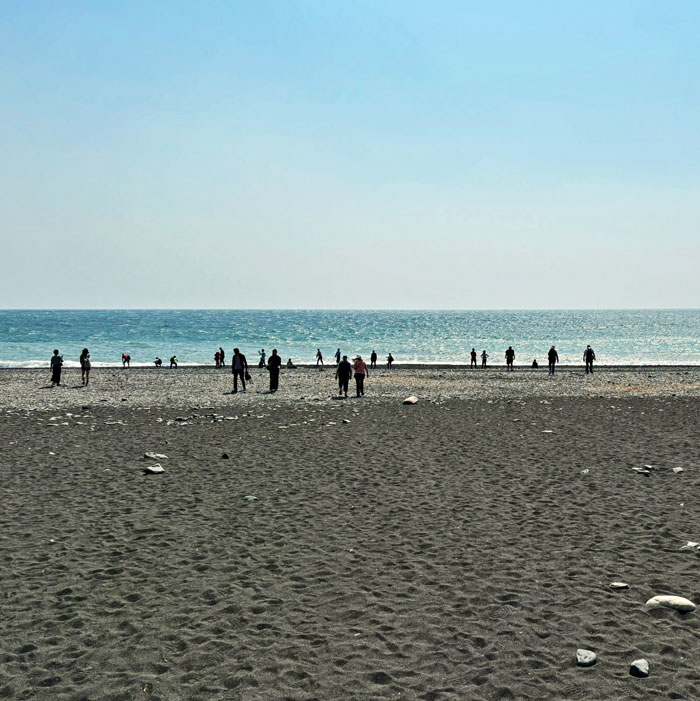
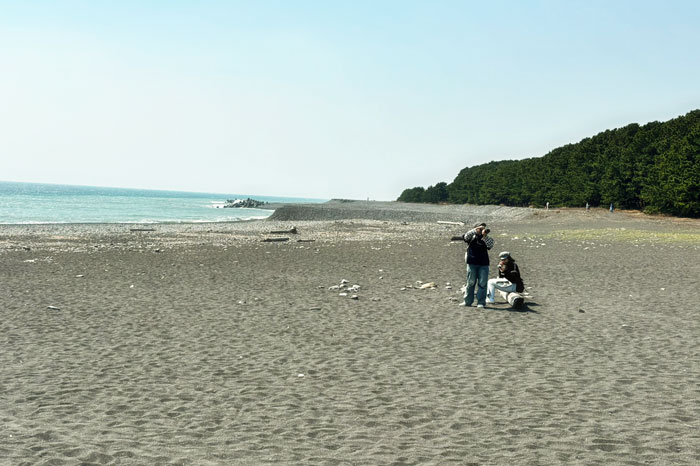
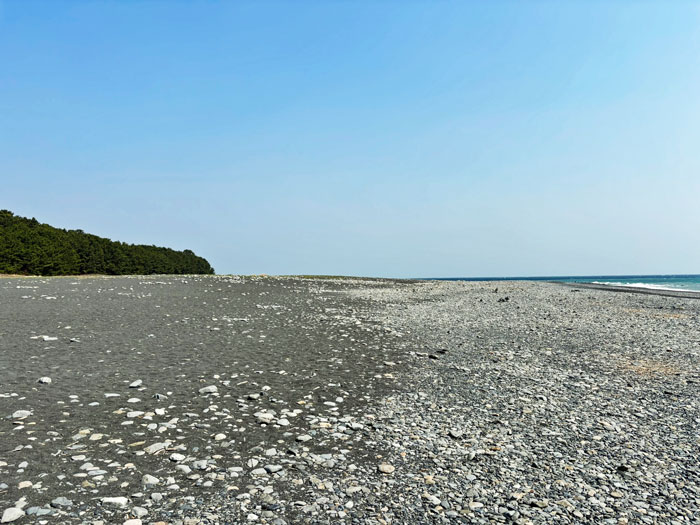
It’s place where you can see Mount Fuji. Unfortunately, it was too hazy… So I improvised and added the famous mount where it was suppose to be…
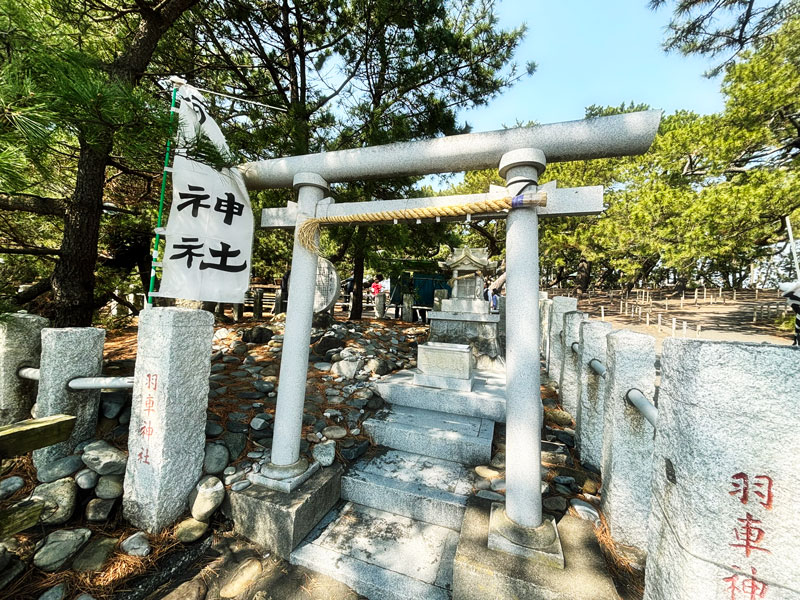

 s
s 