


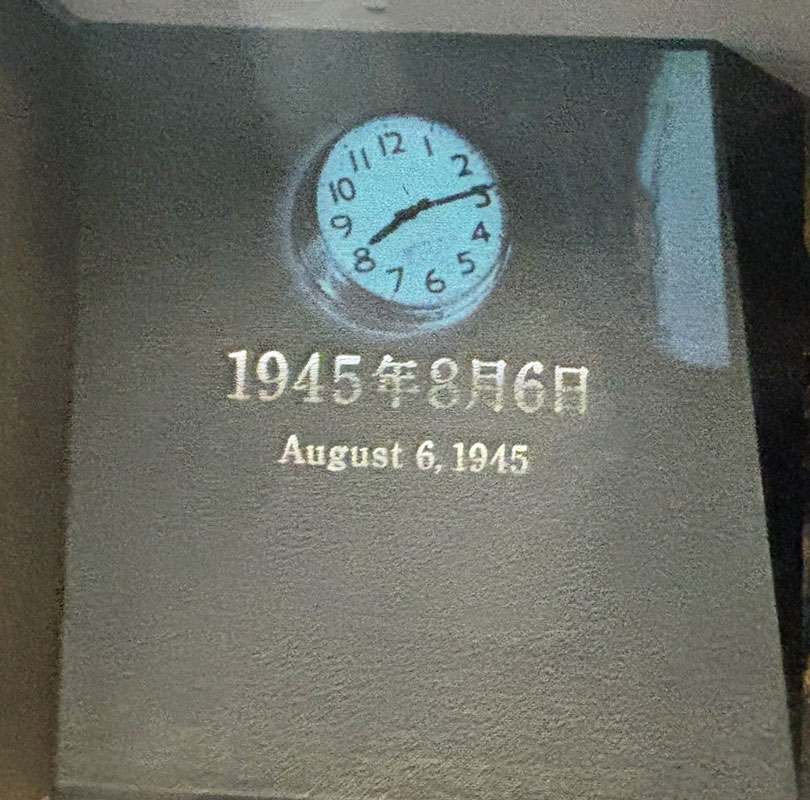
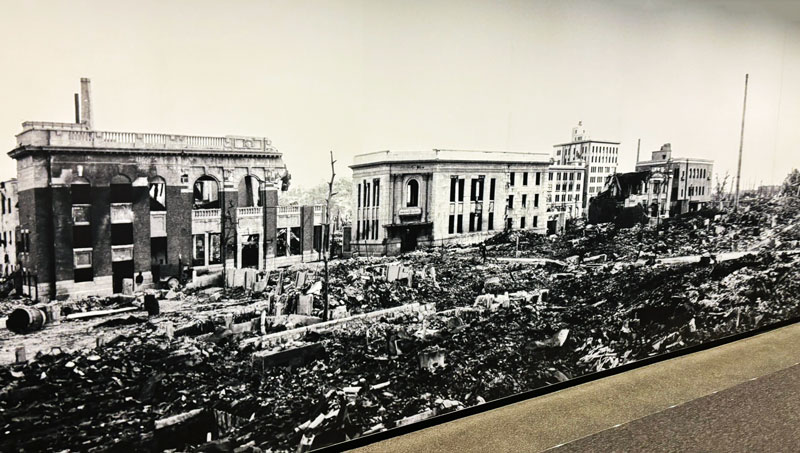
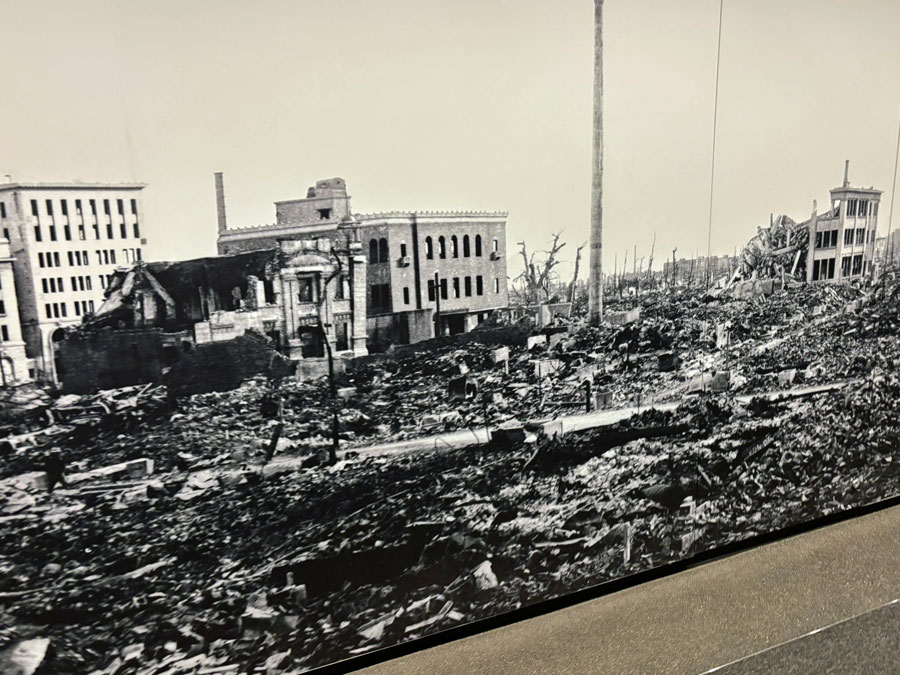
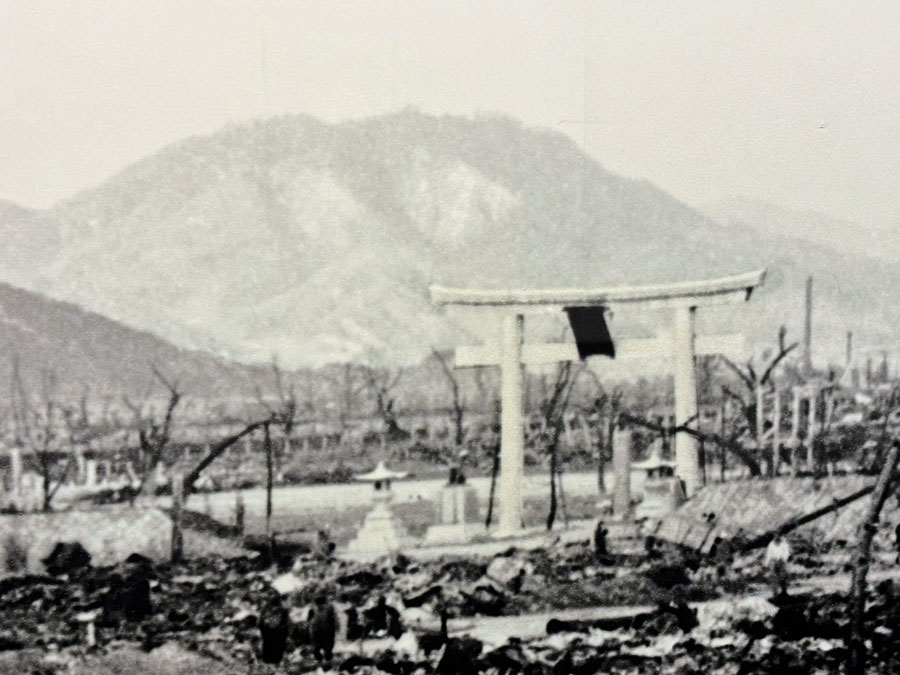
Hiroshima was the first military target of a nuclear weapon in history. This occurred on August 6, 1945, at 8:15 a.m., when the USAAF dropped the atomic bomb nicknamed: Little Boy dropped on the city. Most of Hiroshima was destroyed, and by the end of the year between 90,000 and 166,000 had died as a result of the blast and its effects. The Hiroshima Peace-Memorial serves as a memorial of the bombing.
We visited Hiroshima in March 2025
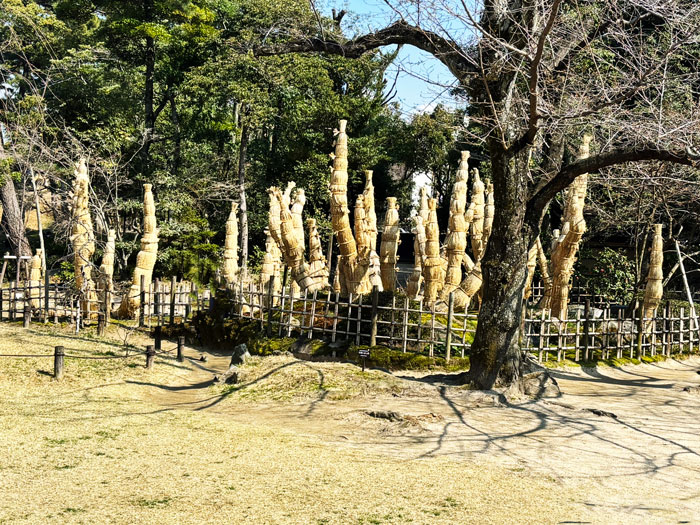
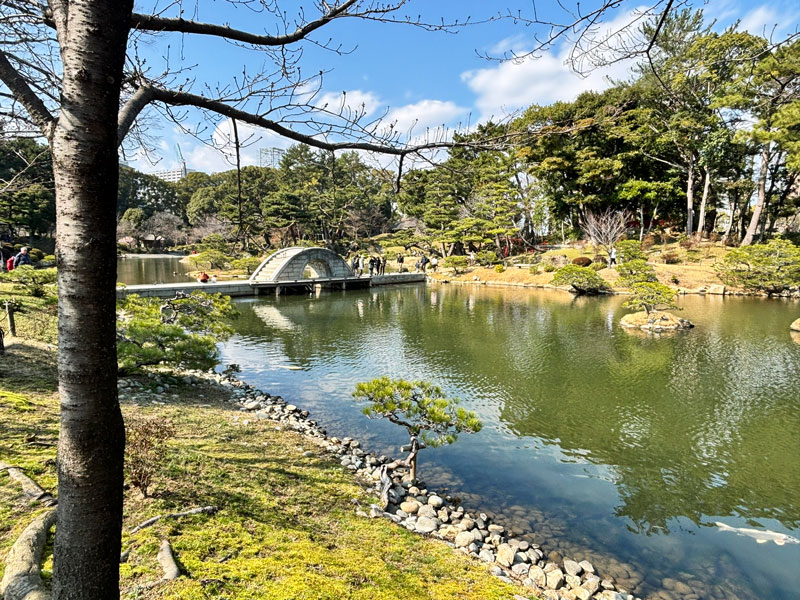
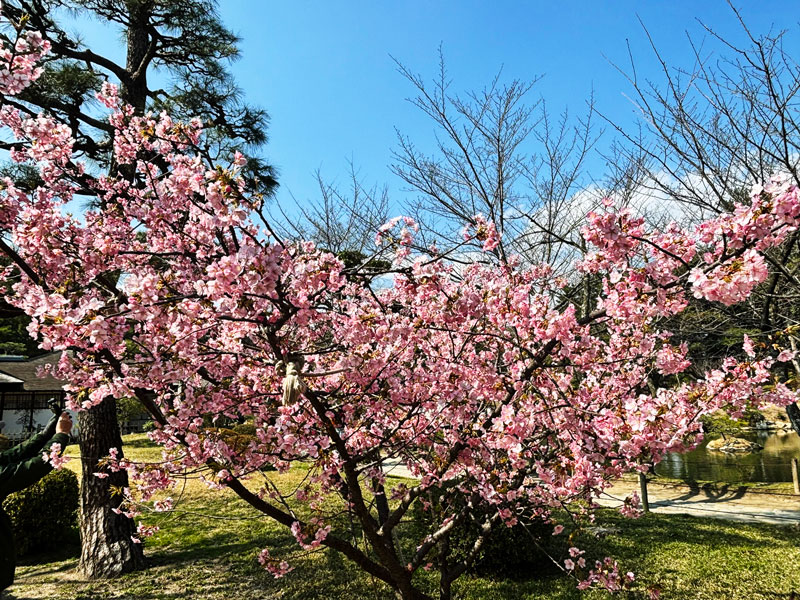
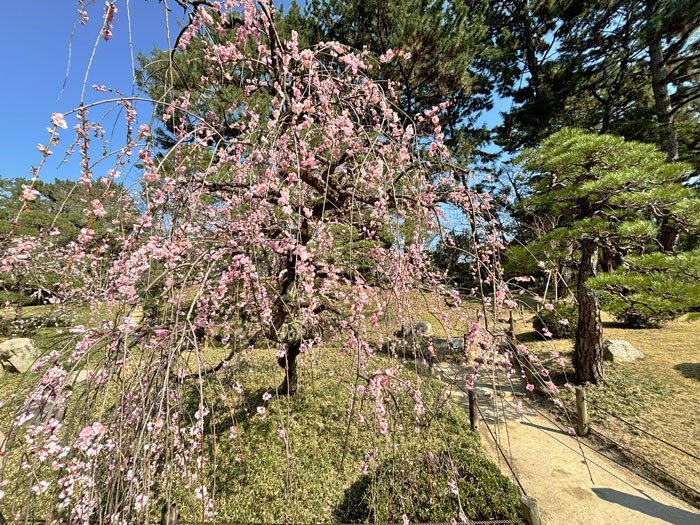
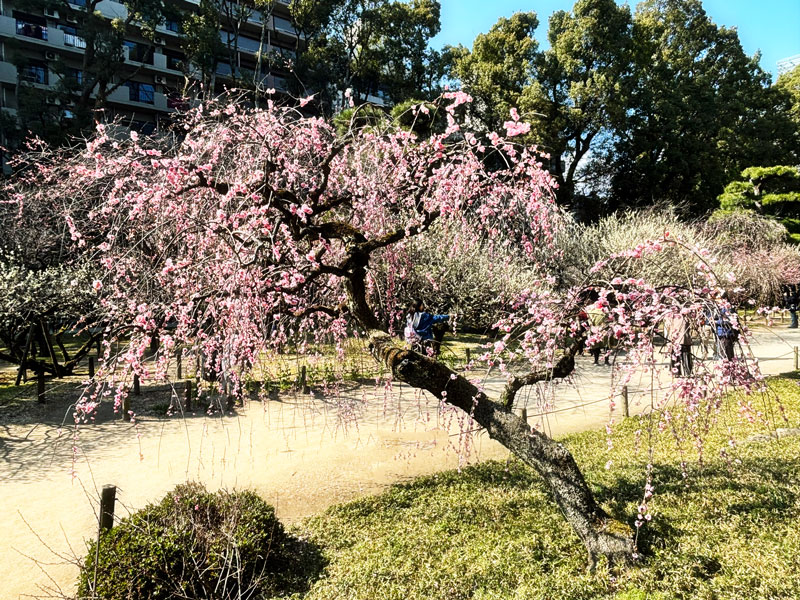
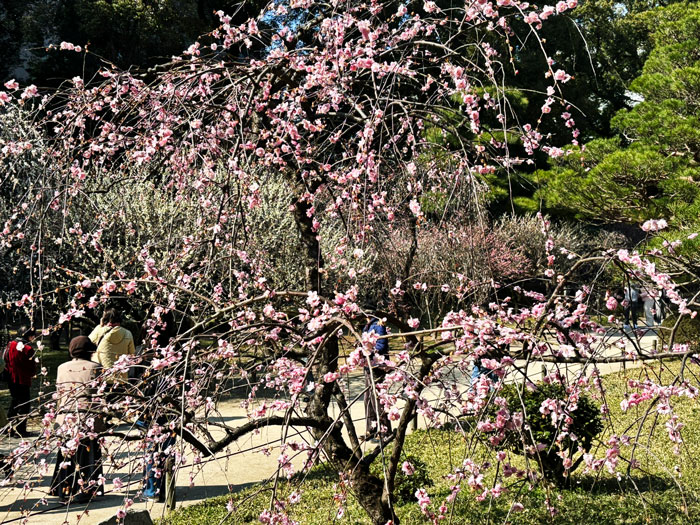
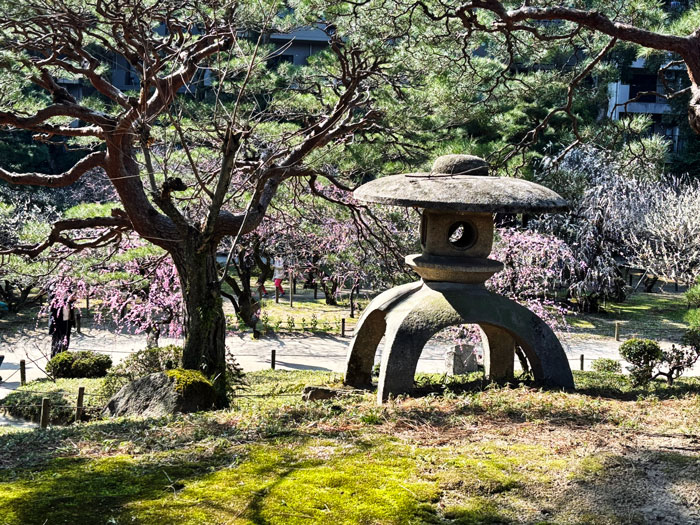
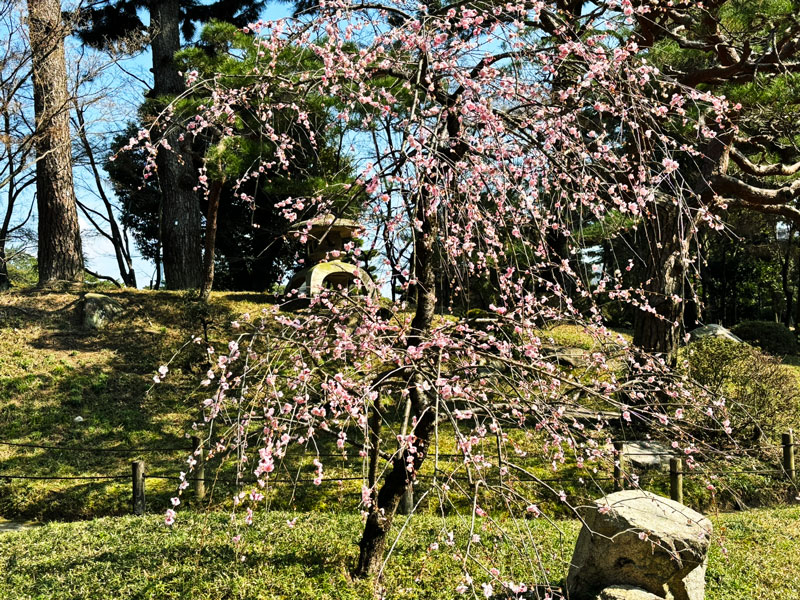
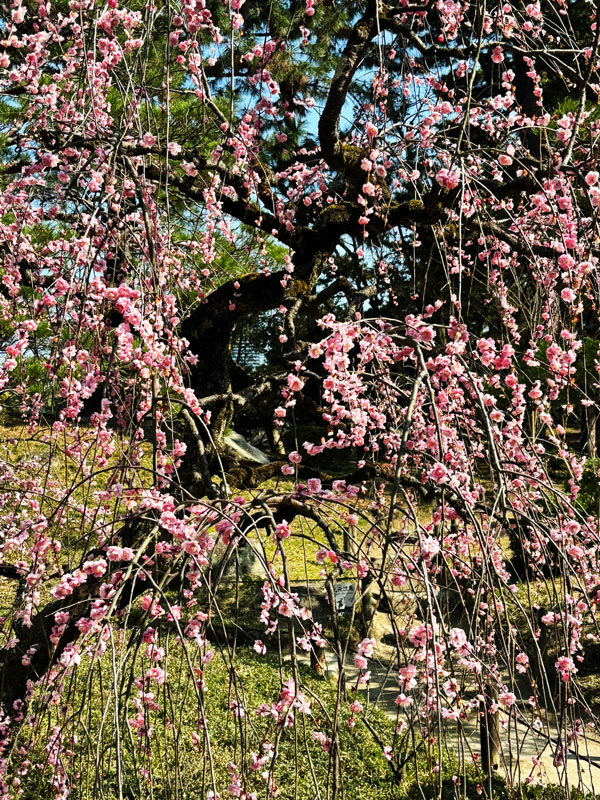
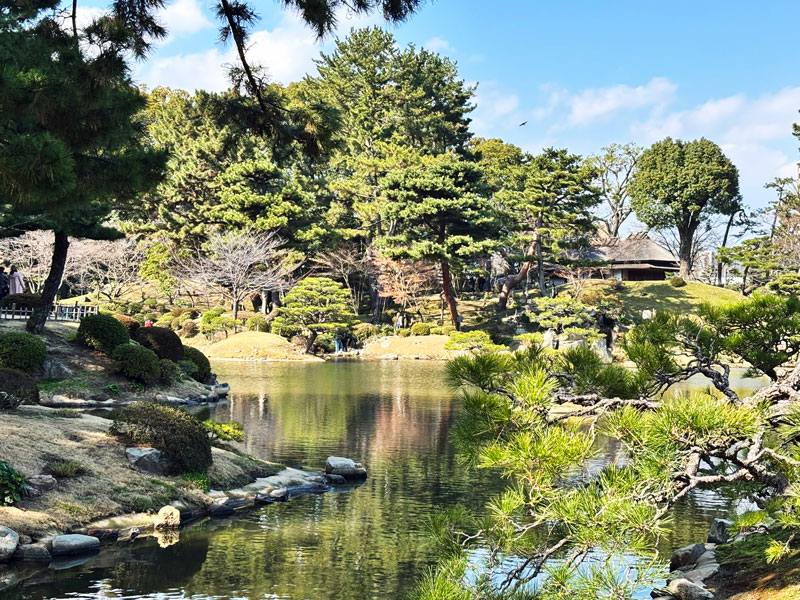
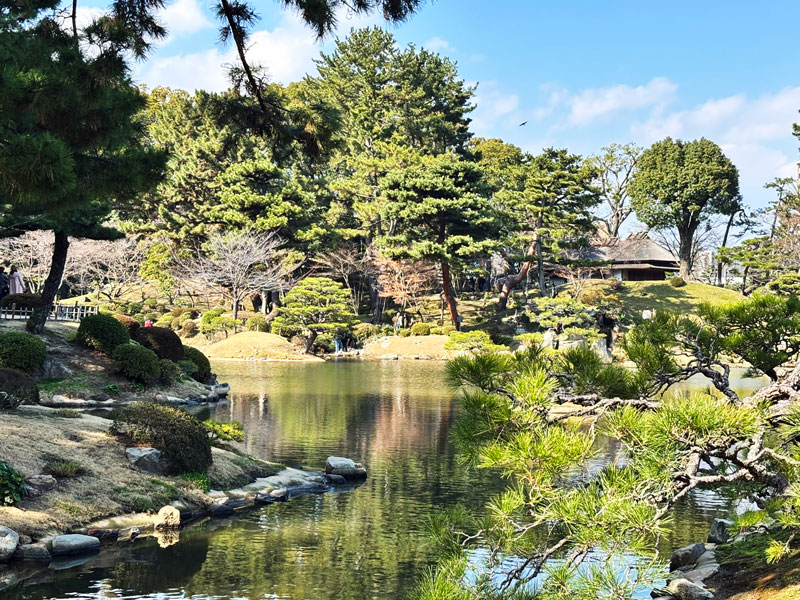
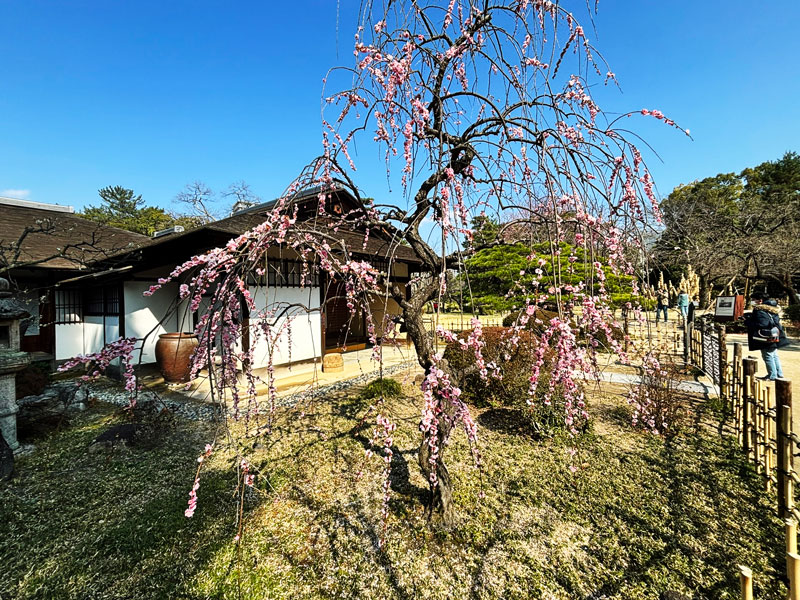
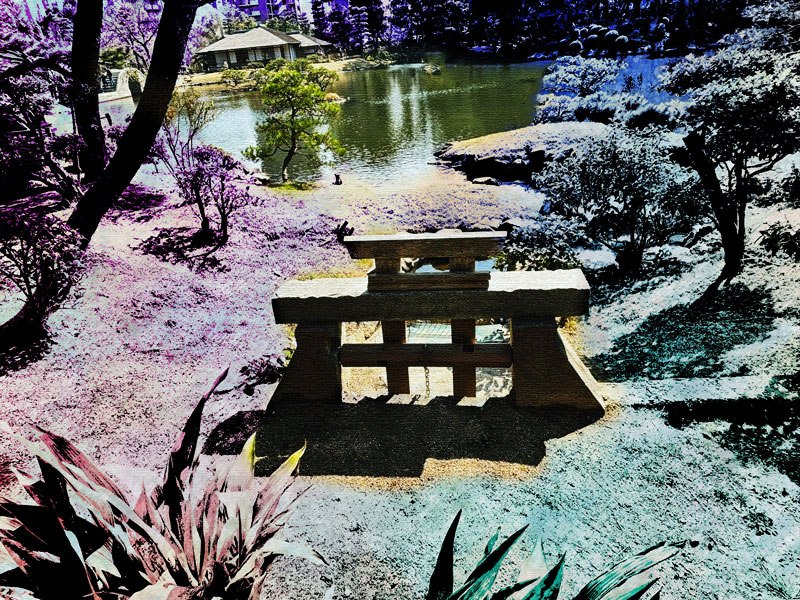
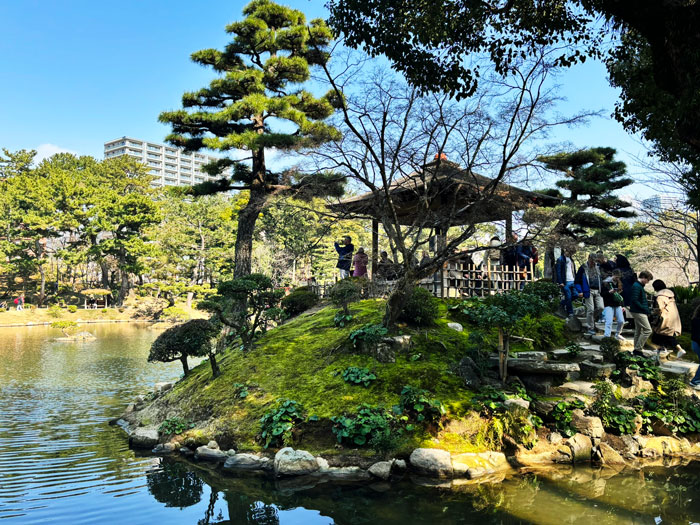
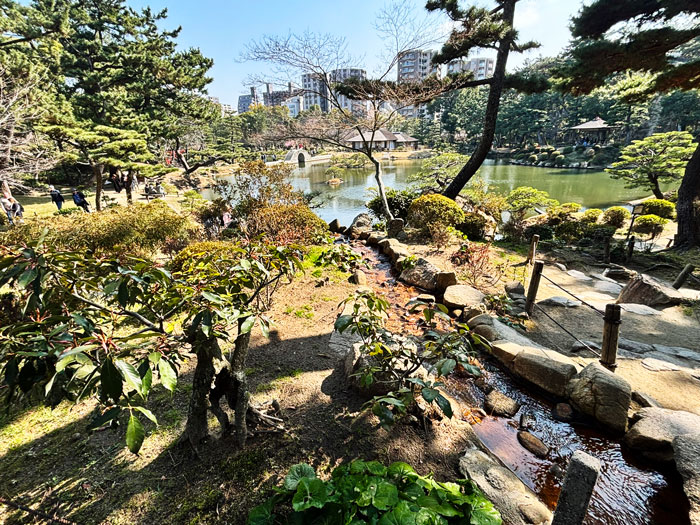
Shukkelen Garden
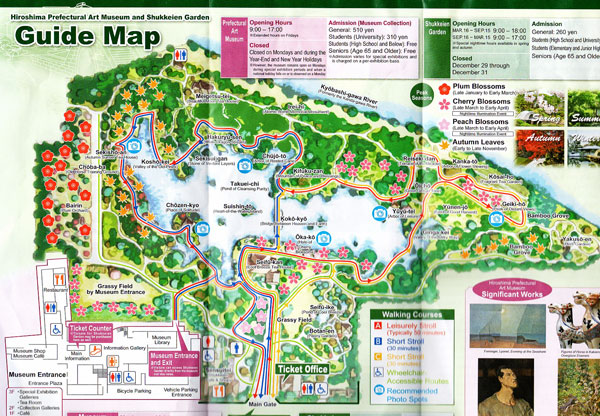
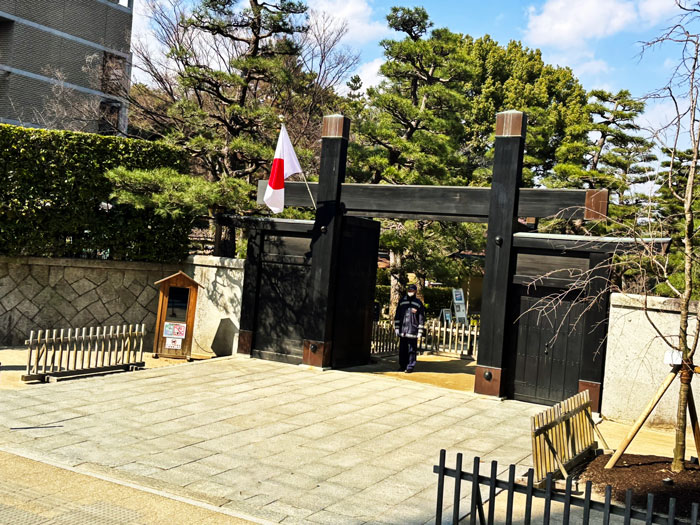
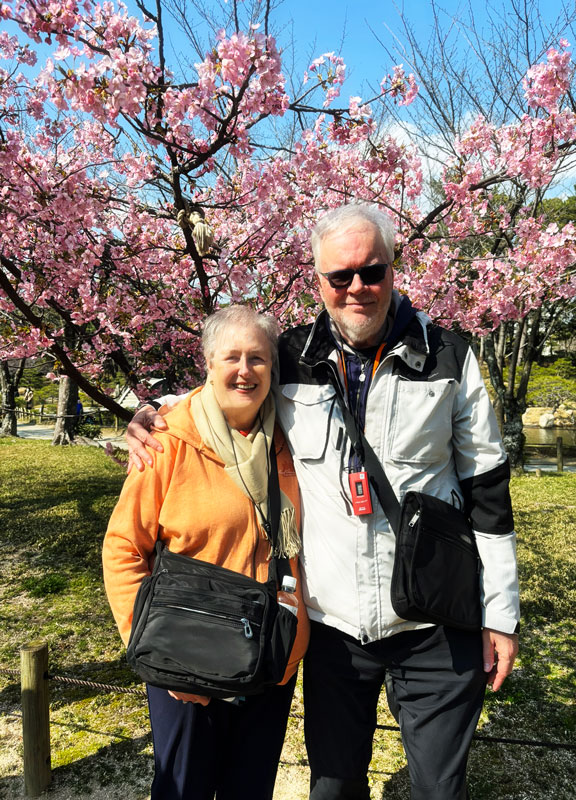
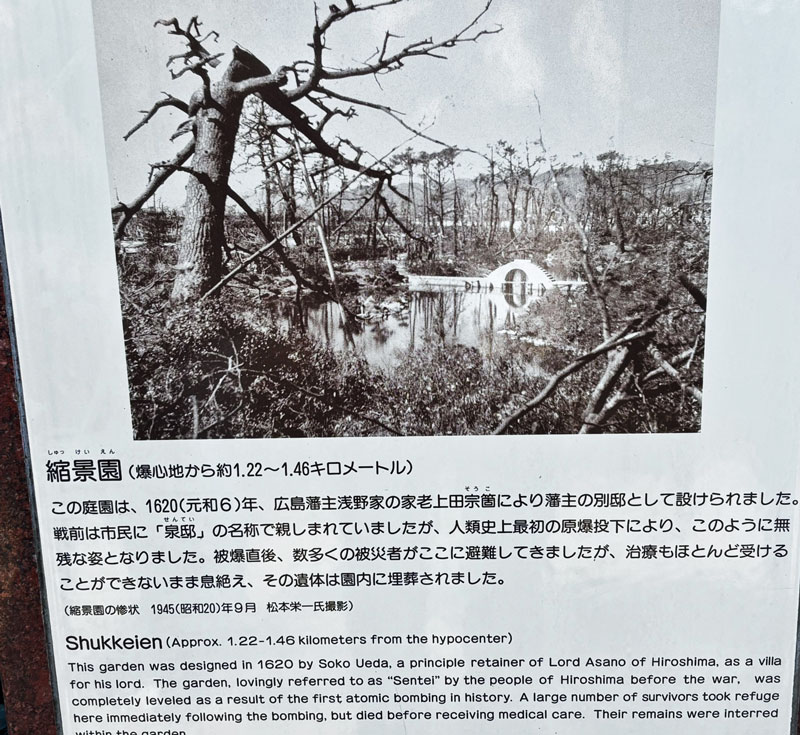
Construction began in 1620 during the Edo period at the order of Asano Naquaakira, daimyo of the Hiroshima han.
Shukkei-en was constructed by Ueda Soko, who served lord Asano as chief retainer of the domain and as a tea master.
Since the Meiji period, the garden served as the villa of the Asano family. When under Emperor Meiji the Imperial General Headquarters were relocated to Hiroshima, the emperor briefly lodged at the villa. The gardens were opened to the public, and in 1940 the Asano family donated them to Hiroshima Prefecture. Being a short walk from ground zero of the nuclear attack on HIroshima, Shukkei-en suffered extensive damage, and then became a refuge for victims of the war. After renovations, it reopened in 1951.
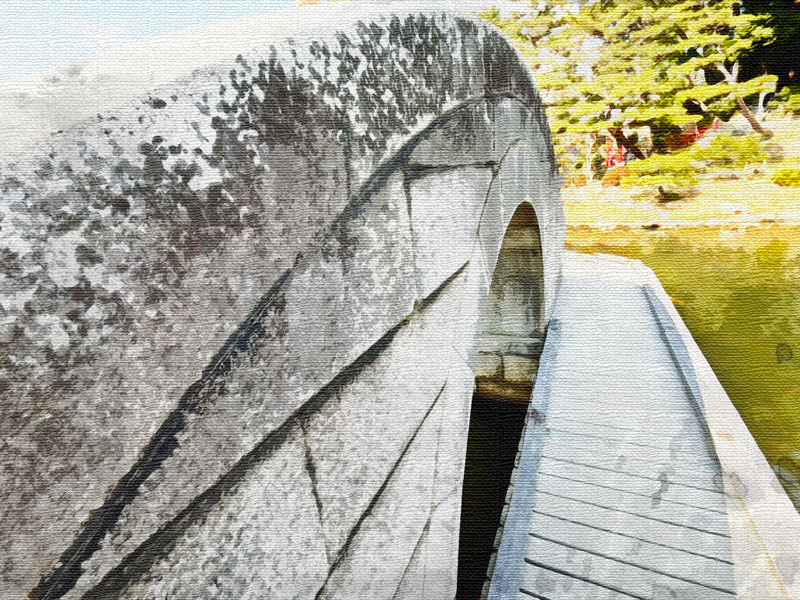
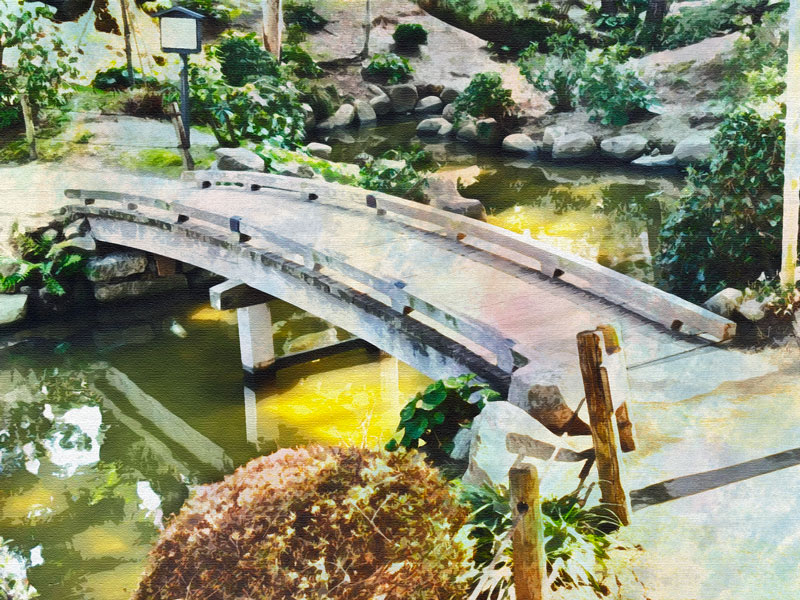
Only the concrete Rainbow Bridge survived,
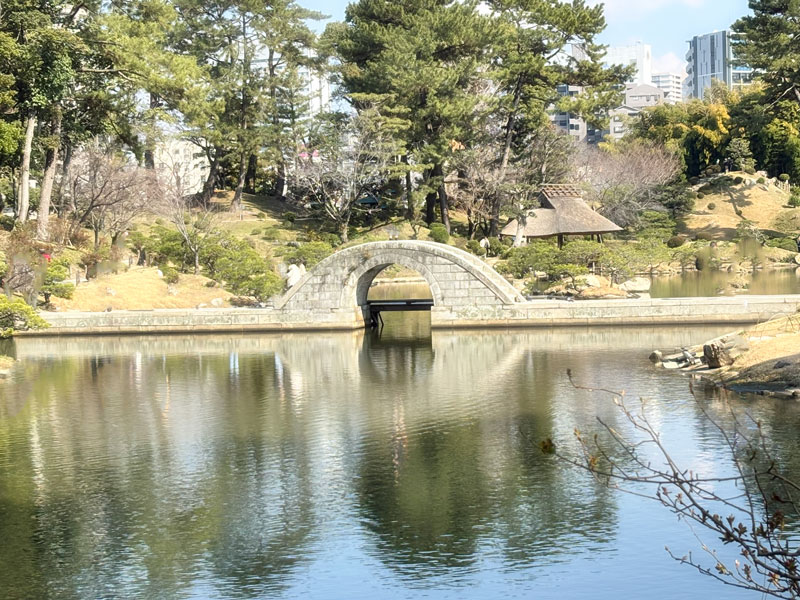
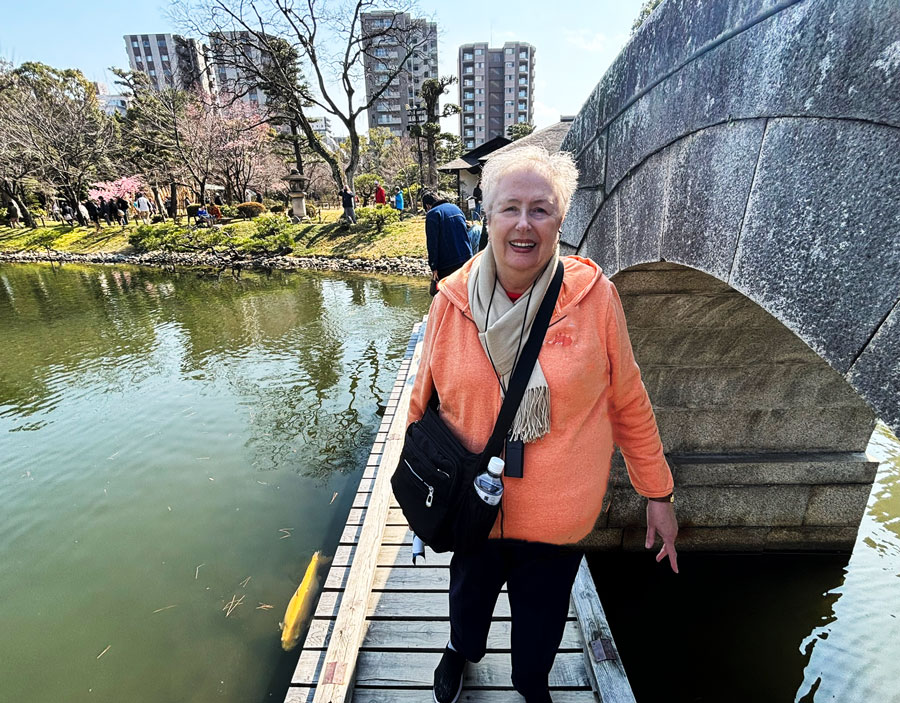
Rainbow bridge in Shukkei-en.



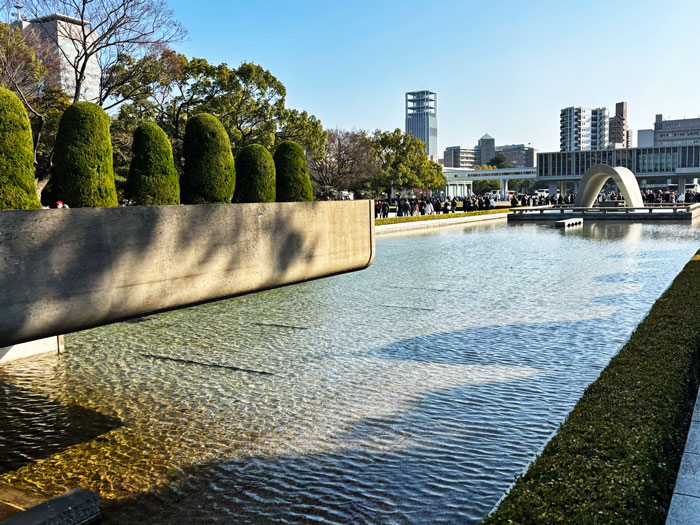
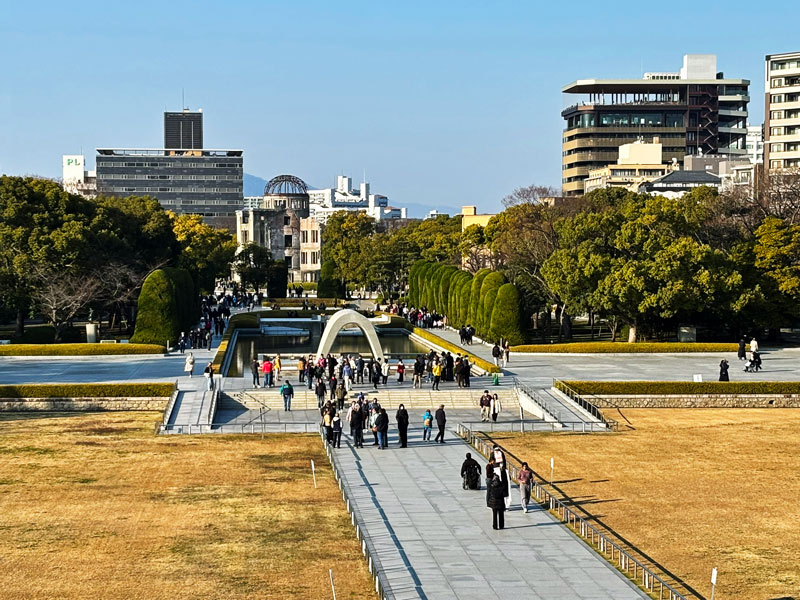
Hiroshima Peace Memorial

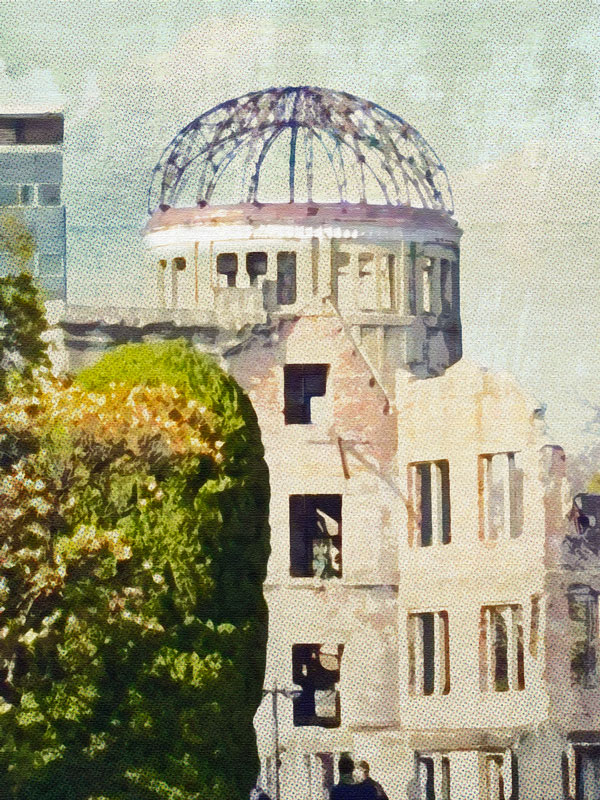
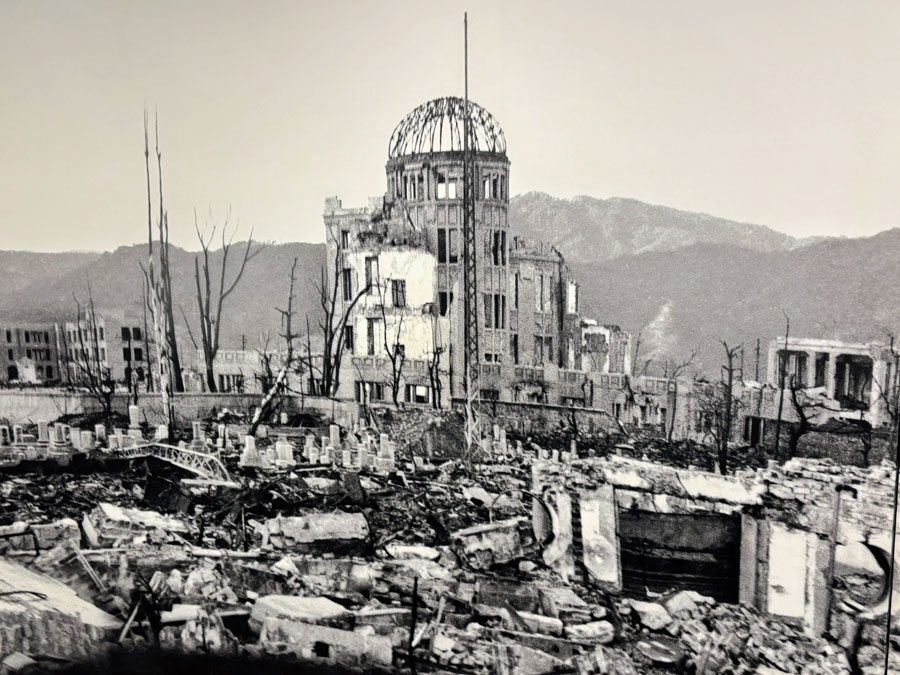
The Genbaku Dome stands almost exactly as it did after the bombing on 6 August 1945. Changes to the ruins, meant to ensure the stability of the structure, have been minimal.[ A metal frame was installed inside to give the ruin more stability.
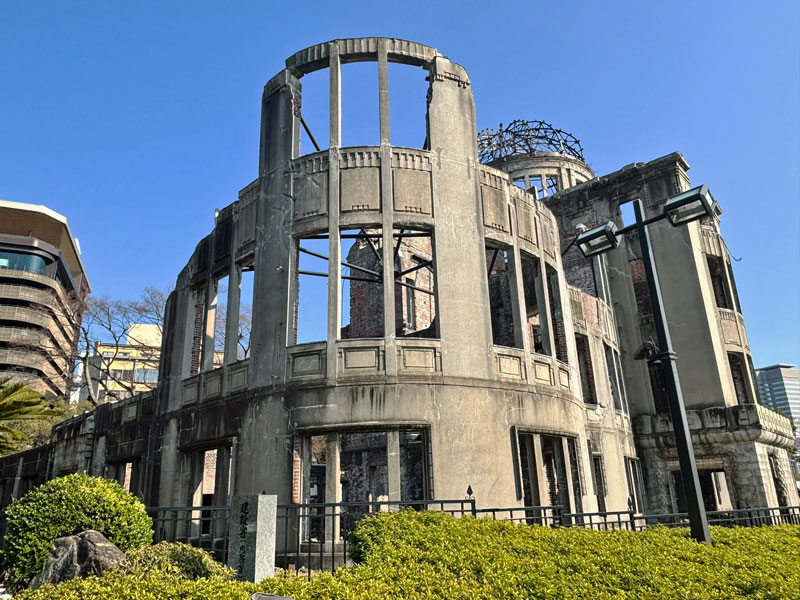
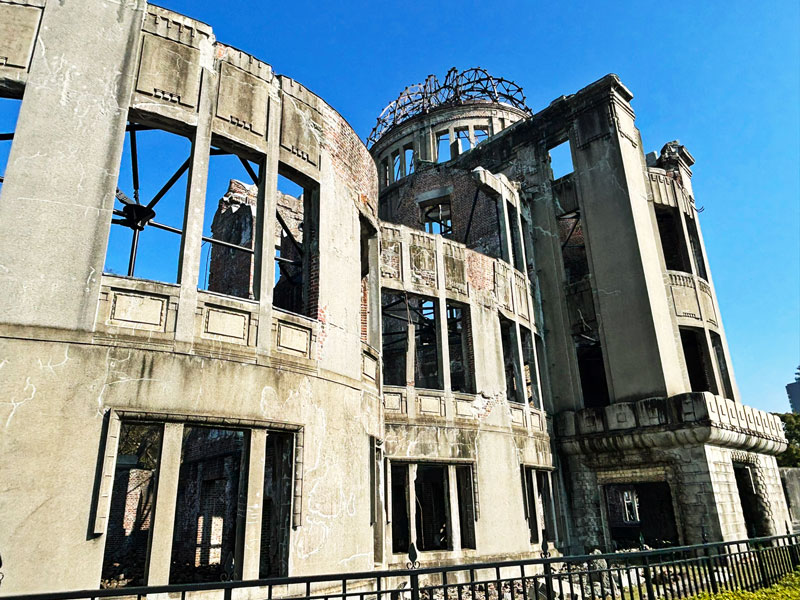
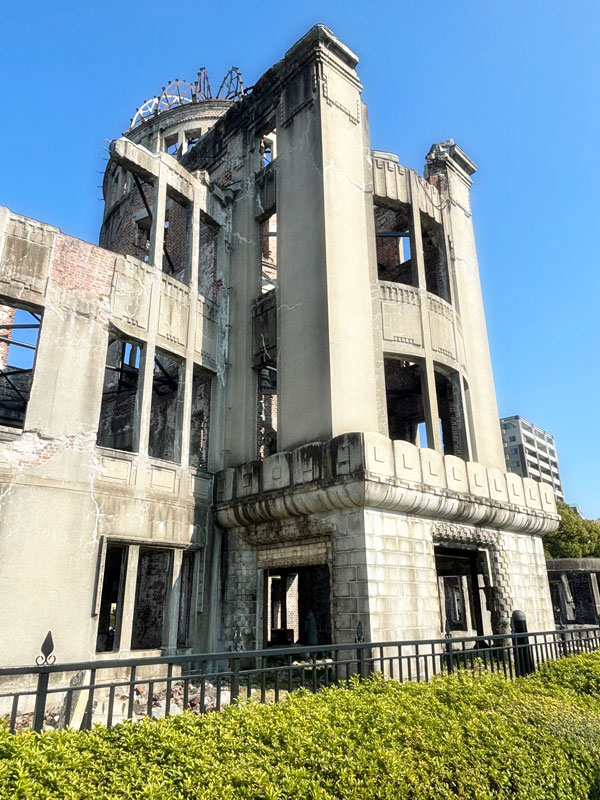
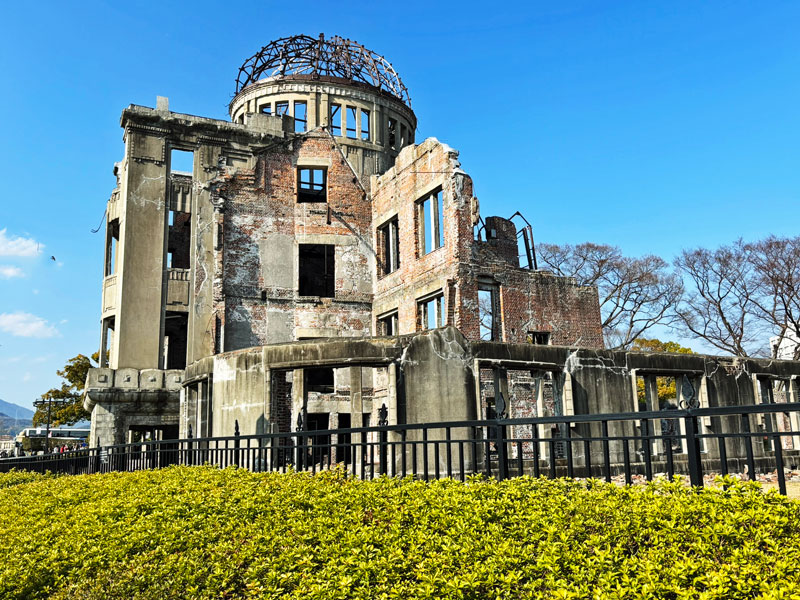
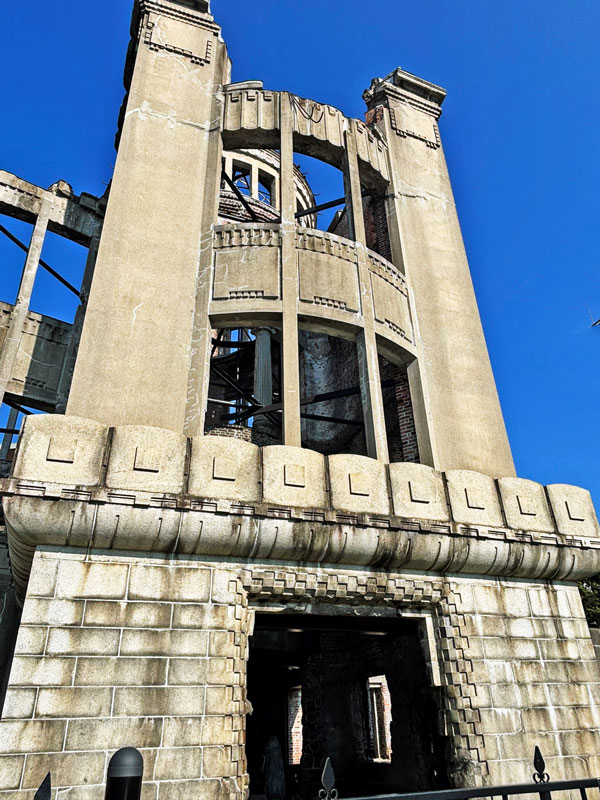
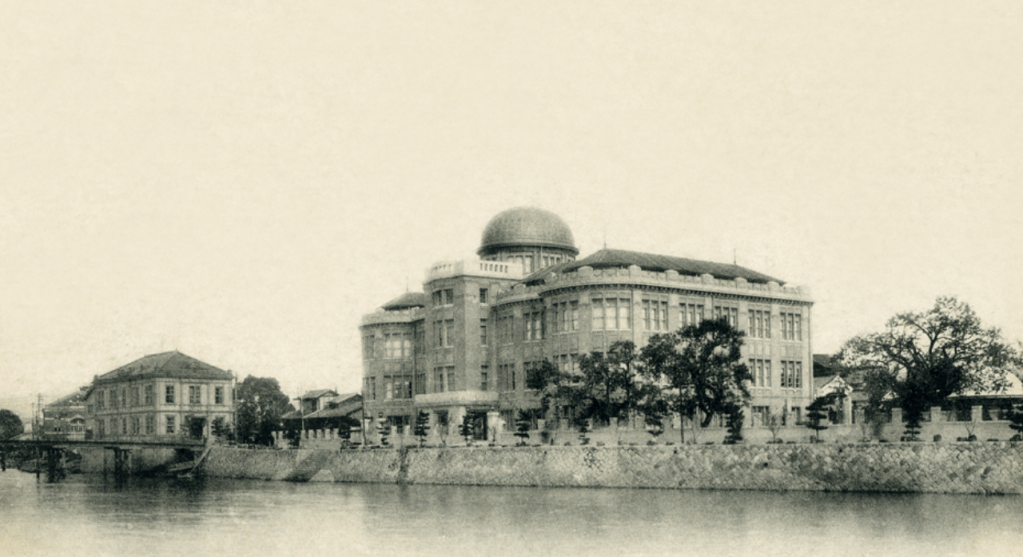
During WWII, at 8:15 a.m. on 6 August 1945, the first atomic bomb to be used in war was dropped on Hiroshima. The bomb possessed a force equivalent to 15,000 tons of TNT , and effectively obliterated the city.
Hiroshima was chosen as a target because it was an important port on southern Honshu and was headquarters of theJapanese Second General Army with 40,000 military personal in the city, and was the only large city that was not known to have a POW camp. Intended for the Aioi Bridge , the bomb missed its target by 240 m and exploded directly over the Shima Hospital , which was very near to the Genbaku Dome. The center of the blast occurred 150 m horizontally and 600 m vertically from the Dome. Everyone inside the building was killed instantly.
Because the explosion was almost directly overhead, the building was able to retain its shape. The building’s vertical columns were able to resist the nearly vertical downward force of the blast, and parts of the concrete and brick outer walls remained intact. The building’s durability can also be attributed to its earthquake-resistant design; it has held up to earthquakes before and since the bombing.
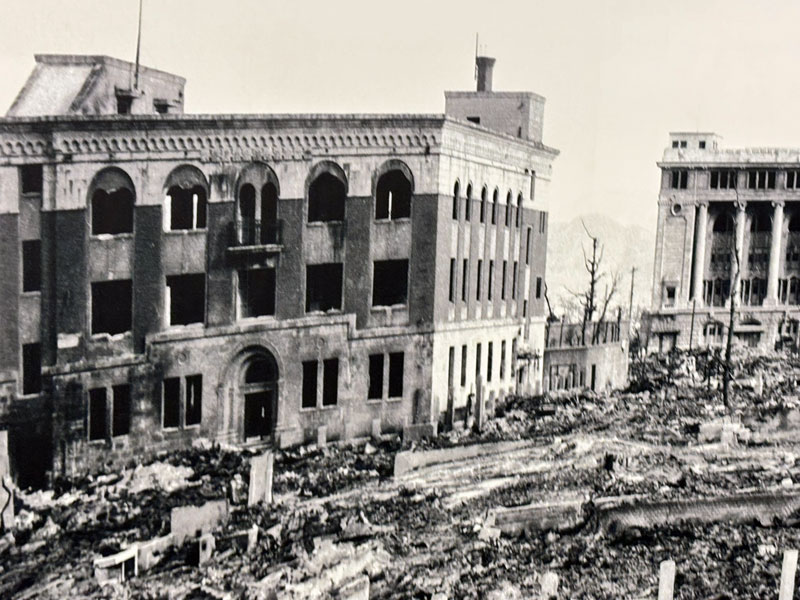
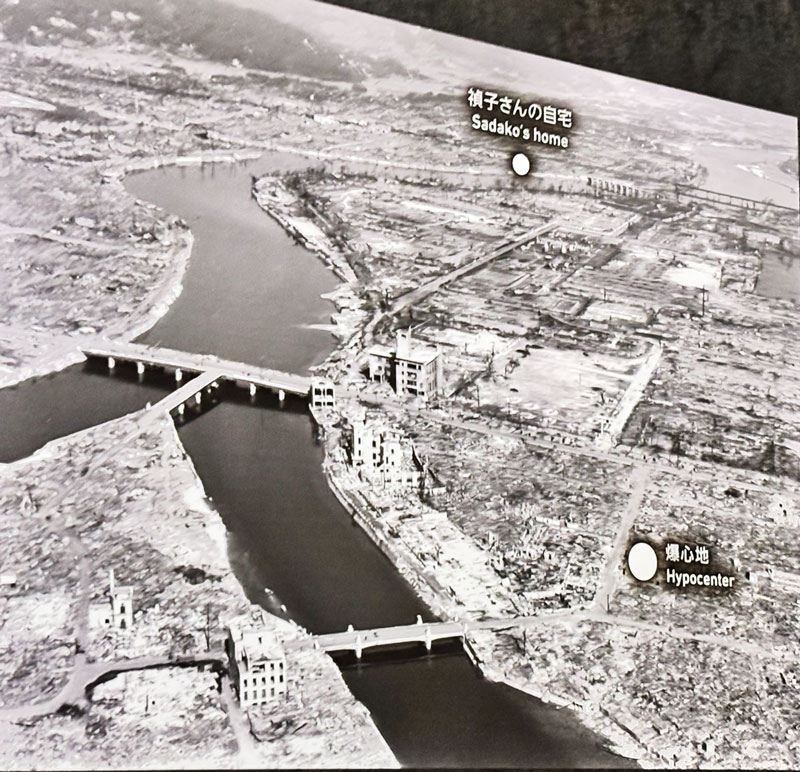
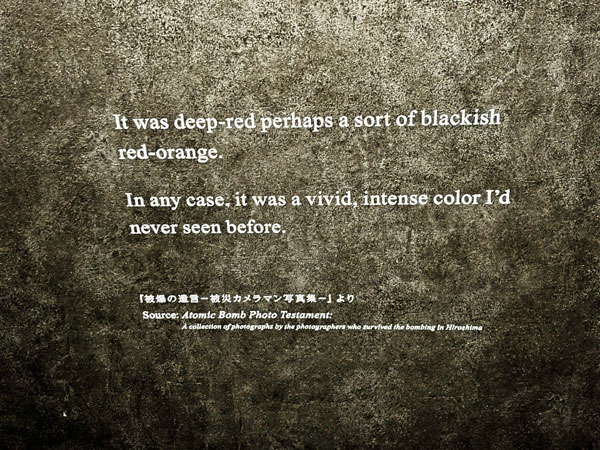
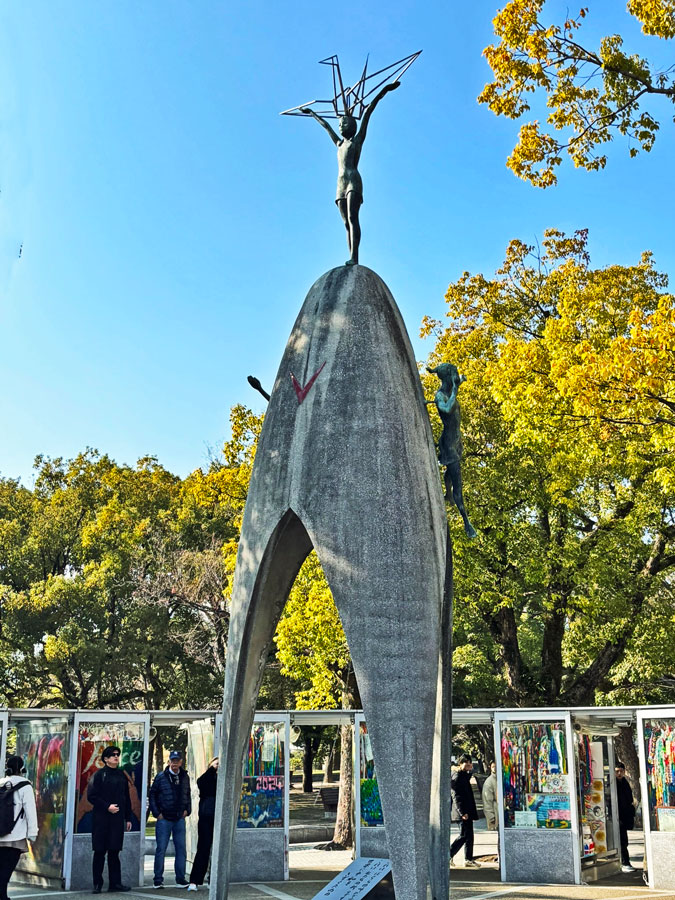
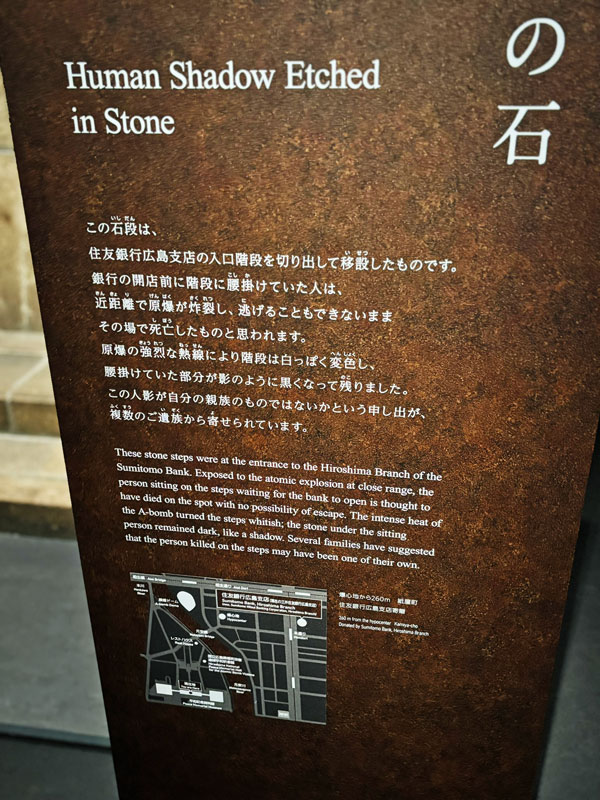
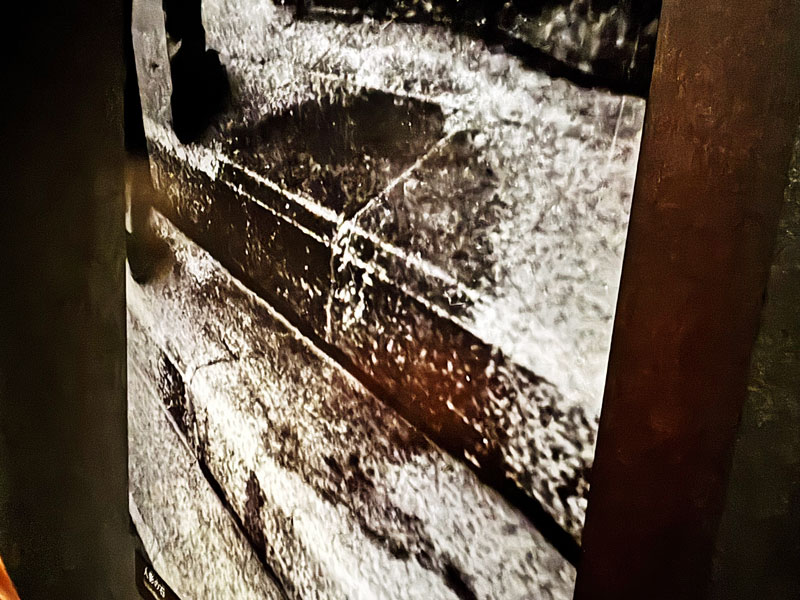
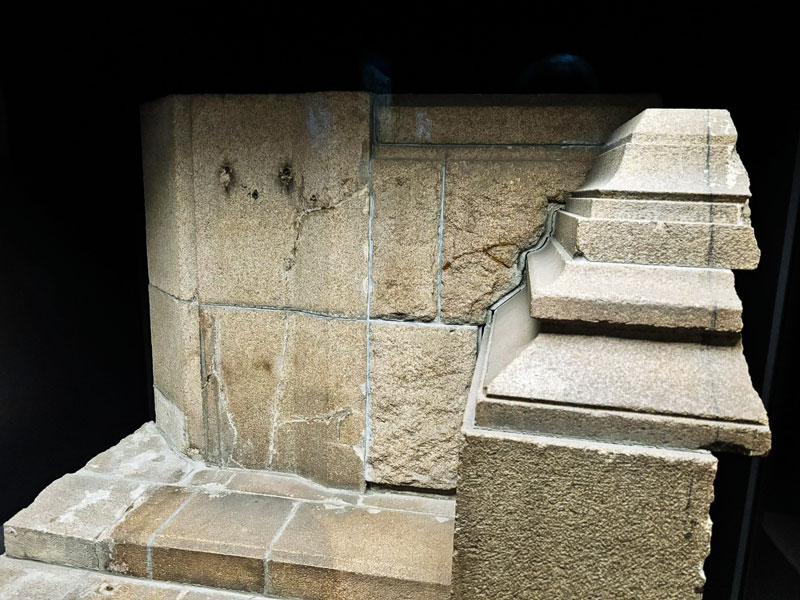
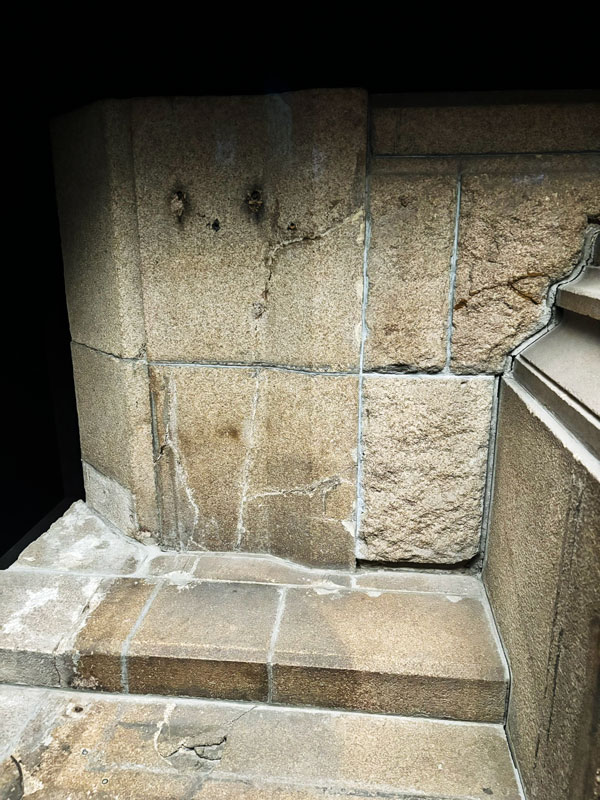
These stone steps were at the entrance to the Hiroshima Branch of the Sumitomo Bank. Exposed to the atomic explosion at close range, the person sitting on the steps waiting for the bank to open is thought to have died on the spot with no possibility of escape. The intense heat of the A-bomb turned the steps whitish; the stone under the sitting person remained dark, like a shadow. Several families have suggested that the person killed on the steps may have been one of their own.

The shutters were bent by the blast.
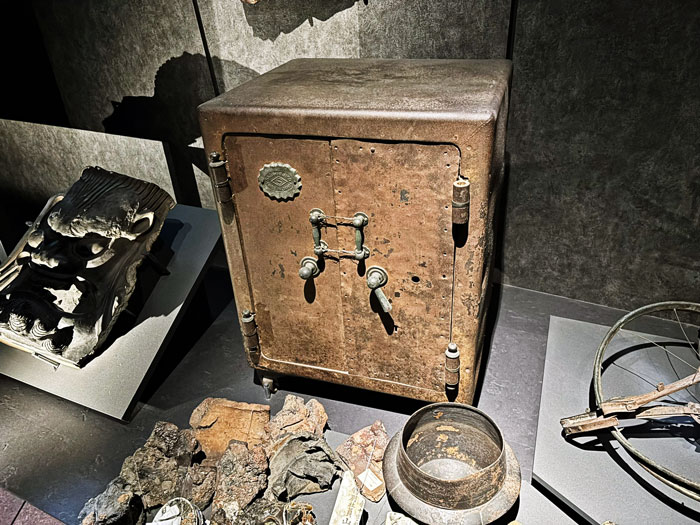
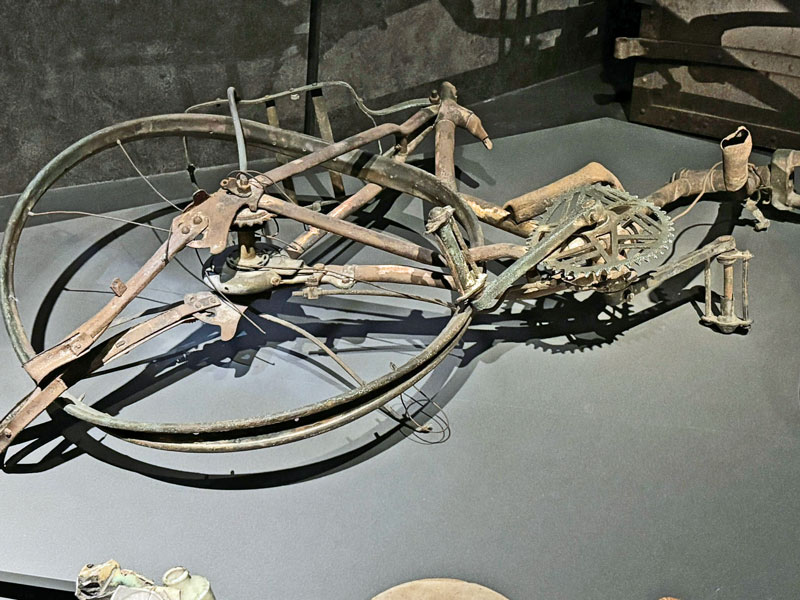
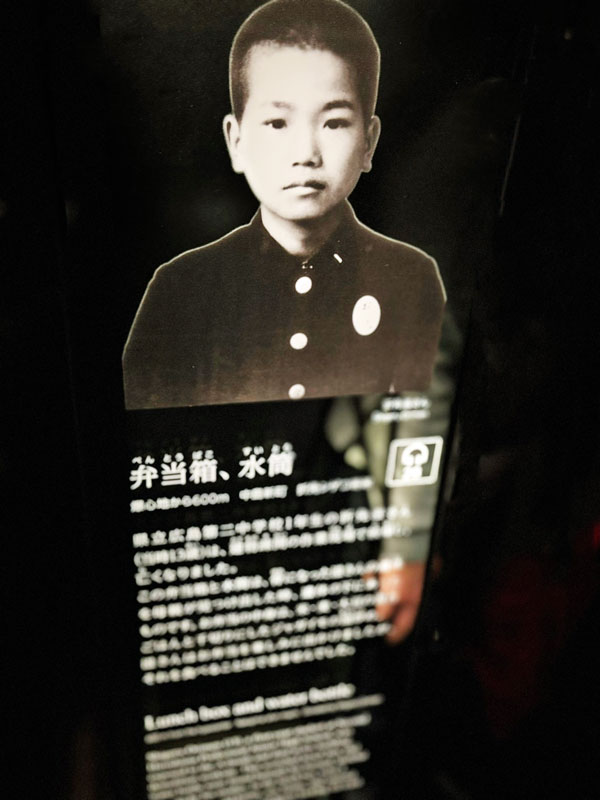
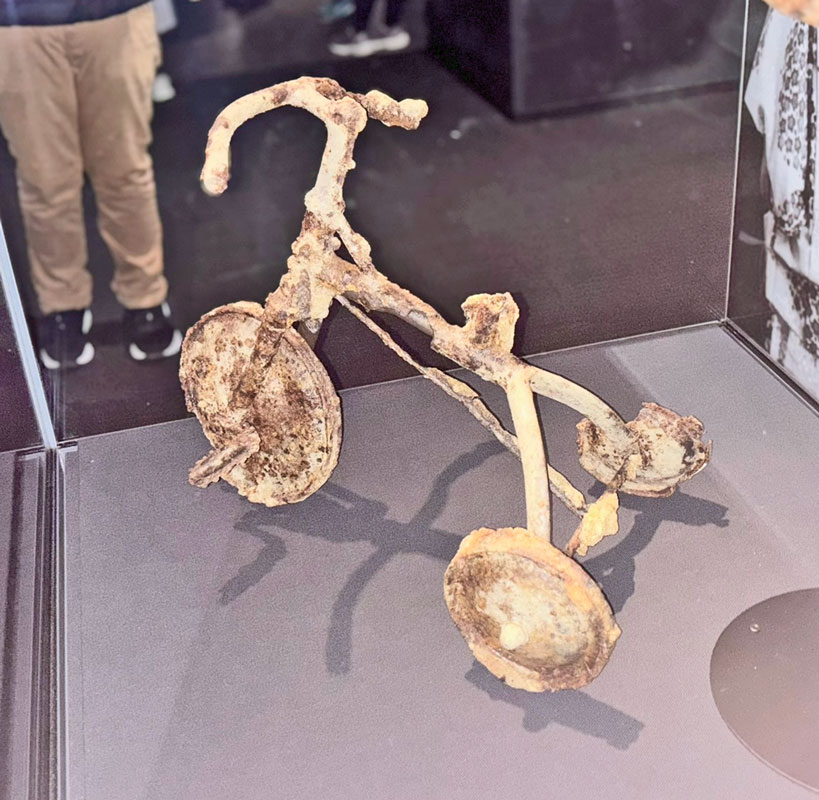
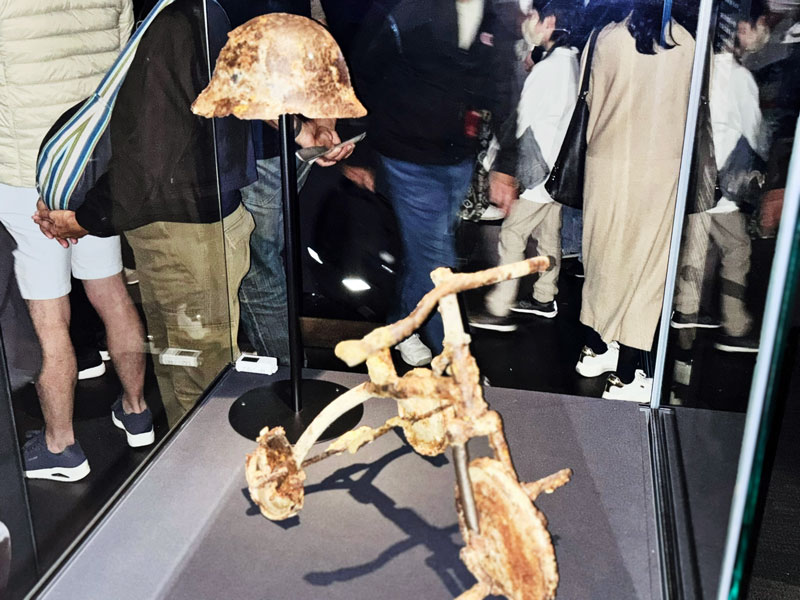
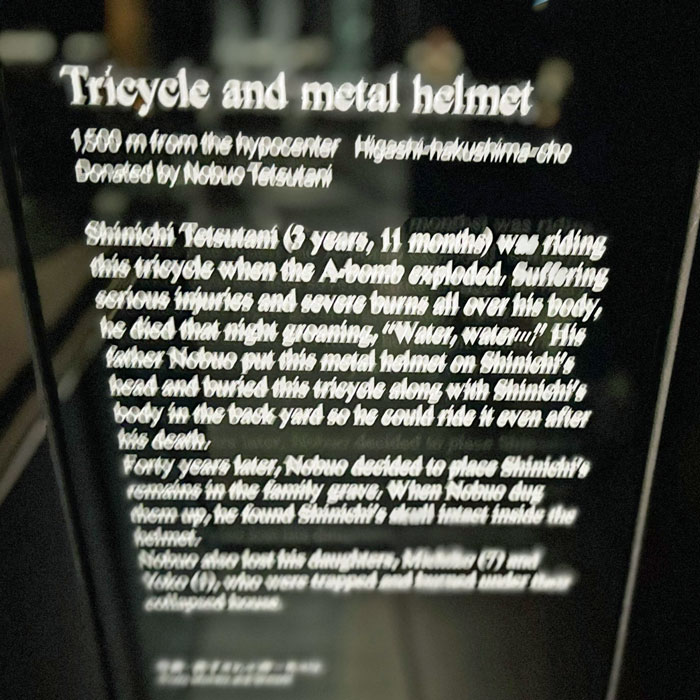
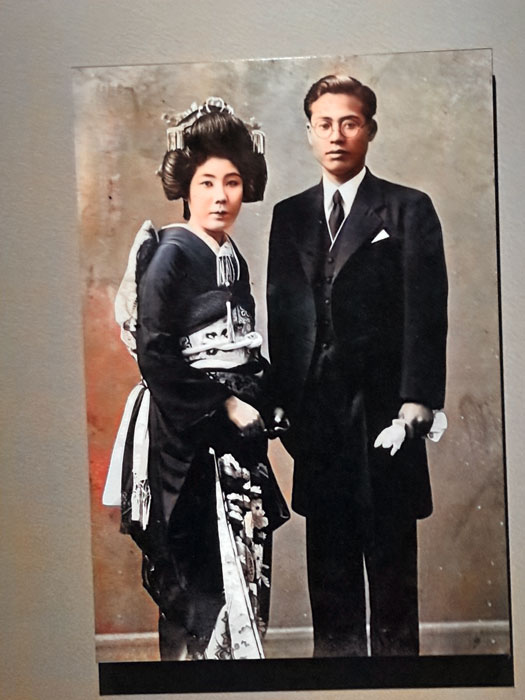
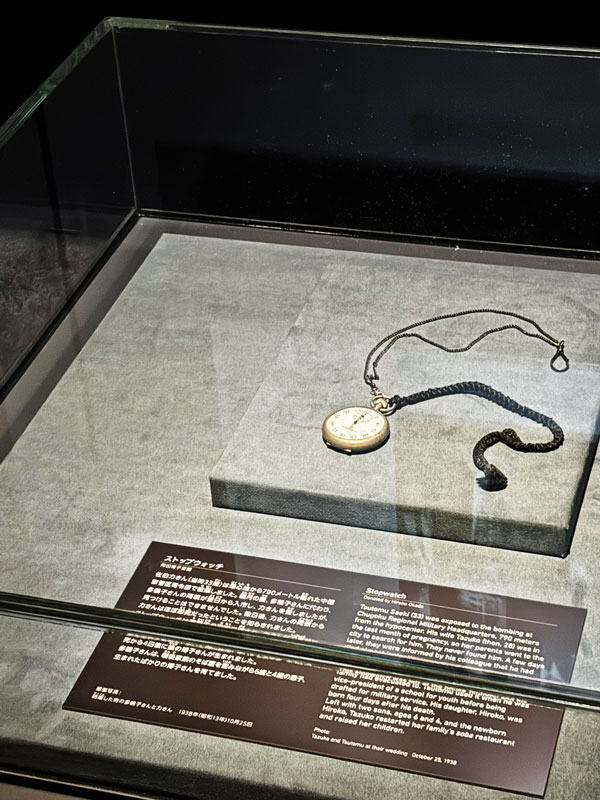
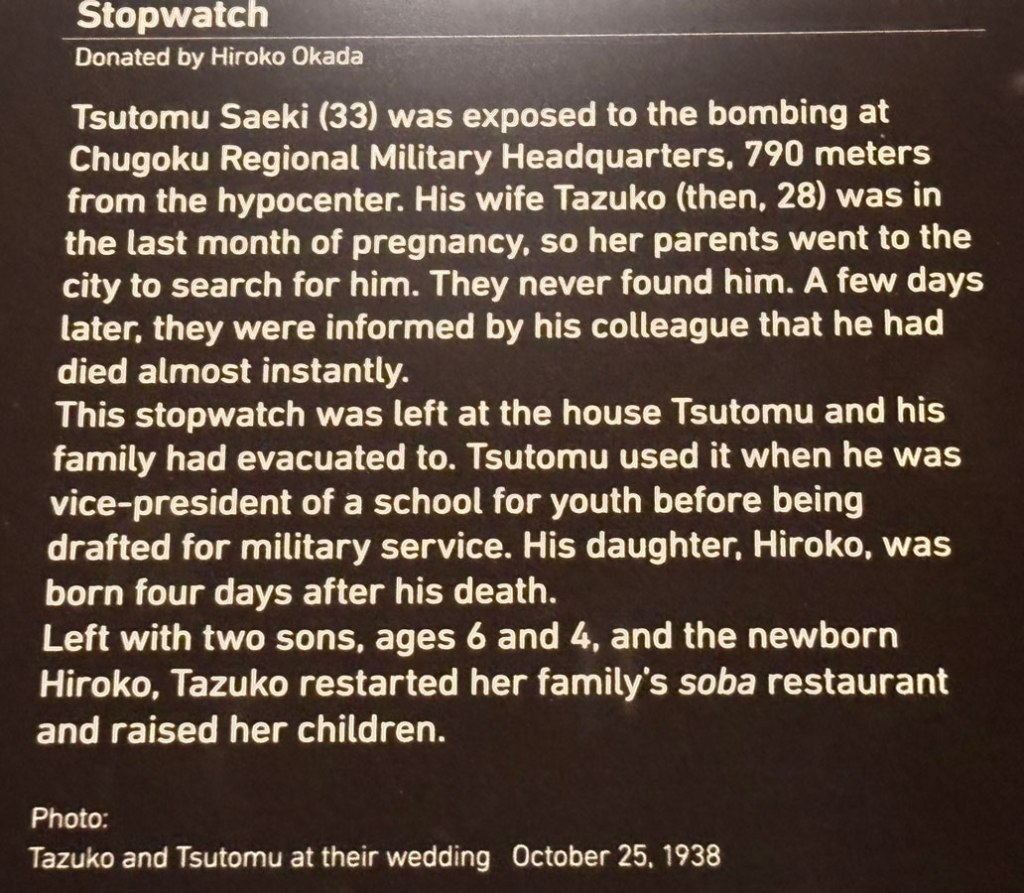
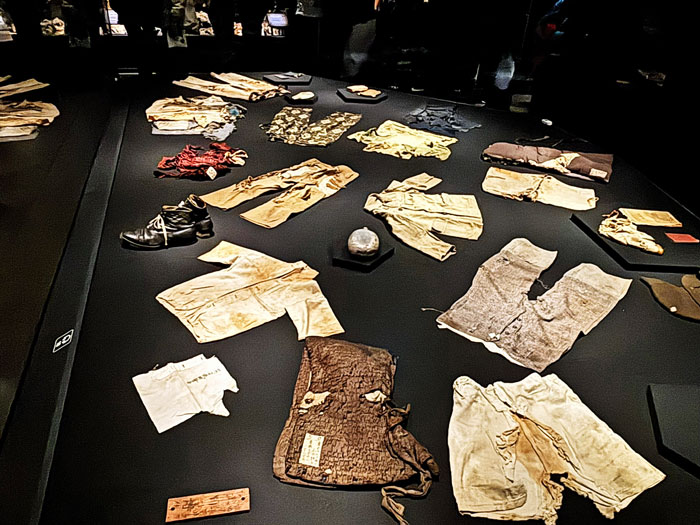
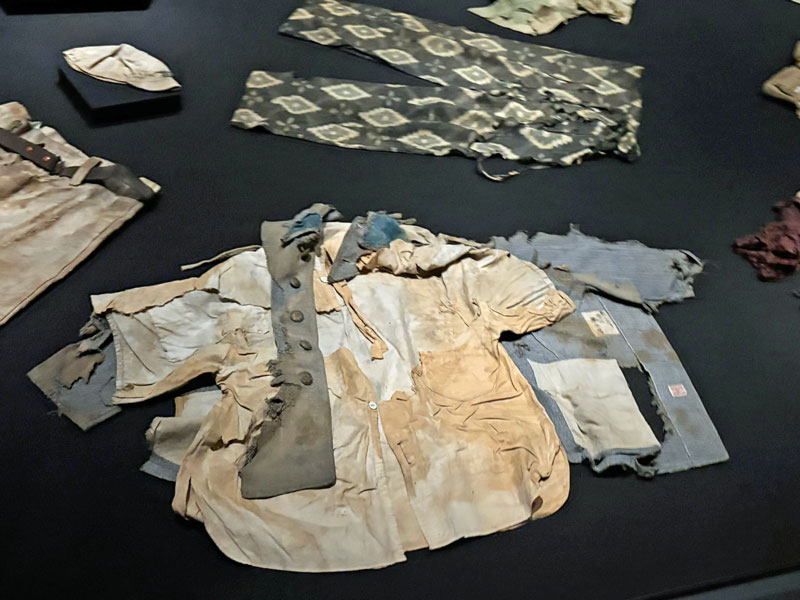
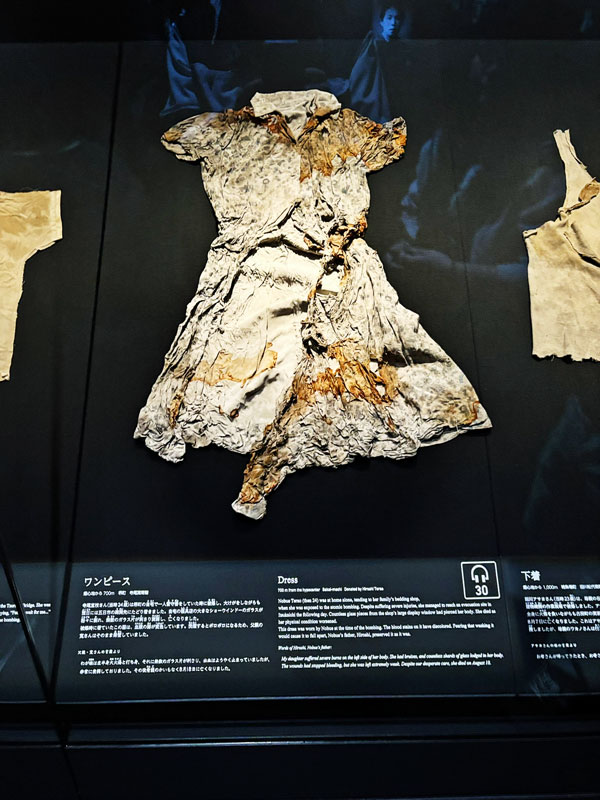
On the morning of August 6, thousands of students were exposed to the atomic bomb while engaging in building demolition work outside. Suffering severe burns, they died in pain and agony.

 s
s 