




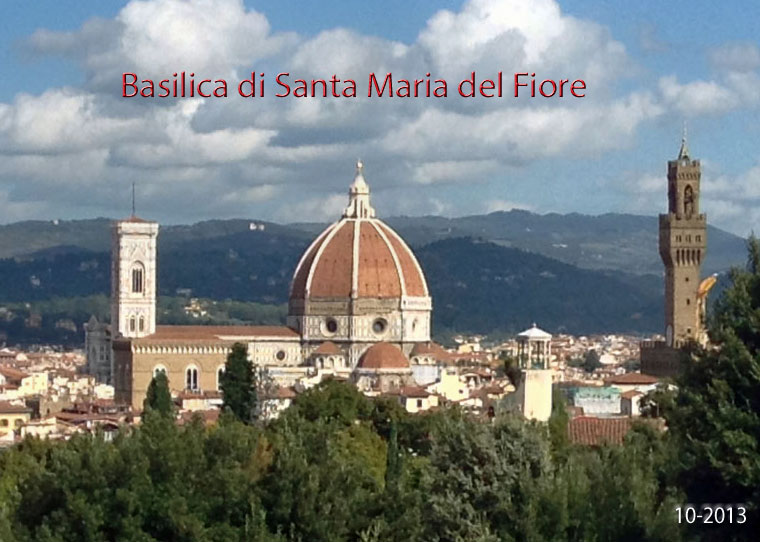
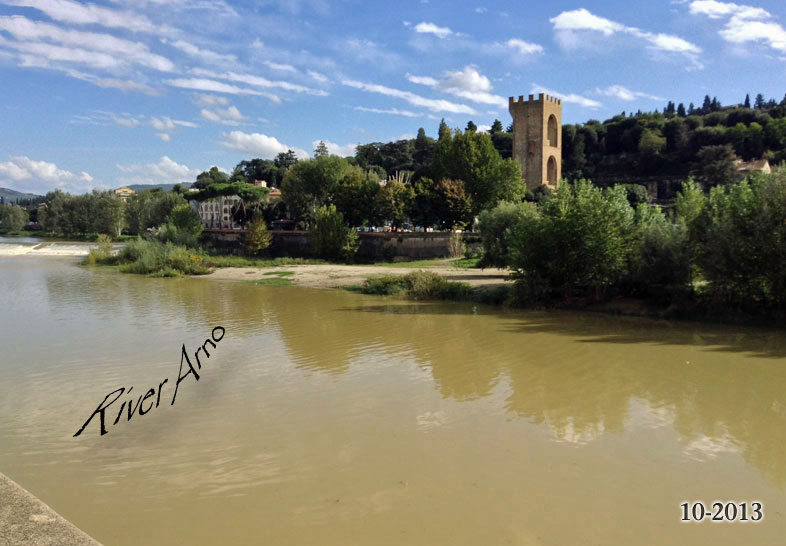
Florence lies on the River Arno and is known for its history and its importance in the Middle Ages and in the Renaissance, especially for its art and architecture. A centre of medieval European trade and finance and one of the richest and wealthiest cities of the time, Florence. It was long under the de facto rule of the Medici family. From 1865 to 1870 the city was also the capital of the Kingdom of Italy.
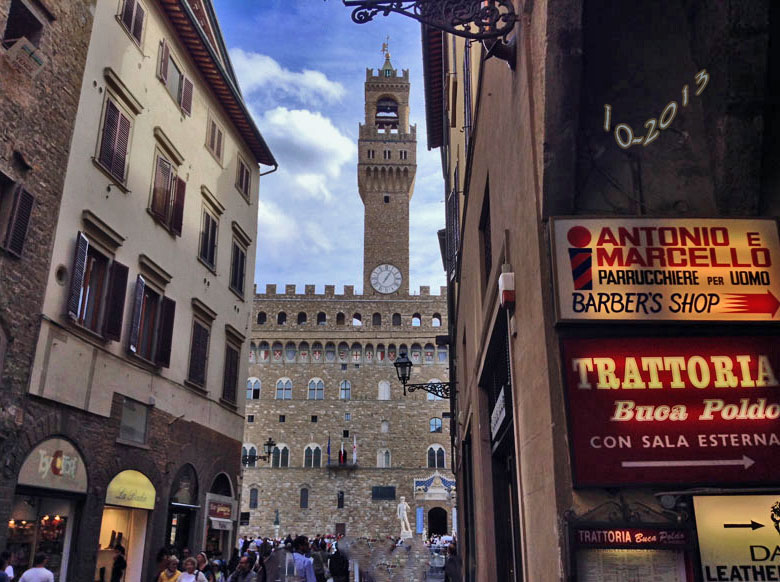
We visited this marvelous city on a couple of occasions. Once in 2005 and again in 2013.
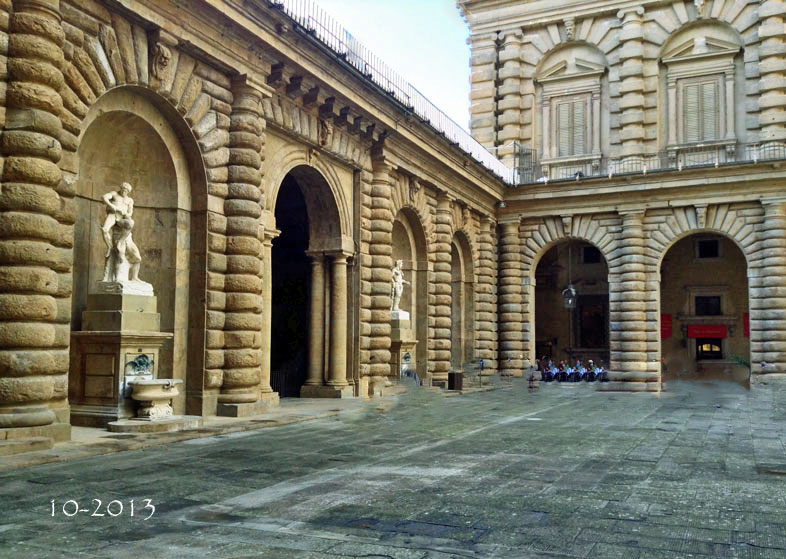
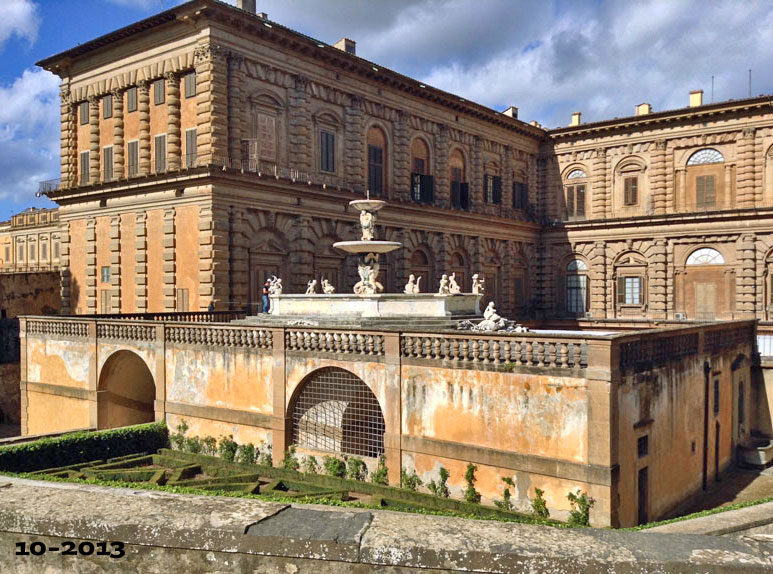
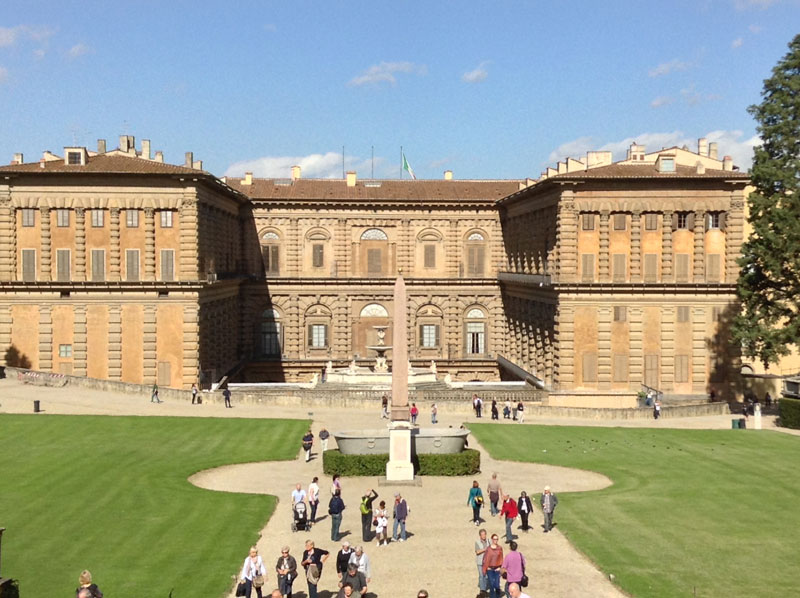
The Palazzo Pitti is a vast mainly Renaissance palace. It is situated on the south side of the River Arno, a short walk from the Ponte Vecchio bridge. The core of the present palace dates from 1458 and was originally the town residence of Luca pitti, an ambitious Florentine banker.
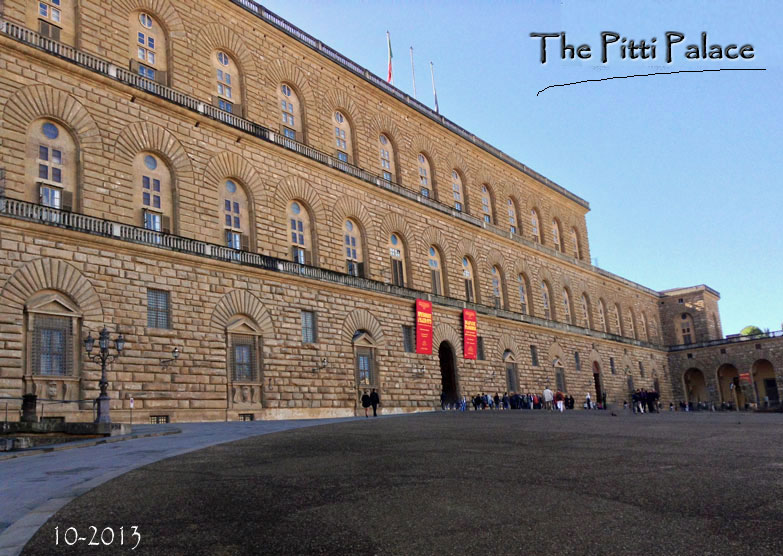
The palace was bought by the Medici family in 1549 and became the chief residence of the ruling families of the Grand Duchy of Tuscany. It grew as a great treasure house as later generations amassed paintings, plates, jewelry, and luxurious possessions.
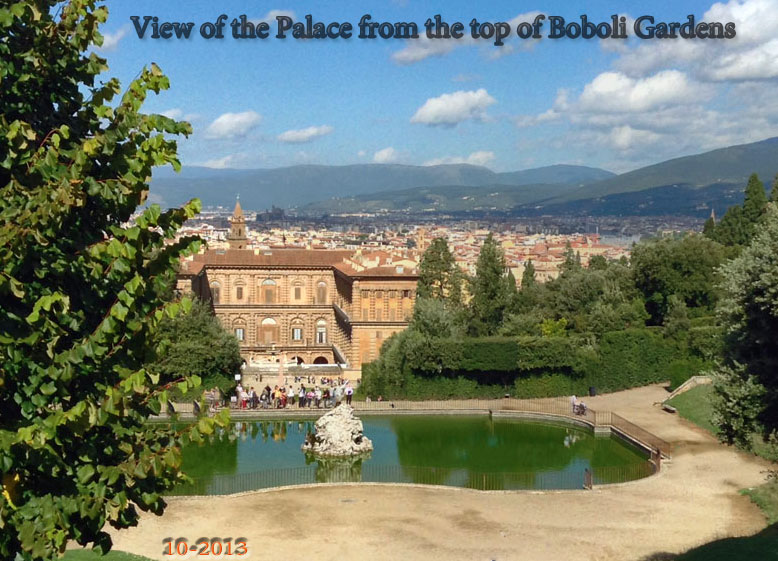
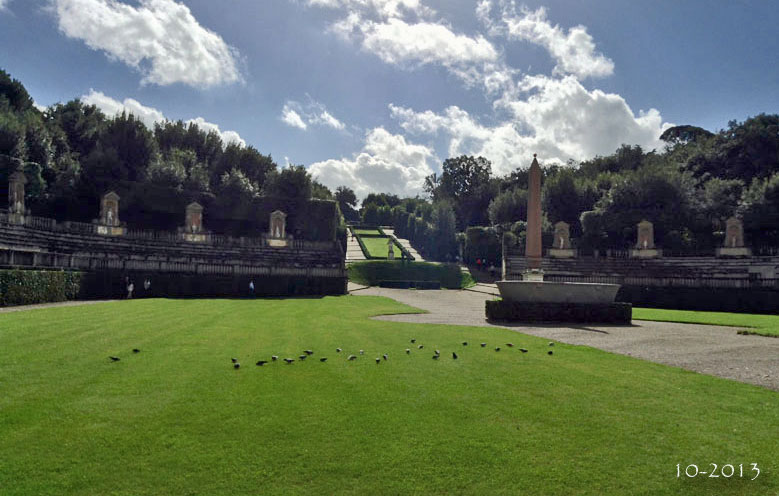
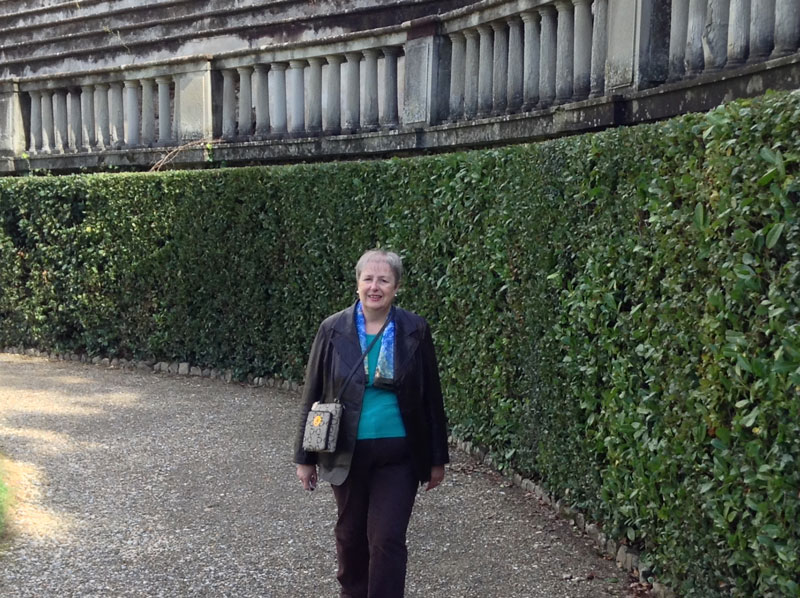
It is massive site, we visited the Silver and Costume museums. We also walked around the Boboli Gardens. It rises sharply but provides great views of the palace and of Florence once you’ve made your way to the top and the Belvedere. The Porcelain museum is located up there, but we didn’t visit it. The Palace is well worth a visit.
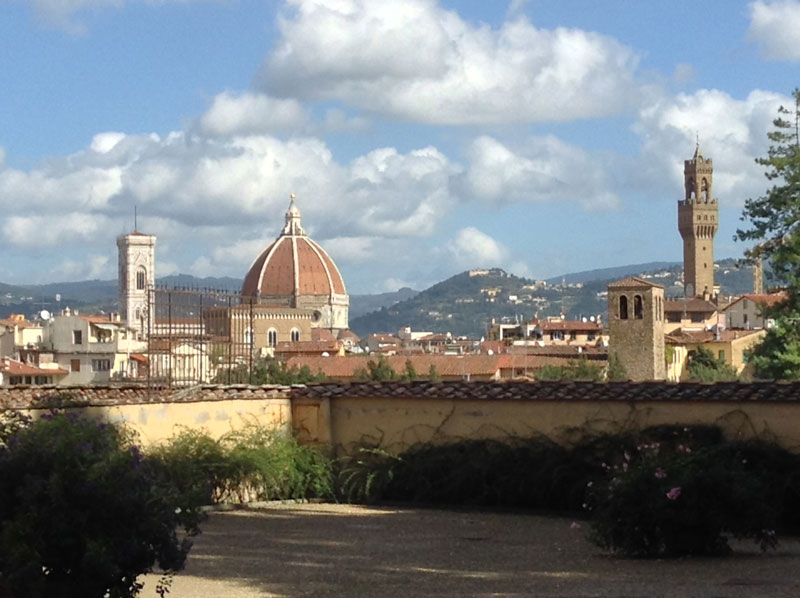
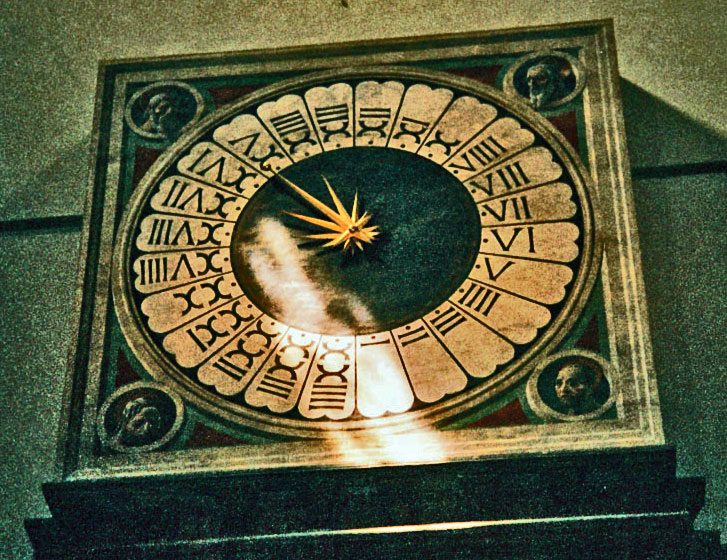
The Duomo
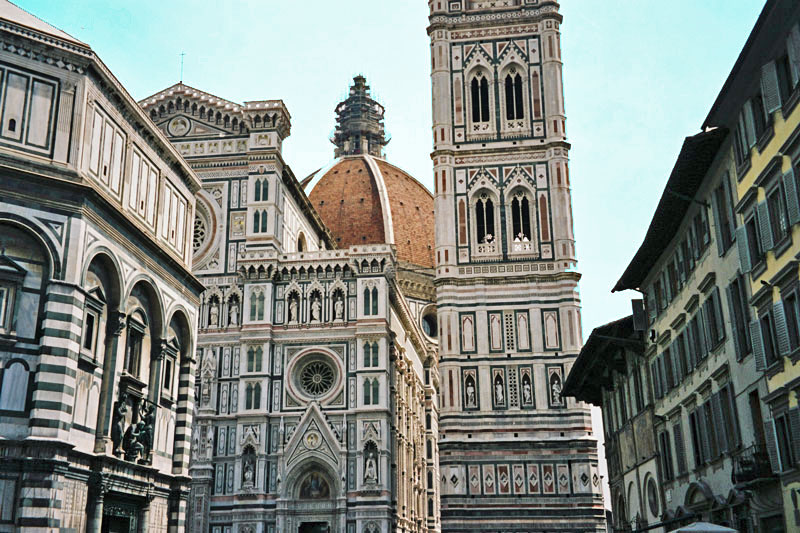
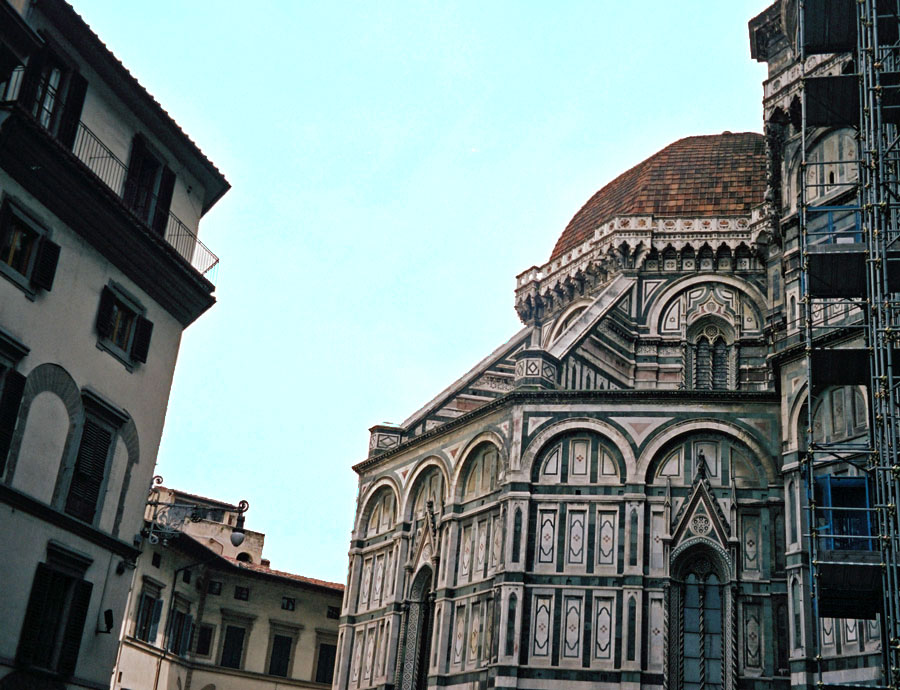
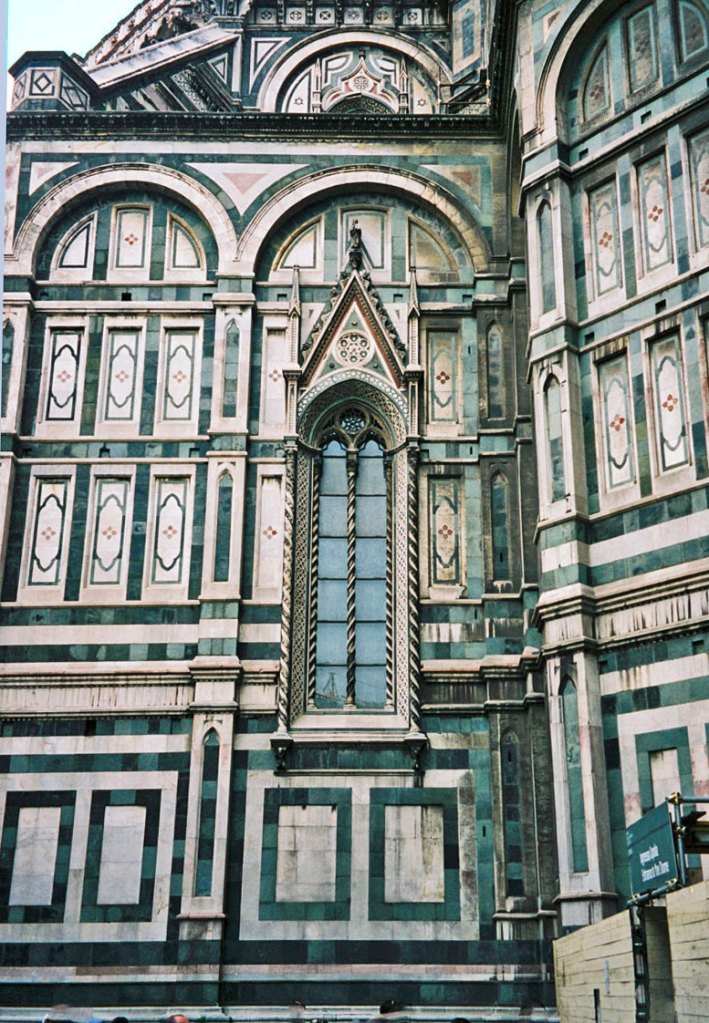
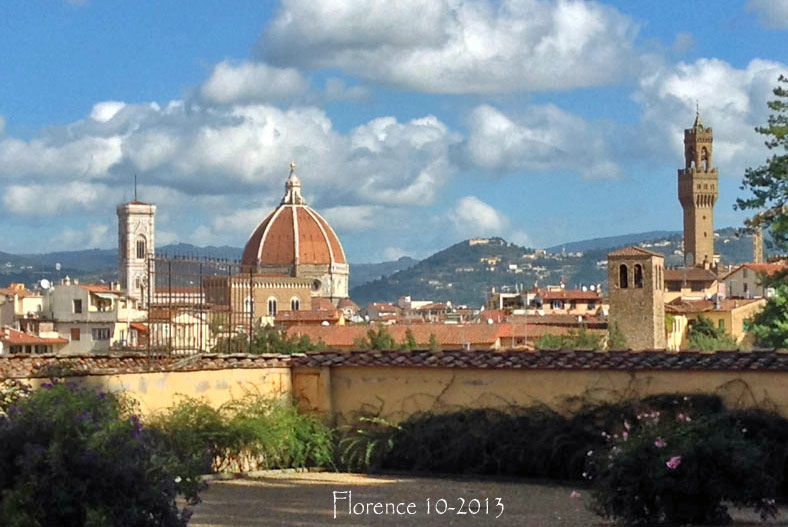
The construction of the Duomo, the Cathedral also called Santa Maria del Fiore, was started by Arnolfo di Cambio on the 8th of September 1296. It is the & fourth longest church in the world (after Saint Peter in Rome, Saint Paul in London, and the Cathedral in Milan).
A competition was held for the dome in 1418 and, after many doubts, Filippo Brunelleschi’s project was accepted in 1420. The church, dedicated to Santa Maria del Fiore (fiore referring to Florence) was consecrated on the 25 of March 1436. The differences in the various parts of the Cathedral show the evident changes in taste in 200 years.
The building of such a masonry dome posed many technical problems. Brunelleschi looked to the great dome of the Pantheon in Rome for solutions. The dome of the Pantheon is a single shell of concrete, the formula for which had long since been forgotten. The Pantheon had employed structural centrino to support the concrete dome while it cured.
This could not be the solution in the case of a dome this size and would put the church out of use. For the height and breadth of the dome designed by Neri, starting 52 m above the floor and spanning 44 m , there was not enough timber in Tuscany to build the scaffolding and forms.
.jpg)
Brunelleschi chose to follow such design and employed a double shell, made of sandstone and marble. Brunelleschi would have to build the dome out of brick, due to its light weight compared to stone and being easier to form, and with nothing under it during construction. To illustrate his proposed structural plan, he constructed a wooden and brick model. The model served as a guide for the craftsmen, but was intentionally incomplete, so as to ensure Brunelleschi’s control over the construction.
The Last Judgment
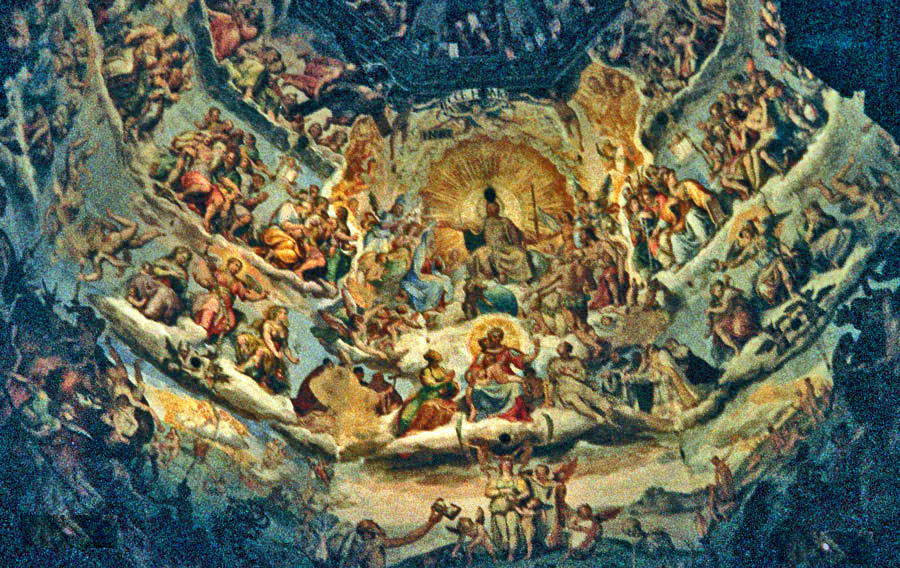
Grand Duke Cosimo I de’ Medici decided to have the dome painted with a representation of The Last Judgment. This enormous work, 38 750 ft² of painted surface, was started in 1568 by Giorgio Vasari and Frederico Zuccari and would last till 1579.
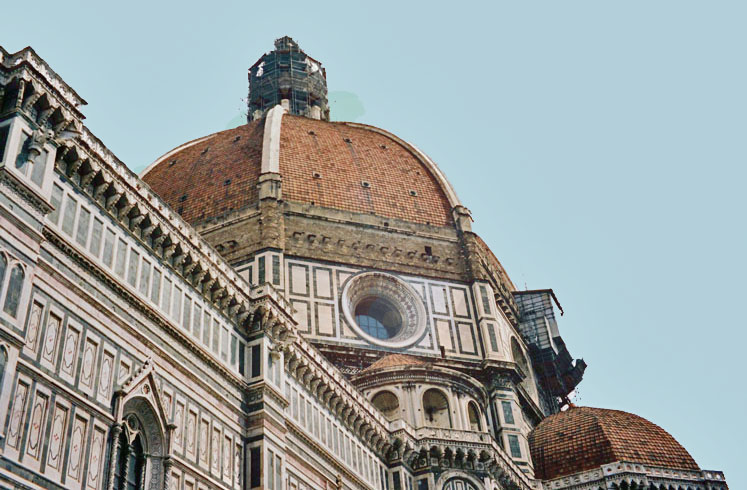
Brunelleschi‘s solutions were ingenious. The spreading problem was solved by a set of four internal horizontal stone and iron chains, serving as barrel hoops, embedded within the inner dome: one at the top, one at the bottom, with the remaining two evenly spaced between them. A fifth chain, made of wood, was placed between the first and second of the stone chains. Since the dome was octagonal rather than round, a simple chain, squeezing the dome like a barrel hoop, would have put all its pressure on the eight corners of the dome. The chains needed to be rigid octagons, stiff enough to hold their shape, so as not to deform the dome as they held it together.
Baptistry
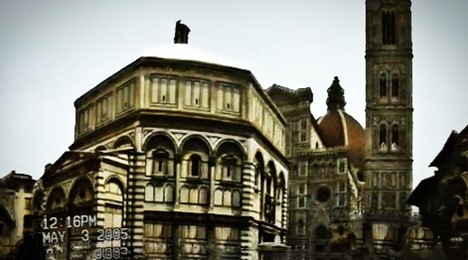
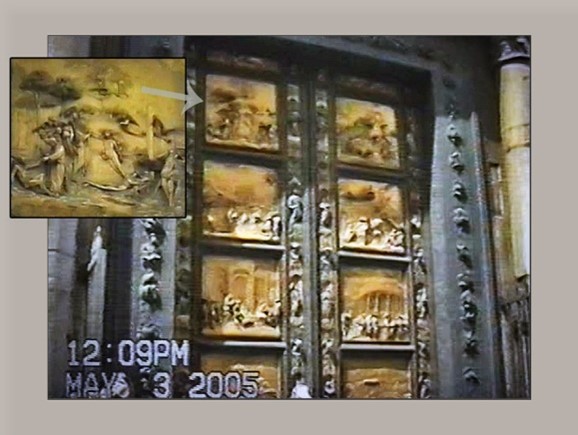
The Baptistry, built about 1050, has a central plan, with eight sides and three doors–doors on the east, north, and south. The south door, finished in 1330 by Pisano, have quatrefoils with eight seated Virtues and 20 scenes from the life of John the Baptist. (The baptistry is dedicated to him–as many were.) Ghiberti designed the north-doors, 1404-24, using the same quatrefoil format as Pisano and with the same number of reliefs–28.
His second set of doors–the so-called Gates of Paradise, however, have much larger panels and use a square format rather than the medieval quatrefoil. Thus, they can accommodate several scenes relating to one Old Testament hero and use many figures (more than a hundred in some panels) and extensive details. These doors depict events from the Creation to the reign of Solomon.
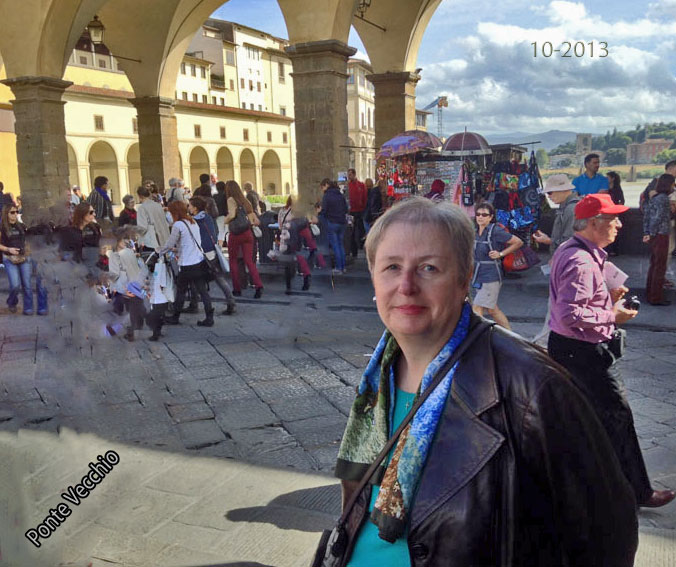
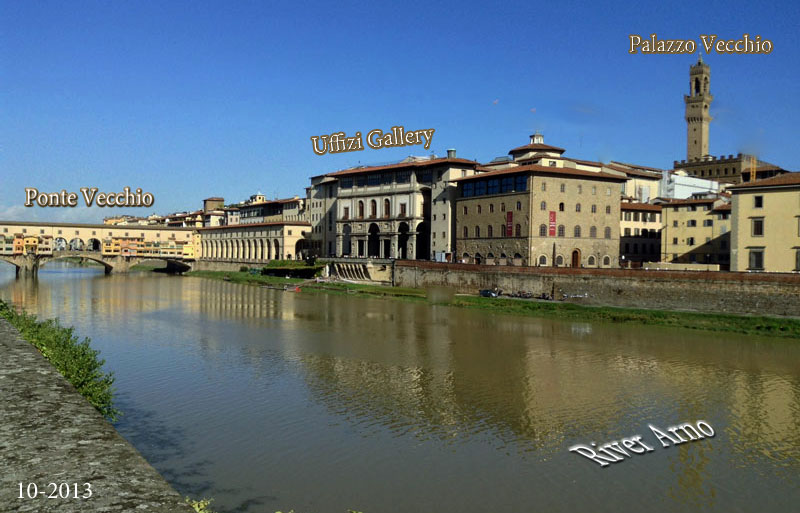
Santa Croce
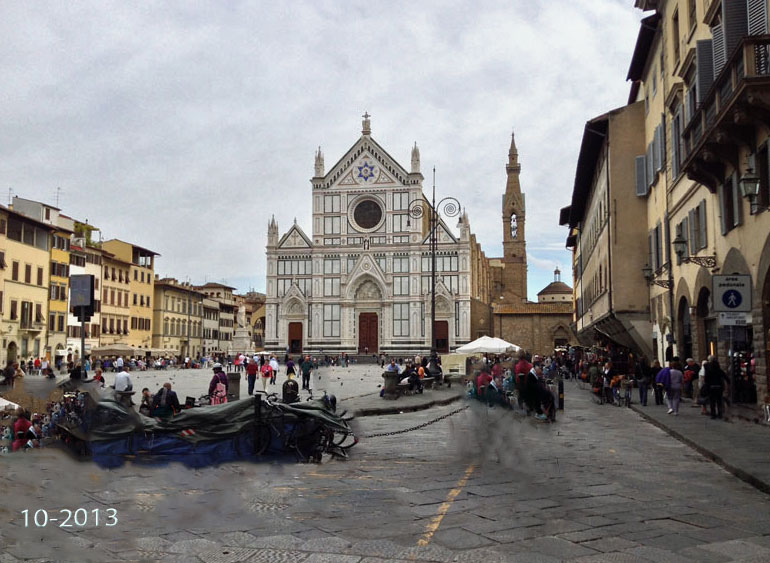
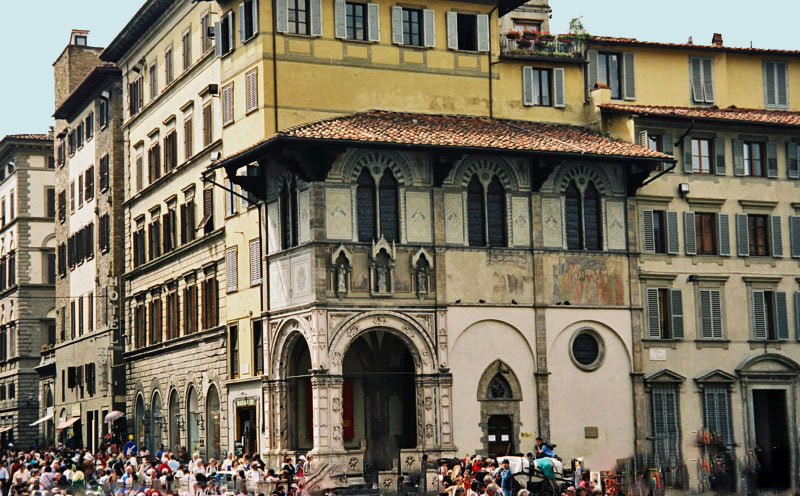
The Gothic church of Santa Croce contains the tombs and monuments of many famous Florentines, among them Galileo, Michelangelo, and Machiavelli.
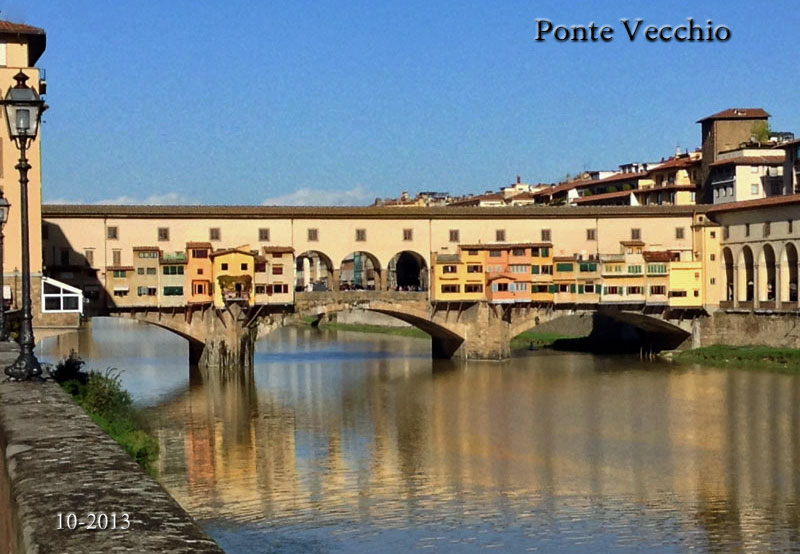
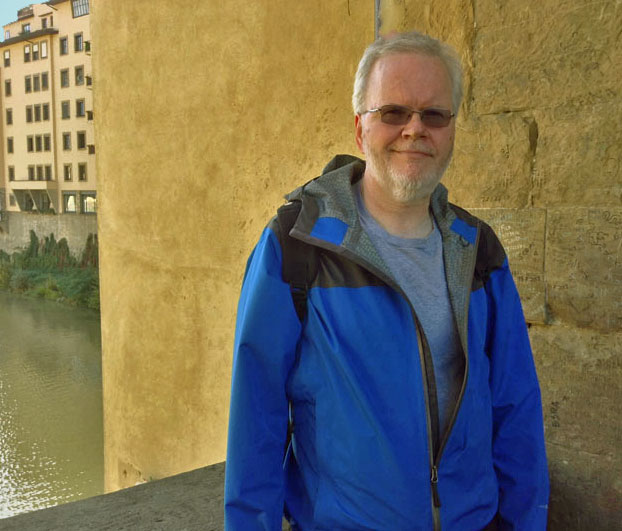
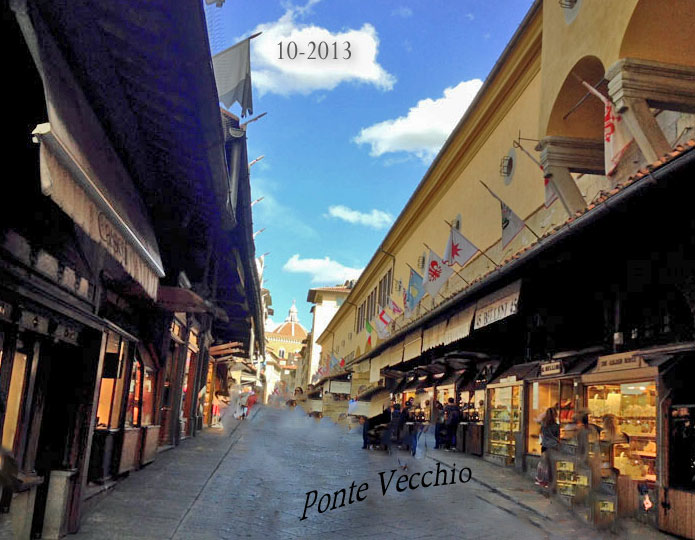
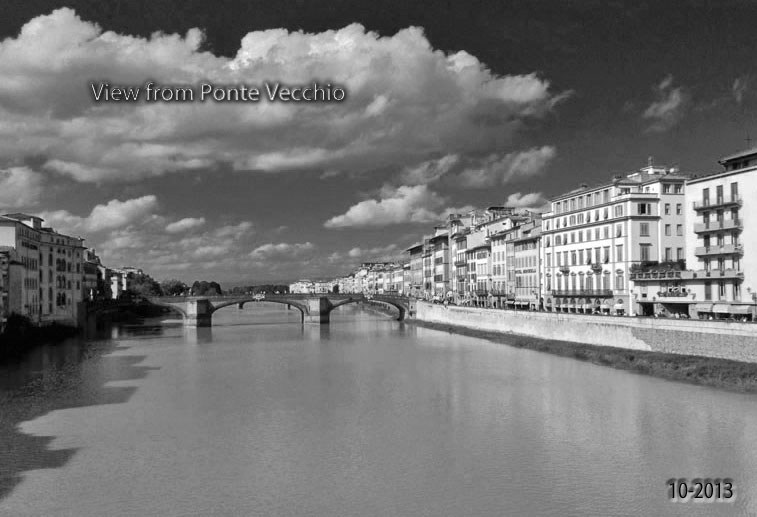
The Ponte Vecchio is a medieval bridge spanning the Arno.
The only bridge in Florence spared from destruction during WWII , it is noted for the shops built along it; building shops on such bridges was once a common practice. Butchers, tanners, and farmers initially occupied the shops; the present tenants are jewellers, art dealers, and souvenir sellers.

 s
s 