



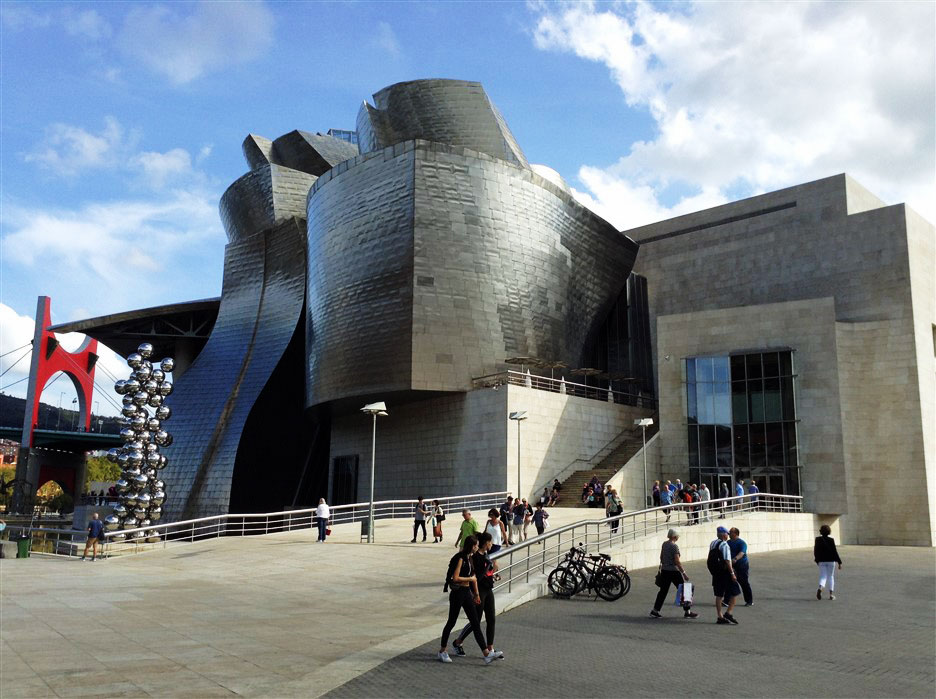
Bilbao is a city in Northern Spain. It is the largest city in the Basque country. Just over one million inhabitants. It was founded in the 14th century by Diego Lopez V de Haro. (I’m sure he had some help…) Its main attraction is the Guggenheim Museum. We have visited the other Guggenheim museums in New-York and Venice.

Bilbao is located in the north-central part of Spain, some 10 milesof the Bay of Biscay, where the economic social development is located, where the estuary of Bilboa is formed. Its main urban core is surrounded by two small mountain ranges.
Its climate is shaped by the Bay of Biscay low-pressure systems and mild air, moderating summer temperatures by Iberian standards, with low sunshine and high rainfall. The annual temperature range is low for its latitude.
After its foundation Bilbao was one of the commercial hubs of the Basque Country that enjoyed significant importance in the Crown of Castile. This was due to its thriving port activity based on the export of wool and iron commodities extracted from the Biscayan quarries to all over Europe.
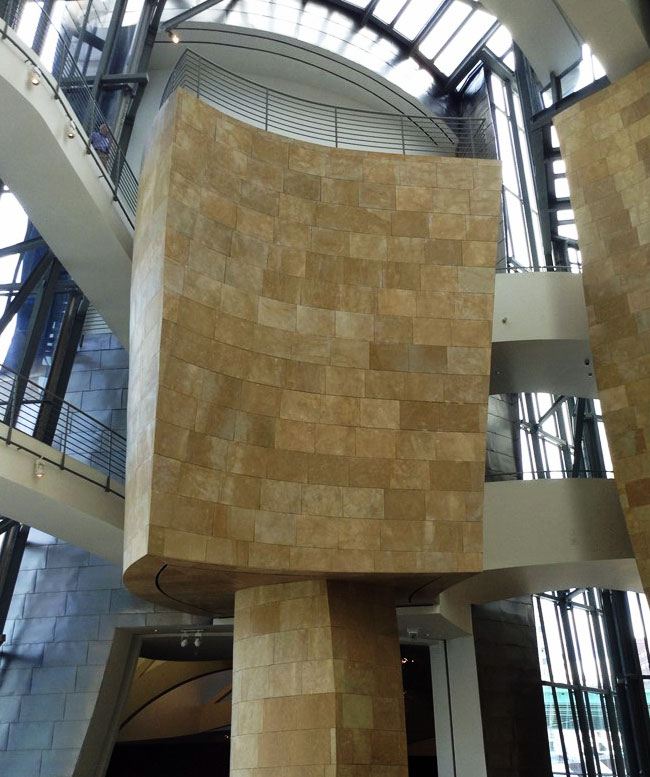
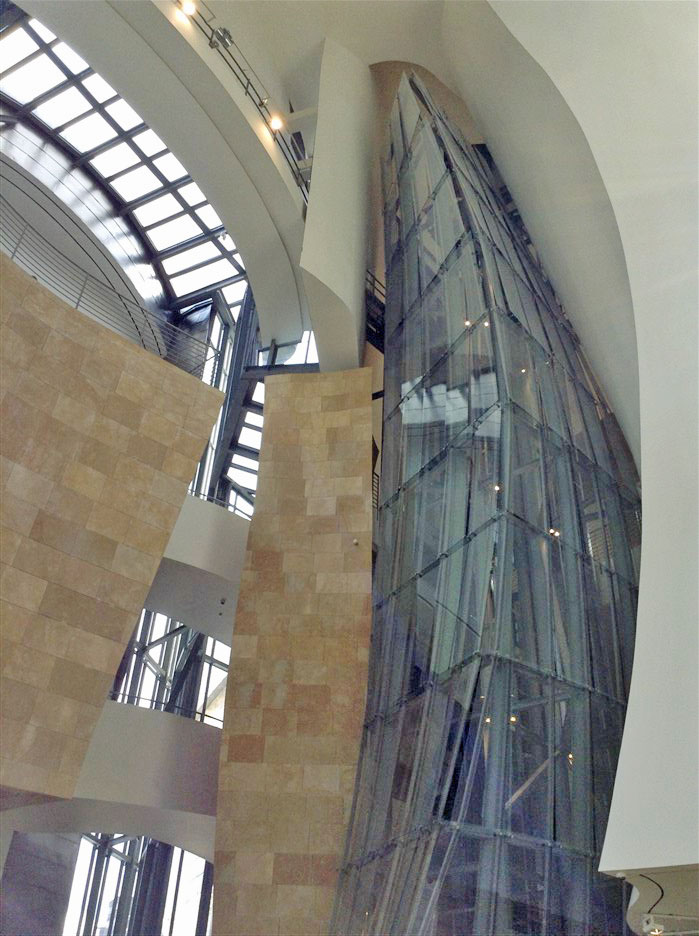
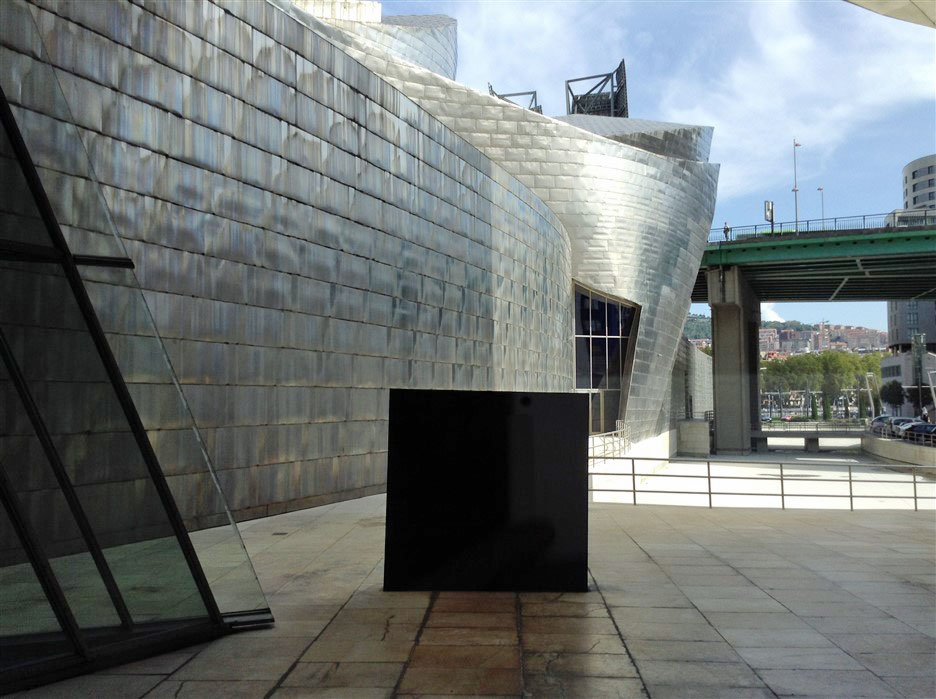
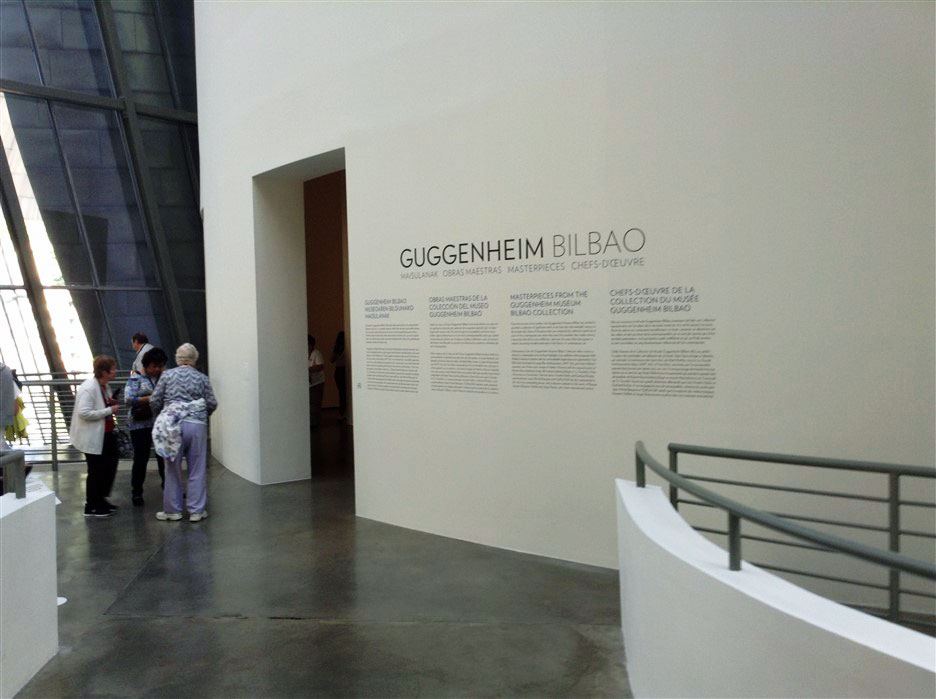
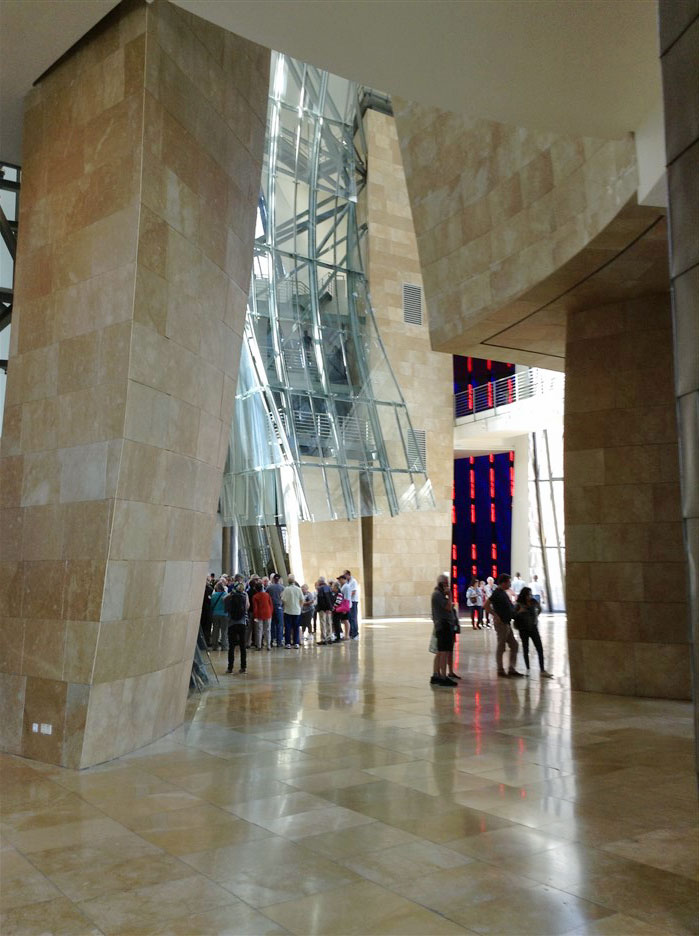
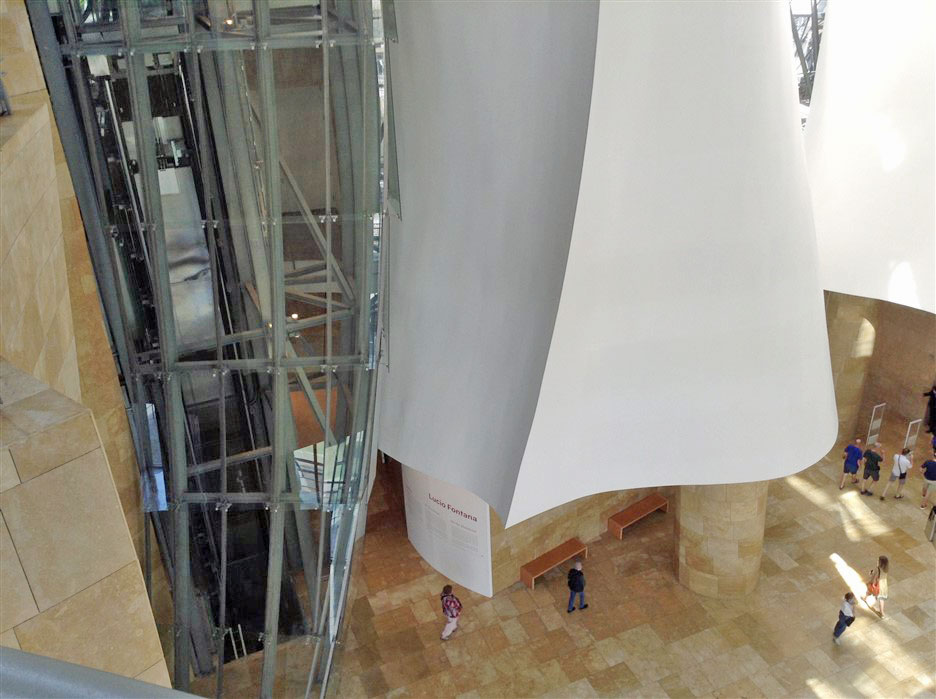
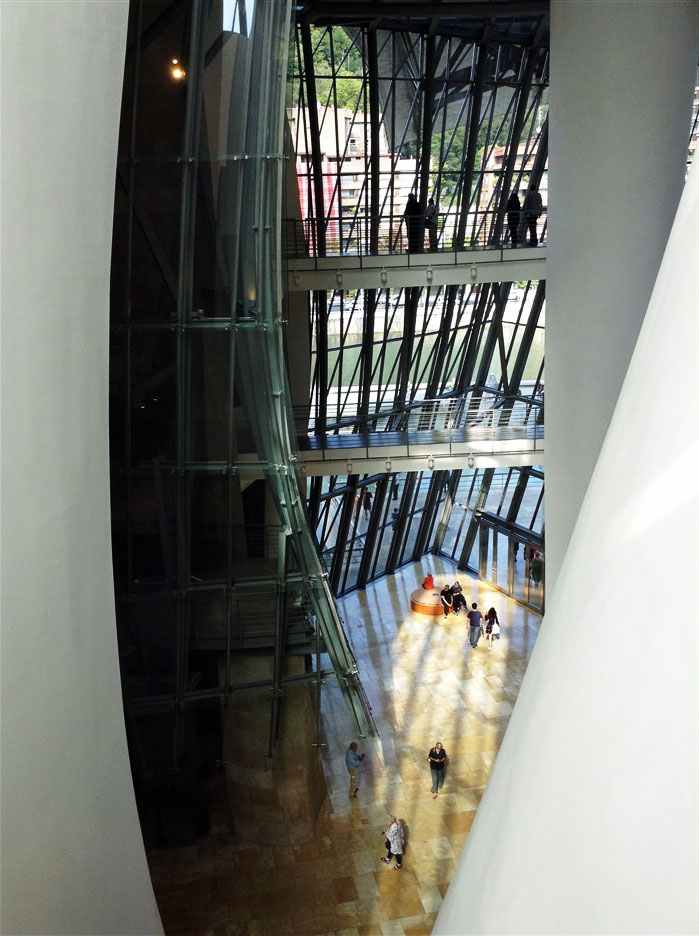
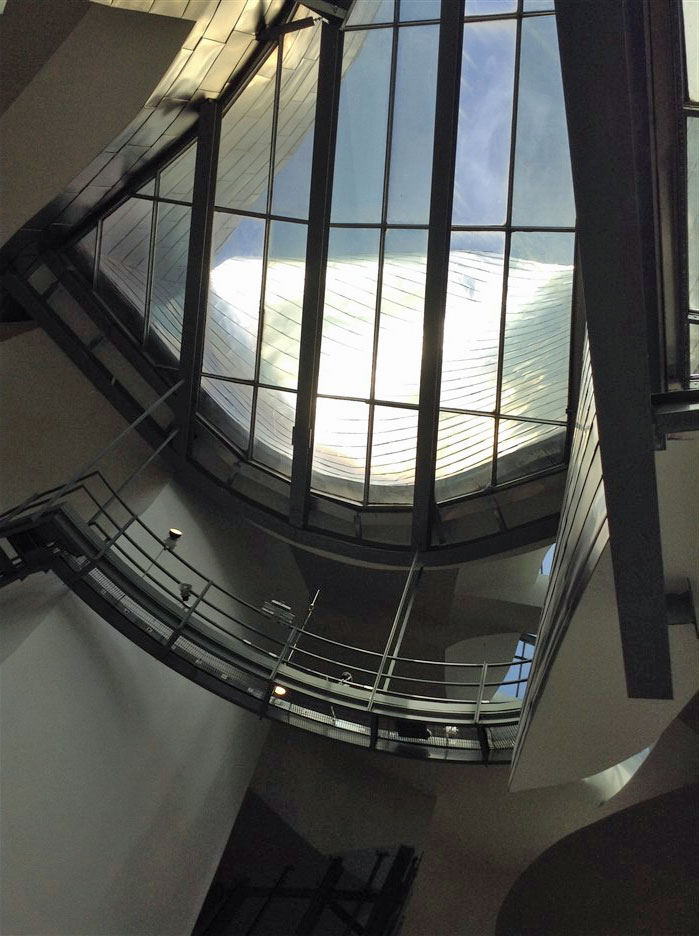
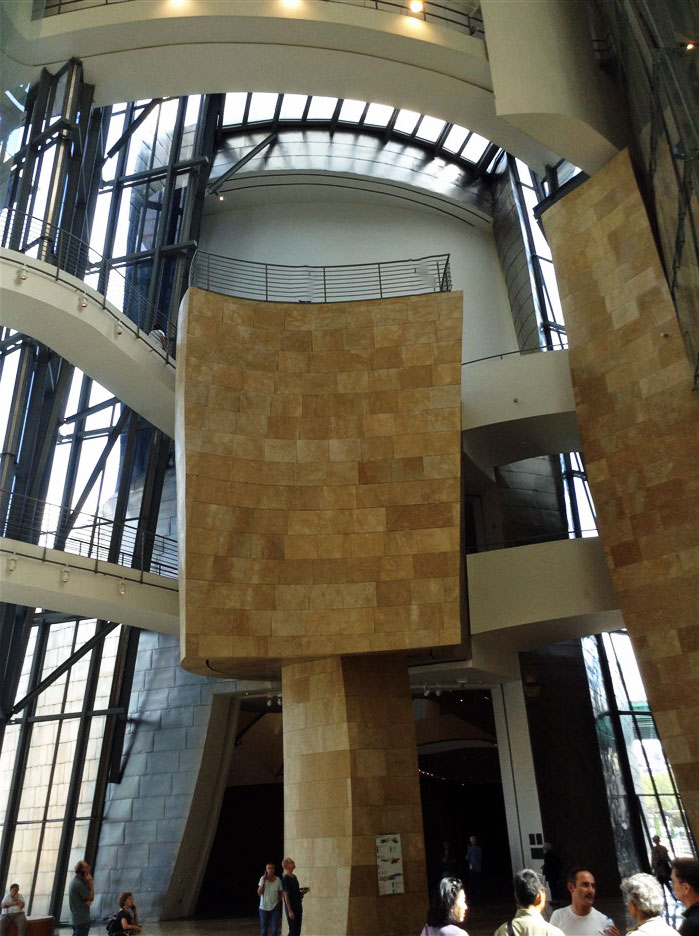
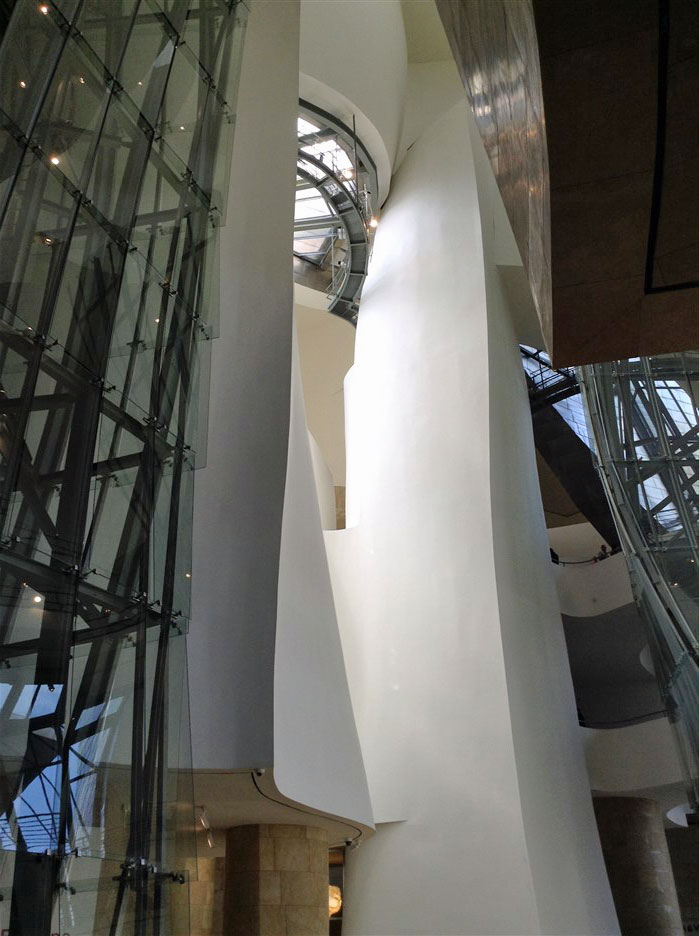
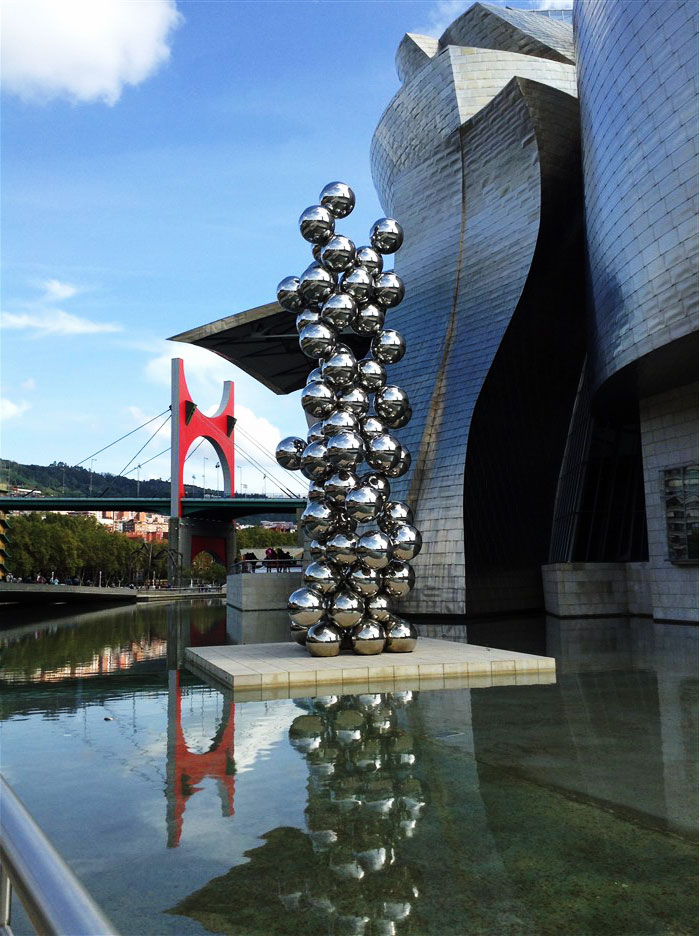
The museum is clad in glass, titanium, and limestone.

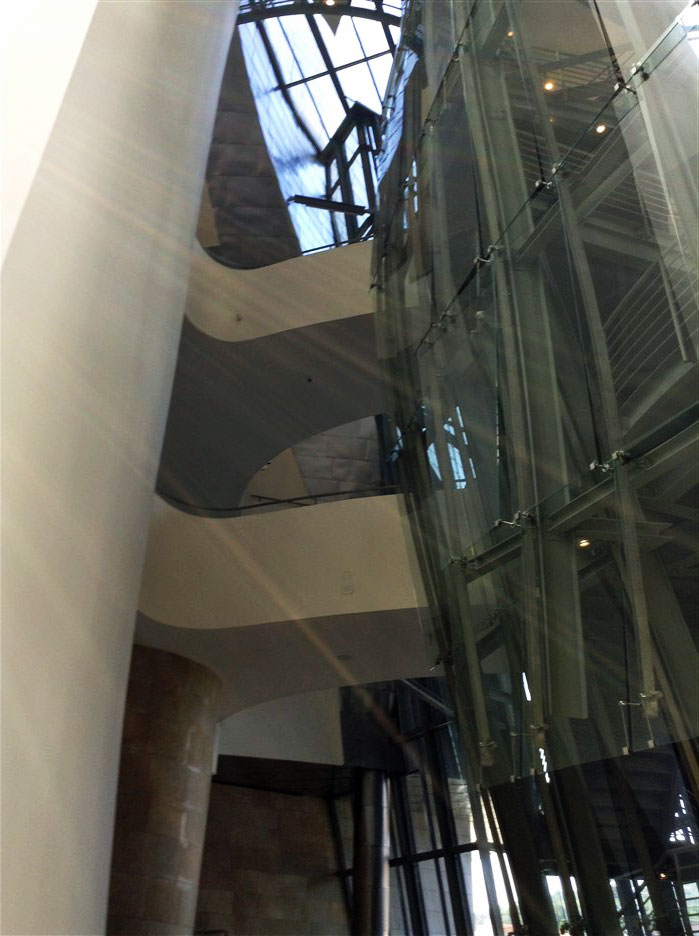
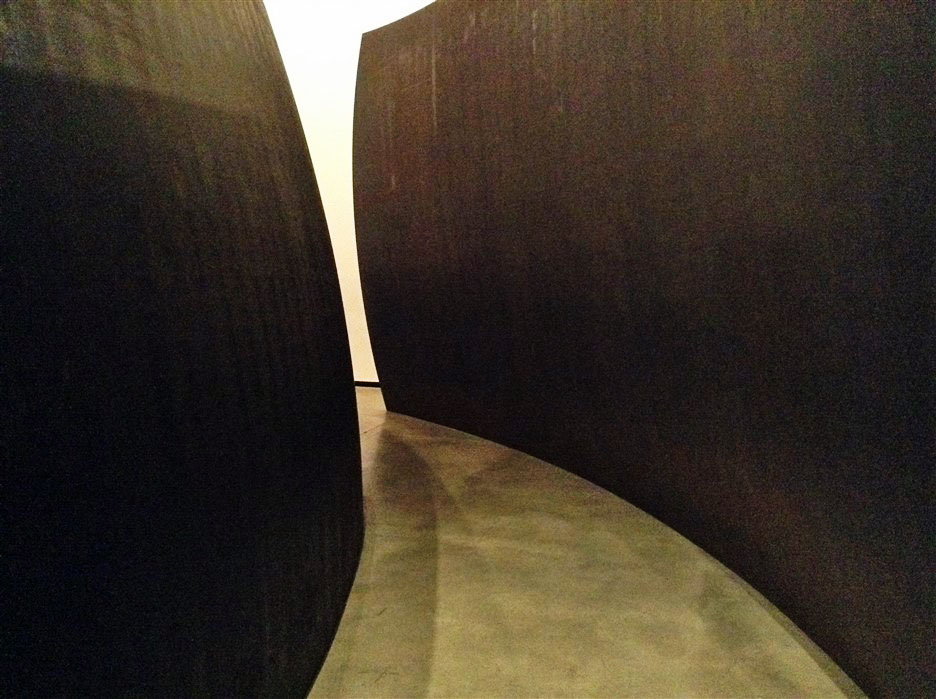

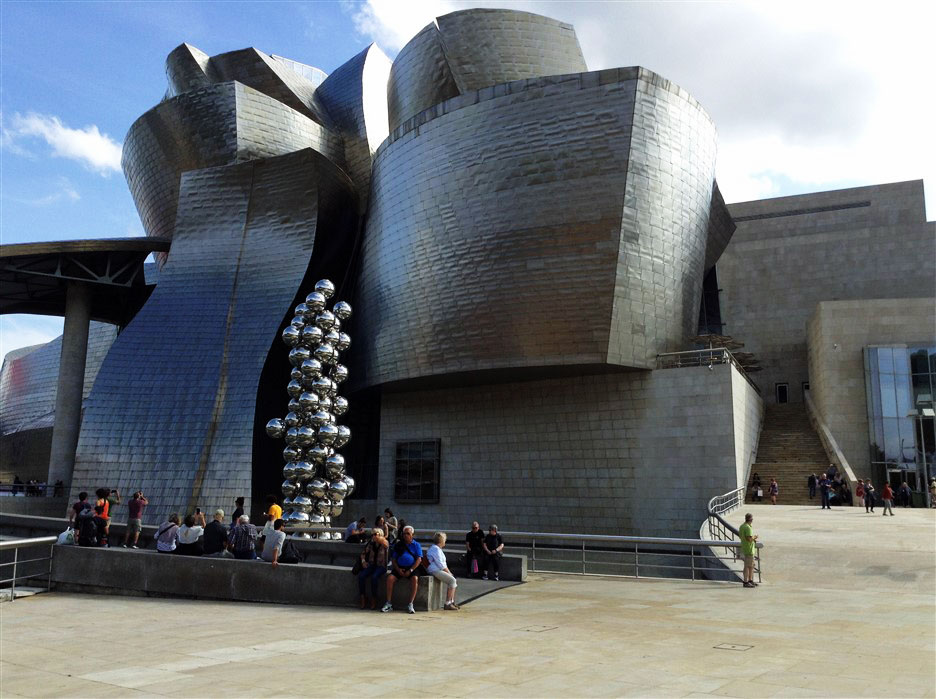
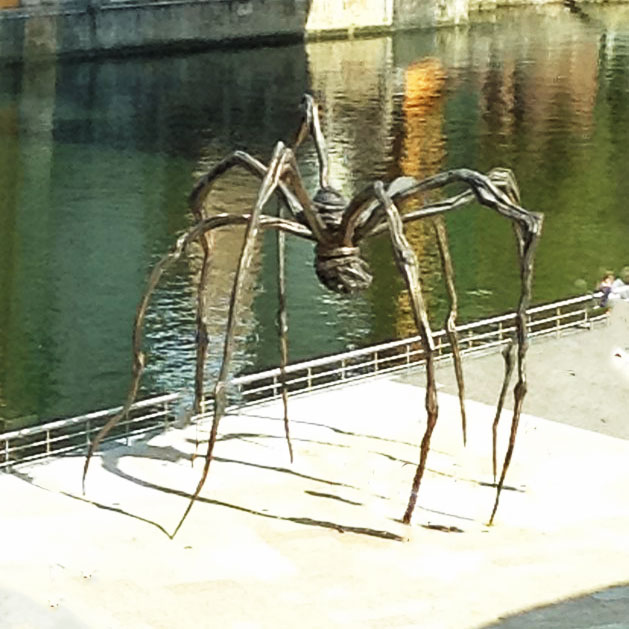
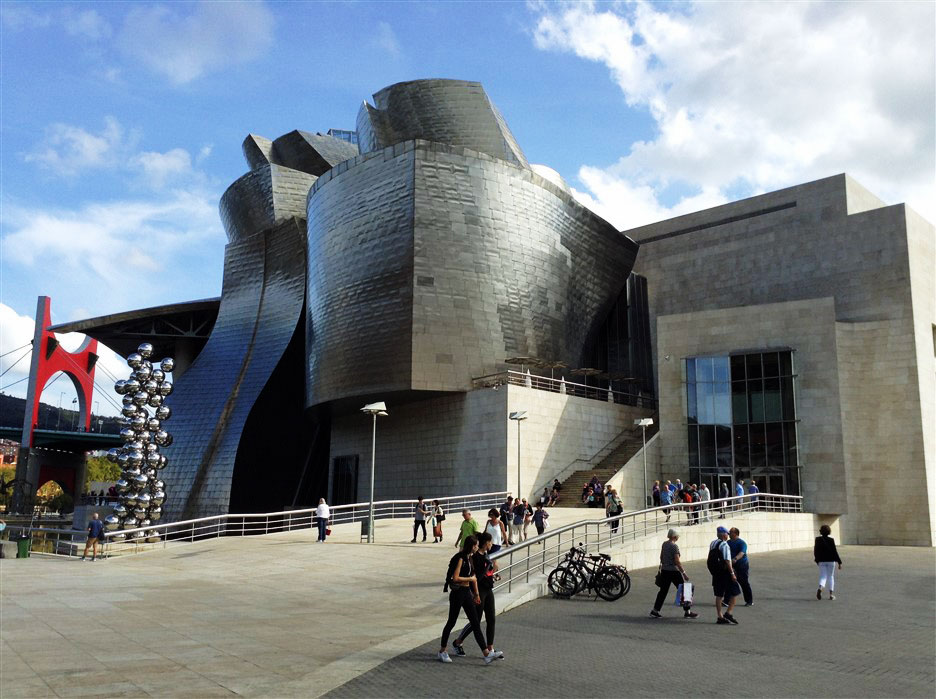
The Guggenheim Museum Bilbao is a museum of modern and contemporary art. It is one of several museums affiliated to the Solomon R. Guggenheim Foundation and features permanent and visiting exhibits of works by Spanish and international artists. It was inaugurated on 18 October 1997 by King Juan Carlos I of Spain, with an exhibition of 250 contemporary works of art. It is one of the largest museums in Spain.
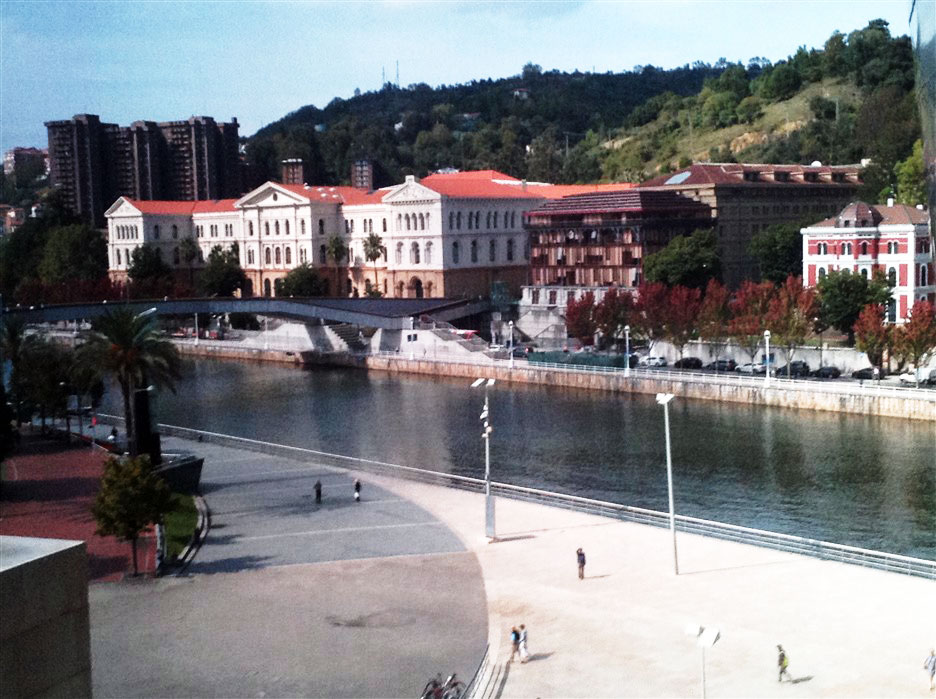
The building, designed by Canadian-American architect Frank Gehry, was built alongside the Nervion River, which runs through the city.
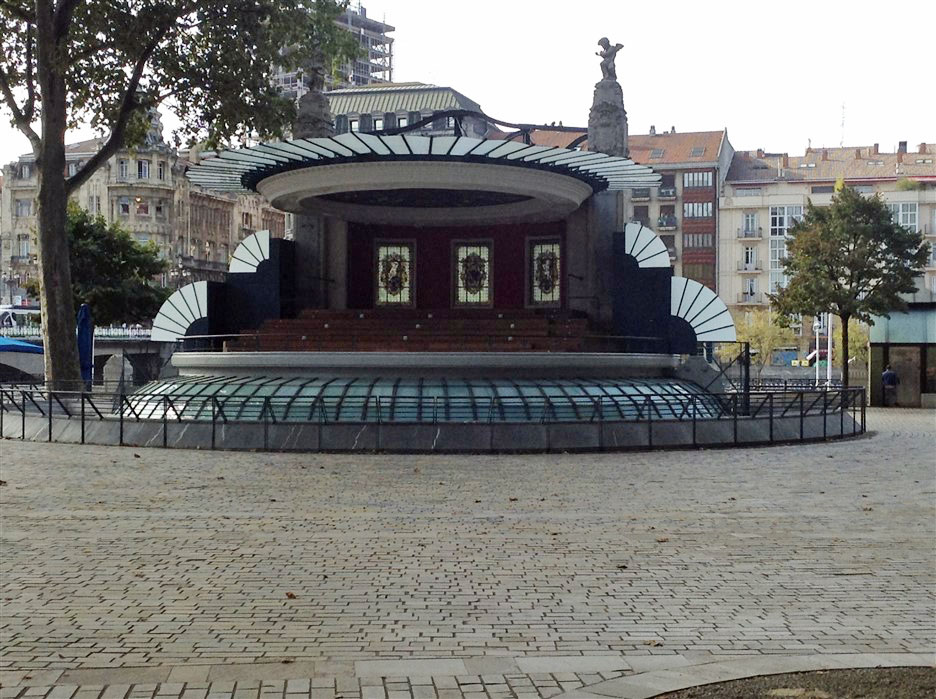
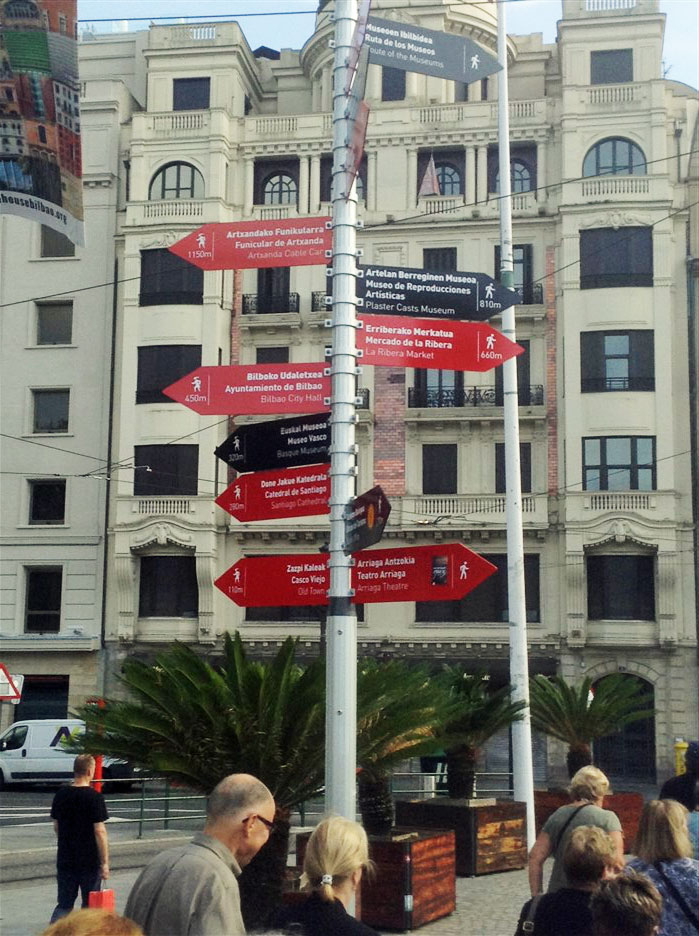
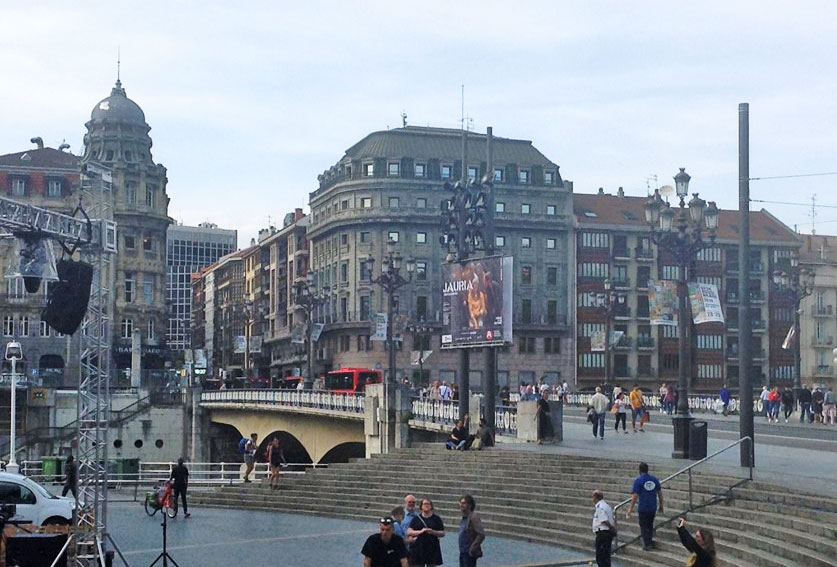
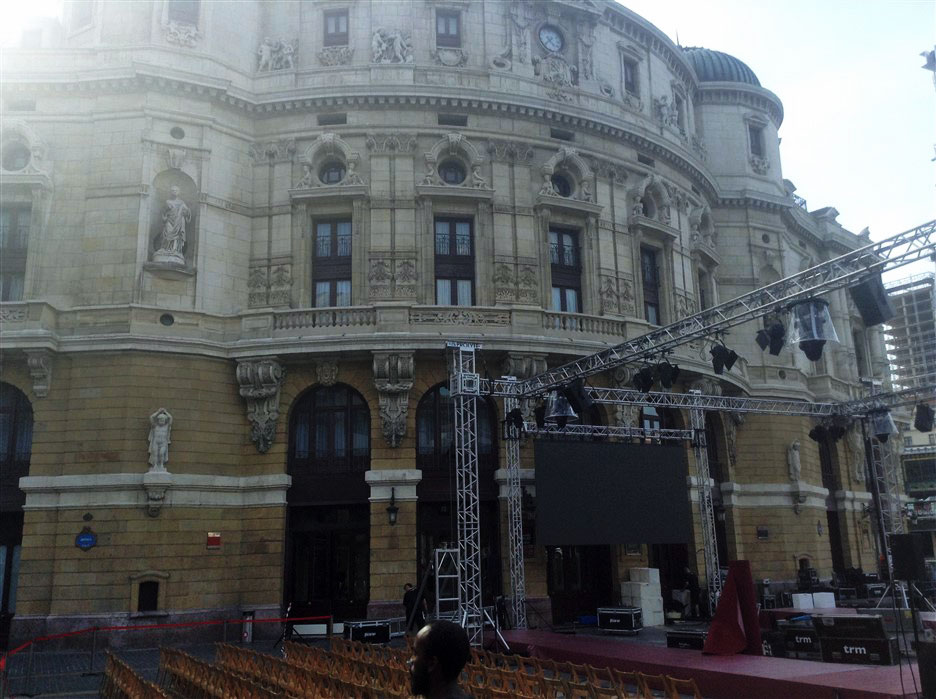
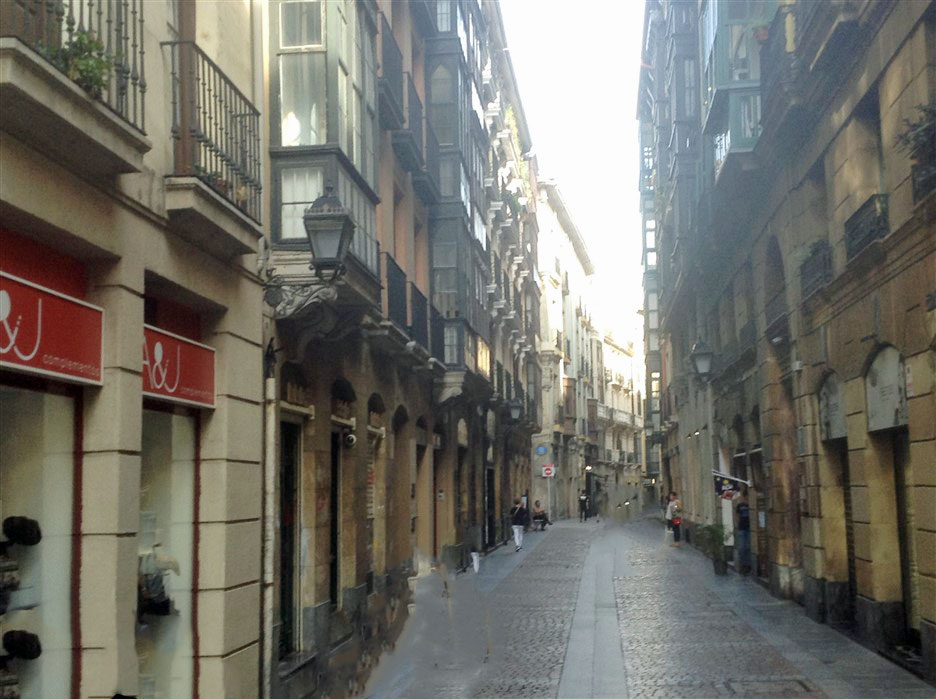
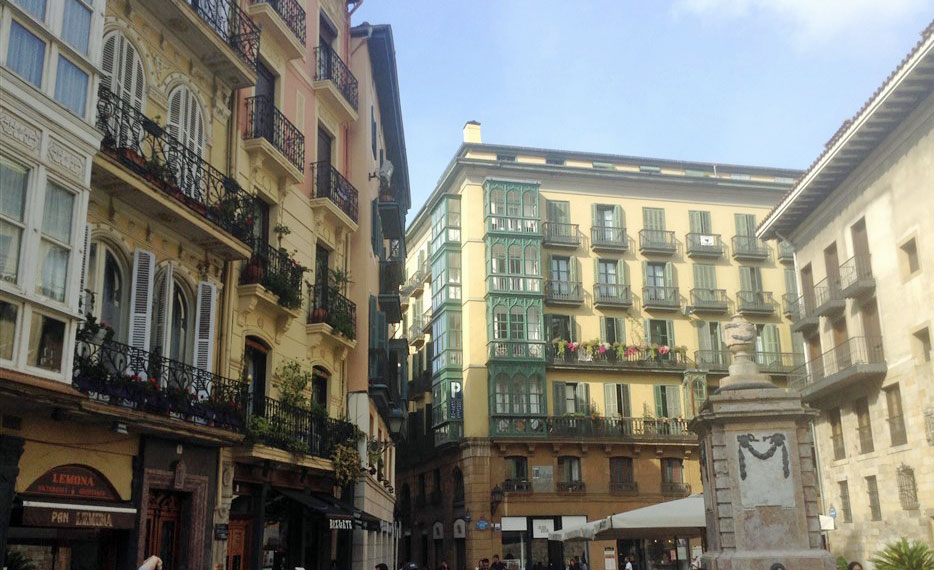
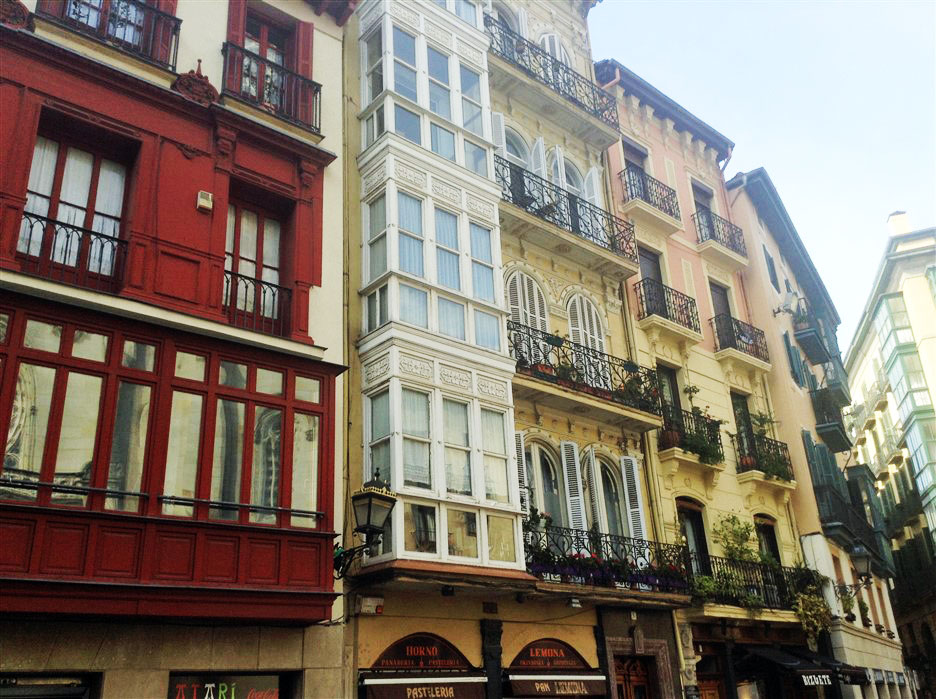
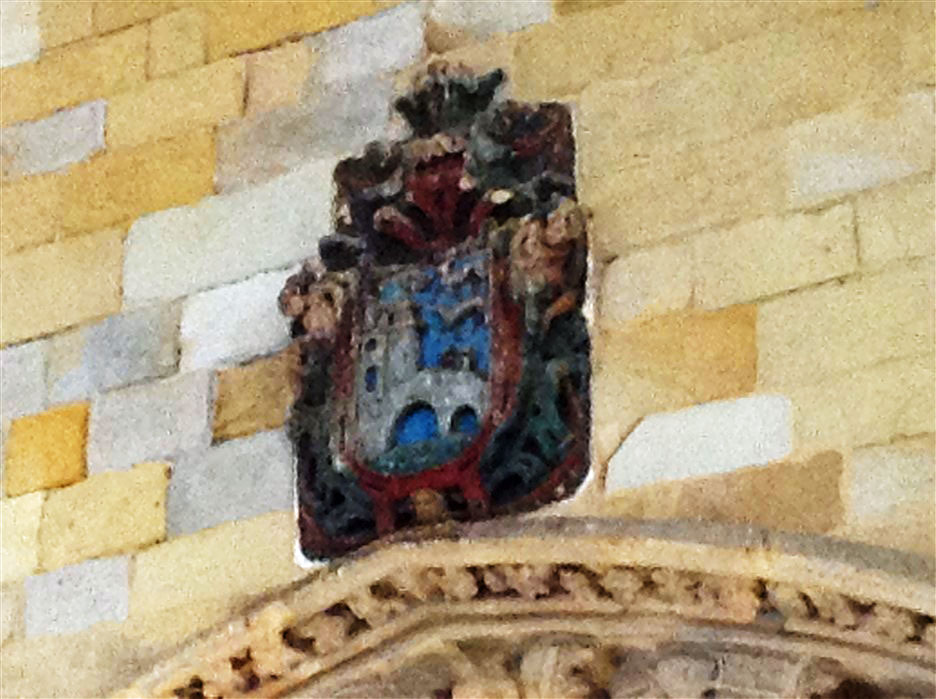
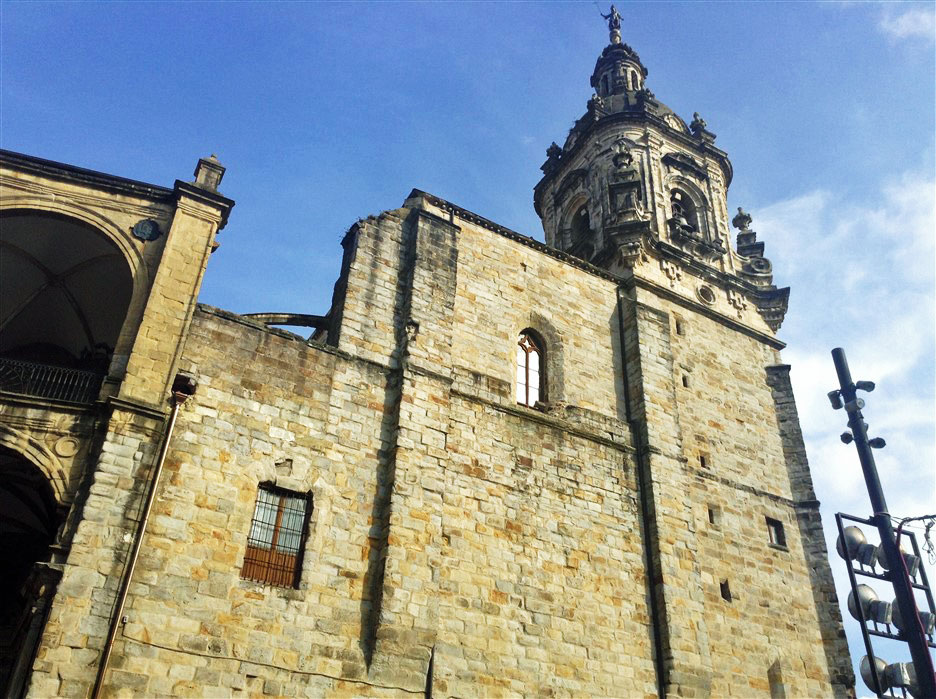
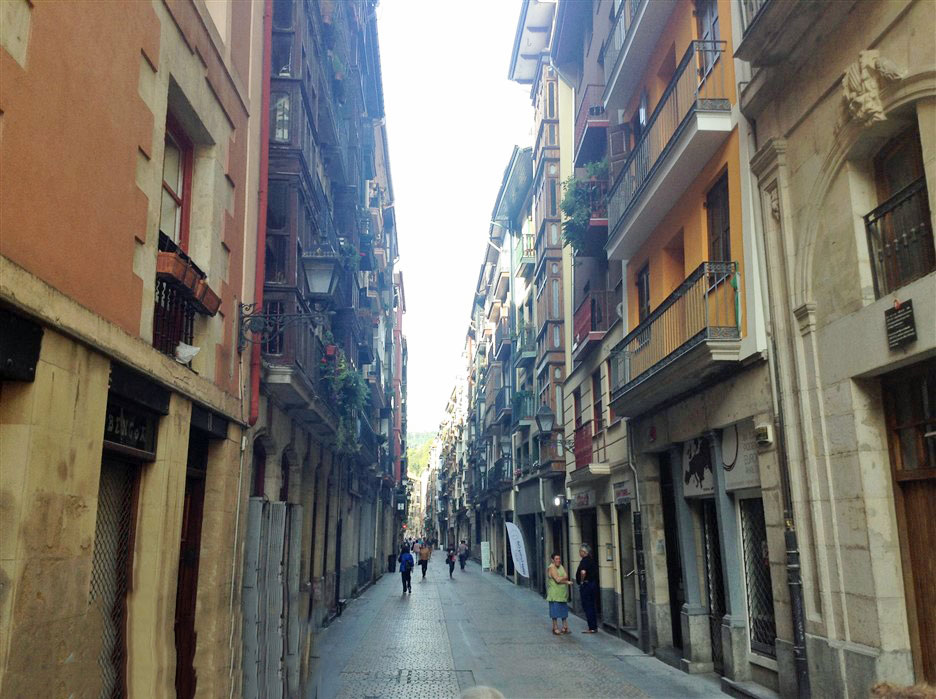
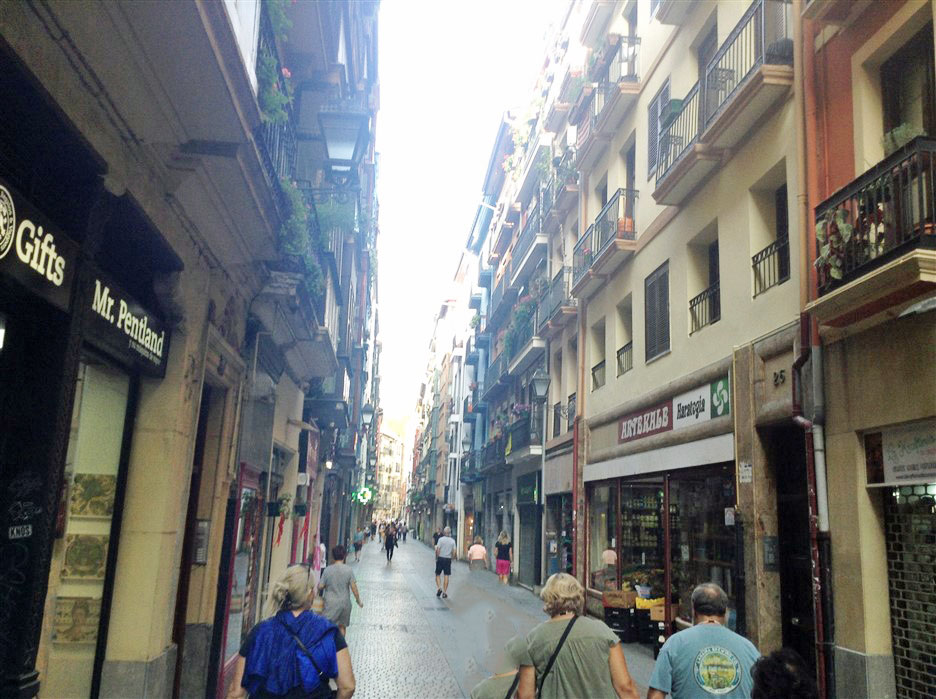
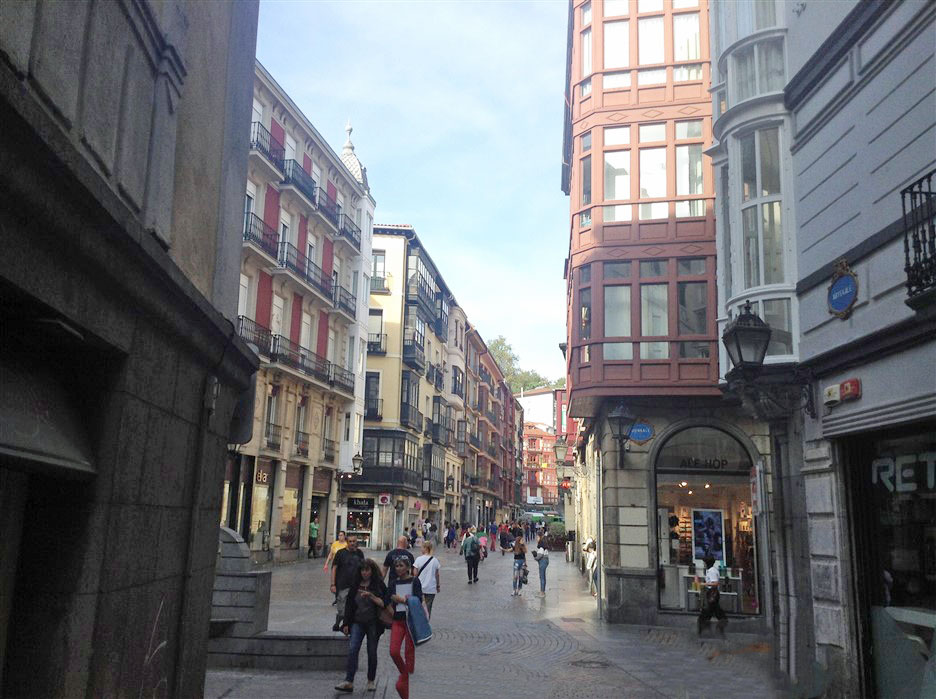
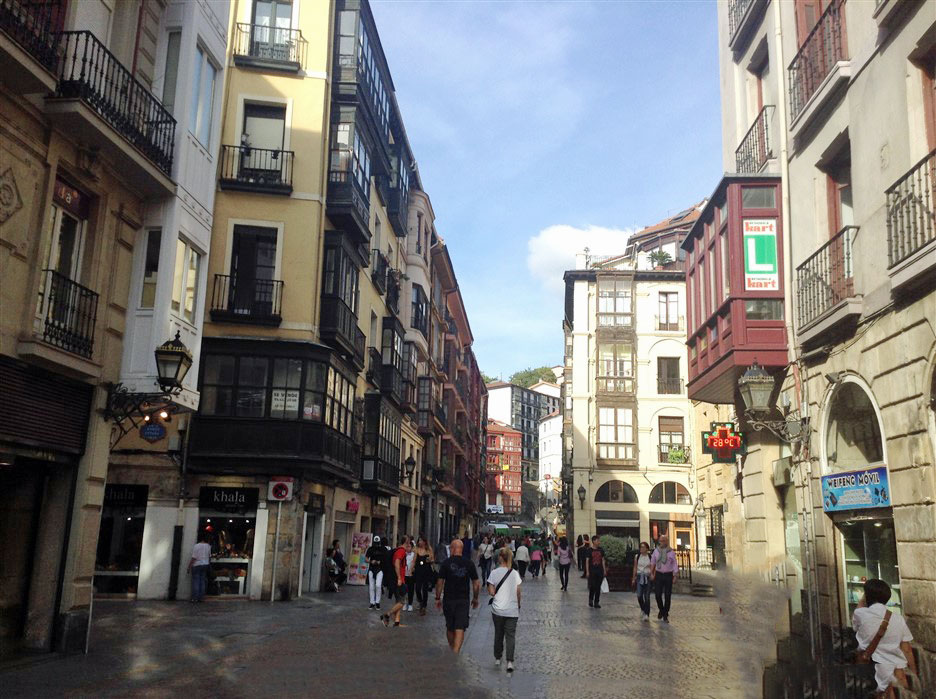
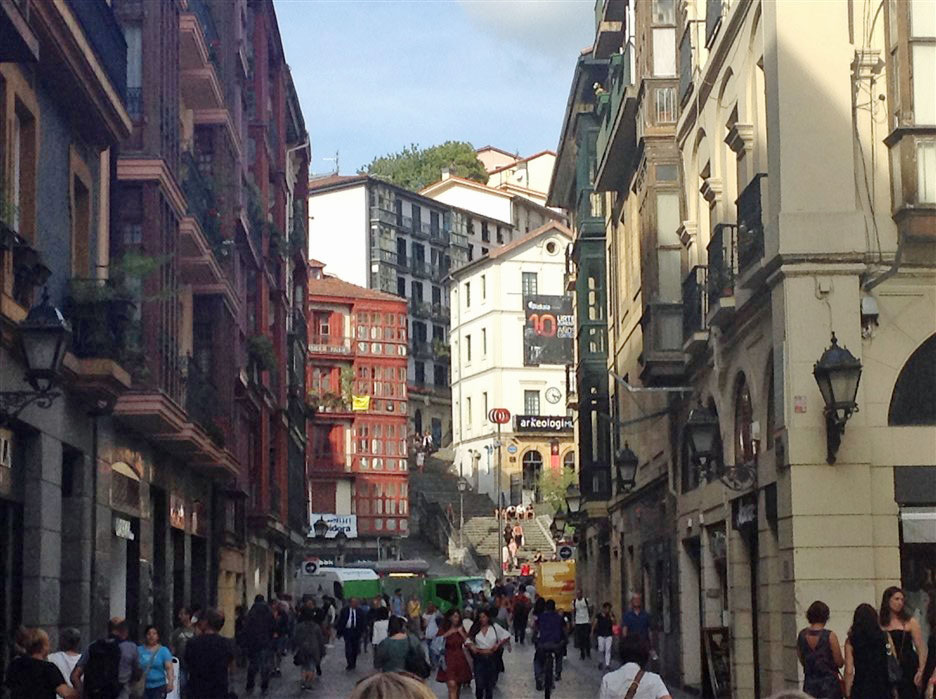
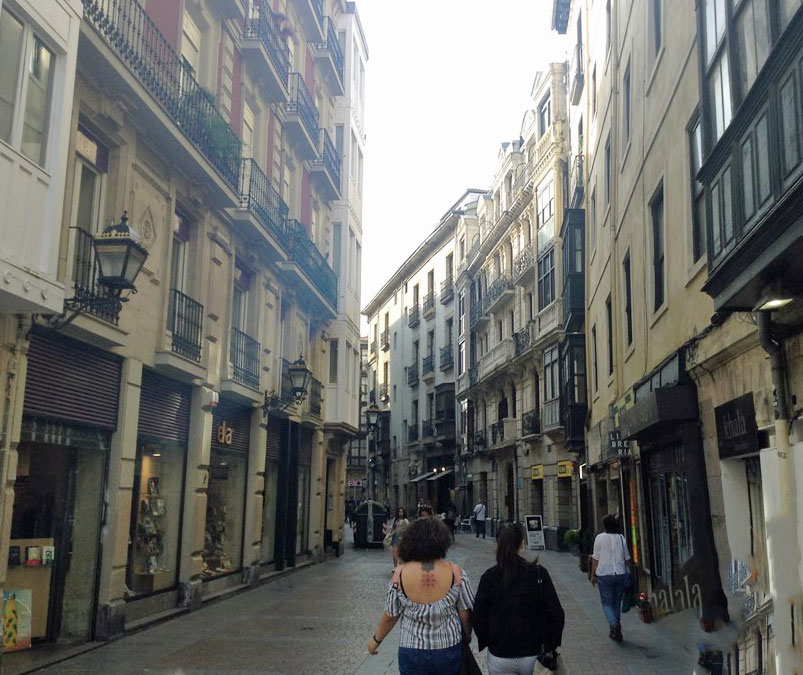
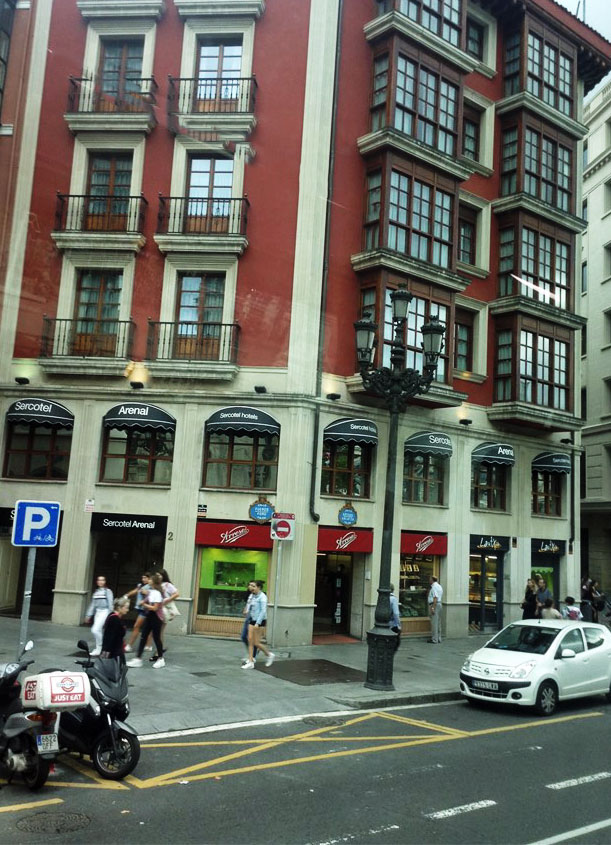
The Old Town features many of the oldest buildings in the city, as the St-James Cathedral, included in the borough’s coat of arms. Most of the Old Town is a pedestrian free zone during the day.
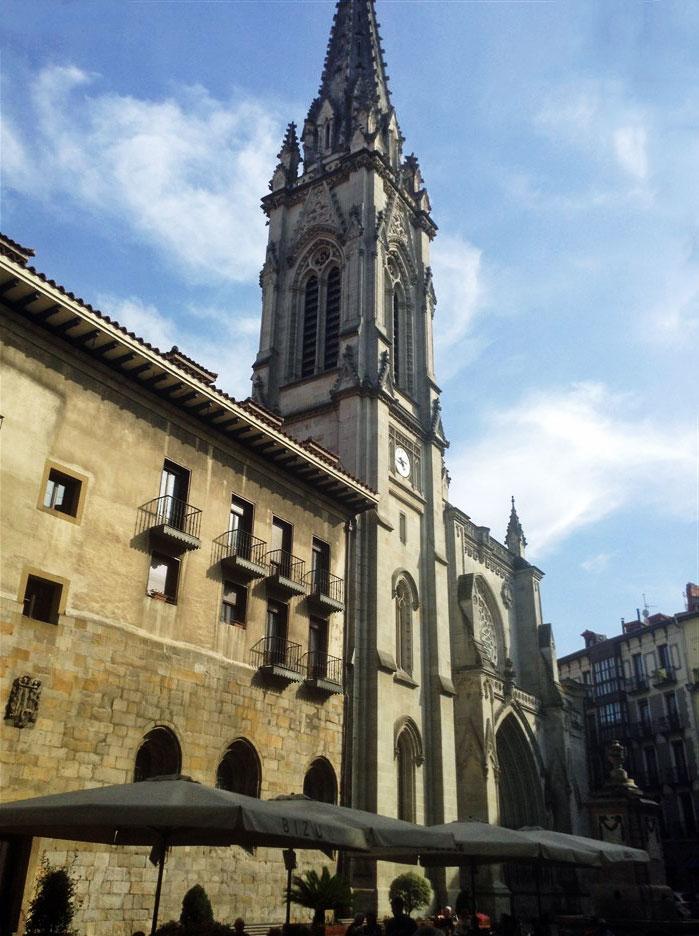
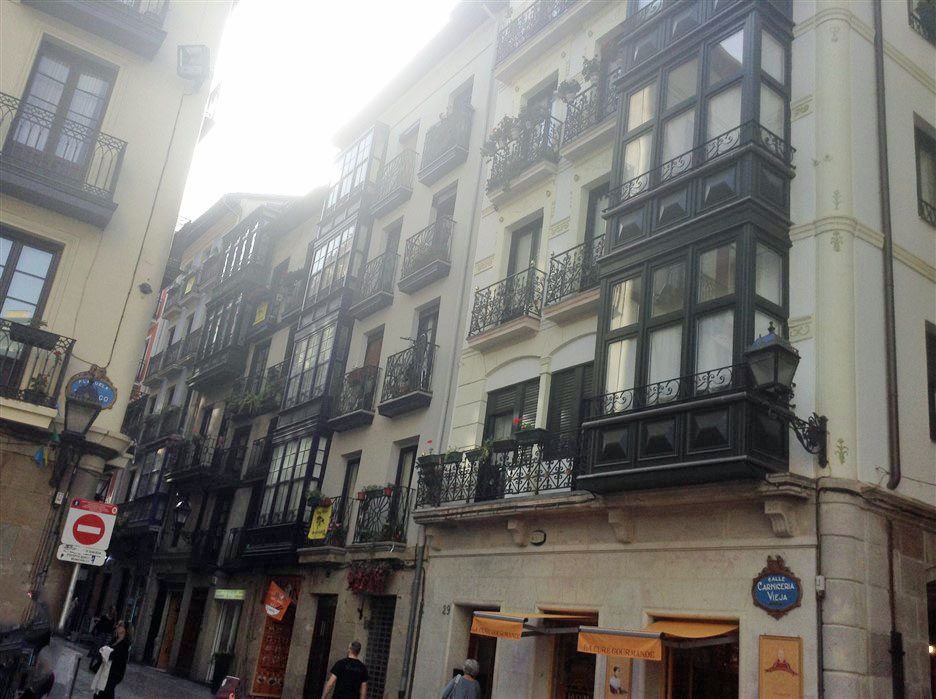
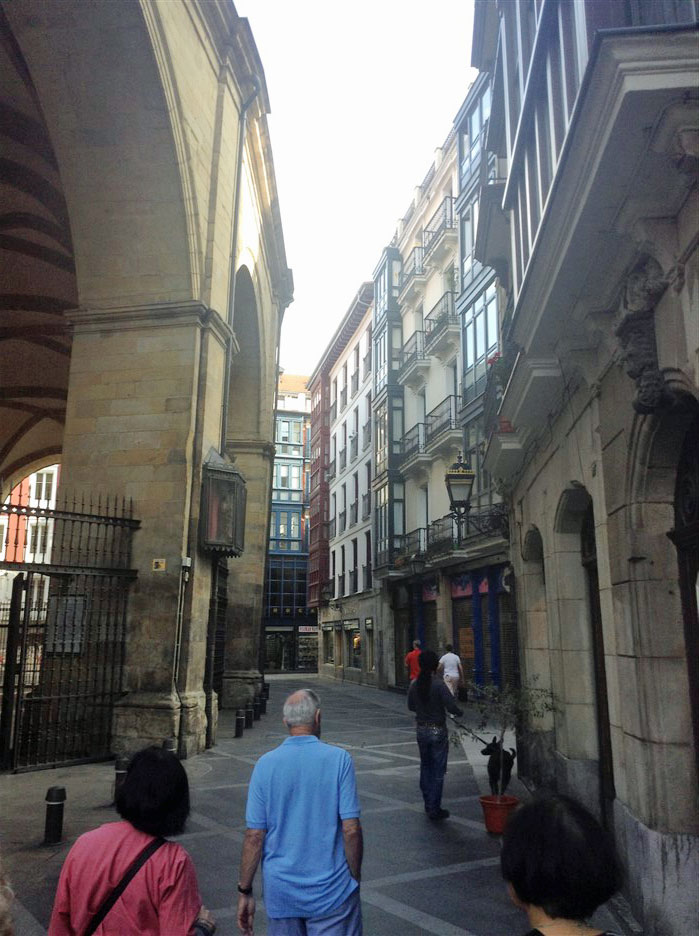
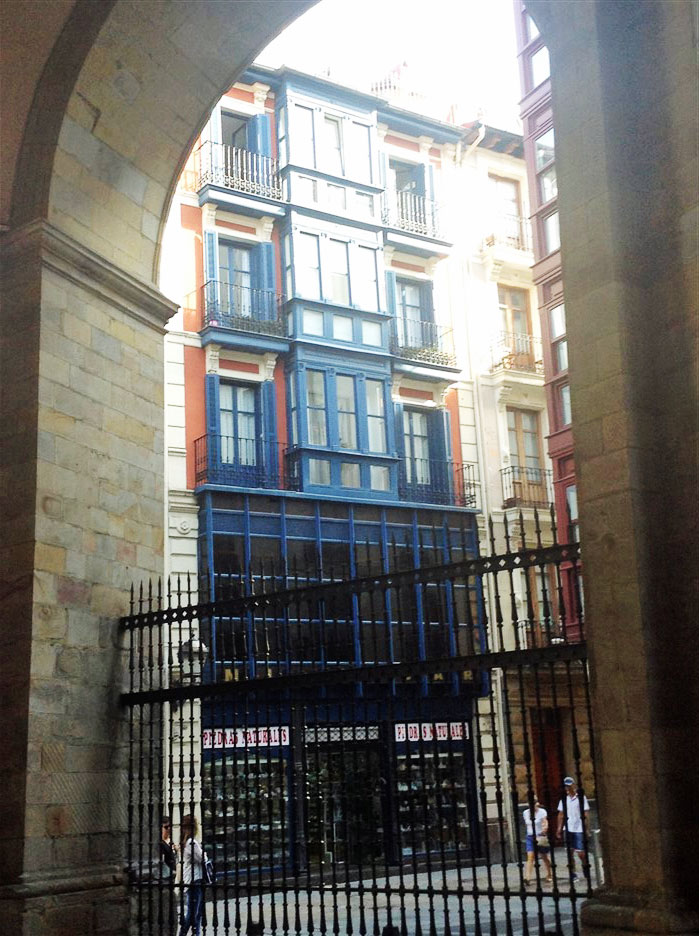
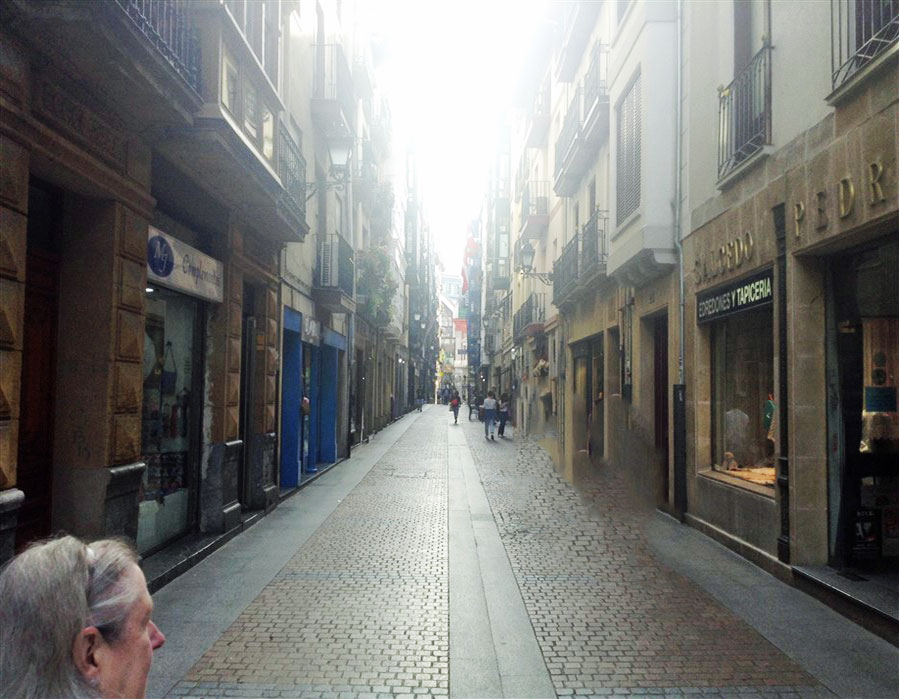
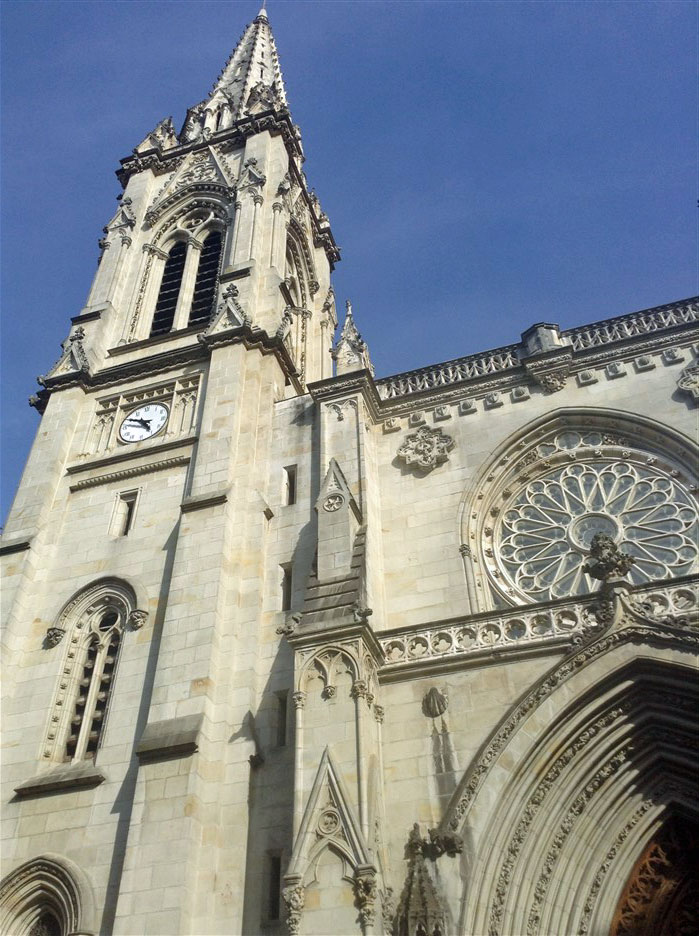
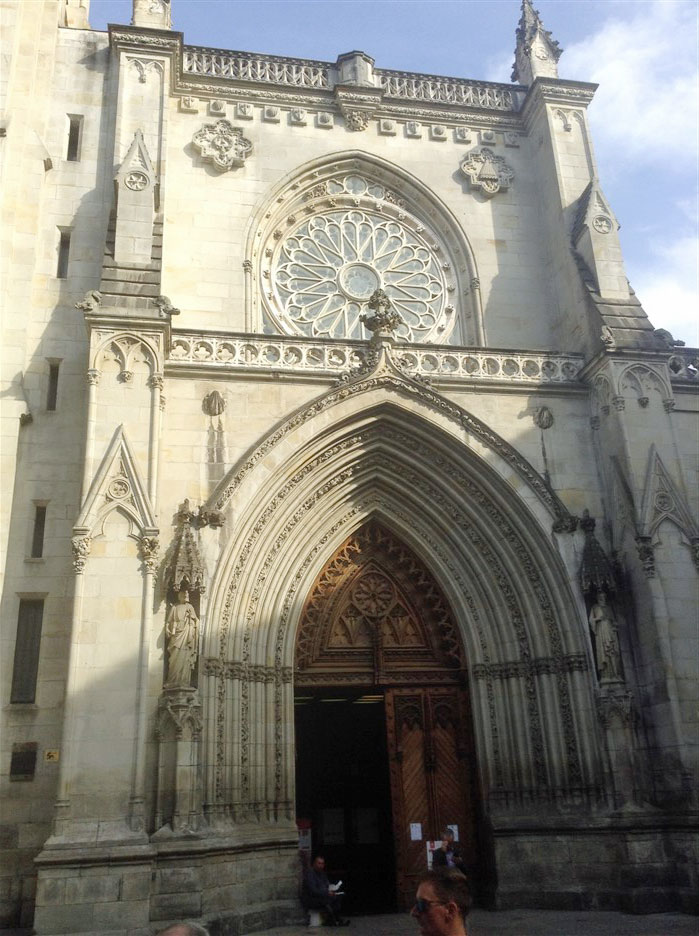
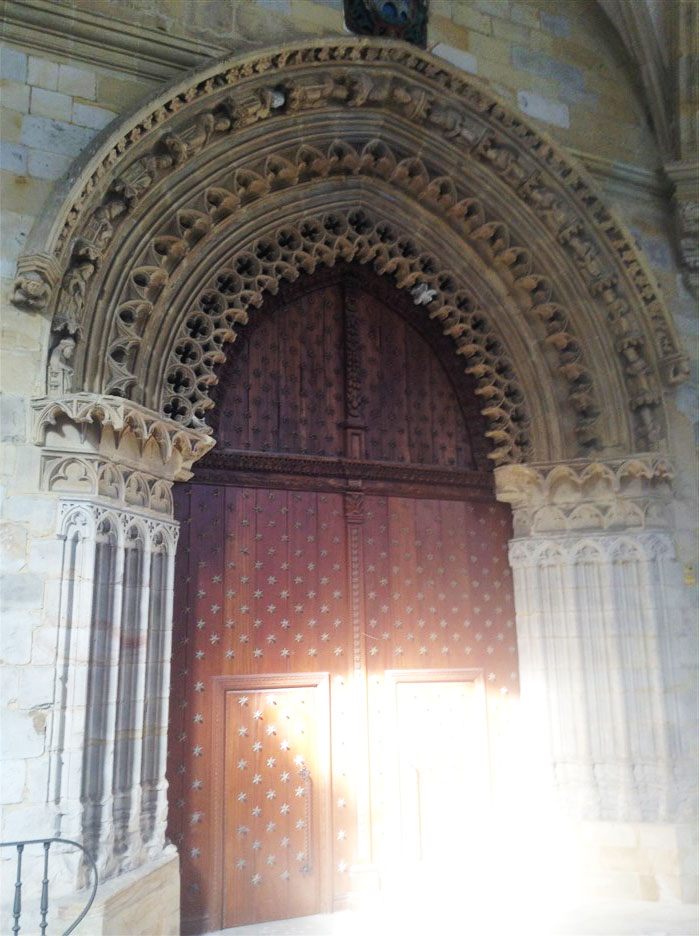
The Cathedral Basilica of Saint James is a Catholic Cathedral. It is dedicated to the apostle James the great, by virtue of being a point of transit for the pilgrims that followed the Northern Way of the Camino de Santiago. In 2015, it was declared a UNESCO WORLD HERITAGE SITE.
The temple was originally built between the 14th and 15th centuries as the city’s main parish church, and as such, it is one the oldest extant buildings in Bilbao. It was built on the site of a previous temple with its origins probably date to well before the foundation of the city in 1300, when Bilbao was little more than a small enclave of fishermen.



 s
s 