



Buenos Aires
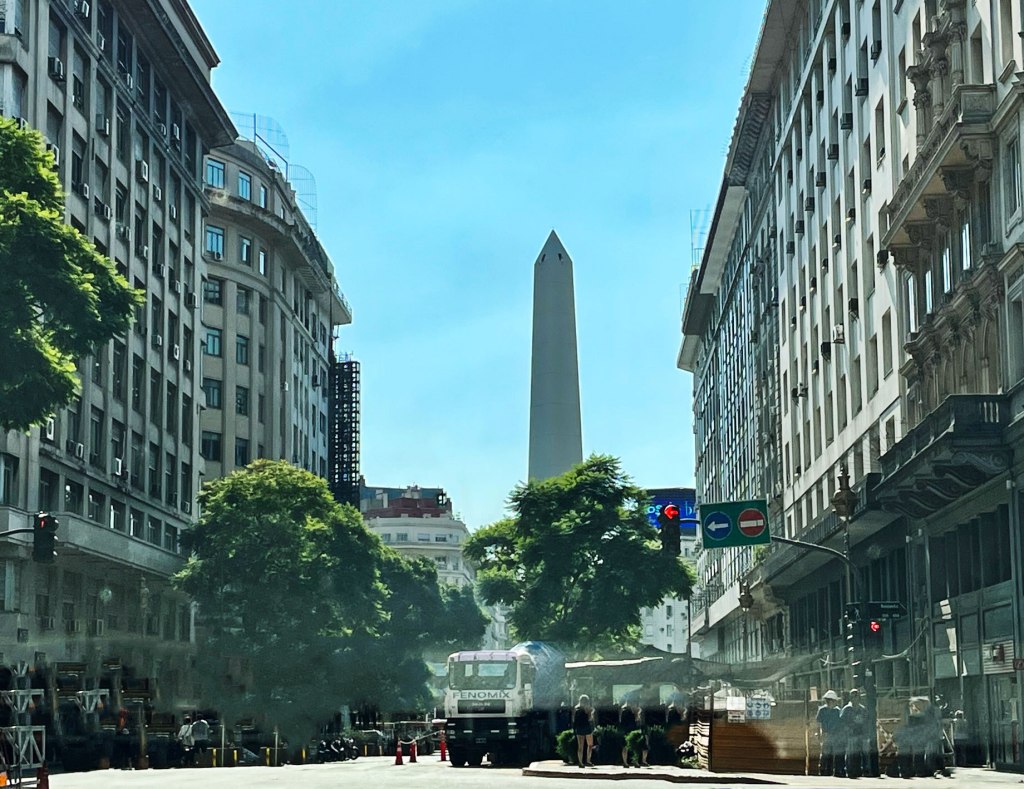
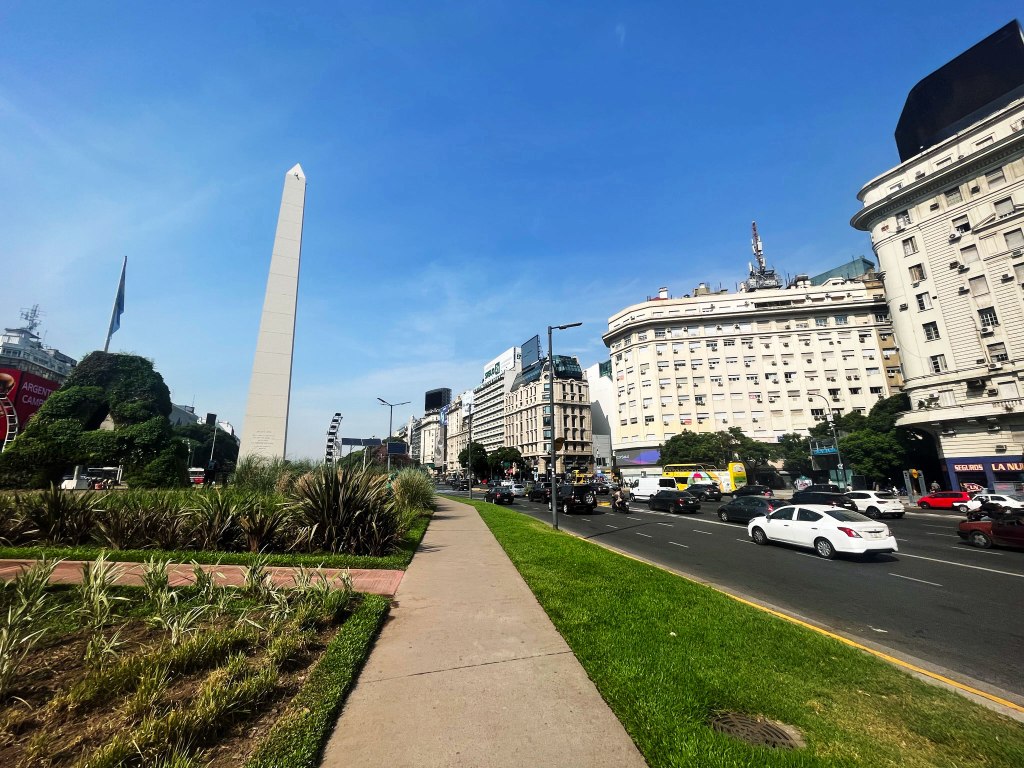
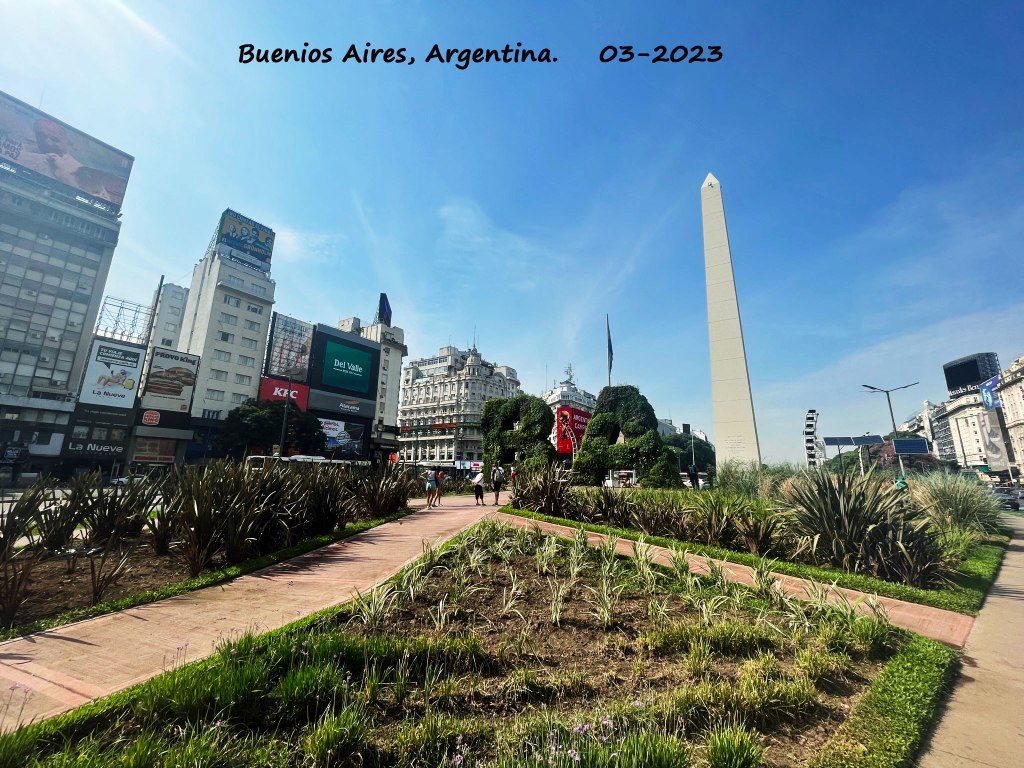
The Obelisco de Buenos Aires is a national historical monument and icon of the city. Located in the Plaza de la Republica in the intersection of avenues Corrientes and 9 de Julio, it was erected in 1936 to commemorate the quadricentennial of the first foundation of the city.
Where the Obelisk stands, there was a church dedicated to St. Nicholas of Bari; it was demolished. In that church the Argentina flag was officially hoisted for the first time in 1812. That fact is noted in one of the inscriptions on the north side of the monument.
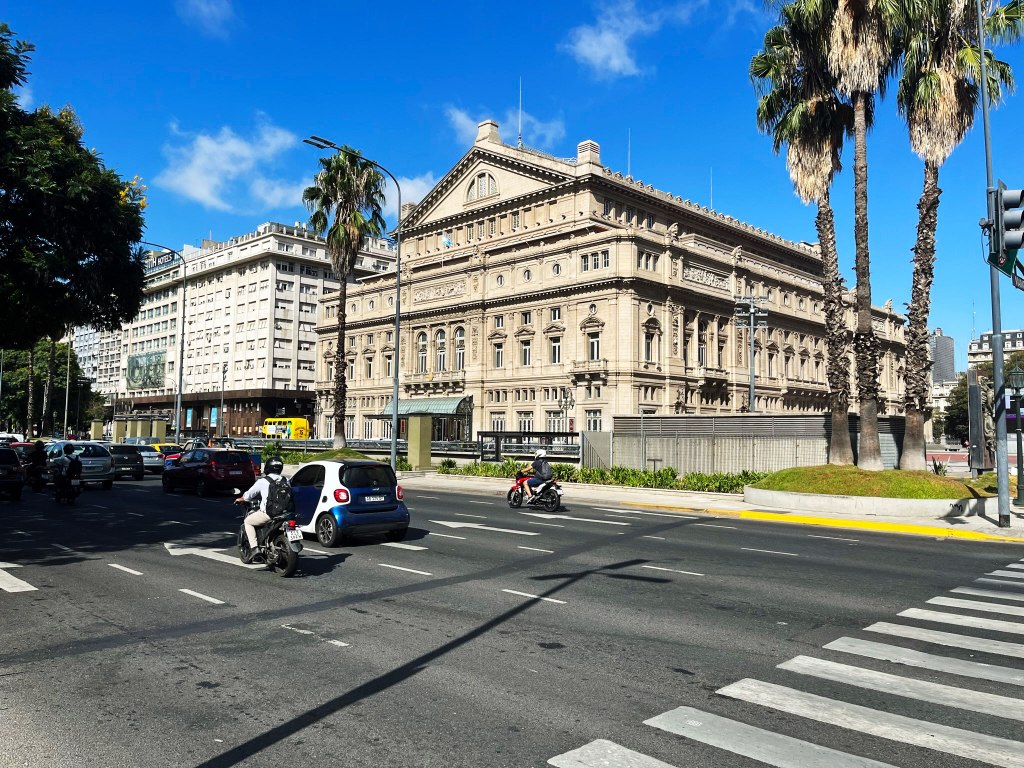
The Teatro Colón is their main opera house. It is considered one of the ten best opera houses in the world by National Geographic. According to a survey carried out by the acoustics expert Leo Beranek among leading international opera and orchestra directors, the Teatro Colón has the room with the best acoustics for opera and the second best for concerts in the world.
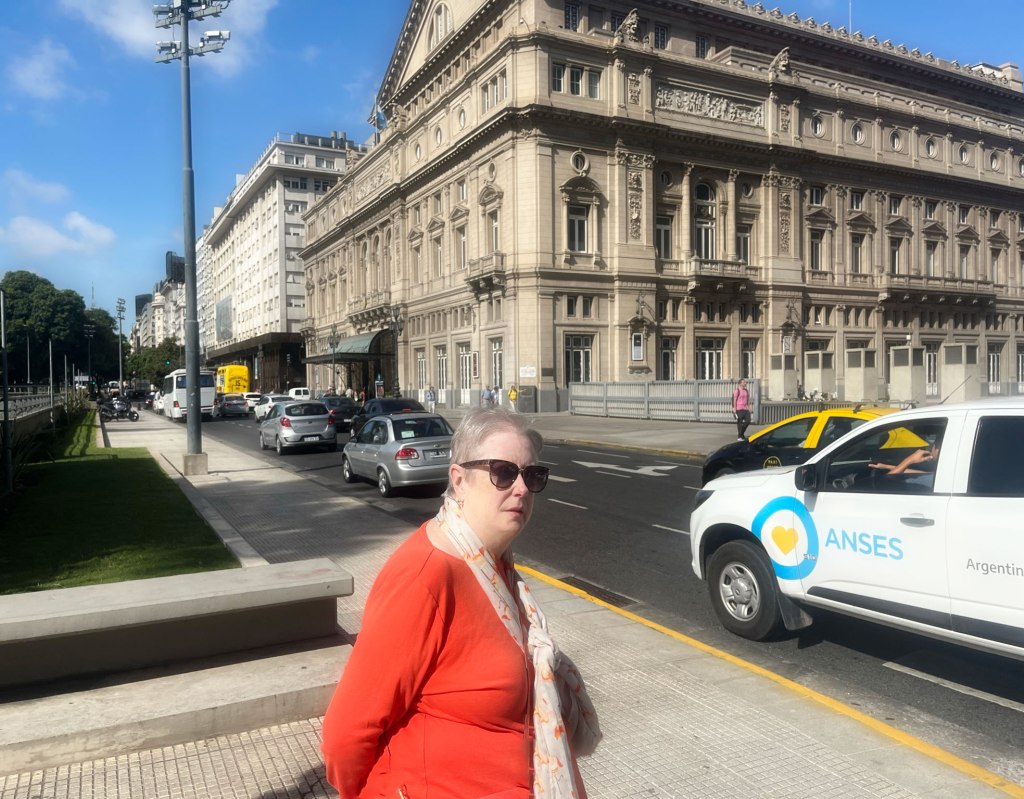
The present Colón replaced an original theatre which opened in 1857. Towards the end of the century, it became clear that a new theatre was needed, and after a 20-year process, the present theatre opened on 25 May 1908, with Verdi’s Aida,
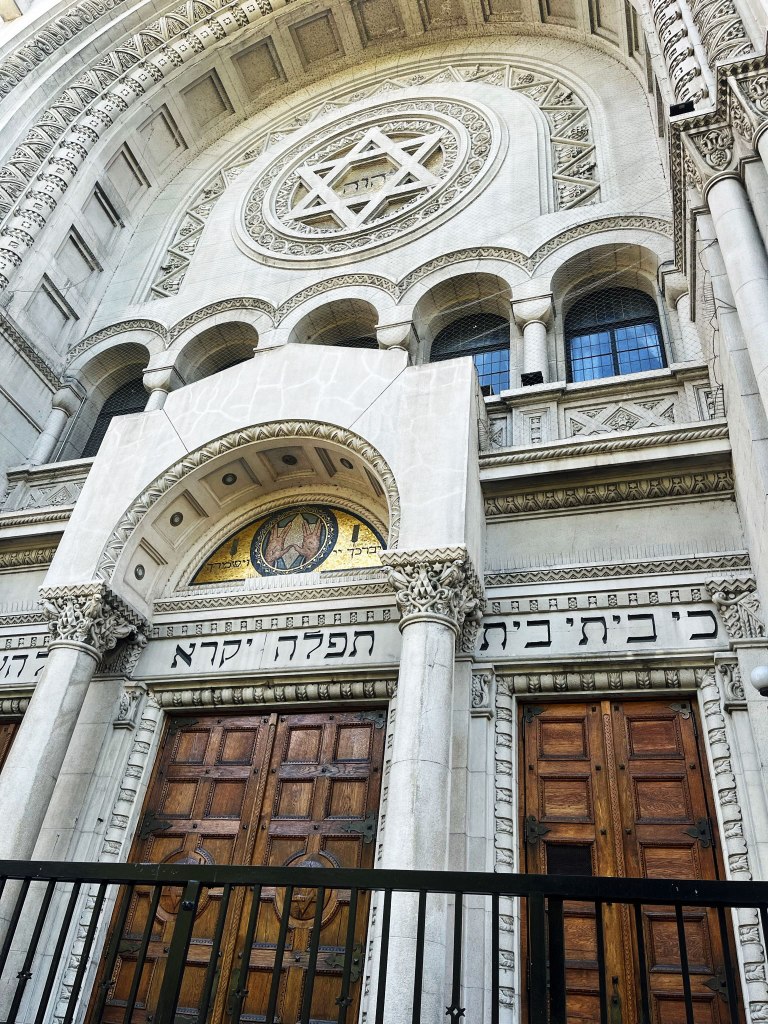
The Sinagoga de la Congregación Israelita Argentina, also called Templo Libertad, is a Reform synagogue. Situated on Libertad street, near the famous Teatro Colon, the synagogue is home to the Congregación Israelita de la República Argentina and houses a Jewish history museum. It is the oldest congregation in Argentina.
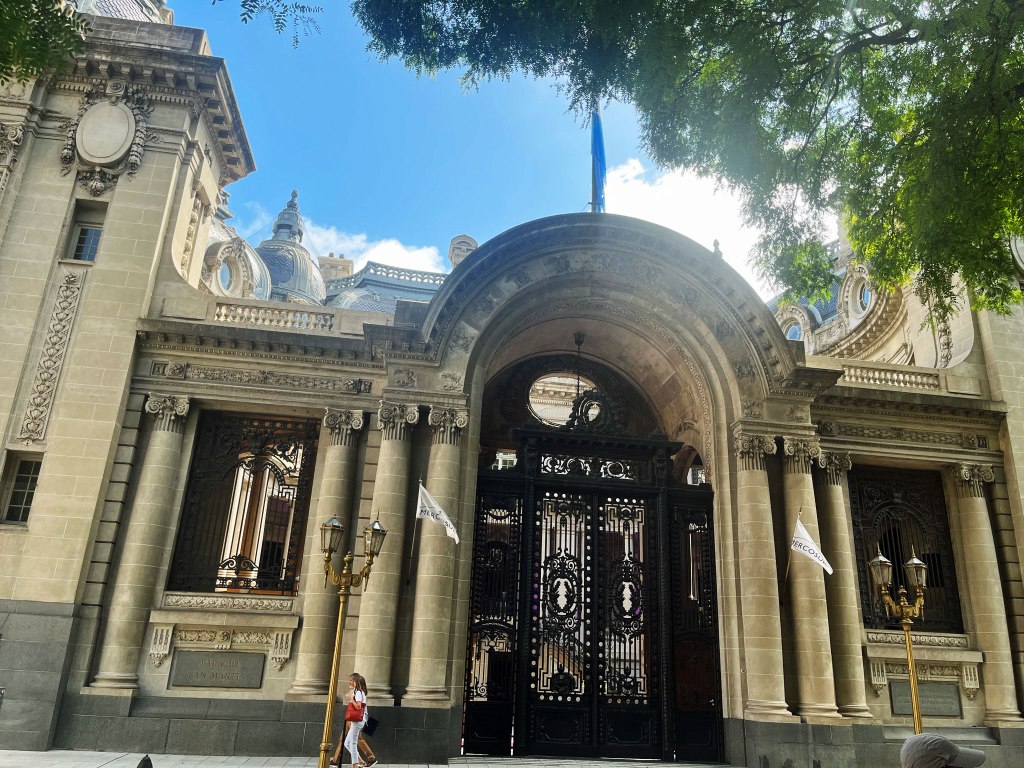
Plaza Saint-Martin
A succession of colonial Spanish governors had their official residences built on what today is the plaza and, in 1713, the land was sold to the British South Sea Company. The South Sea Company operated their slave trade out of the former governor’s residence and a fort and bullring were later built nearby.
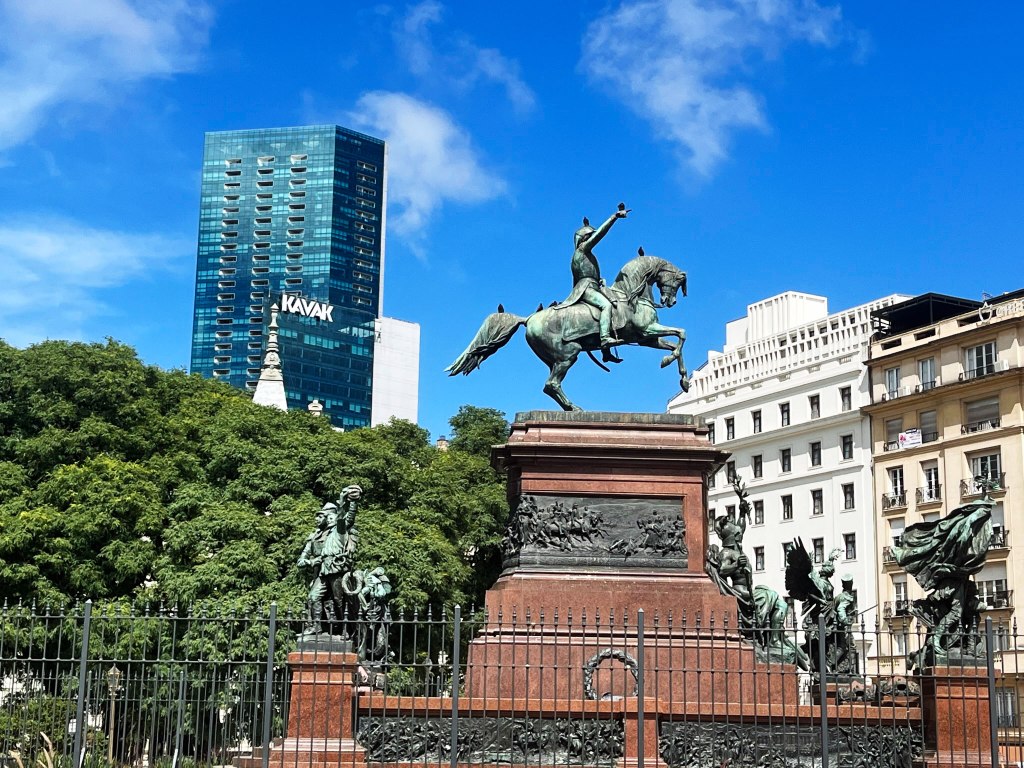
The land was the site of Gen. John Whitelocke’s 1807 defeat upon Britain’s second attempt to conquer Buenos Aires, whereby the area became known as the “Field of Glory”.
The Revolution of 1810 brought an autonomous government to Buenos Aires, which entrusted the Mounted Grenadiers to Jose de San Martin and allowed him to establish his main barracks at the plaza.
An 1813 resolution abolished the slave trade and the slave quarters were shuttered.
Following his decisive military victories, Gen. San Martín was forced into exile in 1824 for political reasons; but a reappraisal of his place in history led to his becoming nearly eponymous in Argentina after his death in 1850. Accordingly, French sculptor Louis-Joseph Daumas was commissioned in 1862 to create an equestrian statue of the hero of the Wars for Independence and the square was renamed in his honor in 1878, upon the hundredth anniversary of his birth.
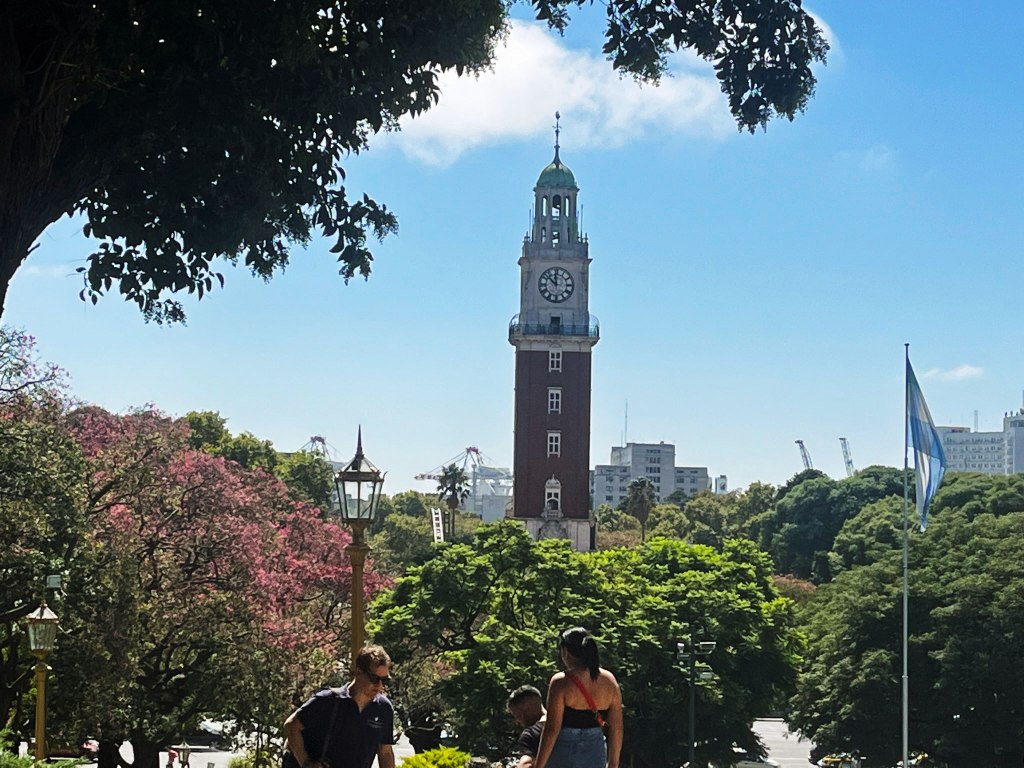
The Torre Monumental, also known by its original name Torre de los Ingleses, or English tower, is a monumental Renaissance-style clocktower completed in 1916 as a gift from Buenos Aires’ British community to celebrate the centenary of Argentina’s independence.
The bricks and stone used in the construction were imported from England.
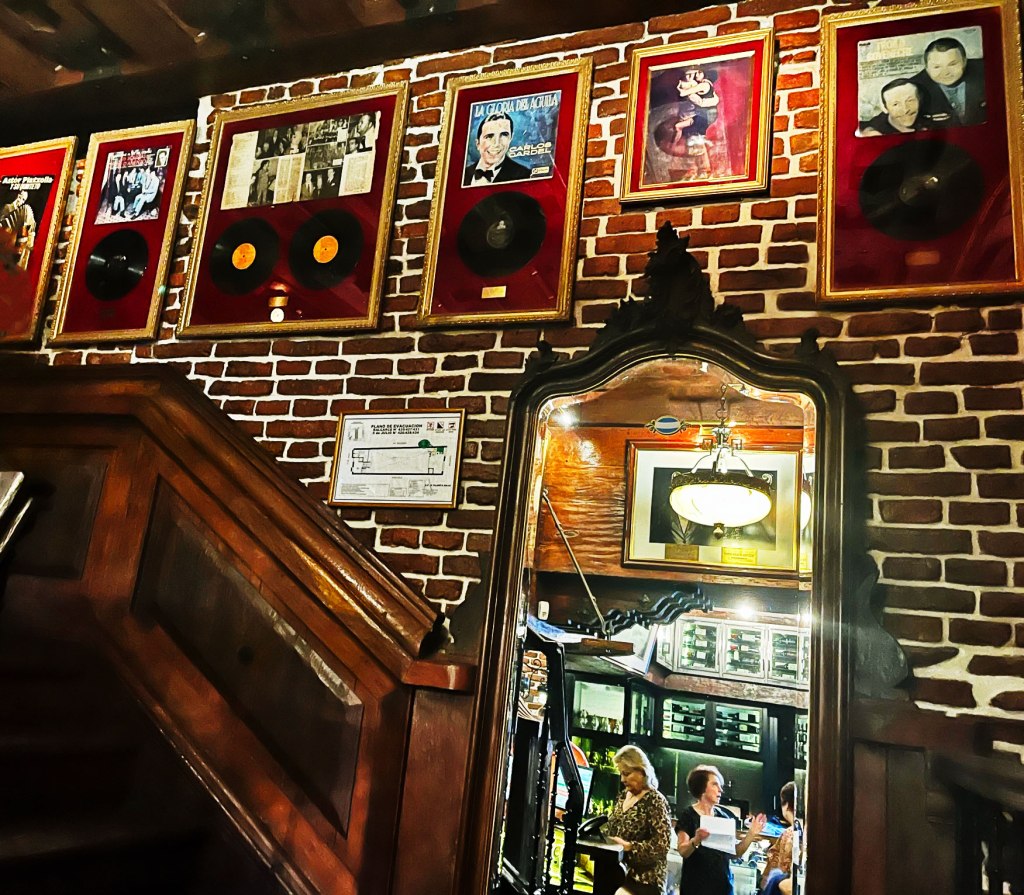
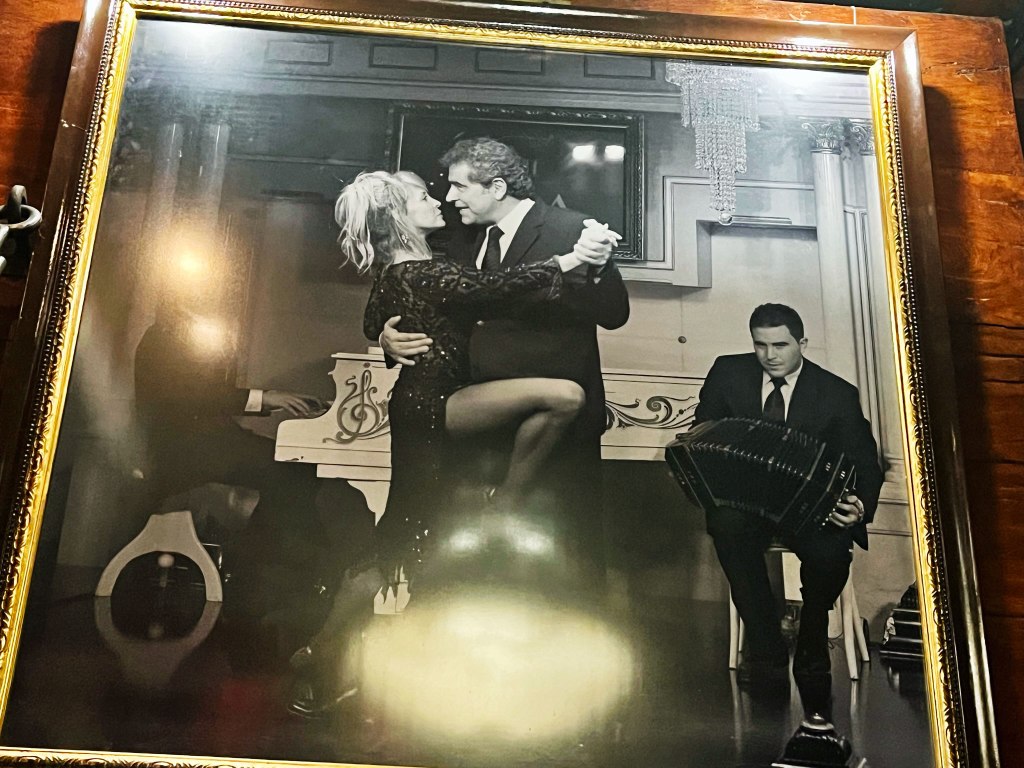
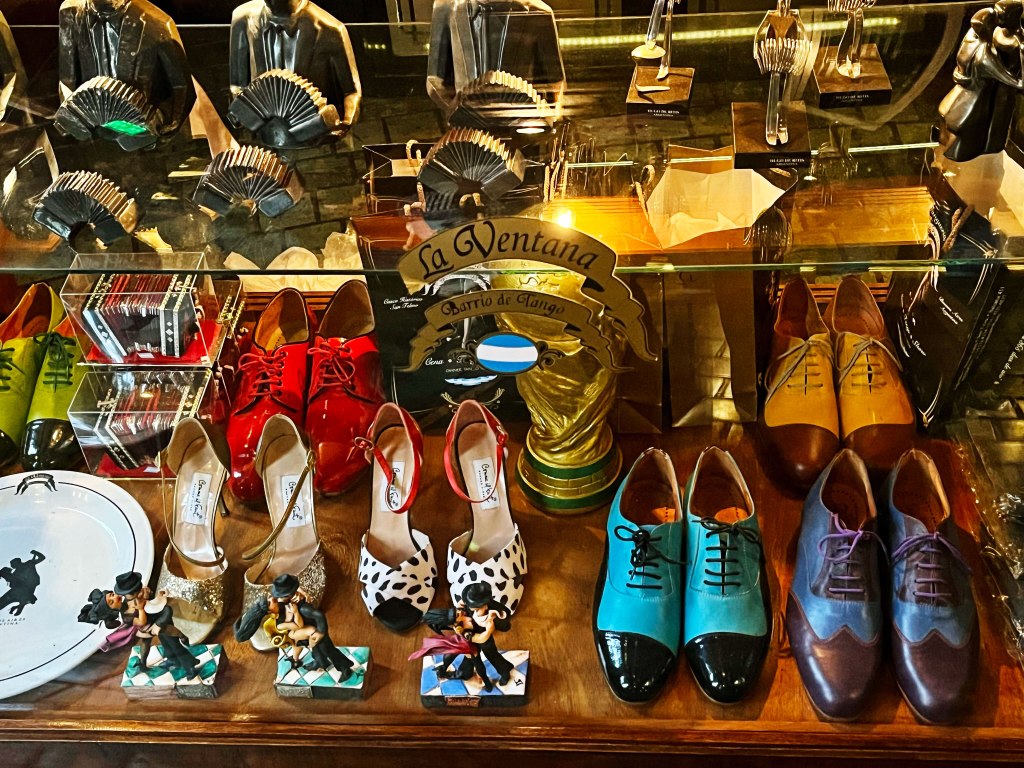
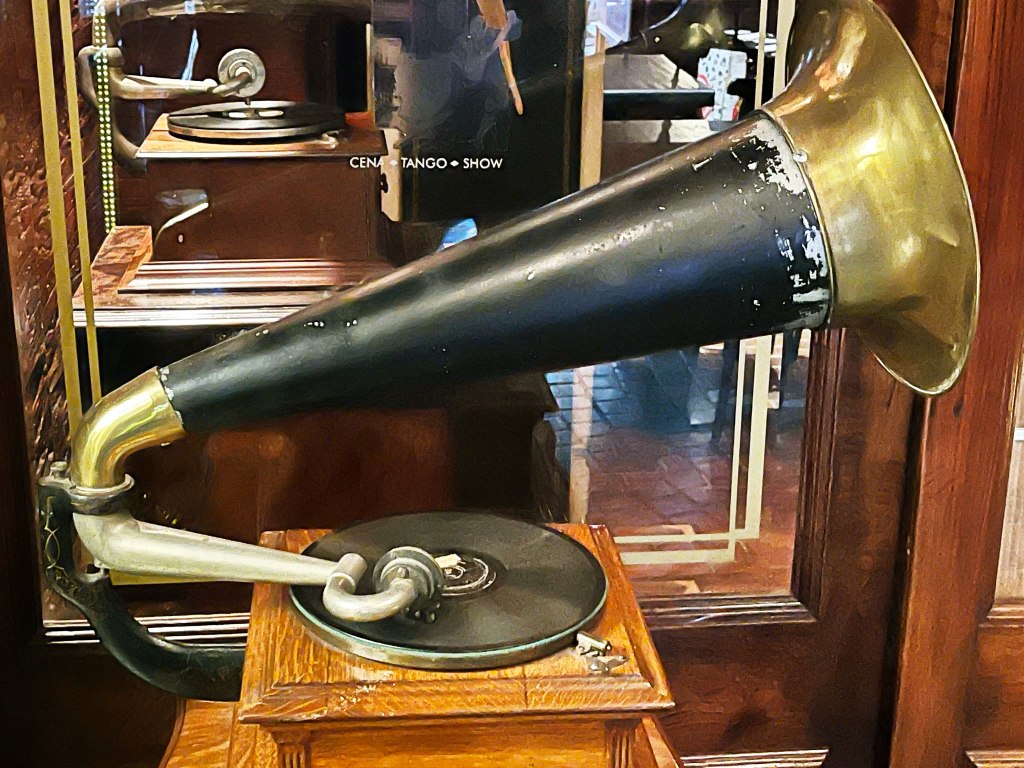
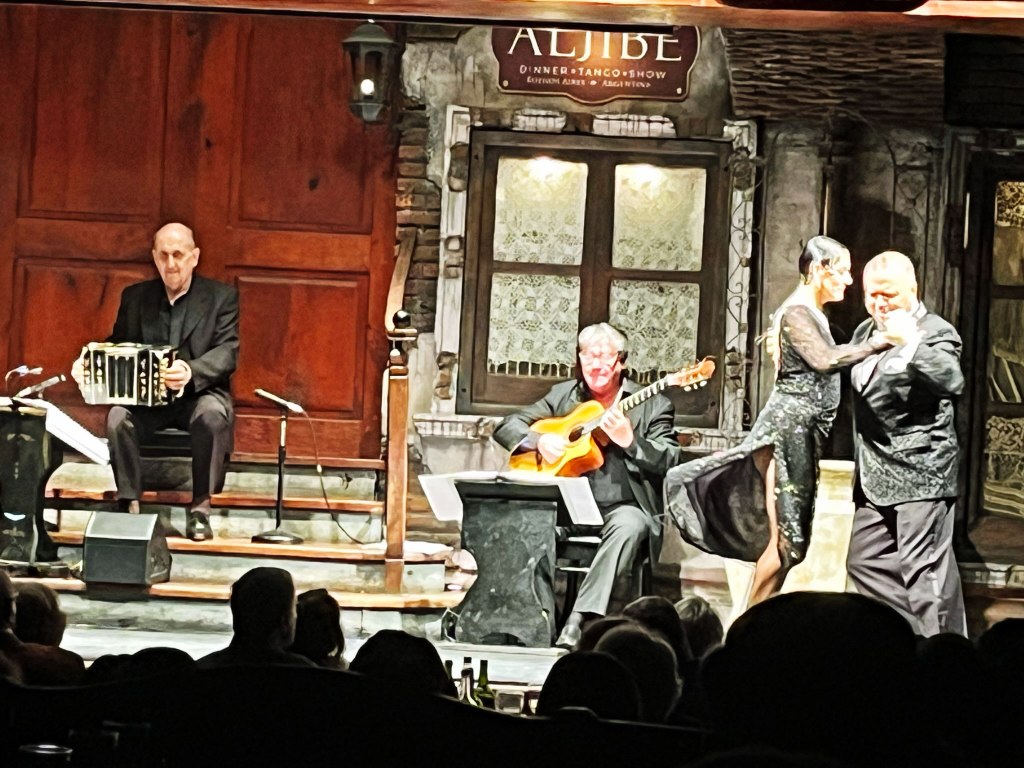
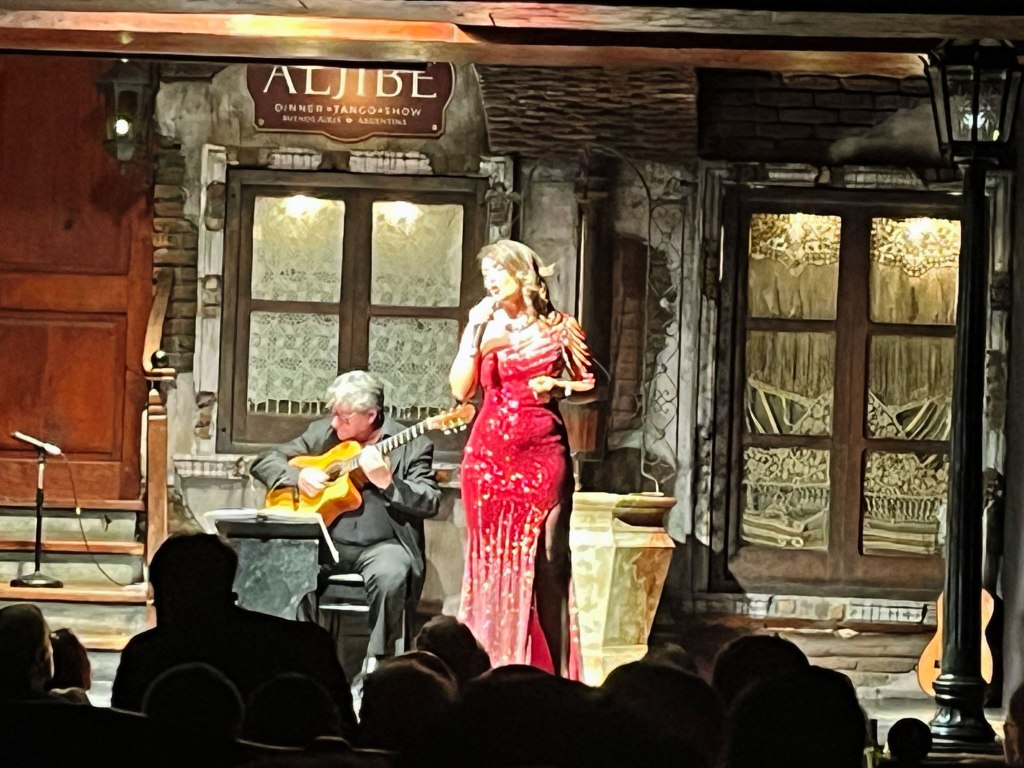
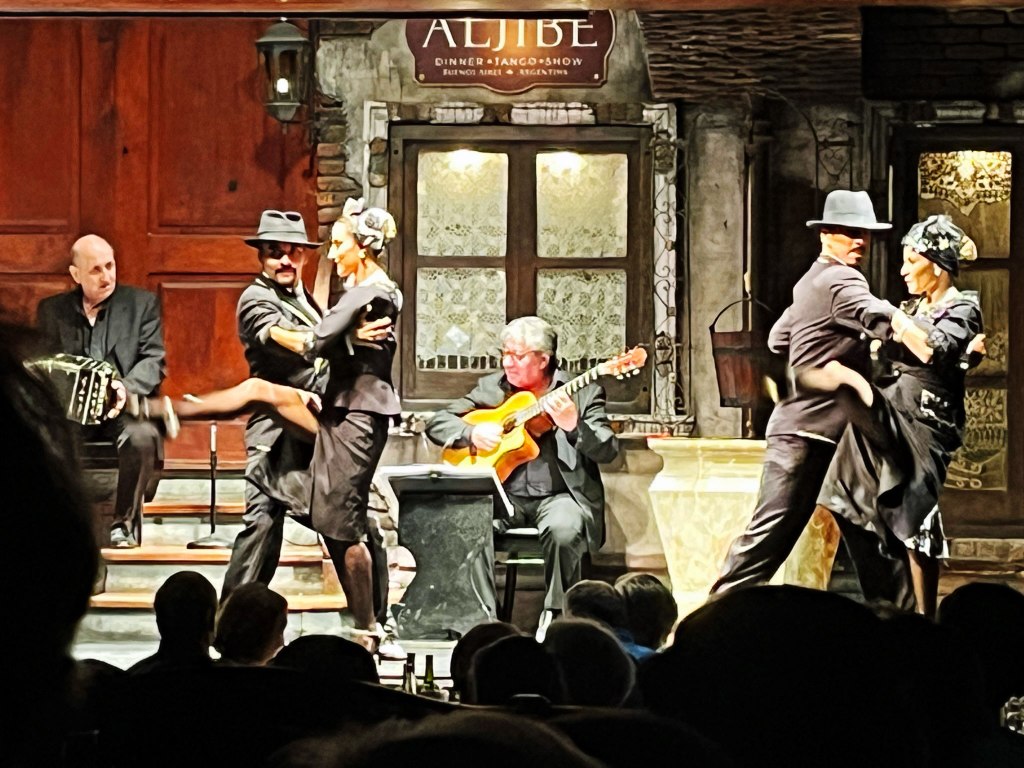
Aljibe Tango lounge and supper club
We had a wonderful time. The show was great and food was quite good. A nice and fascinating experience.
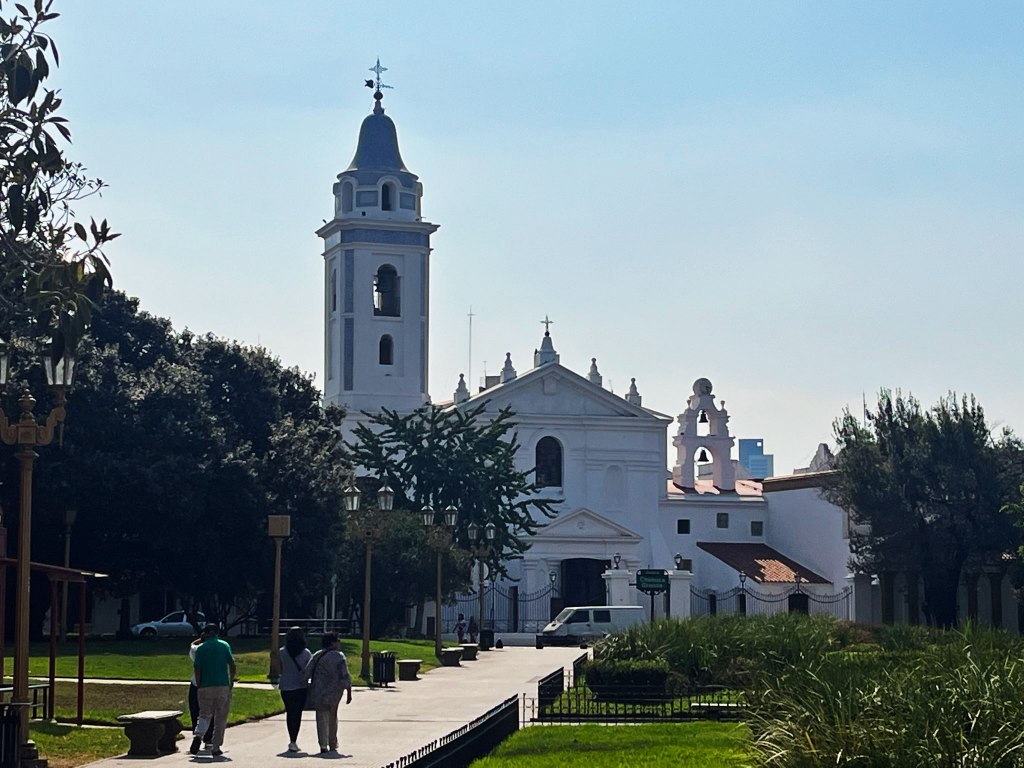
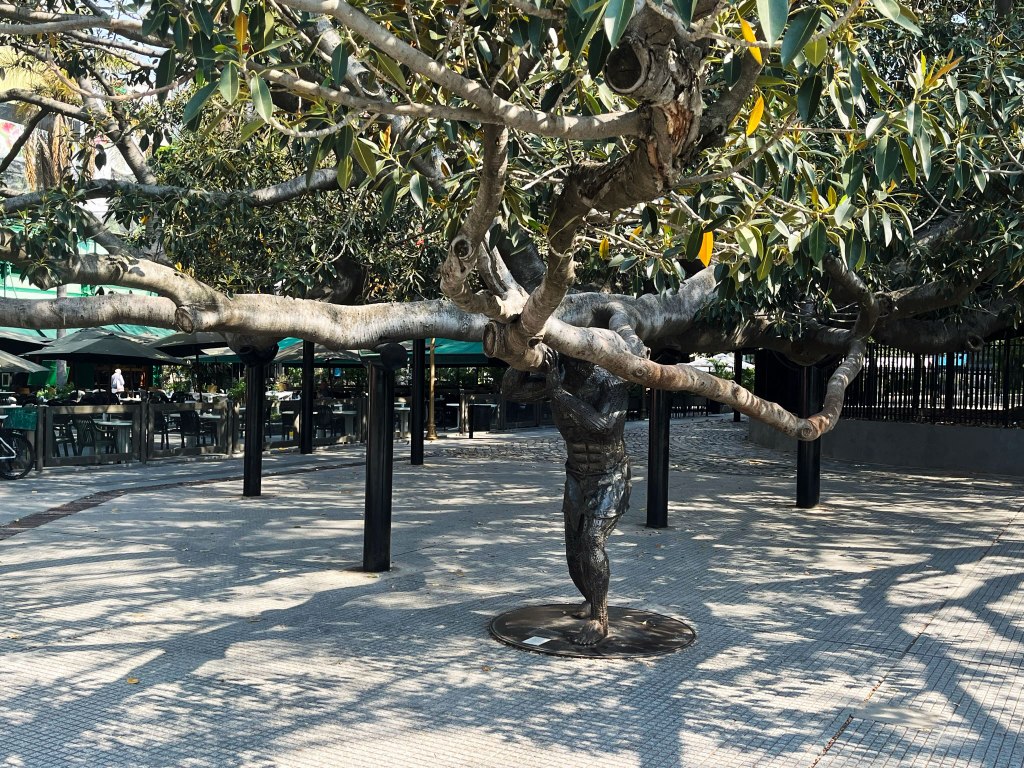
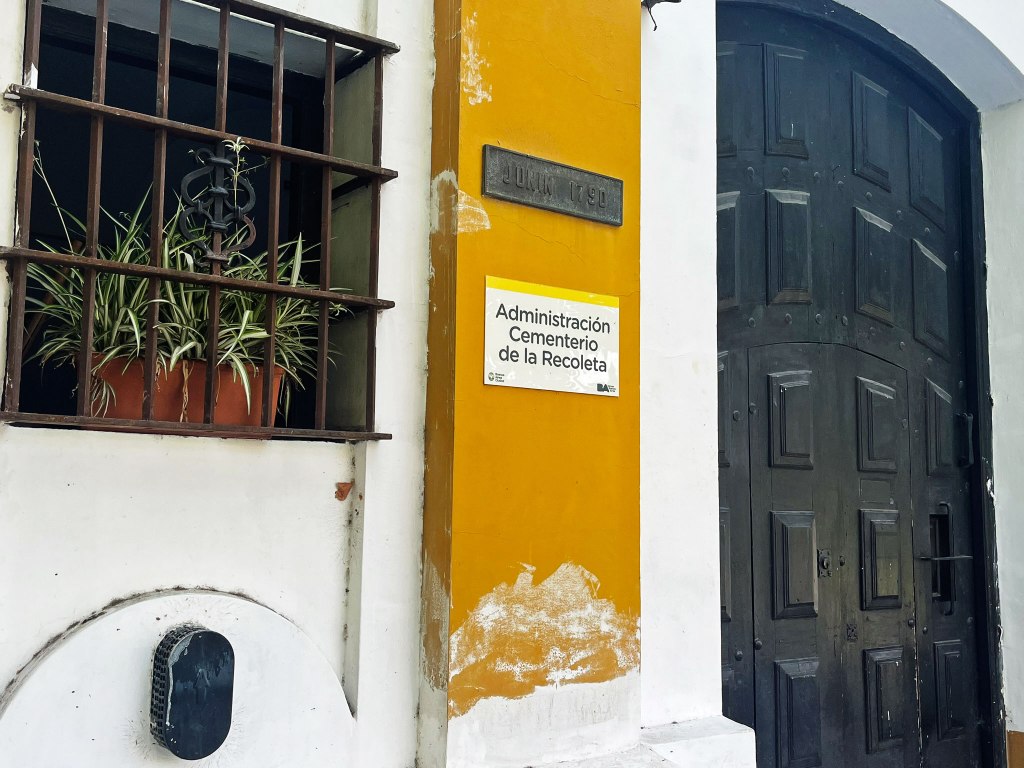
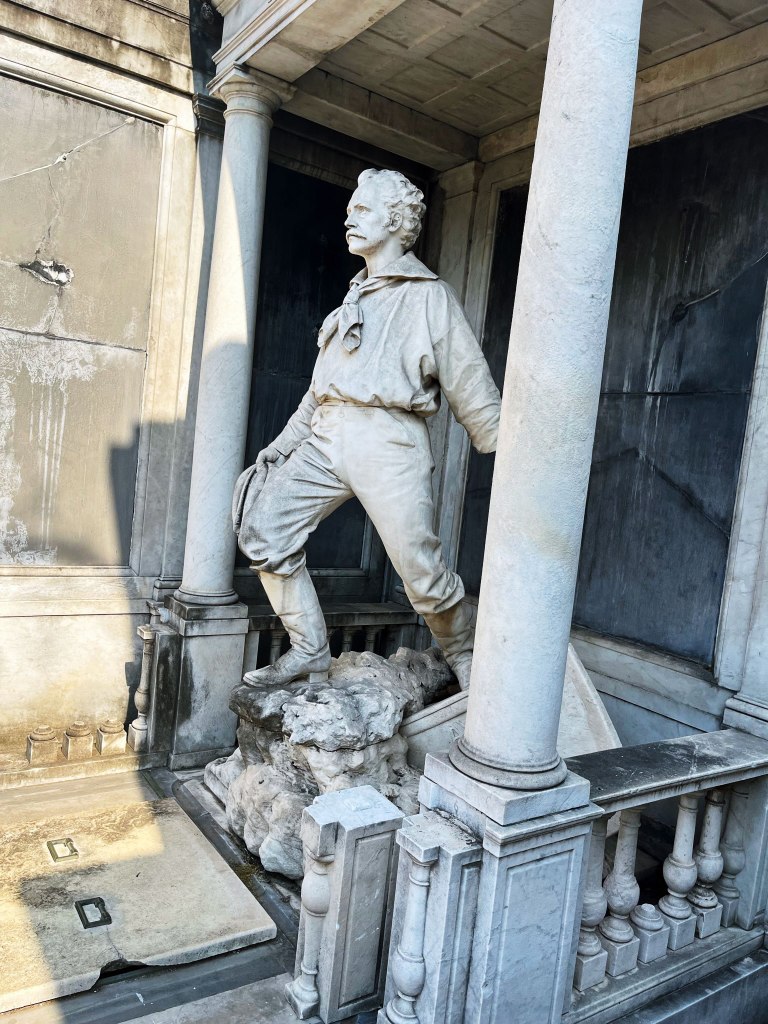
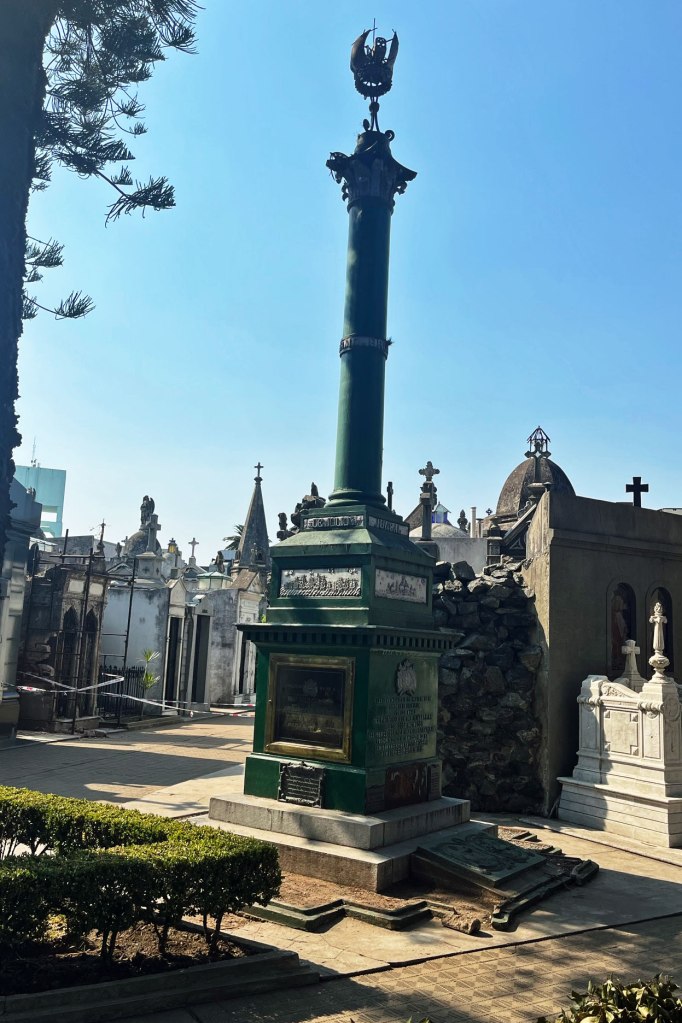
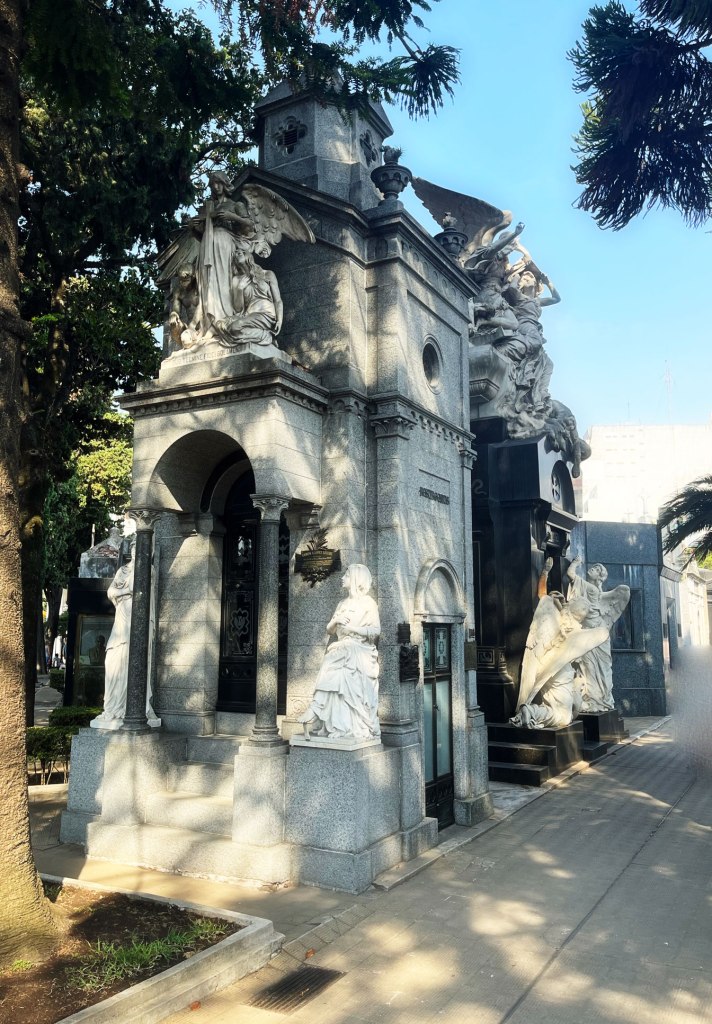
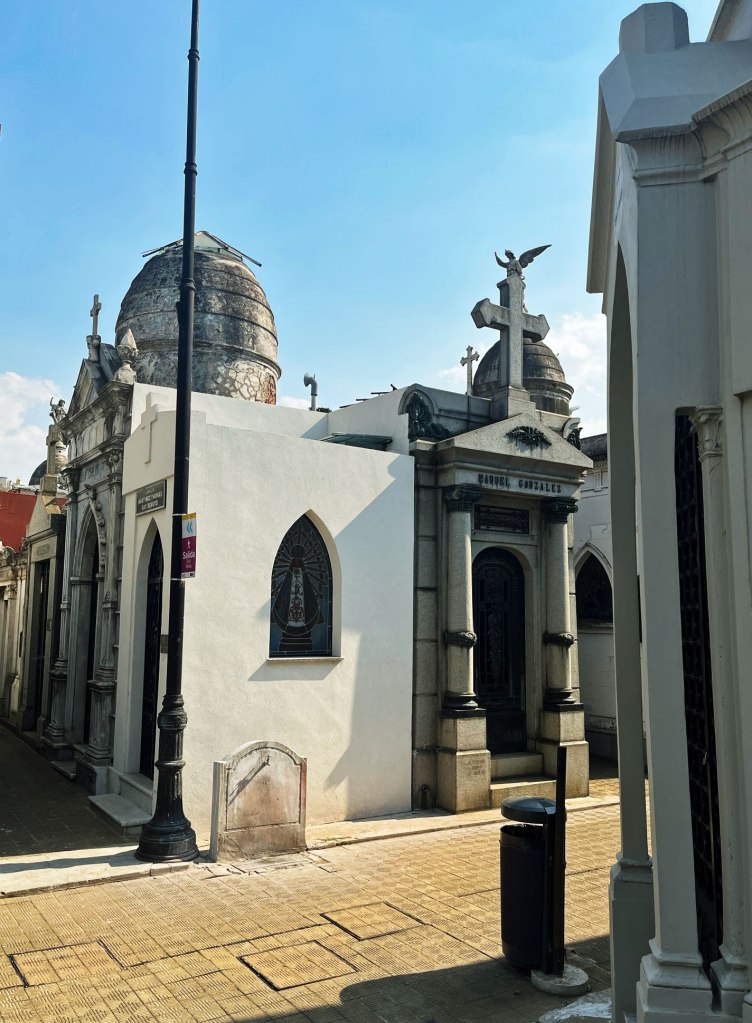
La Recoleta Cemetery is in the Recoleta neighbourhood. It contains the graves of notable people, including Eva Perron, Nobel Prize winners, the founder of the Argentine Navy, and military commanders like Julio Argentino Roca . In 2011, the BBC hailed it as one of the world’s best cemeteries, and in 2013, listed it among the 10 most beautiful cemeteries in the world.
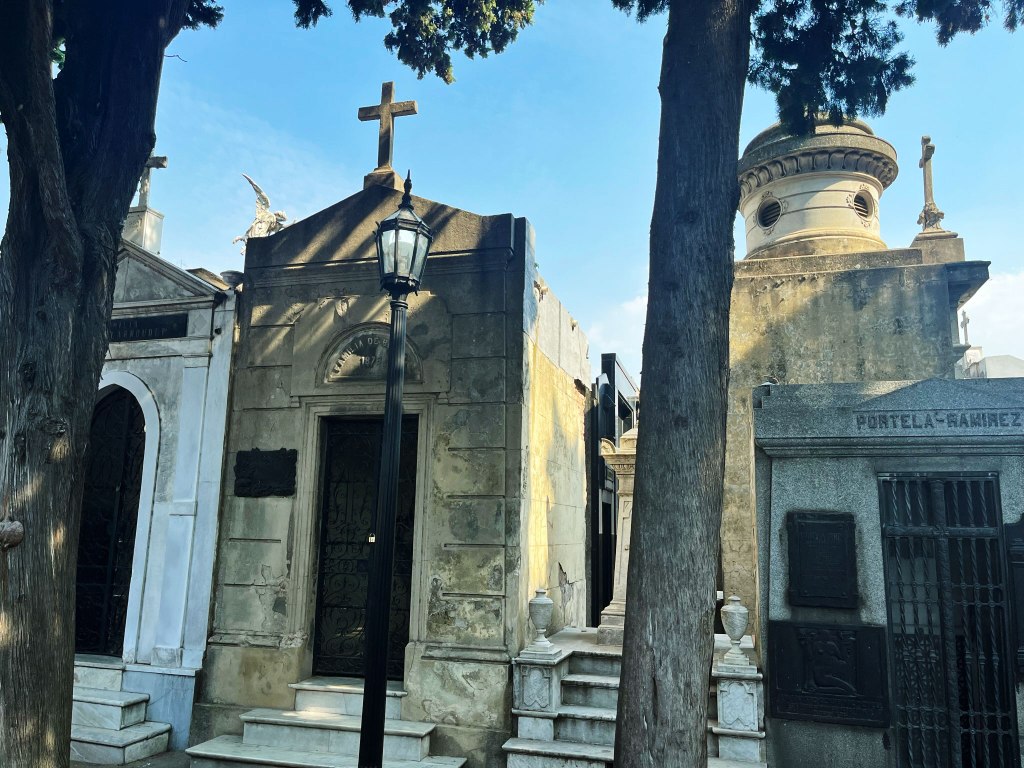
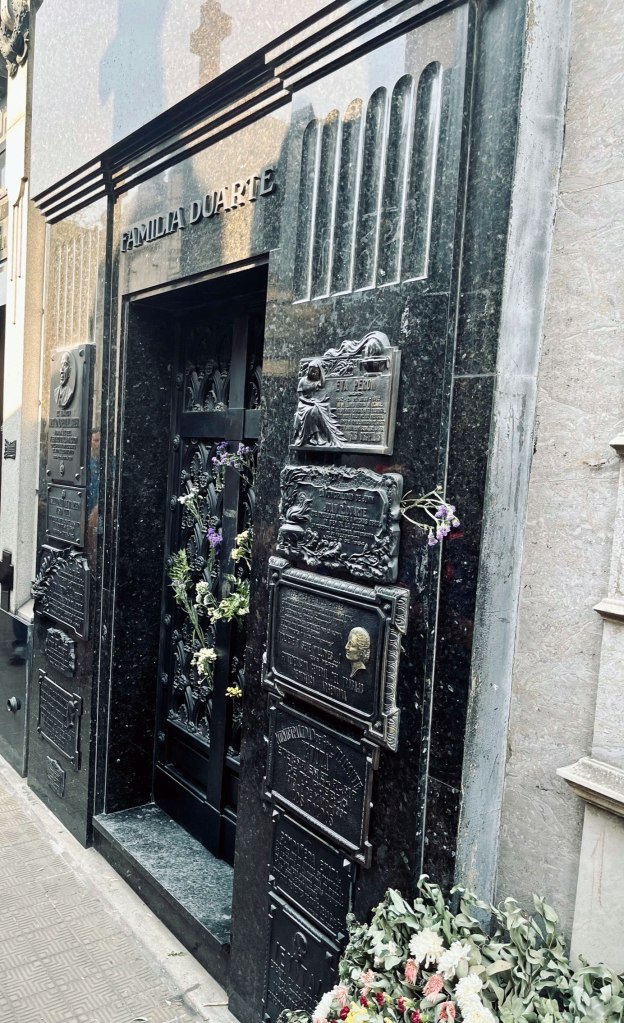
Isabel Martínez de Perón, born María Estela Martínez Cartas, 4 February 1931, was an Argentine politician who served as President from 1974 to 1976.
Isabel Perón was the third wife of President Juan Perron. During her husband’s third term as president from 1973 to 1974, she served as both VP and First Lady. Following her husband’s death in office in 1974, she served as President for almost two years before the military took over the government with the 1976 coup. Perón was then placed under house arrest for five years before she was exiled to Spain in 1981.
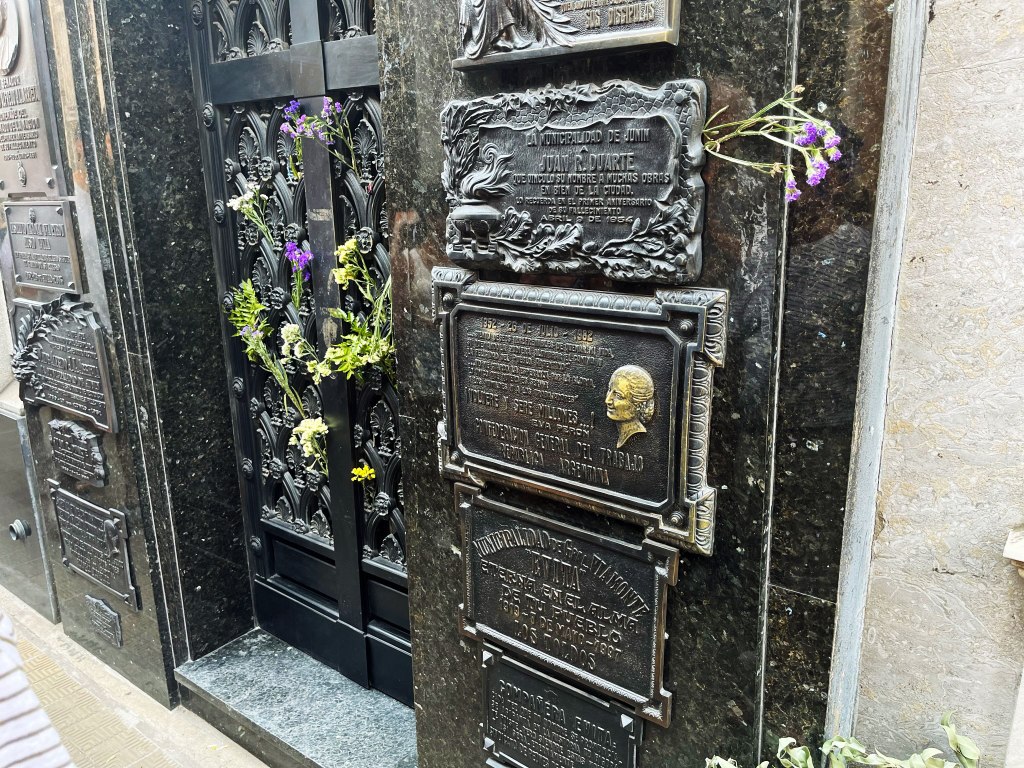
In 2007 an Argentine judge ordered Perón’s arrest over the forced disappearance of an activist in February 1976, on the grounds that the forced disappearance was authorized by her signing of decrees allowing Argentina’s armed forces to take action against “subversives”. She was arrested near her home in Spain on 12 January 2007. Spanish courts subsequently refused her extradition to Argentina.
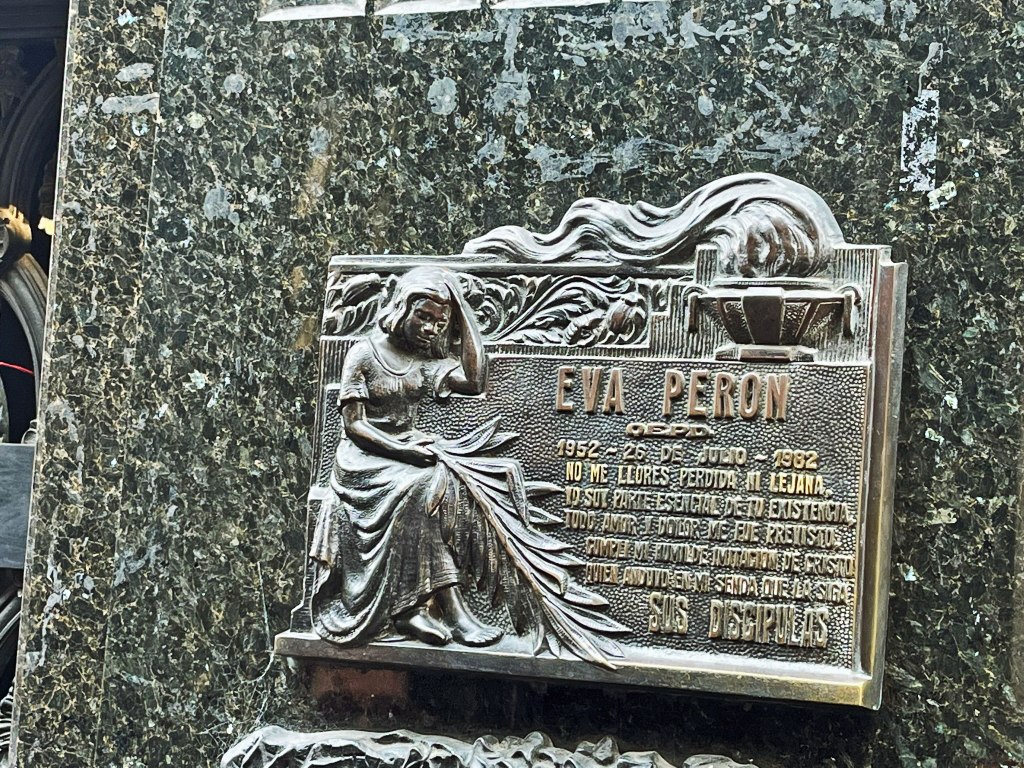
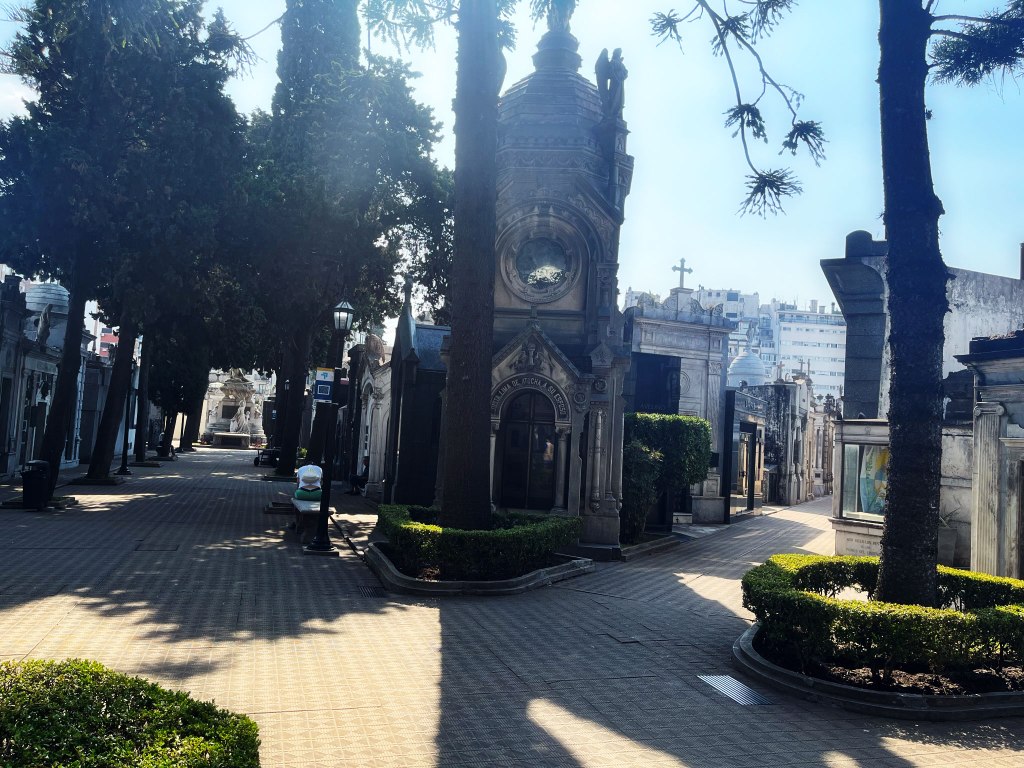
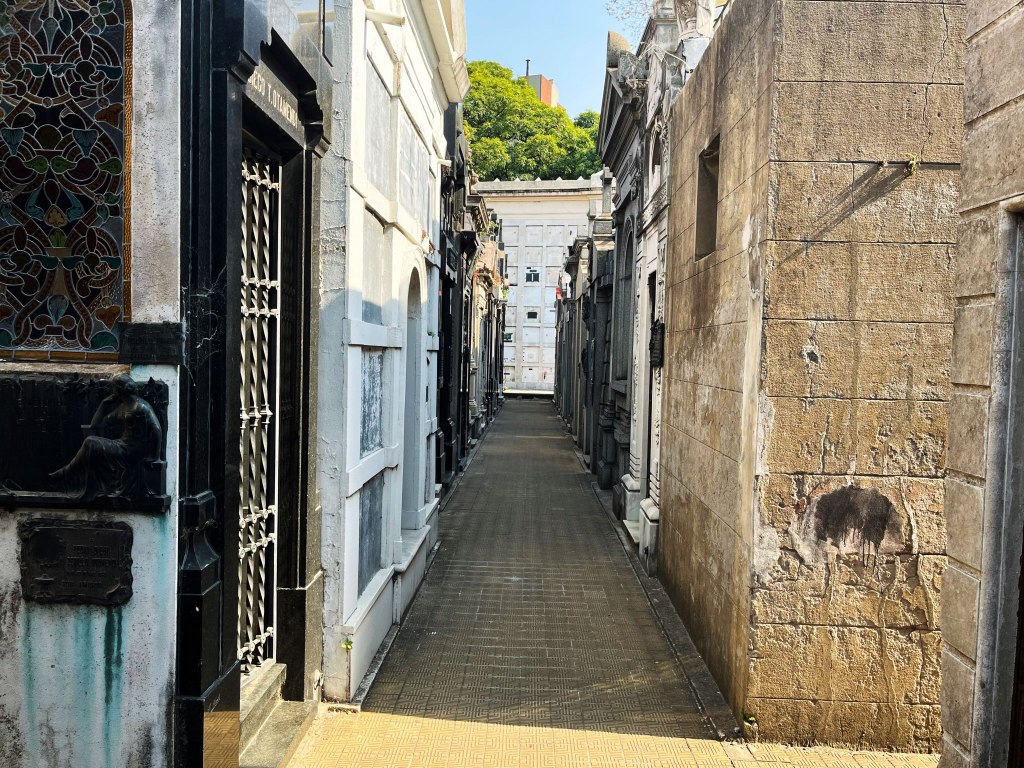
Set in 5.5 hectares , the site contains 4691 vaults, all above ground, of which 94 have been declared National Historical Monuments by the Government and are protected by the state. The entrance to the cemetery is through neo-classical gates with tall Doric columns. The cemetery contains many elaborate marble mausoleums, decorated with statues, in a wide variety of architectural styles such as Art deco, Art Nouveau, Baroque and Neo-Gothic.
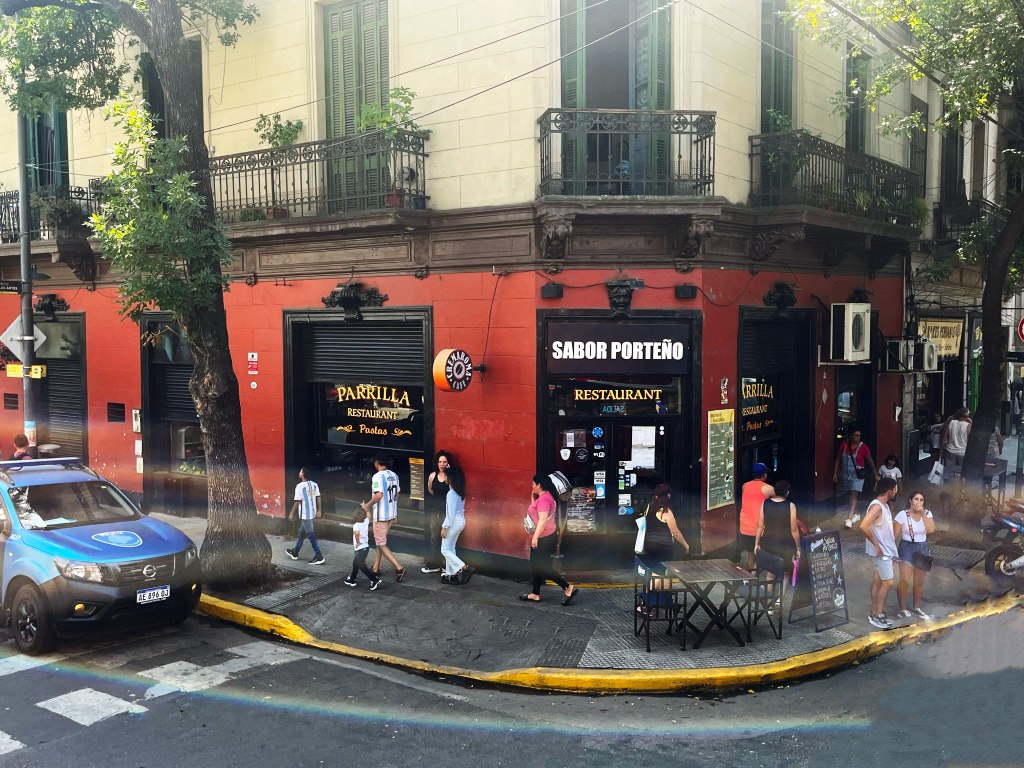
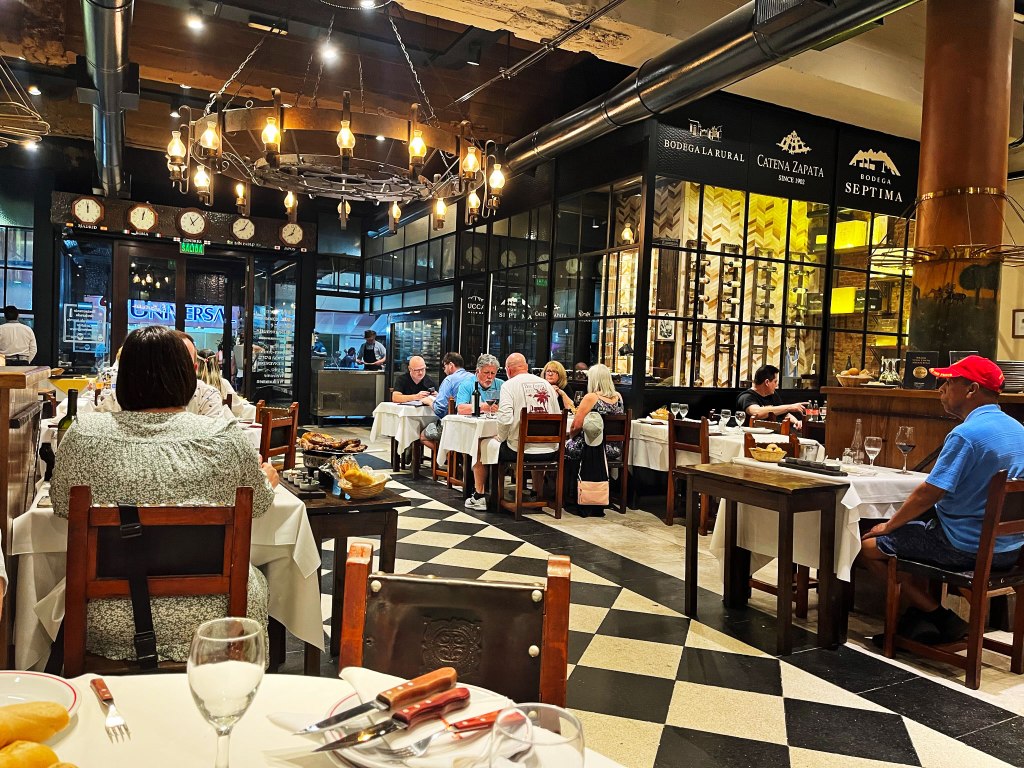
A restaurant we visited. Beef and more beef… Quite inexpensive.
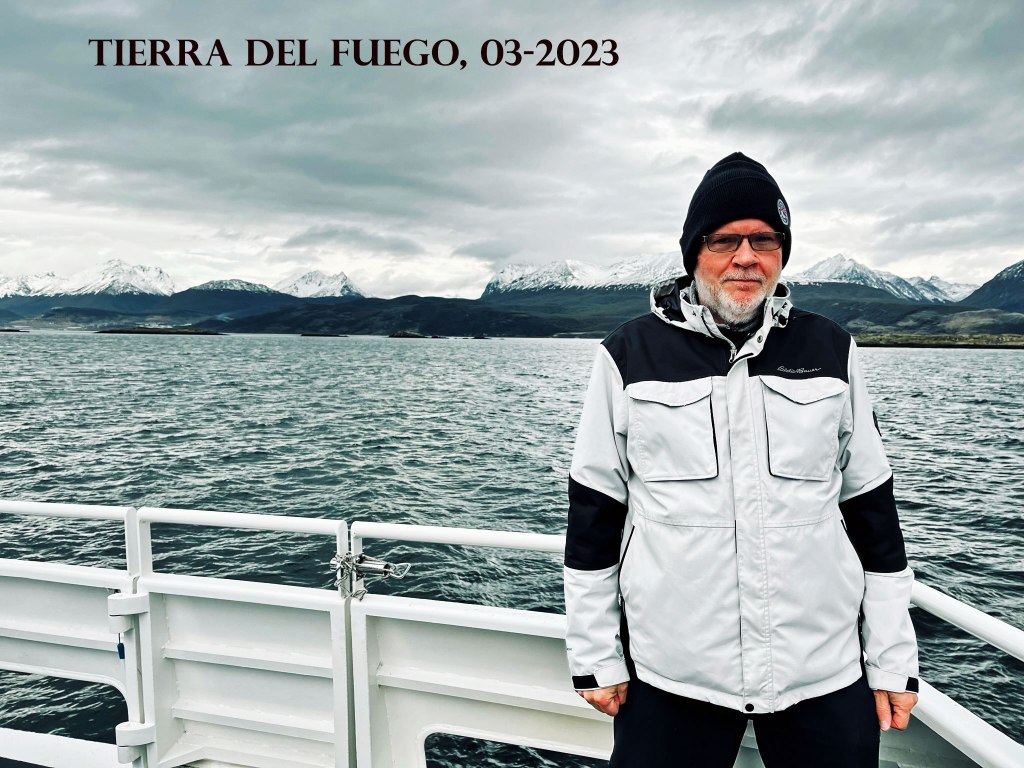
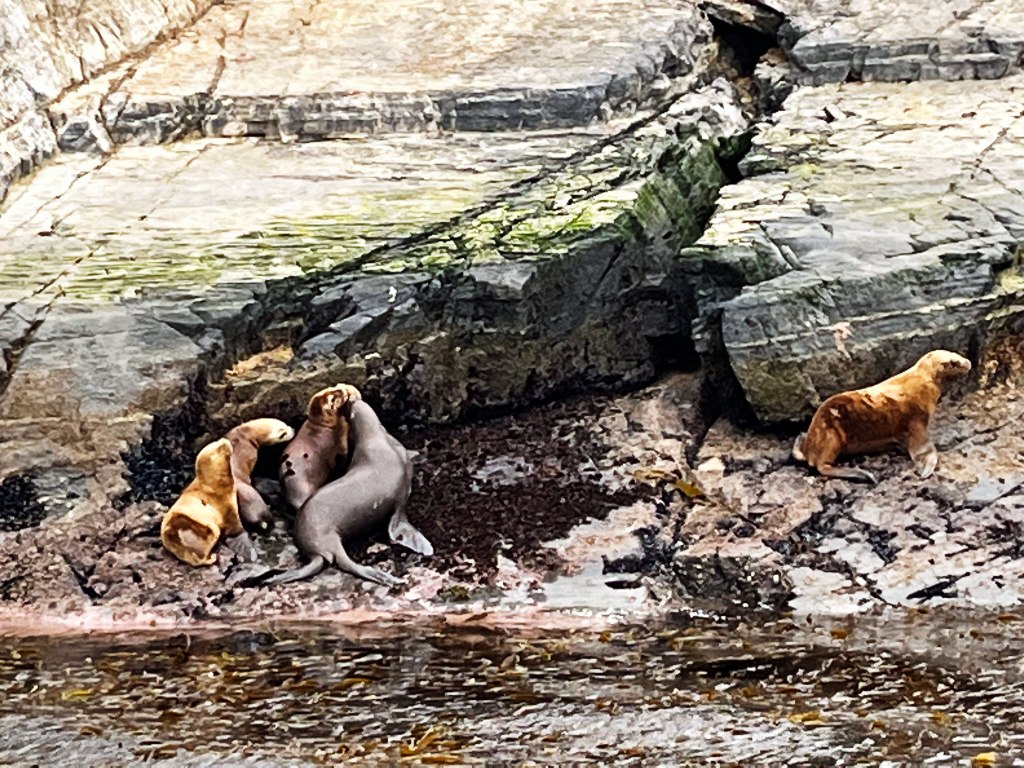
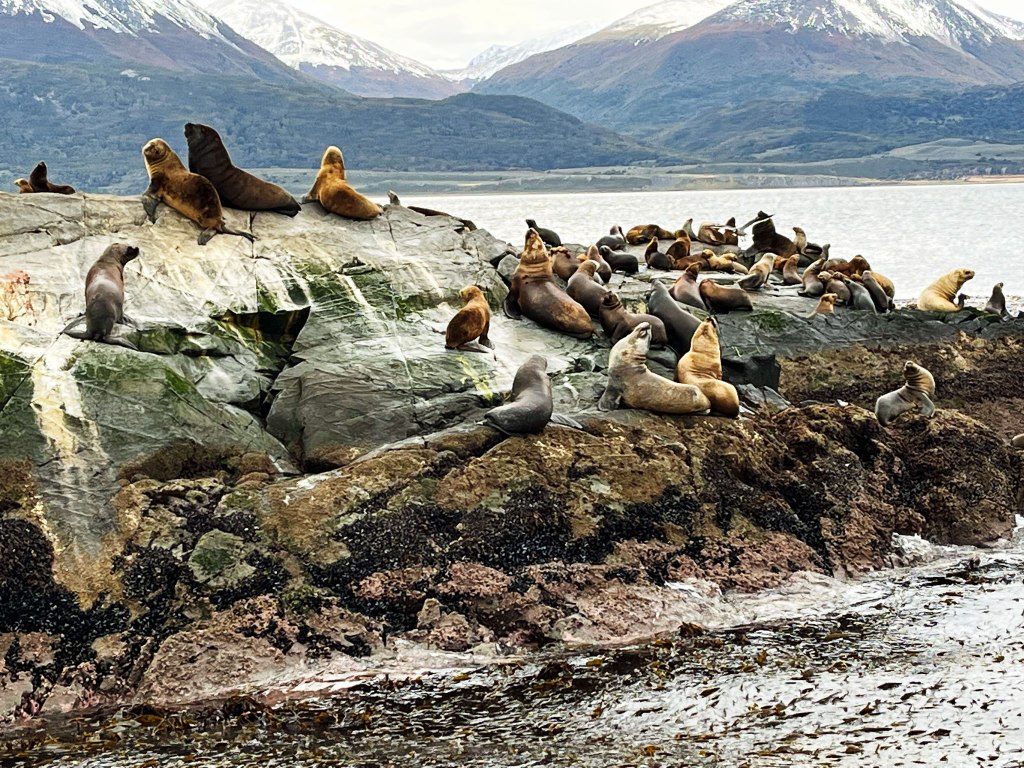
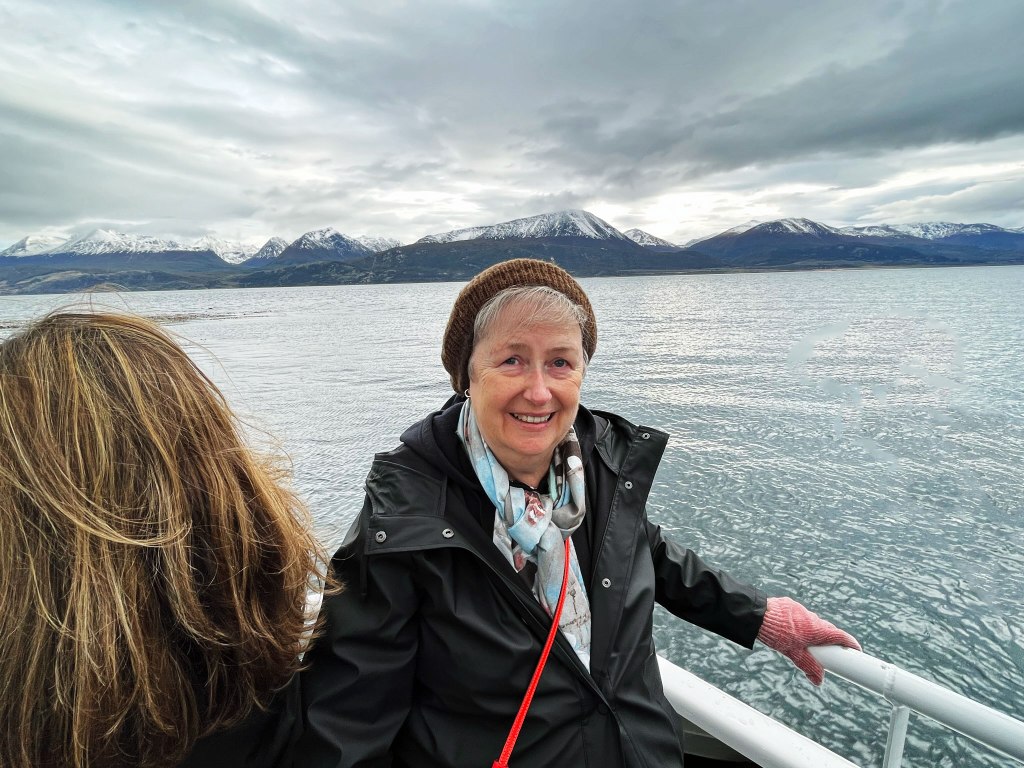
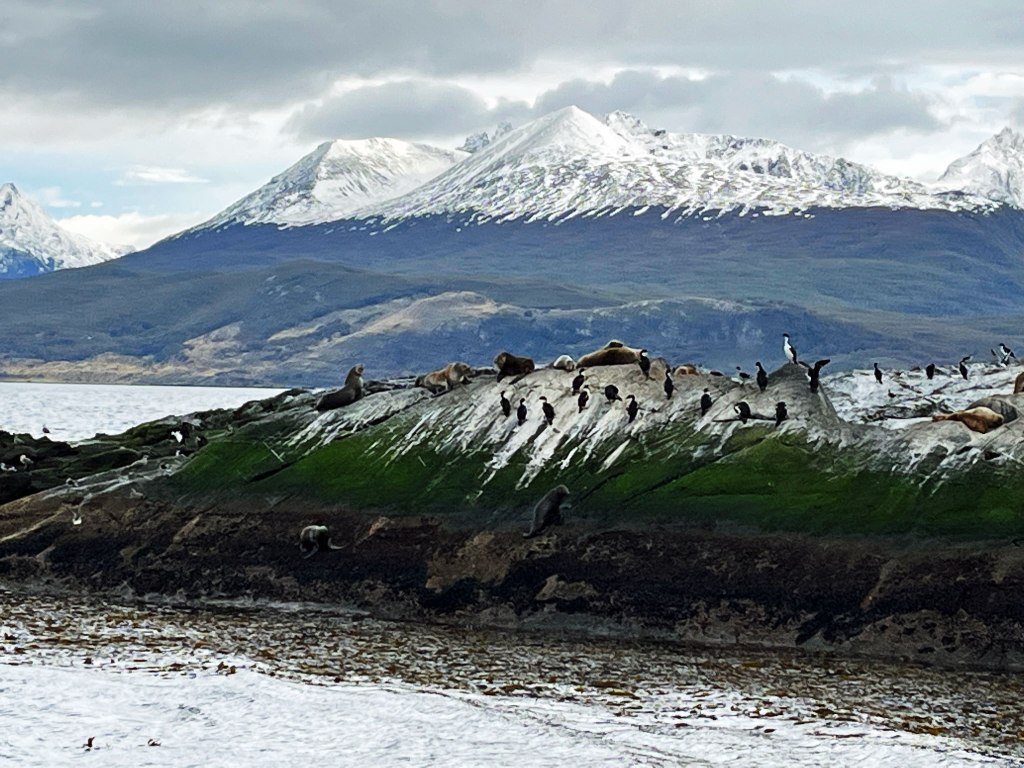
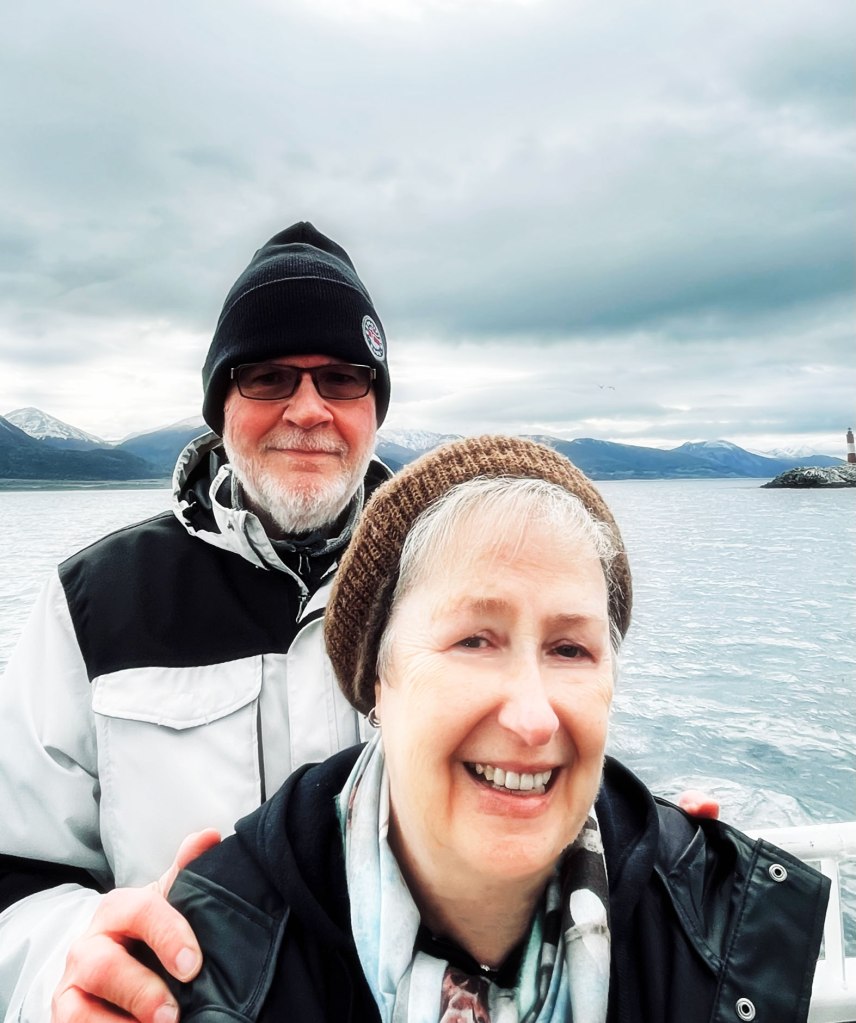
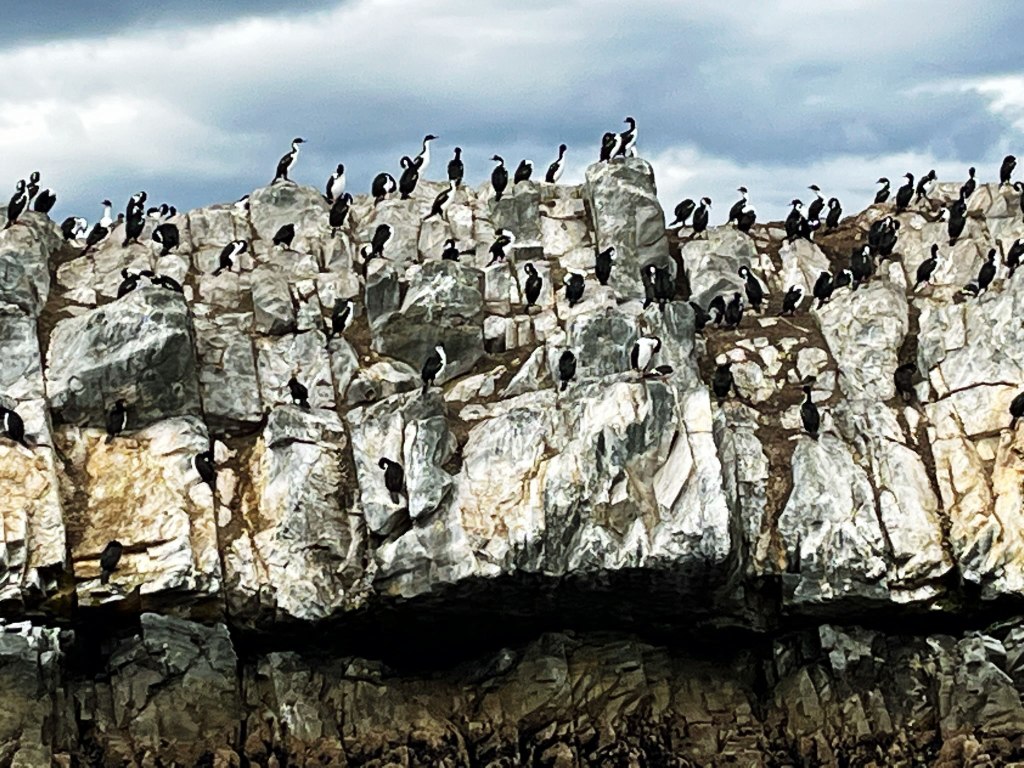
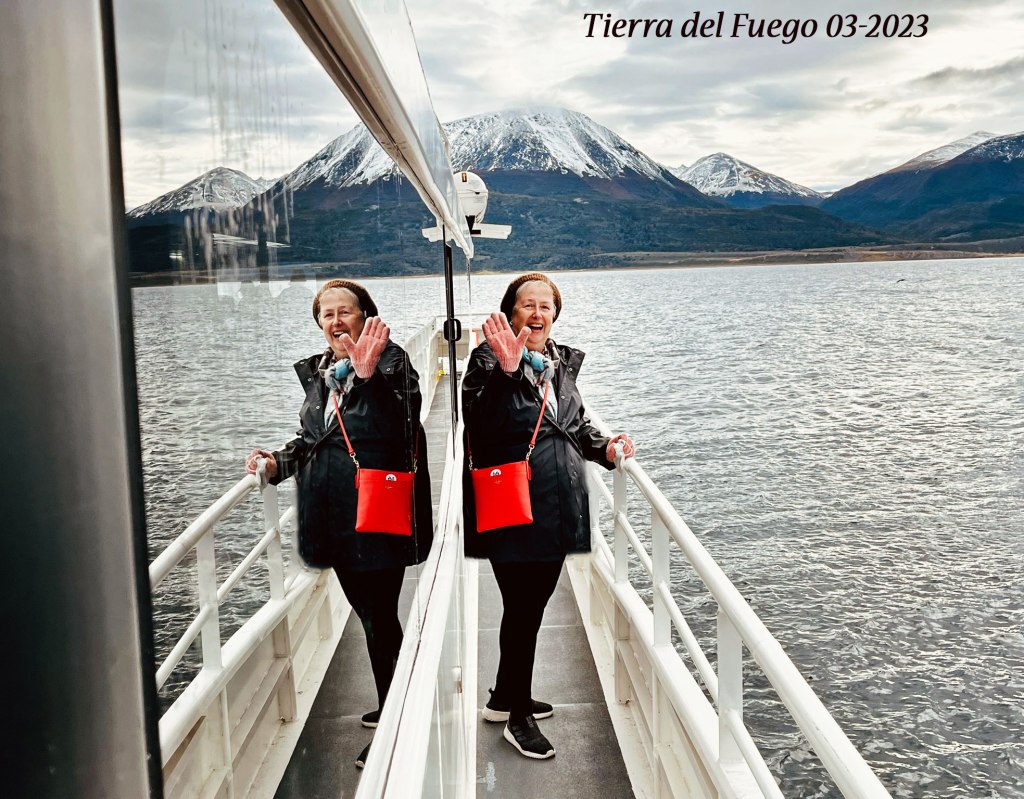
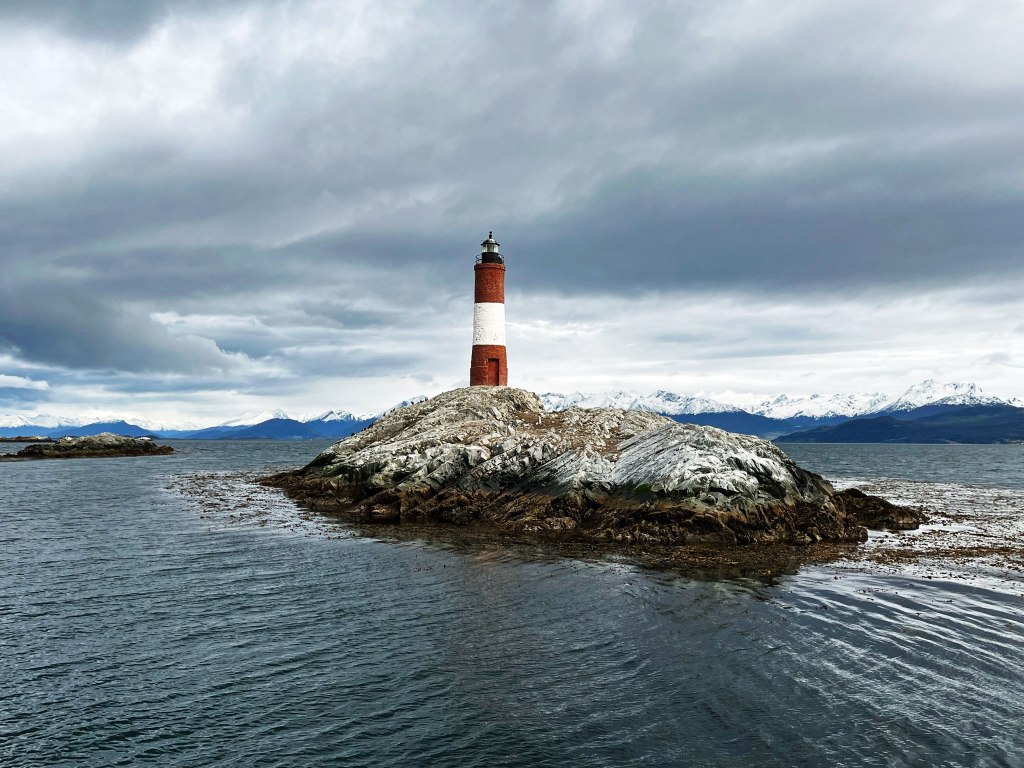
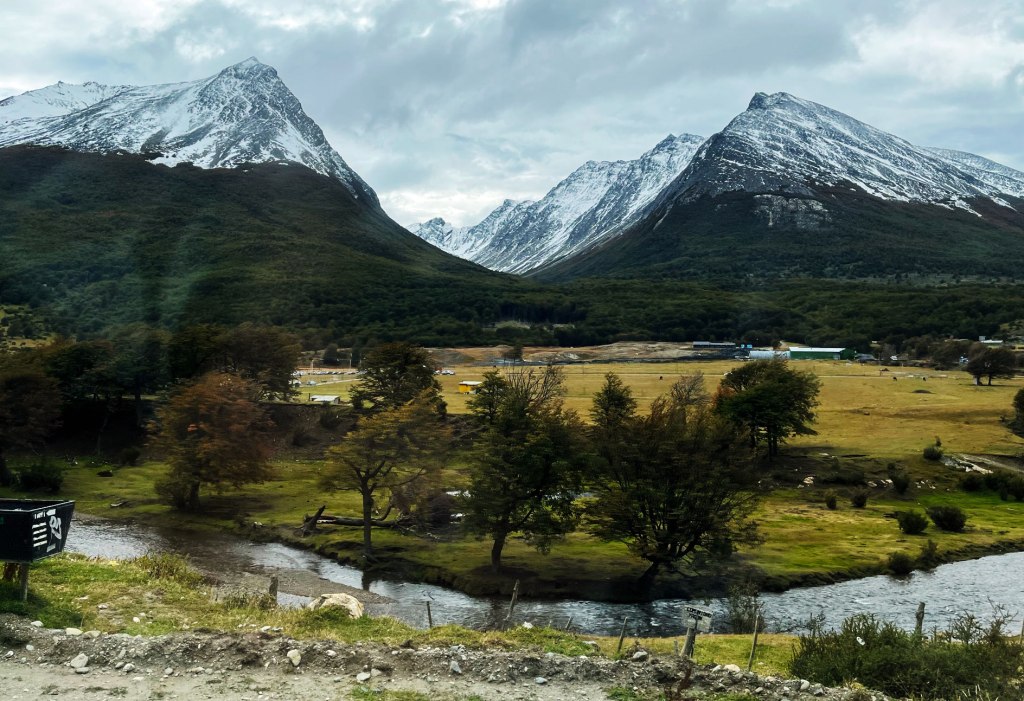
Tierra del Fuego
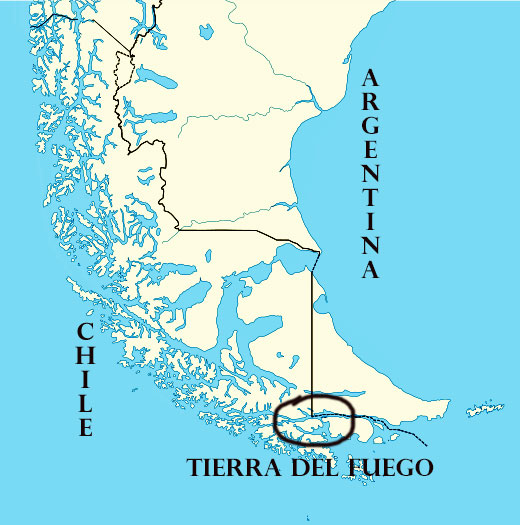
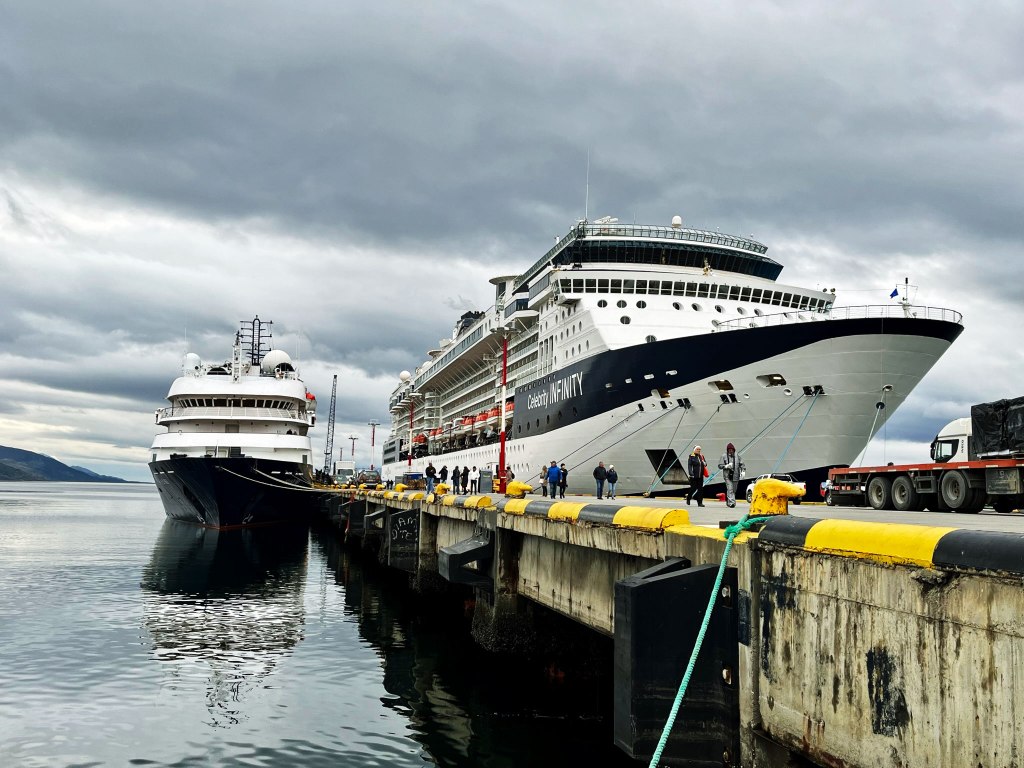
Tierra del Fuego (Spanish for “Land of the Fire“) is an archipelago off the southernmost tip of the South American mainland, across the Strait of Magellan.
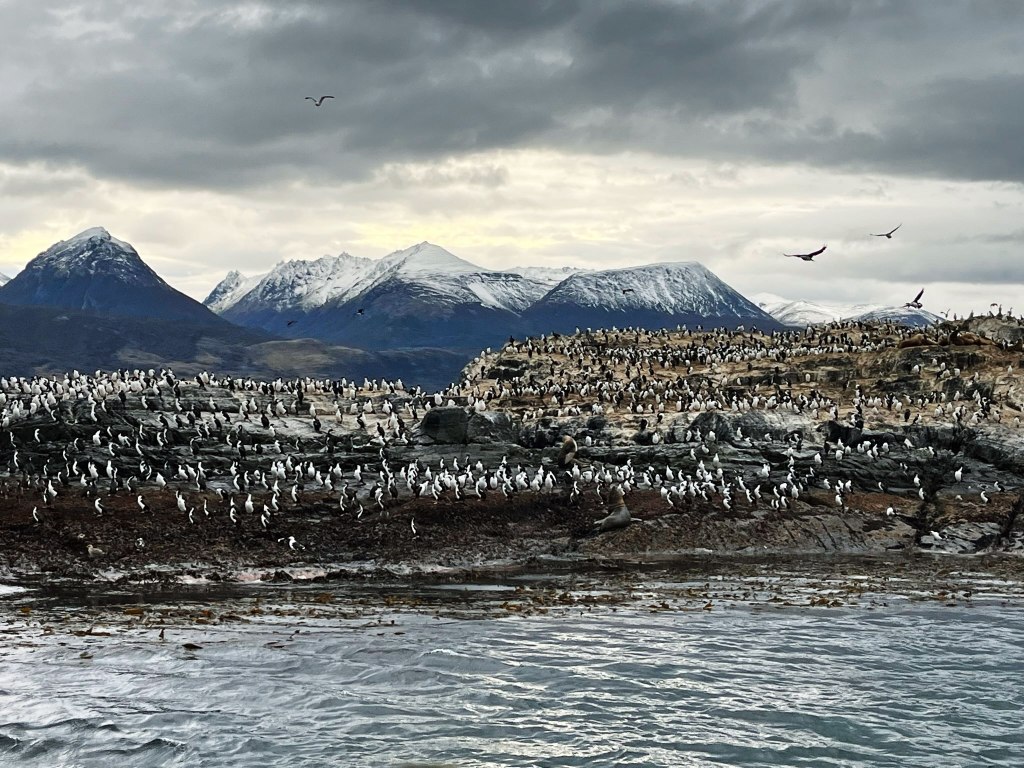
The archipelago consists of the main island, Isla Grande de Tierra del Fuego and a group of many islands, including Cape Horn.
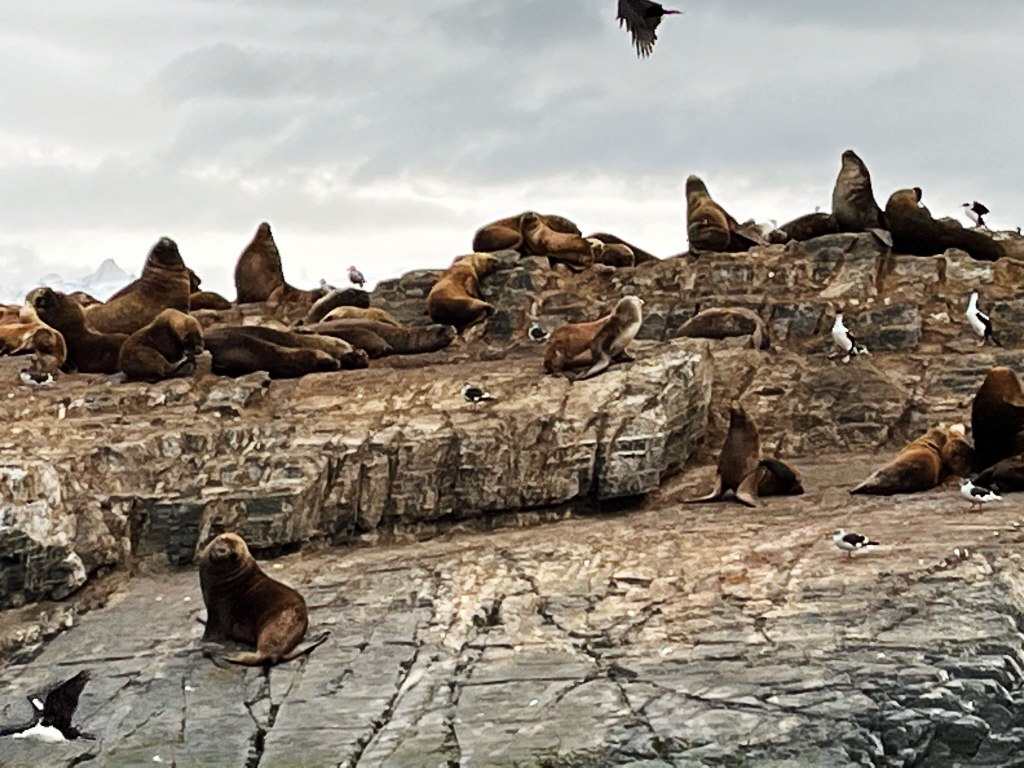
Tierra del Fuego is divided between Chile and Argentina, the latter controlling the eastern half of the main island and the former the western half plus the islands south of Beagle Channel and the southernmost islands.
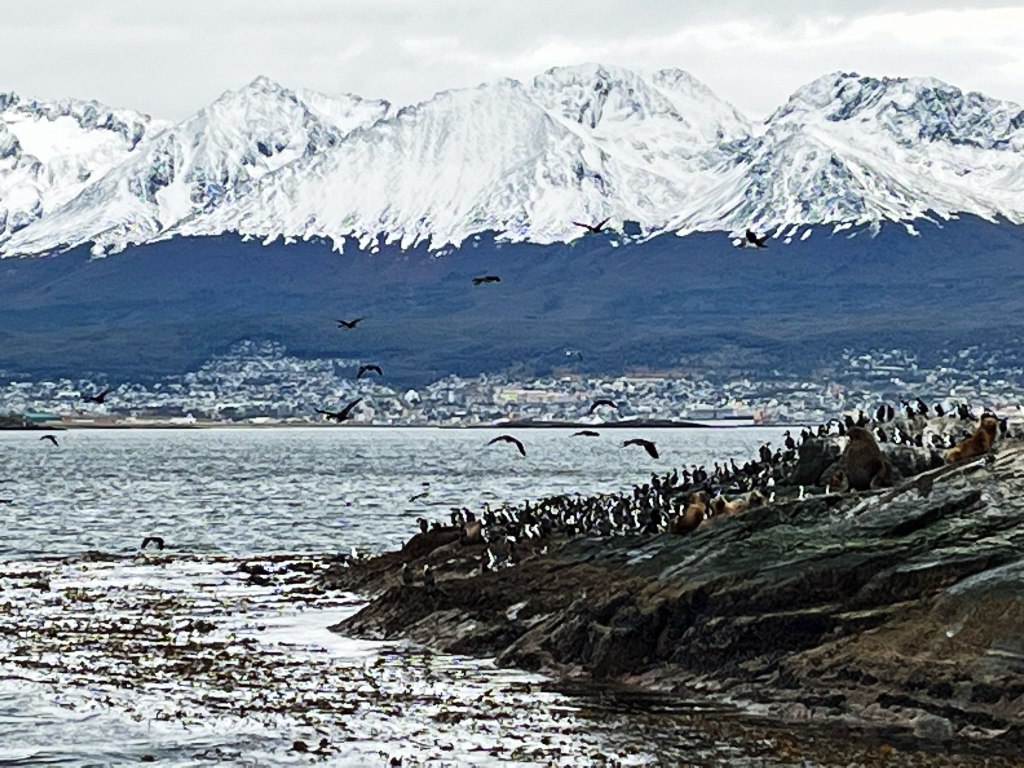

Puerto Madryn
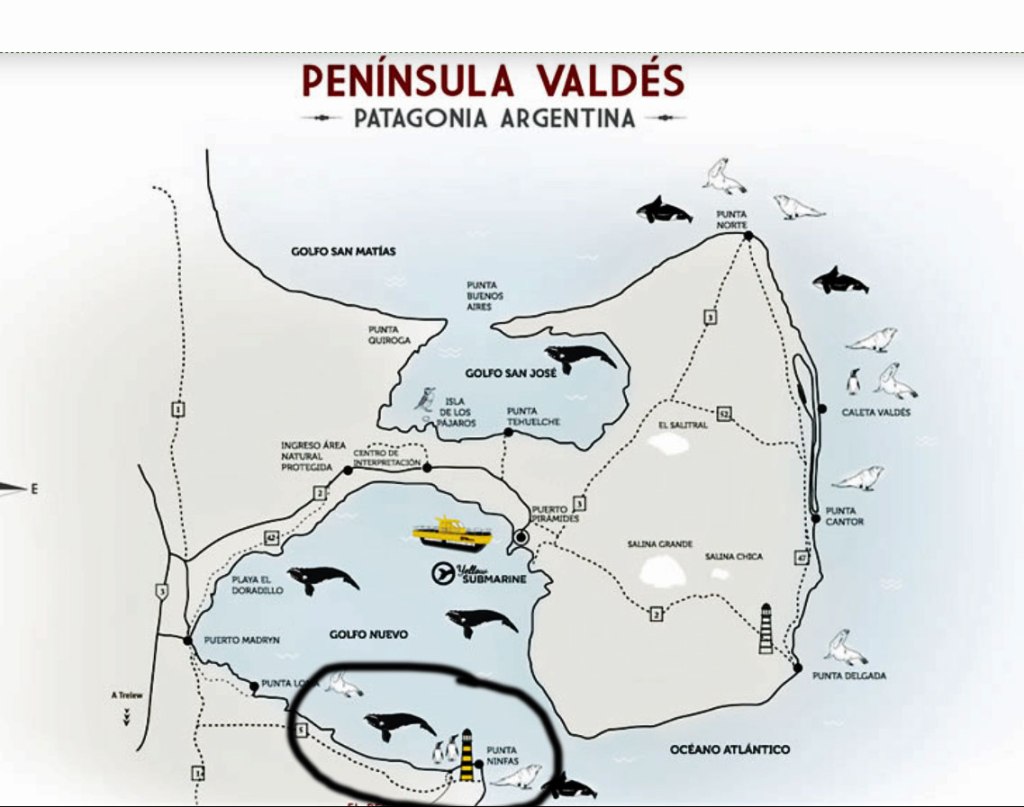
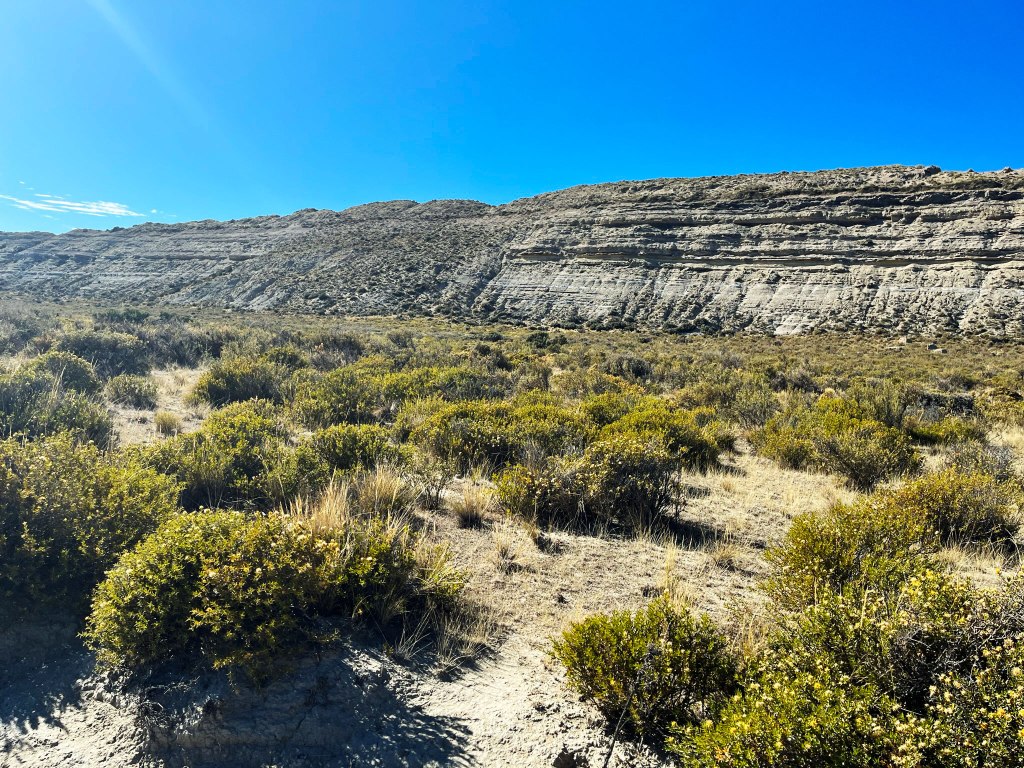
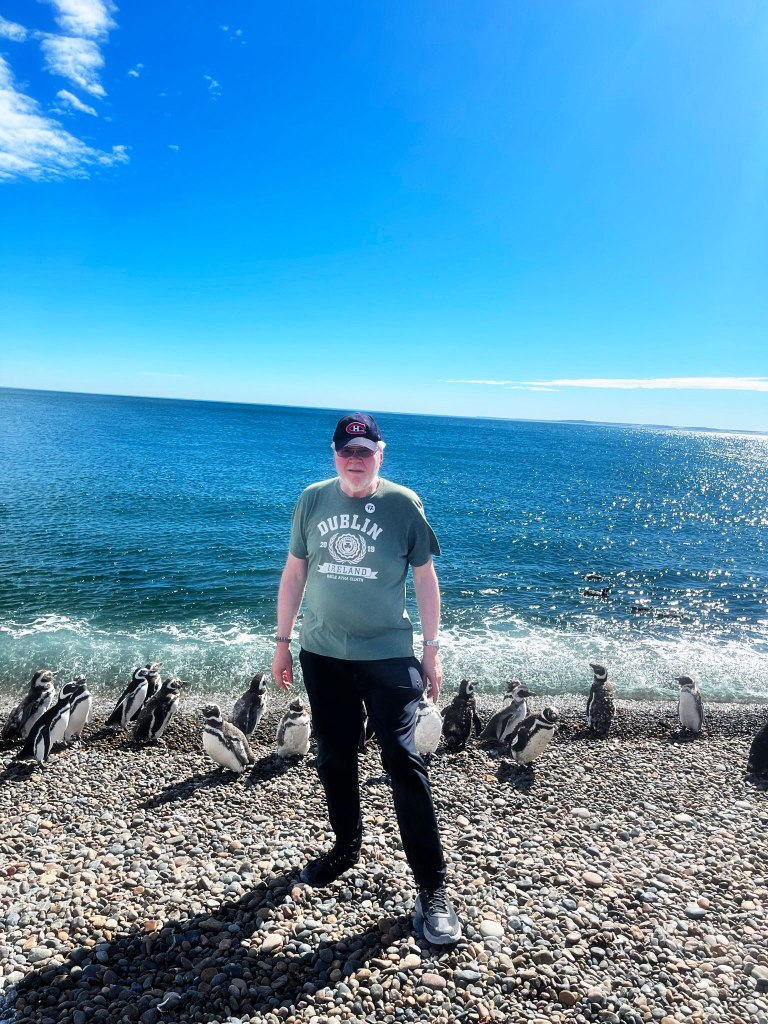
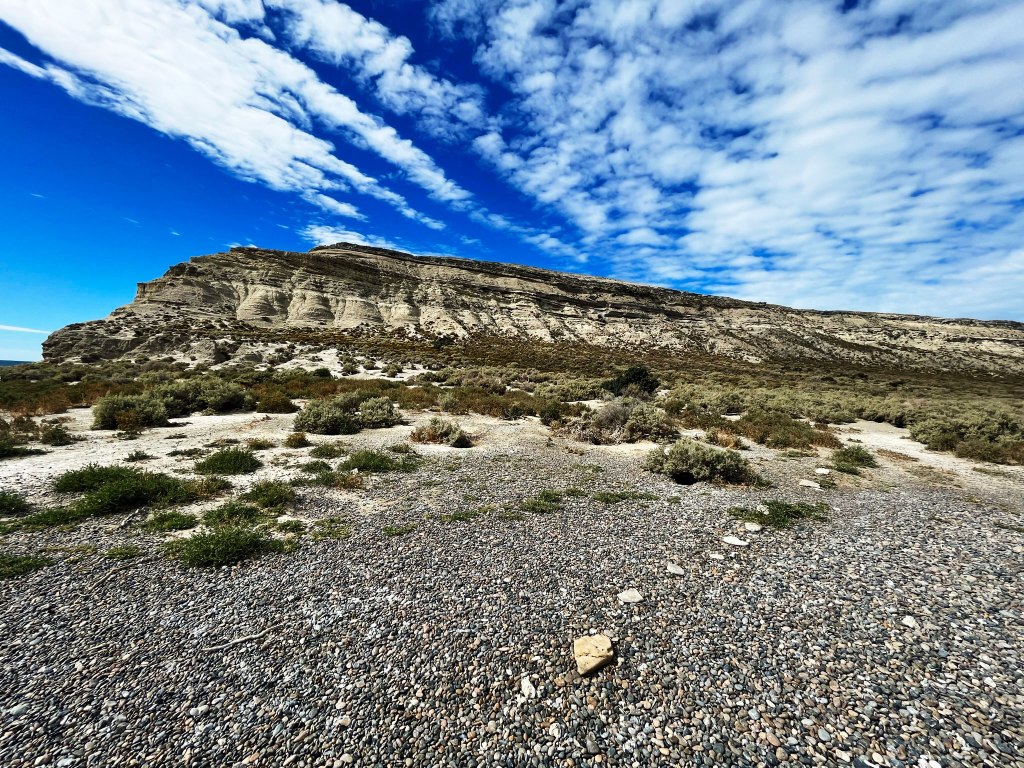
El Pedral is located at Punta Ninfas, province of Chubut, 70 km far from the city of Puerto Madryn.
An hour plus ride to the El Pedral. Was bumpy, but well worth it.
Félix Arbeletche was born in 1870 in the Basque Country and arrived in Argentina at the age of 19.
In 1920, Félix Arbeletche bought the farmhouse ‘El Pedral’ with the aim of pleasing his wife, as it had drinkable water for growing the plants she adored.
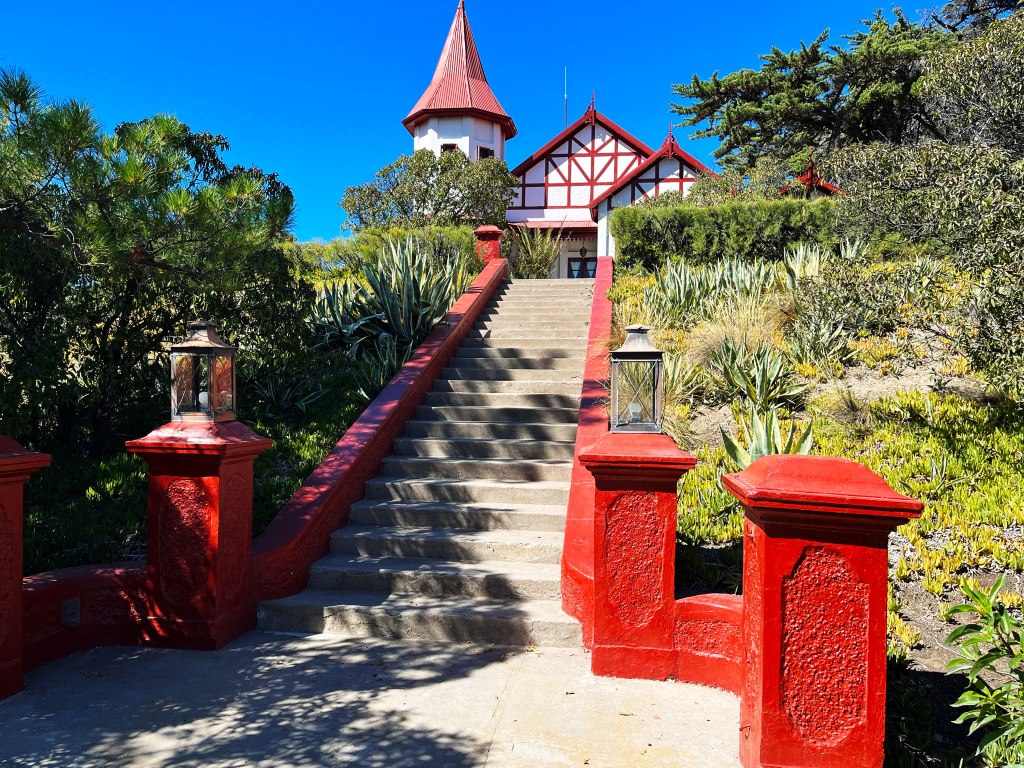
He had the residence built on an artificial elevation erected in a valley, which is sheltered from the winds but near the coast where there was a reservoir.
The construction materials, as well as all the elements for the assembly of the house and its furniture, were brought from Europe in ships that anchored in front of the stone shore of the estancia, where the sea is very deep. The house was inaugurated in 1923. It is roofed by a red corrugated sheet and bears a dome-shaped tower with an observation point that protrudes in the landscape, and which is topped by a pinnacle.
Unfortunately, María Olazábal died in 1921, over twenty years after they had arrived in Patagonia but before the beautiful house that her husband had it built for her was finished. Félix Arbeletche, who became wealthy and attained renowned prestige among his peers, died seventeen years later at the age of 68.
Ushuaia
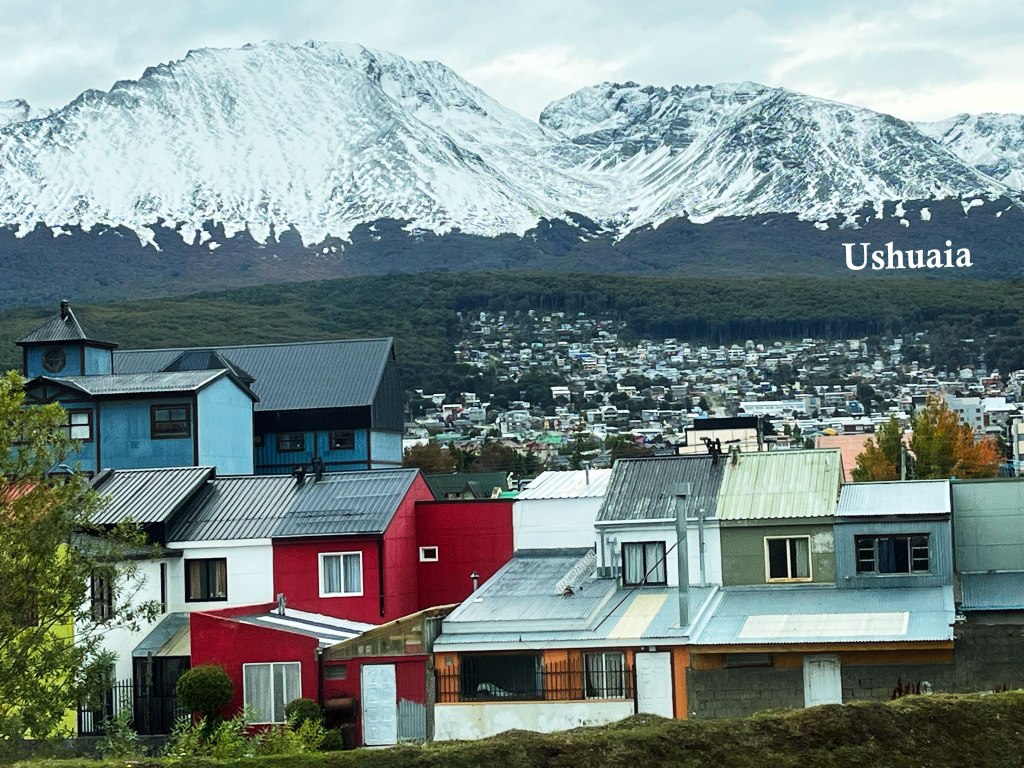
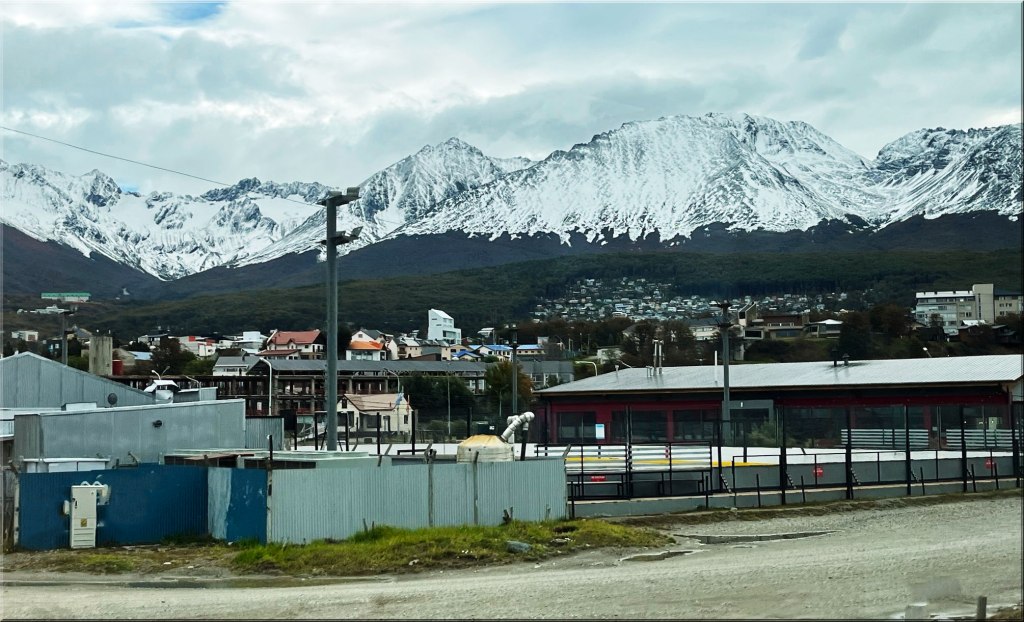
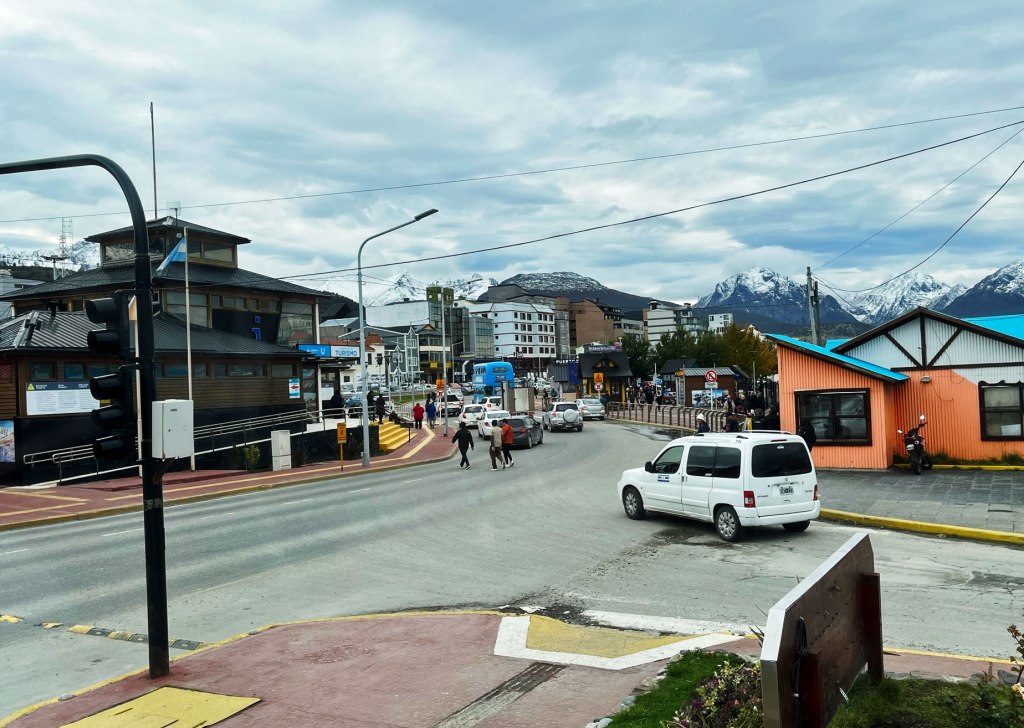
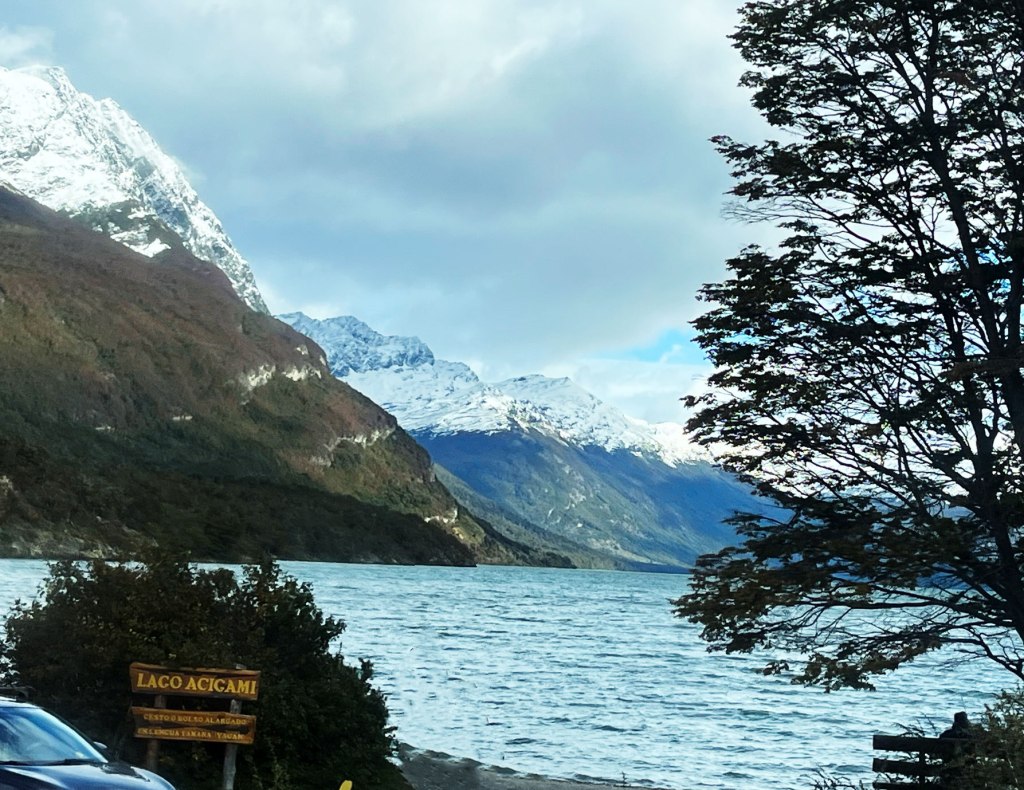
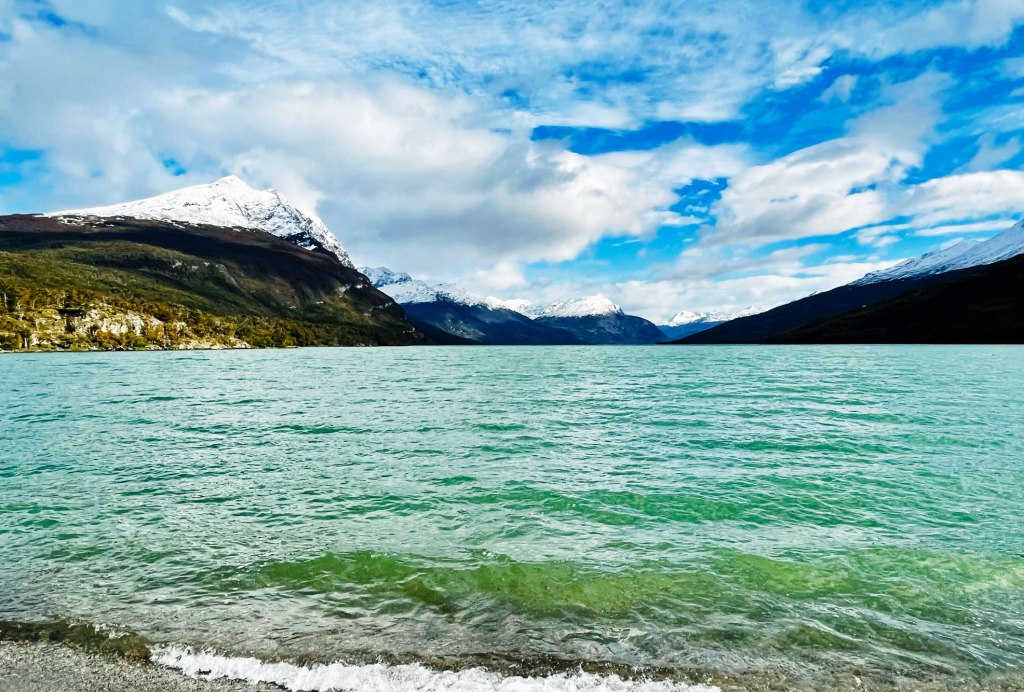
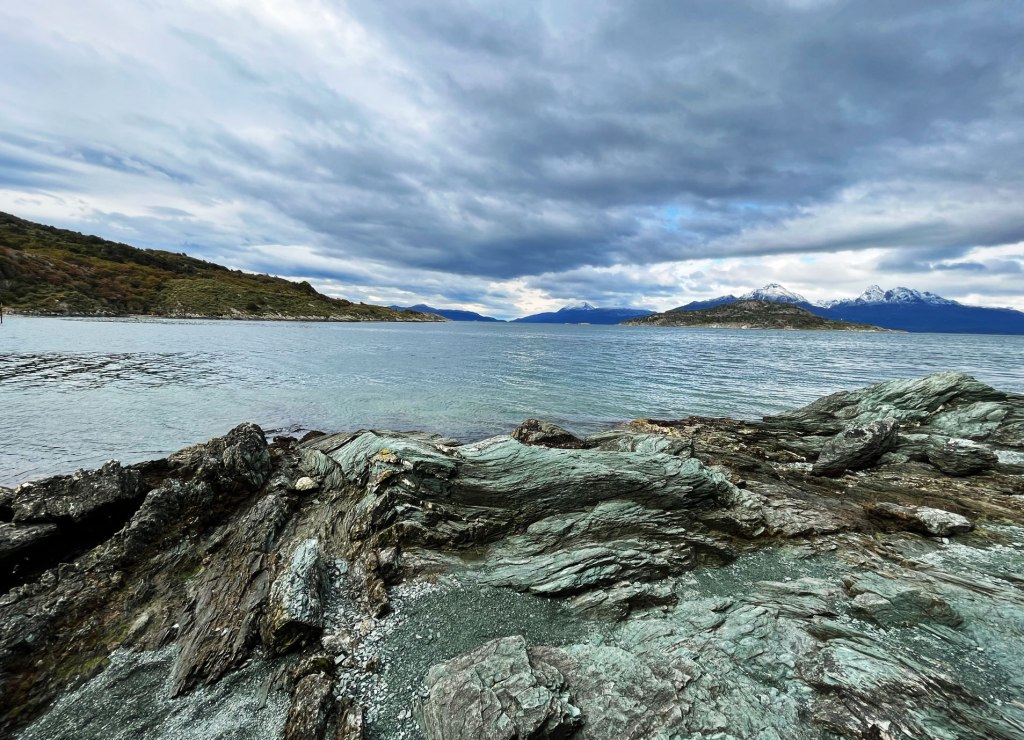
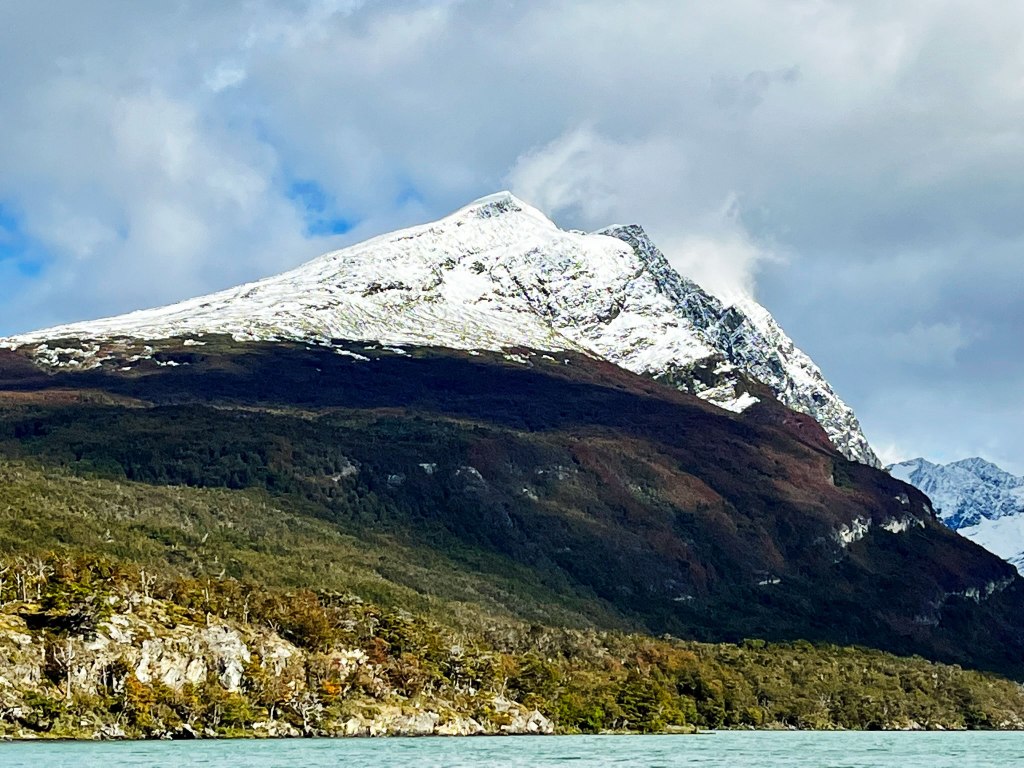
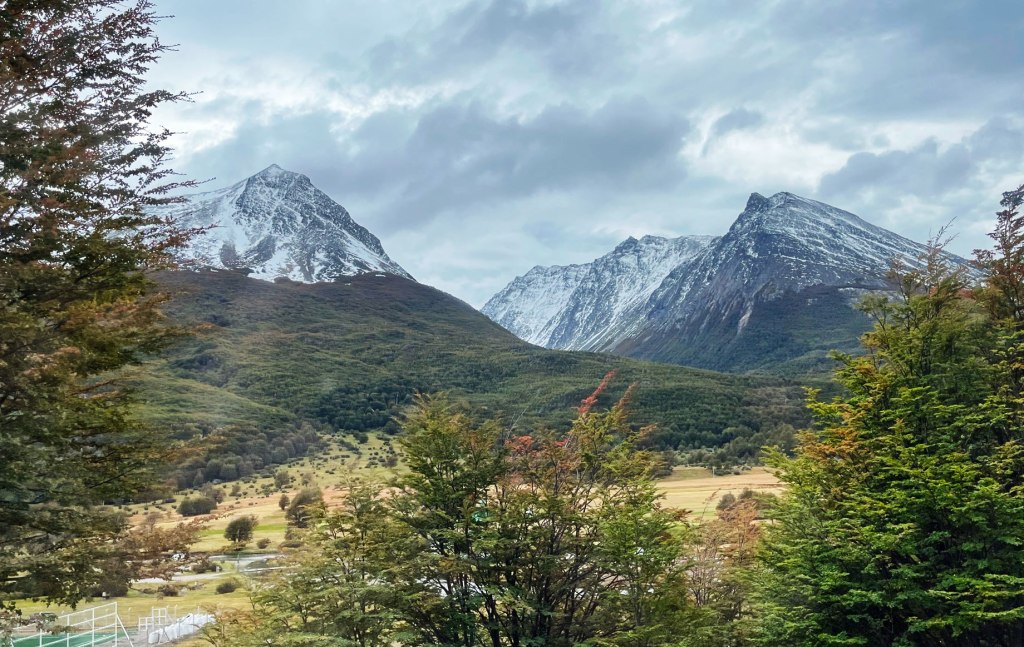
Ushuaia is located in a wide bay on the southern coast of Isla Grande de Tierra del Fuego , bounded on the north by the Martial mountain range and on the south by the Beagle Channel. It was founded on 12 October 1884.
Besides being an administrative center, it is a light industrial port and tourist hub. Ushuaia is located roughly 1,100 kilometres from the Antartic Peninsula and is one of five internationally recognized Antartic gateway cities.

 s
s 